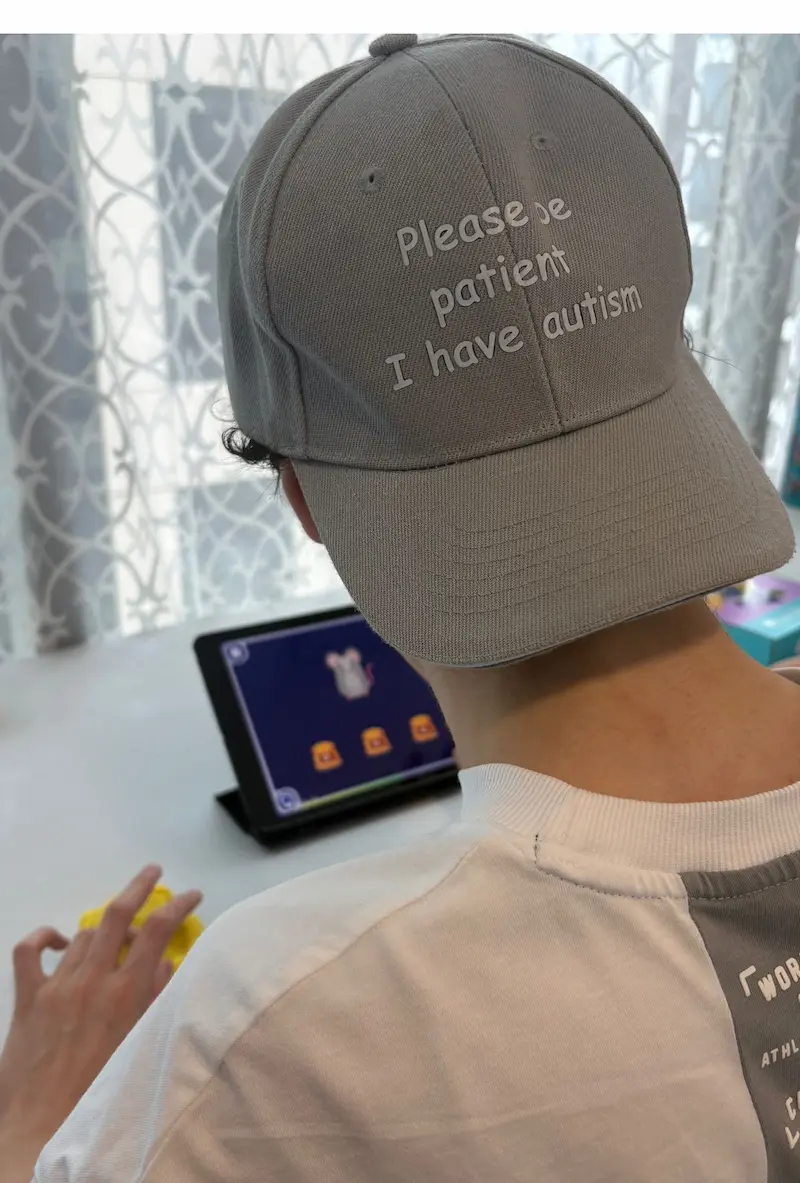
Autism affects how learners experience, process, and respond to the world, but it does not define their ability to learn.
When learning is structured and accessible, learners can build confidence, develop key skills, and succeed in ways that reflect their individual strengths.
Autism, or Autism Spectrum Condition (ASC), is a neurodevelopmental difference that affects communication, sensory processing, and how individuals interact with their environment.
It is estimated that around 1 in 100 children worldwide are on the autism spectrum.
Learners with autism may experience:
differences in communication and interaction
sensitivity to sensory input (e.g. noise, visuals, touch)
preference for routine and predictability
differences in processing and responding to information
Autism presents differently in every individual, and each learner will have their own strengths, needs, and ways of learning.
Strengths of learners with autism
Learners with autism often demonstrate a wide range of strengths, particularly in structured and supportive environments.
These may include:
strong attention to detail
visual thinking and pattern recognition
ability to focus deeply on specific tasks
persistence and consistency in learning
When learning environments align with these strengths, learners can engage more confidently and effectively.
Dificuldades de aprendizagem
In classroom settings, learners with autism may experience challenges such as:
difficulty with unstructured or unpredictable tasks
challenges with processing verbal instructions
sensory overload in busy or noisy environments
difficulty shifting attention between tasks
These challenges can affect engagement and confidence, particularly in environments that rely heavily on language or rapid transitions.
How Magrid supports learners with autism
Concebido para ser acessível
Magrid provides a structured and predictable learning environment that supports how learners with autism engage with and process information.
Clear and consistent task design
Each activity follows a familiar structure, reducing uncertainty
Visual, non-verbal interaction
Minimises reliance on language and supports direct understanding
Ambiente com poucos estímulos
Avoids unnecessary visual and auditory distractions
Predictable task patterns
Supports routine, helping learners feel more comfortable and focused
Progressão estruturada
Concepts are introduced step by step, building confidence over time
This creates a calm and consistent learning experience, helping learners engage with tasks more confidently and with less cognitive and sensory overload.
Apoio através do desenvolvimento de competências específicas
Magrid develops a broad range of skills across its full framework. Within this, certain skills are particularly important for learners with autism, supporting processing, structure, and understanding.
As principais áreas incluem:
Geometria e padrões
Recognising structure, sequences, and relationships
Perceção visual
Identifying patterns, differences, and visual details
Memória de trabalho
Retener e aplicar informações durante as tarefas
Mental rotation and folding
Compreender as relações espaciais
Coordenação motora
Supporting interaction and precision
Through regular engagement, Magrid also supports broader skill development, including:
Attention and sustained focus
Executive functioning
(organisation, task completion, flexibility)
Problem solving and independent learning
These skills develop naturally through structured interaction with tasks.
A utilização do Magrid na prática
Magrid can be used flexibly to support learners with autism across different environments, while maintaining consistency and routine.
É eficaz para:
independent practice, allowing learners to engage at their own pace in a structured environment
one-to-one support, providing predictable and focused learning
small-group sessions, supporting structured interaction and skill development
classroom integration, alongside other learners within a consistent framework
support at home, offering a familiar and low-pressure environment for continued practice
The program’s consistent design and predictable task structure allow learners to move between classroom, home, and specialist settings with minimal disruption.
This continuity supports routine, reduces uncertainty, and helps learners feel more comfortable and confident when engaging with learning.
Monitoring progress and supporting intervention
Magrid provides clear insight into how learners engage and progress over time.
Teachers and specialists can:
track development across specific skills
observe patterns in engagement and response
identify strengths and areas where support may be needed
While Magrid is not a diagnostic tool, the data it provides supports professional understanding and contributes to a broader picture of each learner’s development.
Supporting success over time
Autism presents differences in how learners experience and engage with the world, but it does not limit their ability to succeed. With the right environment, learners can build confidence, develop independence, and engage more meaningfully with learning.
Magrid provides a structured, predictable, and accessible approach that supports learners in developing key skills over time. By aligning with how learners process information and reducing unnecessary barriers, Magrid helps learners with autism build confidence, develop their strengths, and make meaningful progress.
Para proporcionar a melhor experiência possível, utilizamos tecnologias como os cookies para armazenar e/ou aceder a informações do dispositivo. Ao dar o seu consentimento para a utilização destas tecnologias, permite-nos tratar dados como o comportamento de navegação ou identificadores únicos neste site. A recusa do consentimento ou a sua revogação poderá afetar negativamente certas funcionalidades e funções.
Funcional
Sempre ativo
O armazenamento ou acesso técnico é estritamente necessário para a finalidade legítima de permitir a utilização de um serviço específico explicitamente solicitado pelo assinante ou utilizador, ou com o único objetivo de efetuar a transmissão de uma comunicação através de uma rede de comunicações eletrónicas.
Preferências
O armazenamento ou acesso técnico é necessário para a finalidade legítima de armazenar preferências que não são solicitadas pelo assinante ou utilizador.
Estatísticas
O armazenamento ou acesso técnico utilizado exclusivamente para fins estatísticos.O armazenamento ou acesso técnico utilizado exclusivamente para fins estatísticos anónimos. Sem uma intimação judicial, sem a colaboração voluntária do seu fornecedor de serviços de Internet ou sem registos adicionais de terceiros, as informações armazenadas ou recuperadas exclusivamente para este fim não podem, normalmente, ser utilizadas para o identificar.
Marketing
O armazenamento ou acesso técnico é necessário para criar perfis de utilizador com o objetivo de enviar publicidade ou para rastrear o utilizador num site ou em vários sites para fins de marketing semelhantes.













 English
  Spanish
 French
 German
 Portuguese