Autism affects how learners experience, process, and respond to the world, but it does not define their ability to learn.
When learning is structured and accessible, learners can build confidence, develop key skills, and succeed in ways that reflect their individual strengths.
Autism, or Autism Spectrum Condition (ASC), is a neurodevelopmental difference that affects communication, sensory processing, and how individuals interact with their environment.
It is estimated that around 1 in 100 children worldwide are on the autism spectrum.
Learners with autism may experience:
differences in communication and interaction
sensitivity to sensory input (e.g. noise, visuals, touch)
preference for routine and predictability
differences in processing and responding to information
Autism presents differently in every individual, and each learner will have their own strengths, needs, and ways of learning.
Strengths of learners with autism
Learners with autism often demonstrate a wide range of strengths, particularly in structured and supportive environments.
Dazu können gehören:
strong attention to detail
visual thinking and pattern recognition
ability to focus deeply on specific tasks
persistence and consistency in learning
When learning environments align with these strengths, learners can engage more confidently and effectively.
Lernschwierigkeiten
In classroom settings, learners with autism may experience challenges such as:
difficulty with unstructured or unpredictable tasks
challenges with processing verbal instructions
sensory overload in busy or noisy environments
difficulty shifting attention between tasks
These challenges can affect engagement and confidence, particularly in environments that rely heavily on language or rapid transitions.
How Magrid supports learners with autism
Von Grund auf barrierefrei
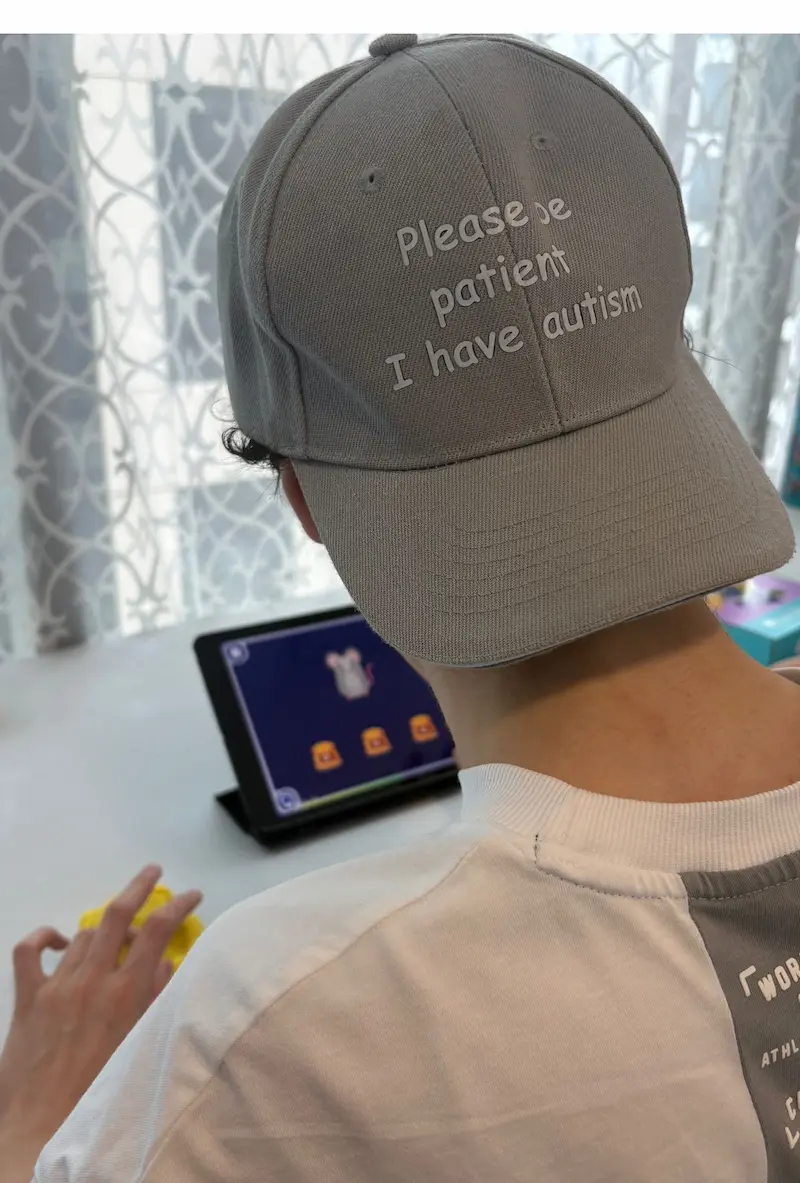
Magrid provides a structured and predictable learning environment that supports how learners with autism engage with and process information.
Klare und einheitliche Aufgabenstellung
Each activity follows a familiar structure, reducing uncertainty
Visual, non-verbal interaction
Minimises reliance on language and supports direct understanding
Umgebung mit geringer Reizbelastung
Avoids unnecessary visual and auditory distractions
Predictable task patterns
Supports routine, helping learners feel more comfortable and focused
Strukturierter Lernfortschritt
Concepts are introduced step by step, building confidence over time
This creates a calm and consistent learning experience, helping learners engage with tasks more confidently and with less cognitive and sensory overload.
Unterstützung durch gezielte Kompetenzentwicklung
Magrid develops a broad range of skills across its full framework. Within this, certain skills are particularly important for learners with autism, supporting processing, structure, and understanding.
Zu den wichtigsten Bereichen gehören:
Geometrie und Muster
Recognising structure, sequences, and relationships
Visuelle Wahrnehmung
Identifying patterns, differences, and visual details
Arbeitsgedächtnis
Informationen während der Aufgaben im Gedächtnis behalten und anwenden
Mental rotation and folding
Räumliche Zusammenhänge verstehen
Hand-Augen-Koordination
Supporting interaction and precision
Through regular engagement, Magrid also supports broader skill development, including:
Attention and sustained focus
Exekutive Funktionen
(organisation, task completion, flexibility)
Problem solving and independent learning
These skills develop naturally through structured interaction with tasks.
Magrid in der Praxis
Magrid can be used flexibly to support learners with autism across different environments, while maintaining consistency and routine.
Es wirkt bei:
eigenständige Tätigkeit, allowing learners to engage at their own pace in a structured environment
individuelle Betreuung, providing predictable and focused learning
Sitzungen in kleinen Gruppen, supporting structured interaction and skill development
Integration in den Unterricht, alongside other learners within a consistent framework
Unterstützung zu Hause, offering a familiar and low-pressure environment for continued practice
The program’s consistent design and predictable task structure allow learners to move between classroom, home, and specialist settings with minimal disruption.
This continuity supports routine, reduces uncertainty, and helps learners feel more comfortable and confident when engaging with learning.
Fortschritte überwachen und Maßnahmen unterstützen
Magrid provides clear insight into how learners engage and progress over time.
Lehrkräfte und Fachkräfte können:
die Entwicklung bestimmter Fähigkeiten verfolgen
observe patterns in engagement and response
Stärken und Bereiche zu ermitteln, in denen möglicherweise Unterstützung benötigt wird
Magrid ist zwar kein Diagnosewerkzeug, doch die darin enthaltenen Daten unterstützen das fachliche Verständnis und tragen dazu bei, ein umfassenderes Bild von der Entwicklung jedes einzelnen Lernenden zu gewinnen.
Langfristige Erfolgsförderung
Autism presents differences in how learners experience and engage with the world, but it does not limit their ability to succeed. With the right environment, learners can build confidence, develop independence, and engage more meaningfully with learning.
Magrid provides a structured, predictable, and accessible approach that supports learners in developing key skills over time. By aligning with how learners process information and reducing unnecessary barriers, Magrid helps learners with autism build confidence, develop their strengths, and make meaningful progress.
Um Ihnen ein optimales Nutzererlebnis zu bieten, verwenden wir Technologien wie Cookies, um Geräteinformationen zu speichern und/oder darauf zuzugreifen. Wenn Sie diesen Technologien zustimmen, ermöglichen Sie uns die Verarbeitung von Daten wie Ihrem Surfverhalten oder eindeutigen IDs auf dieser Website. Wenn Sie Ihre Zustimmung nicht erteilen oder widerrufen, kann dies bestimmte Features und Funktionen beeinträchtigen.
Funktional
Immer aktiv
Die technische Speicherung oder der Zugriff ist für den legitimen Zweck unbedingt erforderlich, um die Nutzung eines vom Teilnehmer oder Nutzer ausdrücklich angeforderten bestimmten Dienstes zu ermöglichen, oder dient ausschließlich der Durchführung der Übertragung einer Nachricht über ein elektronisches Kommunikationsnetz.
Einstellungen
Die technische Speicherung oder der Zugriff ist für den berechtigten Zweck der Speicherung von Einstellungen erforderlich, die nicht vom Abonnenten oder Nutzer angefordert wurden.
Statistiken
Die technische Speicherung oder der Zugriff, die bzw. der ausschließlich zu statistischen Zwecken erfolgt.Die technische Speicherung oder der Zugriff, die bzw. der ausschließlich für anonyme statistische Zwecke genutzt wird. Ohne eine gerichtliche Vorladung, die freiwillige Mitwirkung Ihres Internetdienstanbieters oder zusätzliche Aufzeichnungen von Dritten können Informationen, die allein zu diesem Zweck gespeichert oder abgerufen werden, in der Regel nicht dazu verwendet werden, Sie zu identifizieren.
Marketing
Die technische Speicherung oder der Zugriff ist erforderlich, um Nutzerprofile zu erstellen, um Werbung zu versenden oder um den Nutzer auf einer Website oder über mehrere Websites hinweg für ähnliche Marketingzwecke zu verfolgen.













 English
  Spanish
 French
 German
 Portuguese