






Identifying the Early Symptoms of Dysgraphia

Early identification of dysgraphia is essential to supporting a child’s educational journey. As an often misunderstood learning disability, dysgraphia impacts a child’s ability to perform writing tasks efficiently. It is classified under specific learning disabilities, alongside conditions like developmental dyslexia and certain language disorders. According to the American Psychiatric Association’s Diagnostic and Statistical Manual, dysgraphia is associated with impaired handwriting, impaired spelling, and difficulties with written expression.
Children with dysgraphia struggle with the writing process, not because of a lack of intelligence, but due to challenges in fine motor coordination, language processing, or visual motor integration. These deficits can make it difficult to complete basic letter writing, organize written words, or perform writing related assignments. This can have a lasting impact on academic skills and self-esteem.
Understanding the symptoms of dysgraphia early allows for effective early intervention, particularly in classroom settings where writing skills are considered an important academic skill. Parents, educational psychologists, and special education teachers play a crucial role in observing signs, arranging formalized handwriting assessments, and advocating for supportive or assistive resources.
Recognizing the condition early also allows schools to meet obligations under the Disabilities Education Act, ensuring children with writing challenges receive the support they need.
Understanding the Symptoms of Dysgraphia
The symptoms of dysgraphia can vary from child to child but usually emerge as persistent writing difficulties that interfere with academic performance. Affected children may exhibit slow writing speed, inconsistent letter formation, poor spelling, or trouble copying written text. Many also struggle with the physical act of writing, especially when using standard writing instruments.
These challenges are often linked to problems with fine motor skills, working memory, or language processing skills. Children may write legibly one day and poorly the next, reflecting underlying difficulties with motor planning, spatial perception, or the retrieval of previously acquired skills. For some, writing becomes so taxing that they avoid writing related tasks entirely.
In classrooms, dysgraphia symptoms often show up during writing assignments or standardized tests that demand fluency in written language. Teachers may notice messy handwriting, uneven spacing, or reversed letters, all of which indicate a breakdown in the coordination between cognitive and motor skills.
It’s important to distinguish between temporary struggles and persistent symptoms that may indicate developmental dysgraphia, a specific learning disability. If concerns persist, referral to occupational therapists or educational psychologists for handwriting assessments is recommended.
How Dysgraphia Affects Written Expression
Dysgraphia significantly affects writing at multiple levels, especially when it comes to written expression. Children with this condition often have good verbal ideas but struggle to get those ideas onto paper. This disconnect is caused by challenges in combining language processing, working memory, and fine motor tasks required to form coherent written words.
As a result, their written work may lack structure, display poor spelling, or show signs of fragmented thought. These challenges persist even when the child has strong verbal language skills. This gap can be frustrating and often leads to avoidance of writing assignments or handwriting practice.
Moreover, dysgraphia affects the ability to revise and edit one’s work—both essential parts of the writing process. Without intervention, these issues can undermine a student’s confidence in their writing ability, making it difficult to progress through the mainstream education curriculum. Timely support is crucial to help bridge this gap in written language development.
Why Dysgraphia Is Considered One of Many Learning Disabilities
Dysgraphia is officially classified as a learning disability because it affects the acquisition and execution of foundational writing skills. Like other learning disorders, it impacts how students process and retain information—in this case, related to writing tools, letter formation, and fine motor coordination.
Under the Individuals with Disabilities Education Act, dysgraphia falls within the category of specific learning disabilities, along with other learning disorders such as autism spectrum disorder and developmental dyslexia. These conditions interfere with educational progress, despite normal intelligence and exposure to effective instruction.
According to the Diagnostic and Statistical Manual, a diagnosis requires observable difficulties in academic skills such as written expression and consistent failure in writing related tasks. It’s important to note that dysgraphia symptoms can coexist with other learning disabilities, making comprehensive assessment essential.
Acknowledging dysgraphia as a specific learning disability ensures students receive tailored interventions and equitable access to learning opportunities.
How Dysgraphia Affects Writing in Everyday Tasks

Dysgraphia affects writing far beyond handwriting alone. In daily classroom activities, children with dysgraphia often struggle to complete routine writing tasks, such as note-taking, journaling, or short-answer responses. The effort required to manage fine motor coordination, spelling, and sentence structure can make even brief written assignments exhausting.
Because writing is a complex process involving language processing, working memory, and motor planning, these students may lose track of their ideas while focusing on the mechanics of writing. This often results in incomplete responses or simplified written text that does not reflect their true understanding of the subject matter.
In some cases, children perform better when allowed to use alternative writing tools, such as keyboards or speech to text software, especially for longer writing related assignments. Without appropriate accommodations, dysgraphia can negatively affect performance across subjects, reinforcing the need for early support within the mainstream education curriculum.
Distinguishing Dysgraphia from Other Learning Disorders
Dysgraphia is frequently confused with other learning disorders, particularly dyslexia and dysgraphia, because both affect written language. However, while dyslexia primarily impacts reading and phonological processing, dysgraphia is centered on difficulties with the physical act of writing and organizing written output.
Children with dysgraphia may read fluently yet struggle with letter formation, spacing, or producing legible handwriting. In contrast, students with dyslexia often show challenges in decoding and spelling. Dysgraphia can also co-occur with other learning disorders, including attention-related conditions or language disorders, making accurate identification more complex.
Differentiating between these conditions requires comprehensive evaluation by educational psychologists, often including handwriting assessments and language-based testing. Clear distinctions ensure that interventions address the correct underlying difficulties rather than treating symptoms alone.
Understanding Dysgraphia as a Learning Disability
As a learning disability, dysgraphia interferes with a student’s ability to acquire and demonstrate essential academic skills through writing. Despite adequate instruction and intelligence, students may struggle with acquiring writing skills due to weaknesses in fine motor, visual motor integration, or written organization.
Within educational systems, dysgraphia is categorized as a specific learning disability, meaning it affects a particular area of learning rather than overall cognitive ability. This classification helps schools determine eligibility for specialized instruction, accommodations, and related services under federal guidelines.
Dysgraphia may exist independently or alongside other learning disabilities, such as autism spectrum disorder or attention-related challenges. Recognizing it as a legitimate learning disability helps shift the focus from performance-based expectations to skill-based support, ensuring children receive targeted instruction and access to supportive or assistive resources.
When Dysgraphia Is a Standalone Learning Disorder
In some cases, dysgraphia presents as a distinct learning disorder, without accompanying reading or language impairments. These students often demonstrate strong verbal reasoning and comprehension but encounter persistent writing problems that interfere with classroom performance.
This form of dysgraphia may stem from deficits in motor skills, spatial perception, or difficulties coordinating other writing instruments effectively. Students may struggle with tasks like copying from the board or maintaining consistent spacing, even after repeated instruction and handwriting practice.
When dysgraphia appears on its own, it is still considered a specific learning disorder under educational and psychological frameworks. Identifying it accurately allows educators to focus interventions on handwriting mechanics, organization, and alternative output methods—rather than unnecessary reading or language remediation—ensuring support is both efficient and appropriate.
Spotting Dysgraphia Symptoms in Young Children

Recognizing dysgraphia symptoms in early learners is crucial for timely intervention. In preschool and early elementary years, children may exhibit signs such as awkward pencil grip, difficulty with letter formation, and resistance to writing tasks like drawing shapes or tracing lines. These issues often stem from delays in fine motor skills or fine motor coordination, making it harder to control writing instruments.
Children with dysgraphia may also struggle with handwriting practice, have trouble copying from the board, or take significantly longer to complete simple writing related tasks. Their written words might float unevenly on the page, with inconsistent spacing, slanted lines, or reversed letters. These patterns point to issues with visual motor integration and spatial perception.
Educators and parents should also be alert to emotional signs, such as frustration or avoidance during writing assignments. Since working memory and language processing skills are often involved, these early indicators provide valuable clues that a specific learning disability like dysgraphia may be present.
The Role of Occupational Therapy in Supporting Children with Dysgraphia
Occupational therapy plays a pivotal role in addressing the underlying challenges associated with dysgraphia. Occupational therapists assess fine motor development, posture, grip, and hand strength—critical areas that affect the ability to write smoothly and legibly. Through individualized therapy sessions, children practice fine motor tasks that improve writing ability, such as using raised lines, clay modeling, or finger exercises.
Therapists also help children develop strategies for organizing written text and completing writing tasks more efficiently. For students with developmental dysgraphia, therapy may include multisensory techniques to strengthen connections between movement, memory, and language processing.
In collaboration with special education teachers, occupational therapists may recommend classroom accommodations like slant boards, pencil grips, or alternative writing tools. They may also support the use of speech to text software for students whose writing difficulties severely limit output. These interventions help children build the foundational writing skills they need to navigate the mainstream education curriculum successfully.
Exploring the Features of Motor Dysgraphia
Motor dysgraphia is a subtype of dysgraphia primarily linked to weaknesses in fine motor coordination and motor skills. Unlike other forms, it is not caused by cognitive or language processing issues, but rather by the body’s difficulty executing precise movements needed for writing.
Children with motor dysgraphia often show illegible handwriting, inconsistent letter formation, and difficulty maintaining speed during writing assignments. These issues become particularly evident during formalized handwriting assessments, where they struggle with the physical act of writing, even if they have strong oral language and reading abilities.
This subtype may result from underdeveloped fine motor skills, delayed visual motor integration, or even past brain injury. While some students may benefit from handwriting practice, others may require significant adaptations, including the use of keyboards or other writing instruments.
Recognizing motor dysgraphia allows educators and occupational therapists to focus support efforts on motor-based remediation rather than cognitive or language-based interventions.
Tools and Assessments Used to Diagnose Dysgraphia
To accurately diagnose dysgraphia, professionals use a combination of standardized evaluations and observational checklists. Educational psychologists and occupational therapists often administer formalized handwriting assessments that examine speed, legibility, spacing, and letter formation during various writing related tasks.
Assessments also explore underlying cognitive functions like working memory, language processing, and visual motor integration—areas commonly impacted in both developmental dysgraphia and acquired dysgraphia. Professionals may analyze samples from real-world writing assignments to evaluate how dysgraphia affects writing in academic settings.
Tools like the Beery VMI, the DASH (Detailed Assessment of Speed of Handwriting), and individualized rubrics help pinpoint the exact nature of the child’s writing difficulties. Comprehensive evaluations are essential to differentiate dysgraphia from other learning disabilities, such as language disorders, ADHD, or developmental dyslexia.
Once the diagnosis of dysgraphia is confirmed, schools can develop tailored learning plans, accommodations, and access to supportive or assistive resources, in compliance with the Disabilities Education Act.
Academic Challenges Tied to Writing Skills Development
Dysgraphia often creates barriers during the development of core writing skills, making it difficult for students to express what they know through writing. These challenges can impact the mastery of foundational writing skills, such as paragraph construction, sequencing of ideas, and proper grammar in written expression.
Because writing is both a motor and cognitive process, children with dysgraphia may struggle to integrate language processing, working memory, and fine motor abilities. As a result, their performance on writing assignments may not reflect their actual understanding.
This disconnect not only undermines academic skills, but also affects motivation and participation in classroom tasks. Students may avoid writing related assignments, take longer to complete them, or produce incomplete written text. Without early identification and support, these difficulties can lead to long-term gaps in writing ability, requiring targeted intervention to help students meet grade-level expectations within a mainstream education curriculum.
Recognizing Dysgraphia within the Framework of the Diagnostic and Statistical Manual

Dysgraphia is recognized as part of specific learning disorders in the Diagnostic and Statistical Manual of Mental Disorders (DSM-5), published by the American Psychiatric Association. Though the DSM does not list “dysgraphia” by name, it categorizes it under disorders of written expression, which includes persistent difficulties with written language, impaired spelling, and impaired handwriting.
To meet criteria for a specific learning disability, students must show significant difficulties in acquiring writing skills, despite appropriate instruction and intellectual capability. The statistical manual emphasizes that these struggles must interfere with academic or occupational performance and be evident over time.
Professionals use this framework during the diagnosis of dysgraphia, often in conjunction with tools like formalized handwriting assessments and teacher observations. Understanding how dysgraphia fits into the DSM-5 helps educators, clinicians, and families advocate for proper supports under education laws like the Disabilities Education Act.
Early Intervention Strategies for Children with Writing Problems
Effective early intervention is critical for children who show signs of writing problems. Intervening during the early school years increases the likelihood of improving fine motor skills, strengthening writing ability, and building confidence with writing tasks.
Support may include structured handwriting practice to target letter formation, use of raised lines to improve spacing, or visual aids to assist with spatial perception. Multisensory instruction—incorporating sight, sound, and movement—can enhance both language processing and motor skills.
Assistive technologies like speech to text software offer valuable alternatives for students who cannot keep pace with handwritten work. These tools allow learners to focus on expressing ideas rather than the physical act of writing.
Collaboration among occupational therapists, teachers, and families ensures consistent support across settings. Tailoring intervention strategies to each student’s specific challenges—whether stemming from motor dysgraphia, language disorders, or fine motor impairments—leads to more meaningful progress.
Helping Children with Dysgraphia Thrive in the Classroom
Supporting children with dysgraphia in the classroom requires a combination of awareness, flexibility, and individualized planning. With the right accommodations, these students can overcome many barriers posed by writing difficulties and develop the academic skills they need to succeed.
Educators play a key role in identifying early dysgraphia symptoms and implementing strategies such as allowing extended time for writing related tasks, offering alternative formats for written assignments, or reducing the volume of required writing tasks without lowering expectations. Providing access to supportive or assistive resources, like speech to text software or special writing paper with raised lines, helps students complete work more effectively.
Classroom modifications may also include visual aids, keyboard use, or reduced emphasis on spelling during note-taking. By focusing on content rather than handwriting mechanics, teachers can better assess a student’s knowledge.
Ultimately, the goal is to foster independence and confidence in students with dysgraphia, ensuring they can fully engage in the mainstream education curriculum alongside their peers. Recognizing dysgraphia as a legitimate specific learning disability paves the way for compassionate, equitable, and effective instruction.
How Magrid Supports Early Learners with Diverse Needs
While Magrid is not a tool specifically designed for diagnosing or treating dysgraphia, its early math learning solution offers meaningful support for young learners who experience difficulties in writing and related tasks.
Magrid’s visual, interactive approach strengthens working memory, visual-spatial reasoning, and attention control—skills that are often impacted in children with specific learning disabilities, including dysgraphia. Because it is language-free, Magrid is accessible to all children, including those with language processing challenges or other learning disabilities.
The platform also encourages structured engagement, helping children build academic skills and confidence through success in early learning tasks. For students who may struggle with written expression or fine motor tasks, Magrid offers a supportive space to thrive without the added pressure of handwriting.
Explore how Magrid complements inclusive education efforts and helps children build the cognitive foundation for learning across subjects.
Memória de trabalho

An Inclusive Program to Strengthen Working Memory
Magrid is an inclusive, research-based learning application designed to support children in developing core cognitive abilities such as memória de trabalho. With over 3,000 interactive activities, Magrid provides structured opportunities to practice holding, processing, and using information, skills essential for learning math and thriving in the classroom.
The program is sensory-friendly and self-paced, allowing children aged 4–7—and students with additional needs up to age 12—to engage independently and effectively.
What is Working Memory?
Working memory is the ability to hold and manipulate information in the mind for short periods of time. It is essential for tasks like following multi-step instructions, solving problems, organizing thoughts, and staying focused during learning.
When working memory is weak, children may forget instructions, lose track of steps in a problem, or struggle to organize ideas. This can affect not only math learning but also reading comprehension, writing, and everyday routines. Strong working memory supports attention, reasoning, and problem-solving, making it a foundational skill for academic success and independence.
How Magrid Helps Develop Working Memory
Magrid benefits both neurotypical children and those with special educational needs. For children with ADHD, dyslexia, or other learning differences, working memory is often an area of weakness that directly affects academic progress. Magrid’s intuitive, language-free design provides targeted practice in this crucial skill while building confidence and making learning accessible.
Magrid doesn’t just teach math, it weaves working memory practice into every step of learning. Many tasks require children to remember simple instructions, hold visual information in mind, and apply it moments later, which directly strengthens their memory capacity. Unlike passive learning tools, Magrid gives children active, repeated opportunities to train this vital skill while staying engaged in problem-solving.
Here’s how Magrid targets working memory:
● Holding and applying instructions – Children see or hear a sequence they must remember and use shortly after, training the ability to hold information briefly while acting on it.
● Visual and language-free design – Intuitive instructions reduce overload, allowing children to focus on memory demands rather than decoding text.
● Repetition with variation – Core memory skills are reinforced across multiple contexts, strengthening transfer to real-world tasks.
● Math + memory integration – By practicing math concepts through memory-based activities, children strengthen both academic and cognitive abilities simultaneously.
Magrid is backed by research from the University of Luxembourg and the University of Tübingen, demonstrating its effectiveness in improving early mathematical and cognitive learning. The program is designed to also support the development of broader cognitive skills such as attention, working memory, and executive function.
Working Memory Specific Activities in Magrid
Working memory acts like a mental workspace—holding and using information just long enough for children to follow directions, solve problems, or learn something new. Strong working memory supports reading, math, and attention, helping children stay focused and engaged.
● In daily learning, it underpins focus and self-regulation, making it easier to follow instructions and complete tasks.
● In math, it allows children to keep track of numbers and problem-solving steps in their head.
● In reading, it helps them remember letters, sounds, and words they’ve just encountered to build fluency and comprehension.
Magrid introduces a variety of problem solving based working memory activities that grow with the child’s ability. These tasks provide repeated, engaging opportunities to strengthen different aspects of working memory.
The Specific Working Memory Tasks in Magrid:
Matching Diagram Coloring
Children observe a color pattern in one diagram and replicate it in another location on the screen. This simple yet powerful exercise trains the ability to hold visual information briefly and apply it accurately.
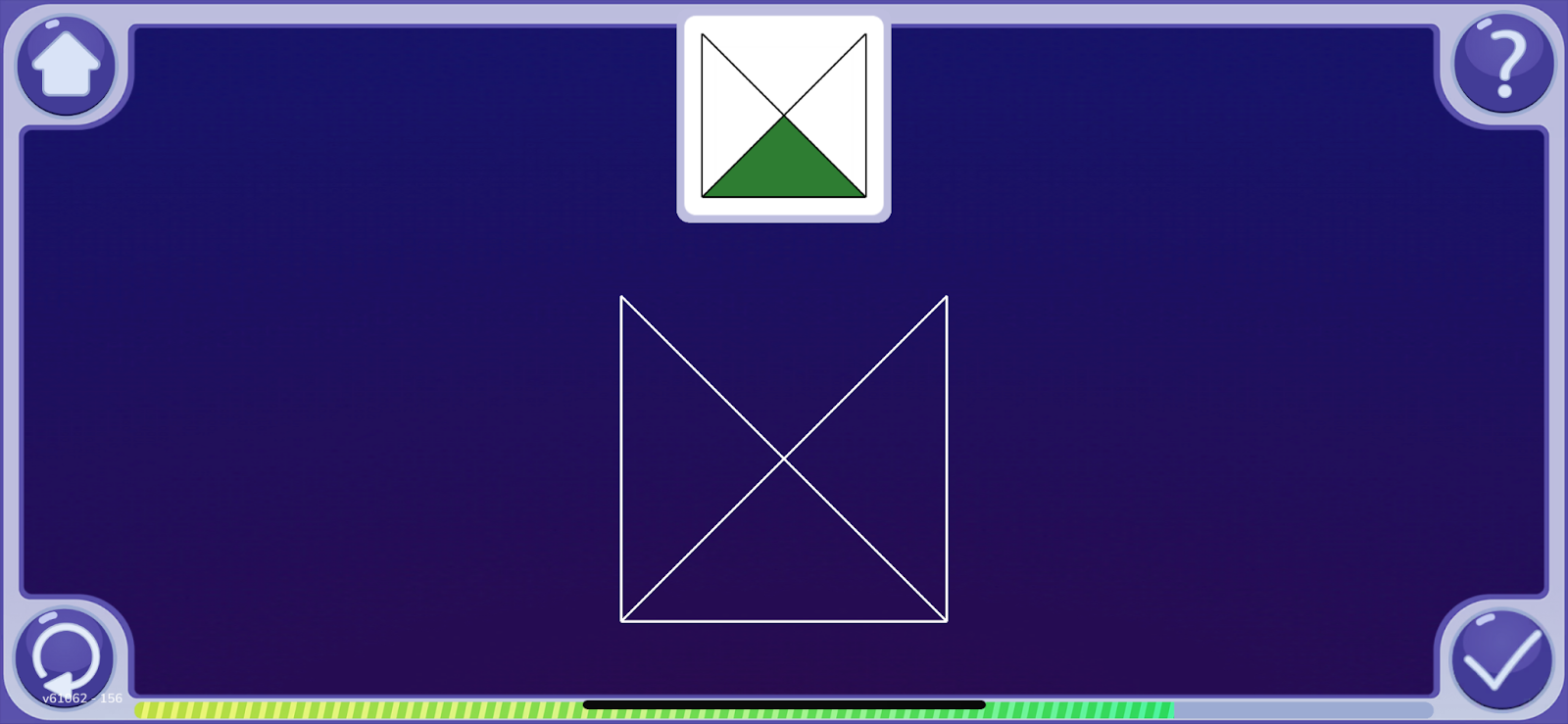
This step requires looking at the model at the top and identifying which section of the larger shape should be marked in green.
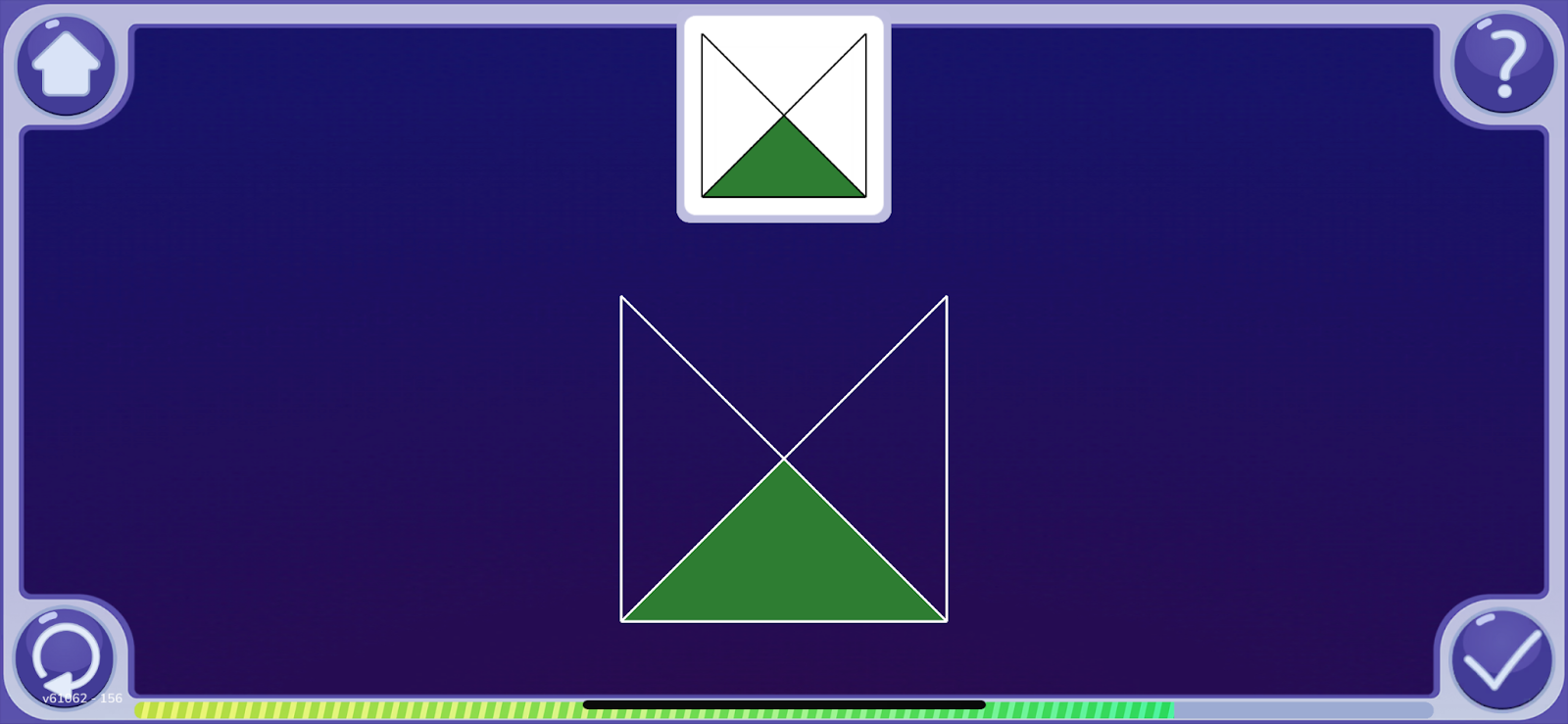
After selecting the correct green section on the larger shape, the exercise continues with other shapes.
Visual Color Memory
A simplified activity where children recall where a specific color appears on the screen. By keeping the visuals uncluttered, this task introduces memory practice in its most accessible form.

This step requires observing the model at the top and noting which section of the shape is highlighted in blue.

In this phase, the model disappears, and the task requires recalling from memory which section was originally colored.

After selecting the correct blue section on the shape, the exercise continues with additional patterns to remember.
Color Fill Memory
Children view a diagram with colored sections for a few seconds, then reproduce it on a blank version. As they progress, diagrams become more complex, challenging them to retain and apply multiple pieces of information at once.

This step requires observing the two colored squares at the top and noting which color appears in each position.

In this phase, the colors disappear, and the task requires remembering which top square matched the color now shown at the bottom.

After selecting the square that matches the bottom color, the exercise continues with new color combinations.
Character Placement Memory
Several detailed characters appear on the screen briefly, and children must recall both which character it was and where it was placed. This task strengthens both identity memory and spatial recall, important for higher-order problem-solving and classroom learning.

Este passo implica observar os caracteres e registar qual o caractere que se encontra em cada um dos três quadrados.
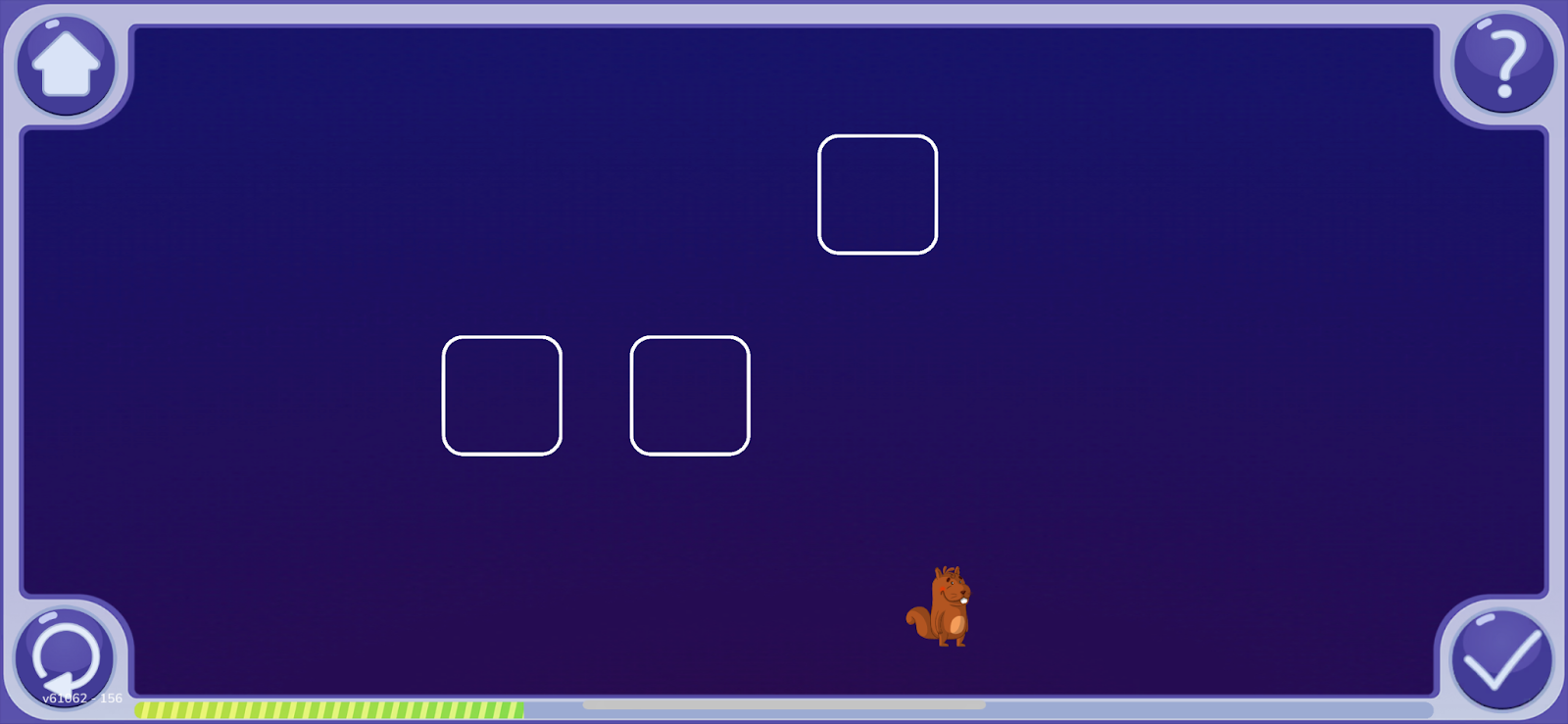
Nesta fase, as figuras desaparecem e a tarefa consiste em recordar onde cada uma delas estava posicionada.
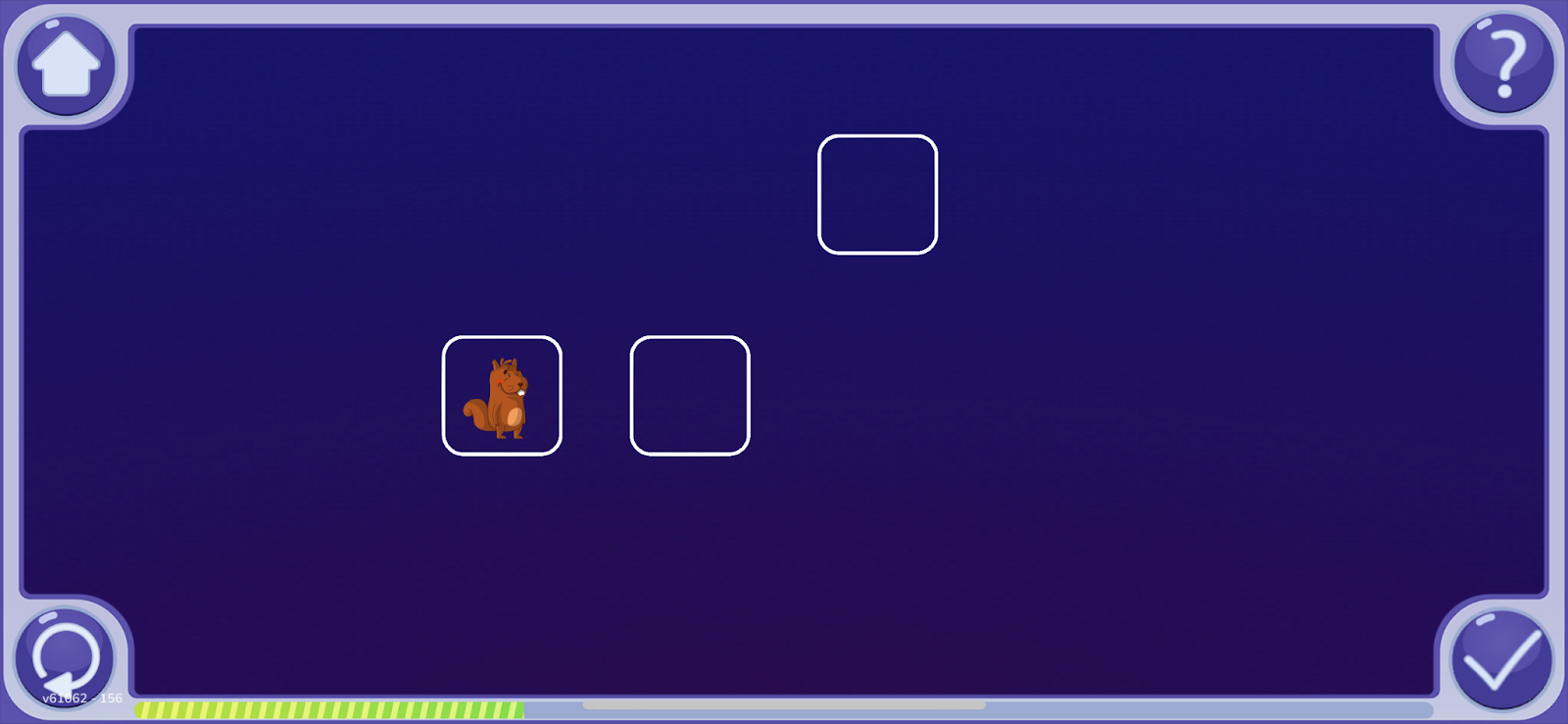
Depois de identificar o símbolo apresentado e tocar no quadrado onde este apareceu inicialmente, o exercício prossegue com novos símbolos.
By blending these varied exercises into engaging gameplay, Magrid ensures that children are not only building math understanding but also training the very cognitive systems that make learning possible.
For Teachers
Magrid is simple to integrate into preschool and elementary classrooms. Its memory-focused activities align with core skills in numeracy, problem-solving, and sequencing. Students can work independently, giving teachers flexibility to focus on small groups or provide targeted support. Short daily sessions (10–15 minutes) have been proven highly effective and prevent learning overload.
The teacher dashboard tracks student performance, highlights progress in both math and cognitive skills, and identifies areas where additional support may be needed. By embedding working memory practice into math lessons, Magrid helps teachers strengthen foundational learning skills without adding extra workload.
For Parents
At home, Magrid offers children an enjoyable way to strengthen working memory while practicing math. The clear, visual instructions mean children can navigate activities independently, giving parents peace of mind that screen time is both productive and purposeful.
Parents can use the dashboard to see their child’s progress in both math and memory skills, making it easy to celebrate achievements and notice growth over time. With its sensory-friendly and uncluttered design, the app provides a calm space where children can focus and persist.
Building Confidence Through Working Memory
Working memory is at the heart of learning, from following directions to solving multi-step problems. By strengthening this skill, Magrid helps children become more confident learners who can stay organized, follow through on tasks, and succeed academically.
For both neurotypical children and those with special needs, Magrid provides an inclusive and effective way to build working memory while making math engaging and accessible. Through consistent, research-backed practice, every child can strengthen this essential skill and unlock greater independence in learning and life.
Desenvolvimento da memória de trabalho na primeira infância: estratégias para crianças com desenvolvimento típico
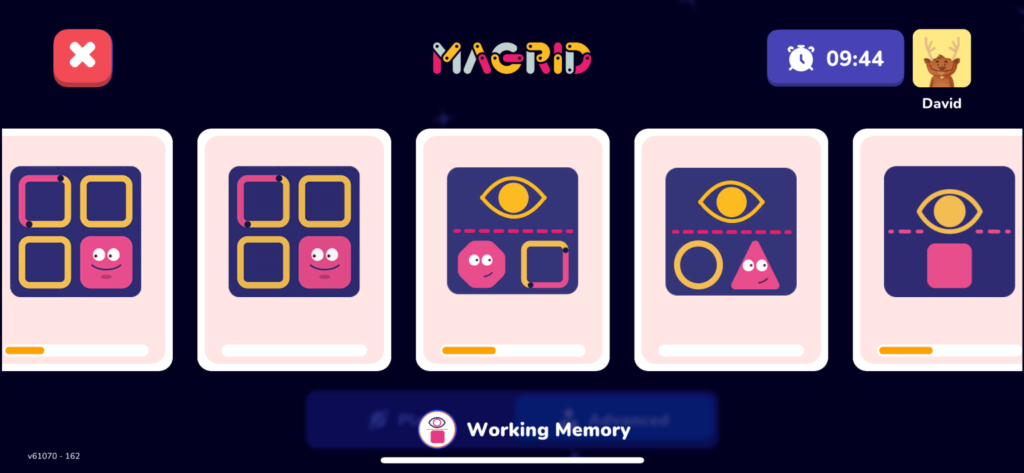
Nos primeiros anos de vida, as crianças não estão apenas a aprender a contar ou a ler — estão a aprender a aprender. No cerne deste processo está a memória de trabalho, uma competência cognitiva crucial que permite às crianças reter e manipular informação na sua mente durante curtos períodos de tempo. É isso que ajuda uma criança a lembrar-se dos passos para escovar os dentes, a seguir as instruções de várias etapas de um professor ou a acompanhar os números num jogo de contagem.
Embora seja frequentemente subestimada, a memória de trabalho é um poderoso indicador do sucesso académico, especialmente em matemática e literacia. Para as crianças com desenvolvimento típico, desempenha um papel essencial na transição da exploração baseada na brincadeira para ambientes de aprendizagem mais estruturados. Este artigo explora estratégias práticas e adequadas ao desenvolvimento que os educadores e cuidadores podem utilizar para ajudar a reforçar a memória de trabalho nos jovens alunos.
O que é a memória de trabalho e por que é importante na primeira infância?
A memória de trabalho pode ser vista como uma espécie de «post-it» mental de uma criança — ajuda-a a reter fragmentos de informação durante o tempo suficiente para os utilizar. Isto pode incluir lembrar-se do final de uma frase enquanto lê o início, manter um número na mente enquanto resolve um problema matemático simples ou recordar o próximo passo numa rotina da sala de aula.
Na educação infantil, uma memória de trabalho sólida contribui para a atenção, a resolução de problemas e a capacidade de seguir instruções. Está também intimamente ligada à função executiva, que inclui competências como o controlo dos impulsos e a alternância entre tarefas. Por exemplo, uma criança com uma memória de trabalho bem desenvolvida tem mais probabilidades de se manter concentrada na tarefa, lembrar-se das regras da sala de aula e participar de forma significativa nas atividades de grupo.
Um subtipo particularmente importante é a memória de trabalho visuoespacial — a capacidade de reter e manipular informação visual e espacial. Esta competência está na base das primeiras competências numéricas, tais como estimar quantidades, reconhecer padrões e compreender formas e o espaço. Quando as crianças desenvolvem esta capacidade numa fase precoce, ficam mais bem preparadas para abordar conceitos matemáticos fundamentais.
Utilizar recursos visuais e representações da vida real
Uma das formas mais eficazes de apoiar a memória de trabalho em crianças em idade escolar é através da aprendizagem visual. As crianças pequenas têm frequentemente dificuldade em reter instruções verbais na memória, mas os elementos visuais proporcionam-lhes algo concreto em que basear a sua compreensão. Por exemplo, em vez de dizer simplesmente “primeiro guarda o teu brinquedo e, depois, lava as mãos”, um professor pode utilizar um quadro ilustrado com ícones simples que mostrem cada passo. Isto ajuda as crianças a reter e a pôr em prática a informação de forma mais fiável.
As representações da vida real também ajudam a tornar os conceitos abstratos mais fáceis de compreender. Nos primeiros passos da matemática, a utilização de objetos físicos, como botões, blocos ou frutas, permite que as crianças vejam e toquem aquilo que estão a contar ou a agrupar. Esta interação tangível reduz o esforço mental de manter os números na cabeça e reforça a memória através do envolvimento sensorial.
O apoio visual não é apenas um complemento — é uma estratégia que tira partido da forma como o cérebro das crianças processa e retém naturalmente a informação. Seja através de diagramas legendados, storyboards ou rotinas ilustradas, os recursos visuais ajudam as crianças a ter sucesso, mantendo a informação essencial visível, familiar e acessível.
Divida as tarefas em passos mais pequenos e fáceis de gerir
Mesmo as crianças pequenas com desenvolvimento típico podem sentir-se sobrecarregadas com instruções que envolvem várias etapas. Quanto mais etapas uma tarefa incluir, maior será a memória de trabalho necessária para a concluir. Uma estratégia simples, mas eficaz, consiste em dividir as tarefas em partes mais pequenas e sequenciais e orientar as crianças de forma clara em cada etapa.
Esta abordagem — frequentemente designada por “escarpamento pedagógico” — ajuda as crianças a concentrarem-se numa porção de informação mais fácil de gerir de cada vez. Por exemplo, em vez de dizer: “Desenha a tua casa, pinta-a e, depois, escreve o teu nome”, um professor pode começar por dizer: «Primeiro, desenha a tua casa. Avisa-me quando terminares.» Assim que o primeiro passo estiver concluído, é dada a instrução seguinte.
A utilização de instruções verbais em conjunto com sinais físicos (como apontar para os materiais ou demonstrar ações) pode reduzir ainda mais a carga cognitiva. As listas de verificação visuais também são eficazes, permitindo que as crianças acompanhem o seu próprio progresso, passo a passo.
Ao simplificar a quantidade de informação que as crianças têm de reter na memória de uma só vez, os educadores preparam-nas para o sucesso e desenvolvem a sua capacidade de realizar tarefas mais complexas ao longo do tempo.
Repetição e ritmo para reforçar a aprendizagem
A repetição é essencial na primeira infância — é assim que as crianças adquirem familiaridade, confiança e fluência. No que diz respeito à memória de trabalho, a repetição e o ritmo ajudam a consolidar as ligações neurais, facilitando às crianças a retenção e a recuperação de informação ao longo do tempo.
As canções, os cânticos e as atividades rítmicas são ferramentas particularmente poderosas. Por exemplo, uma criança pode aprender a contar até dez não através da memorização mecânica, mas cantando uma melodia cativante que integra os números numa estrutura previsível. As rimas e os padrões rítmicos reduzem a exigência cognitiva da recordação e incentivam a automatização, especialmente em contextos de grupo, onde a repetição se torna parte da rotina social.
A repetição também favorece a aprendizagem em diferentes contextos. Se as crianças praticarem repetidamente a mesma competência baseada na memória (como ordenar ou emparelhar) em formatos variados — puzzles, jogos, brincadeiras físicas —, é mais provável que apliquem essas competências de forma flexível. Desta forma, a repetição torna-se uma ponte entre a retenção a curto prazo e a compreensão a longo prazo.
Como o Magrid reforça a memória de trabalho através de exercícios lúdicos
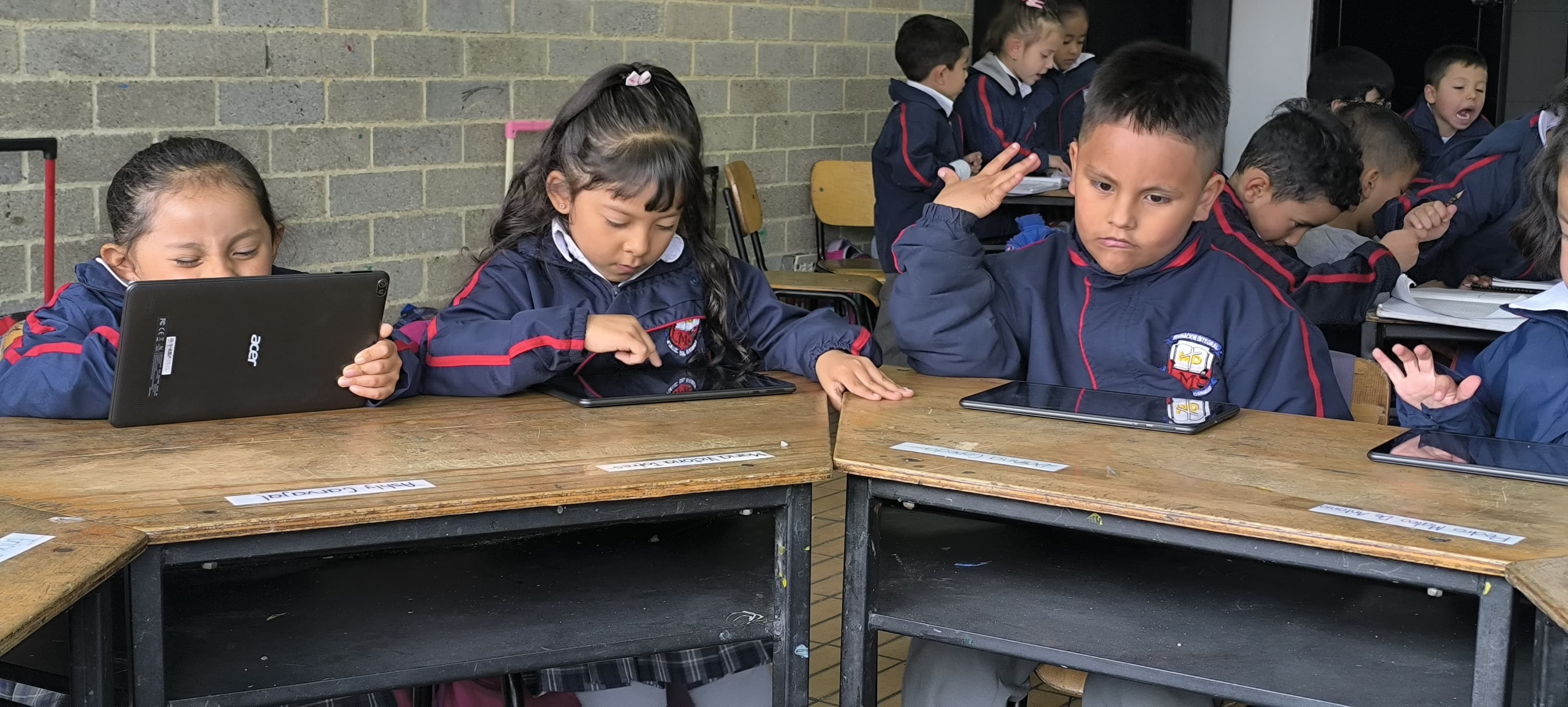
Embora os educadores possam fazer muito para apoiar a memória de trabalho na sala de aula, as ferramentas certas podem ampliar esse impacto. O Magrid é uma dessas ferramentas — uma plataforma de aprendizagem inclusiva e baseada em investigação que integra o desenvolvimento da memória de trabalho diretamente nas suas atividades de matemática.
O que torna o Magrid único é a forma como transforma competências de memória abstratas em experiências envolventes e acessíveis. O seu design visual e sem linguagem elimina distrações desnecessárias, permitindo que as crianças se concentrem inteiramente na tarefa em mãos. Muitas das suas mais de 3 000 atividades estão estruturadas para estimular a memória de trabalho através de desafios curtos e específicos, cuja complexidade vai aumentando.
Eis alguns exemplos de como o Magrid treina a memória de trabalho:
- A atividade de colorir diagramas exige que as crianças observem um padrão de cores e, em seguida, o reproduzam num espaço diferente, incentivando-as a reter a informação visual na memória por um breve momento antes de a pôr em prática.
- O «Visual Color Memory» apresenta uma figura com secções coloridas que desaparecem antes de as crianças terem de se lembrar e selecionar a posição correta.
- O «Color Fill Memory» aumenta o desafio, exigindo a memorização de várias informações — posição, cor e ordem —, tudo num curto espaço de tempo.
- O jogo «Memória de Localização de Personagens» reforça a memória espacial, pedindo às crianças que se lembrem tanto do que viram como do local onde apareceu.

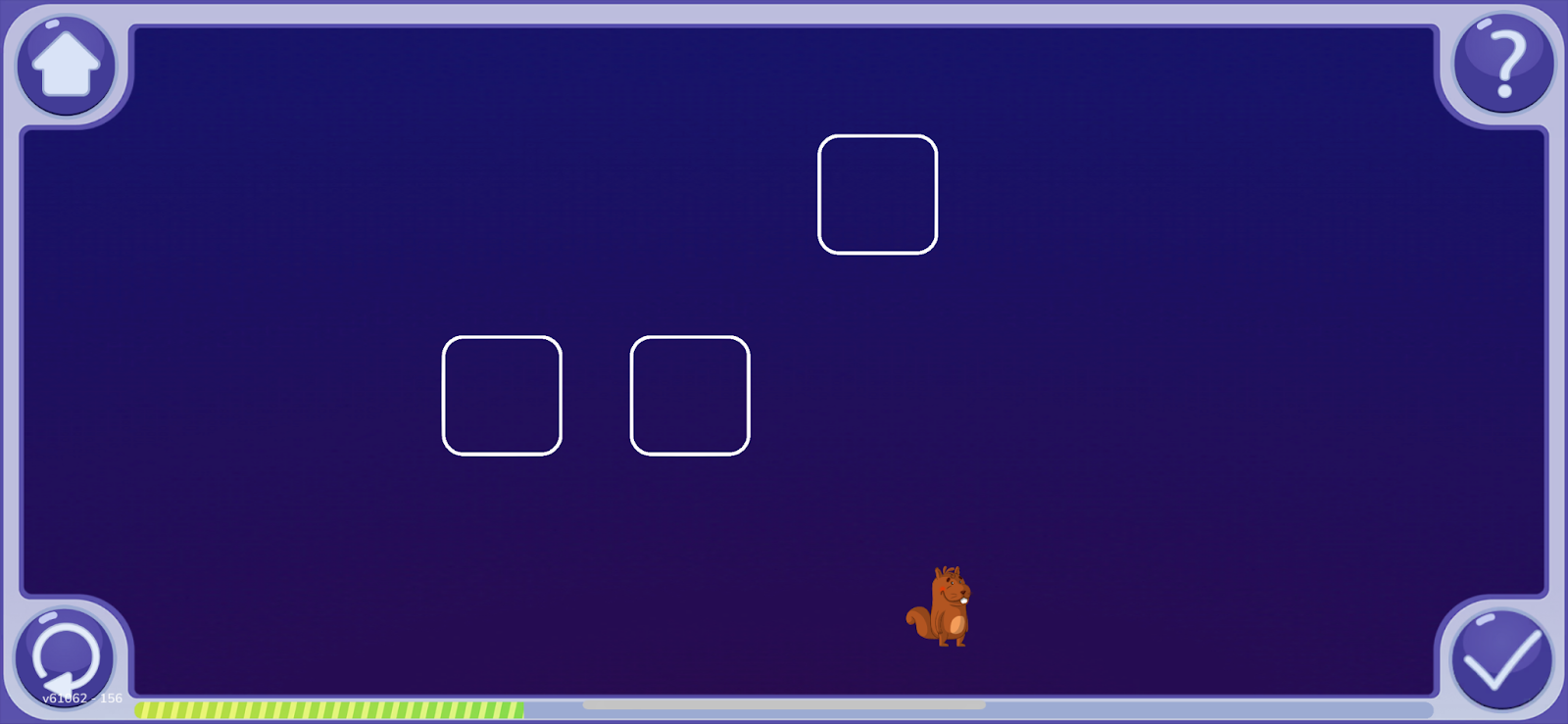
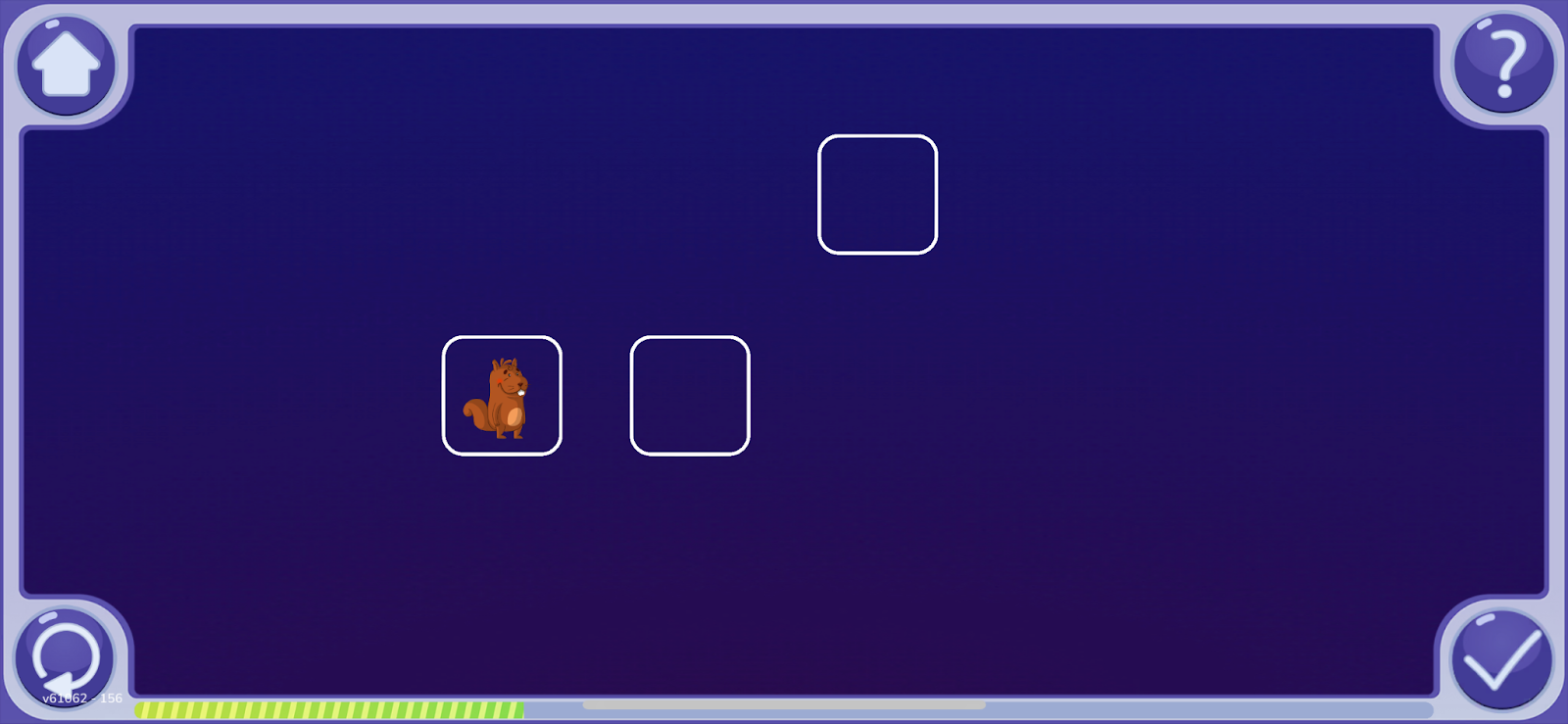
Estas tarefas não são meros exercícios de memória — são lúdicas, interativas e adequadas ao nível de desenvolvimento das crianças. O Magrid integra a matemática e a memória numa experiência harmoniosa, reforçando tanto o desenvolvimento cognitivo como o académico. A sua estrutura, que permite que cada criança avance ao seu próprio ritmo, é adequada para crianças dos 4 aos 7 anos e mantém-se eficaz para alunos com necessidades especiais até aos 12 anos.
Para os professores, o Magrid é fácil de integrar nas rotinas diárias. E para as crianças, oferece uma forma divertida e focada de desenvolver competências cognitivas fundamentais que vão muito além da matemática.
Recorra ao movimento e às pausas para revitalizar a capacidade cognitiva
As crianças pequenas têm uma capacidade limitada de memória de trabalho e a fadiga mental instala-se rapidamente. Para manter a atenção e facilitar a retenção da memória, precisam de oportunidades para recarregar. É aí que entram as pausas cognitivas e a atividade física.
Pausas curtas e intencionais entre tarefas dão ao cérebro tempo para processar e descansar. Uma pausa de cinco minutos para se movimentar após uma atividade que exija concentração pode ajudar as crianças a retomarem a tarefa com a atenção renovada. Isto não tem de perturbar o ritmo do dia — alongamentos rápidos, danças «congeladas» ou respiração consciente podem ser integrados diretamente no ritmo da sala de aula.
A própria aprendizagem baseada no movimento também pode reforçar a memória. Atividades como saltar para pontos numerados no chão ou utilizar gestos com as mãos para memorizar sequências de histórias combinam a memória cinestésica com estímulos visuais e auditivos. Estas experiências multissensoriais proporcionam múltiplos pontos de acesso para a recordação e um envolvimento mais profundo.
Em vez de forçar longos períodos de trabalho concentrado, a alternância entre esforço e descanso respeita as necessidades de desenvolvimento das crianças em fase de aprendizagem inicial e ajuda a preservar a memória de trabalho para quando esta for mais necessária.
Promover a aprendizagem prática – Aprendizagem tátil e interativa
As crianças aprendem melhor quando estão ativamente envolvidas na sua própria descoberta. Isto é especialmente verdade quando se trata de desenvolver a memória de trabalho, que se beneficia de experiências práticas e interativas.
Quando as crianças manipulam materiais físicos — como classificar objetos, criar padrões ou resolver puzzles —, não estão apenas a aprender sobre formas ou números. Estão também a reforçar os sistemas cognitivos que as ajudam a reter e a utilizar informação em tempo real. Por exemplo, organizar blocos coloridos para reproduzir um modelo exige manter esse modelo na mente, acompanhar o que já foi colocado e decidir o que vem a seguir.
A aprendizagem interativa também promove o envolvimento. É mais provável que as crianças se mantenham concentradas e concluam as tarefas quando podem tocar, movimentar e explorar. Esta motivação natural contribui para a memória, ao manter a atenção e criar associações significativas com a experiência de aprendizagem.
Seja através de caixas sensoriais, jogos de contagem ou estações de construção, proporcionar às crianças oportunidades de aprenderem através da prática é uma das formas mais eficazes de desenvolver a memória e aprofundar a compreensão.
Tornar a memória de trabalho um foco diário na sala de aula
A memória de trabalho não é apenas uma competência cognitiva — é um elemento fundamental para o sucesso da aprendizagem na primeira infância. Quando as crianças conseguem reter e utilizar a informação de forma eficaz, estão mais bem preparadas para seguir instruções, resolver problemas e interagir de forma significativa com os conteúdos académicos.
A boa notícia é que estimular a memória de trabalho não exige uma reformulação completa do currículo. Começa com escolhas deliberadas: utilizar recursos visuais, estruturar as tarefas em partes mais fáceis de gerir, incorporar repetição e movimento e dar às crianças oportunidades de aprender através da ação. Estas estratégias não só melhoram a memória, como também aumentam a concentração, a independência e a confiança.
Ao integrar estas práticas nas rotinas diárias da sala de aula, os educadores podem garantir que o desenvolvimento da memória de trabalho não seja um elemento adicional, mas sim uma parte natural e essencial da educação na primeira infância.
Crie melhores bases de aprendizagem com o Magrid
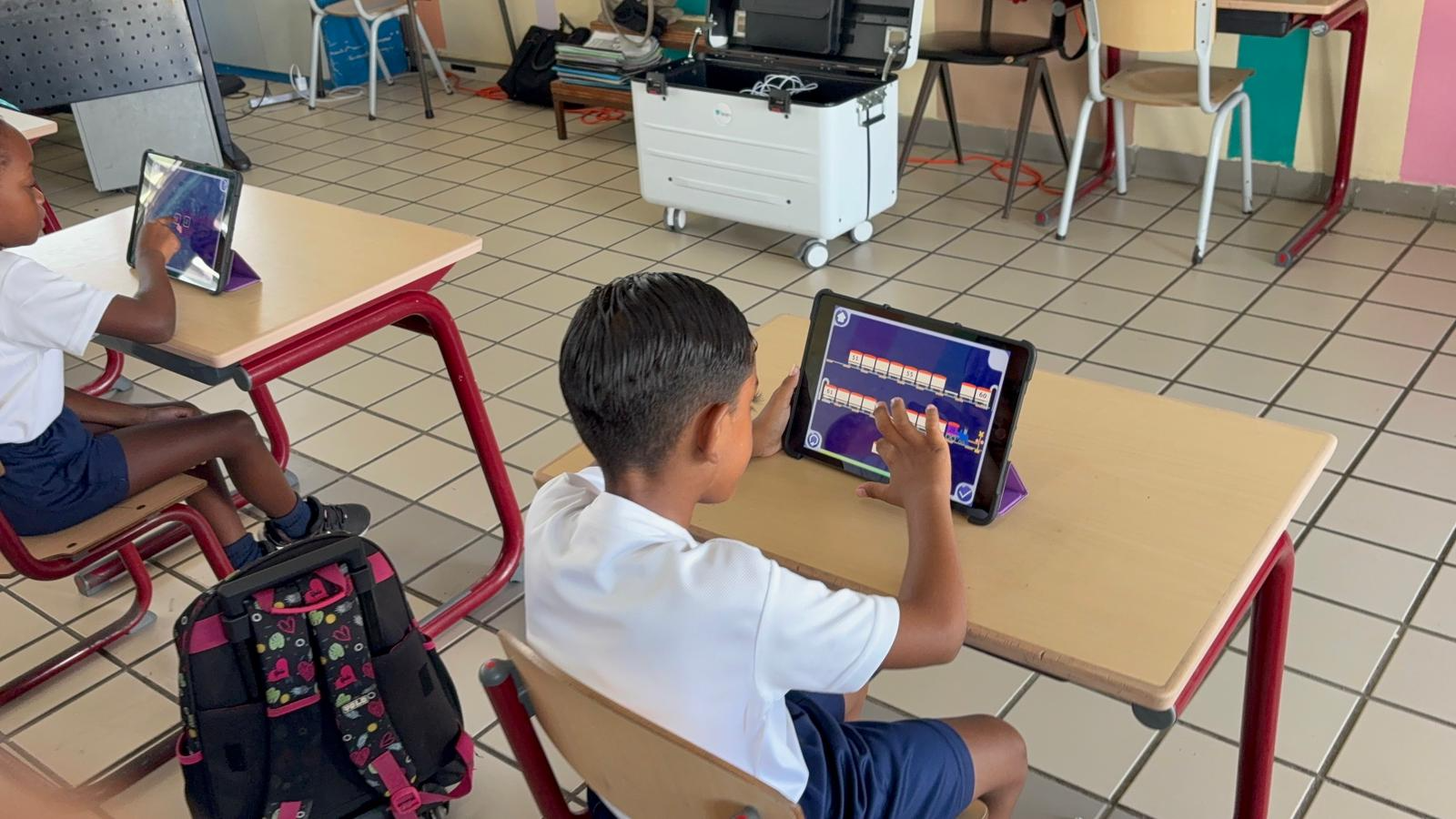
Se procura uma forma eficaz de estimular a memória de trabalho enquanto ensina competências académicas essenciais, o Magrid oferece uma solução prática e comprovada cientificamente. Concebido especificamente para jovens alunos, o Magrid transforma cada interação numa oportunidade para desenvolver a memória — através de tarefas visuais, desafios interativos e atividades adequadas ao seu nível de desenvolvimento.
Quer seja um professor à procura de ferramentas para apoiar todos os alunos ou um pai ou mãe que pretenda proporcionar momentos significativos em frente ao ecrã em casa, o Magrid oferece um espaço tranquilo e inclusivo onde as crianças podem reforçar as suas bases cognitivas, ao mesmo tempo que ganham confiança na matemática.
Visite magrid.com para descobrir como a Magrid pode tornar-se um parceiro de confiança no seu ambiente de aprendizagem.
Recursos para aprofundamento
- Working Memory and Learning: A Practical Guide for Teachers by Susan Gathercole & Tracy Alloway
- Centro de Harvard para o Desenvolvimento Infantil – Investigação sobre a função executiva e o desenvolvimento cognitivo
- Magrid.com – Saiba mais sobre a abordagem da Magrid à matemática e à memória
O que causa a discalculia? Compreender as causas subjacentes

A discalculia é uma dificuldade de aprendizagem em matemática que afeta a capacidade de uma pessoa compreender conceitos matemáticos, reconhecer números e realizar cálculos. Frequentemente designada por «dislexia matemática», esta condição tem impacto não só nos testes de matemática, mas também interfere nas atividades da vida quotidiana, como ler números de telefone, gerir conceitos de tempo ou estimar distâncias. À medida que os alunos enfrentam dificuldades com competências matemáticas básicas, a sua ansiedade e insucesso na matemática podem aumentar. Compreender as causas da discalculia é essencial para que professores, pais e profissionais possam apoiar as crianças com discalculia através da identificação precoce e de intervenções eficazes. Neste artigo, iremos explorar as causas subjacentes e destacar formas de melhorar as competências matemáticas e os resultados na aprendizagem da matemática.
O que causa a discalculia? Uma análise das principais teorias
Então, o que causa a discalculia? Embora não exista um único fator que explique todos os casos, a investigação mostra que a discalculia resulta frequentemente de uma combinação de influências genéticas, neurológicas e de desenvolvimento. A discalculia do desenvolvimento pode surgir numa fase precoce da vida e estar associada a diferenças no desenvolvimento cerebral, particularmente no lobo parietal, que está envolvido no raciocínio matemático, no sentido numérico e no processamento de operações matemáticas. Fatores ambientais e biológicos — como a síndrome alcoólica fetal, o baixo peso à nascença ou a síndrome de Turner — também desempenham um papel importante. Em alguns casos, uma lesão cerebral pode conduzir à discalculia adquirida. Compreender estes causas da discalculia ajuda a explicar por que razão algumas crianças têm dificuldades com problemas matemáticos, com a contagem e até mesmo com a compreensão de conceitos numéricos básicos, apesar de terem grandes capacidades noutras disciplinas.
O papel do desenvolvimento e da estrutura do cérebro
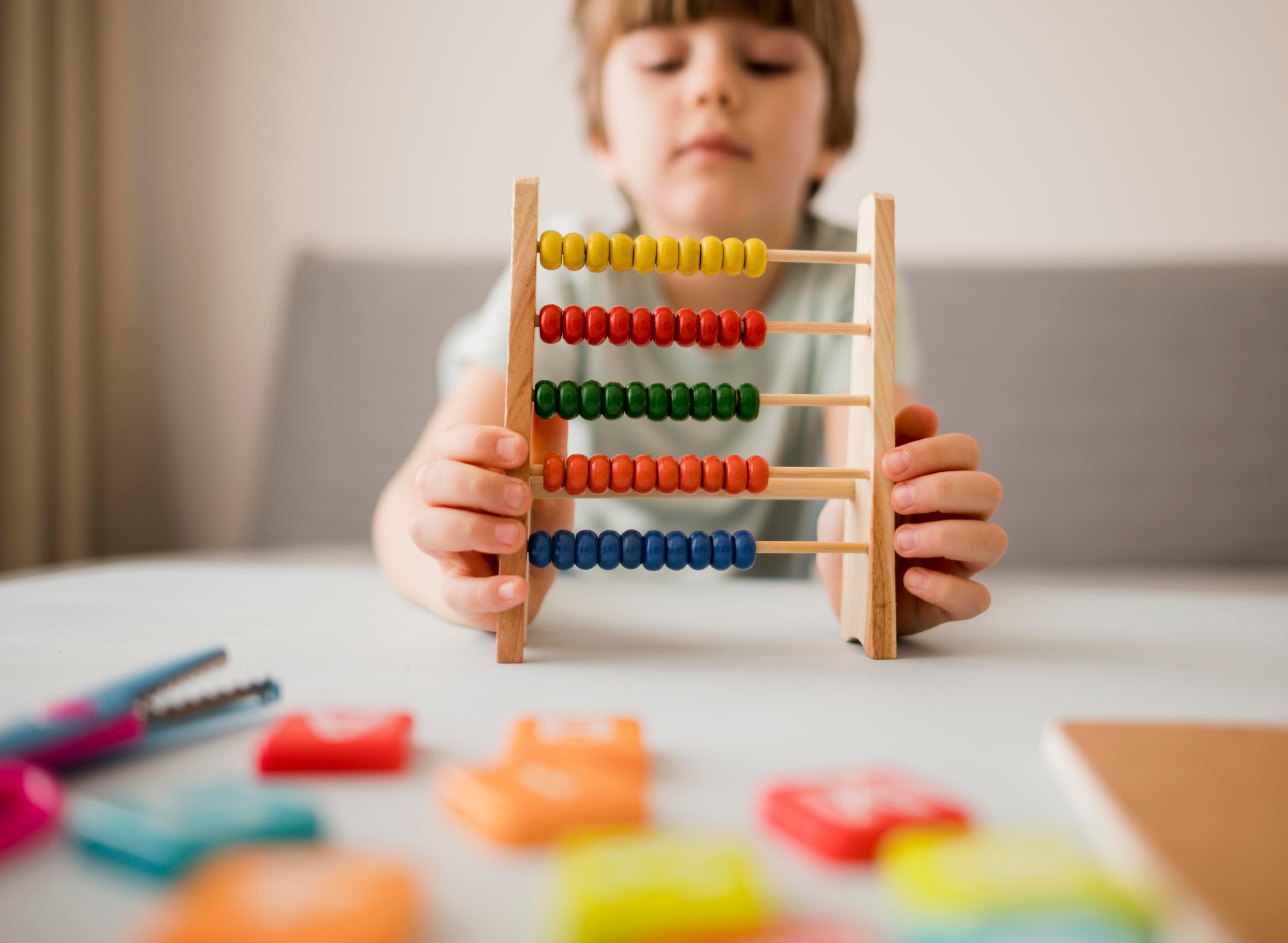
O desenvolvimento cerebral desempenha um papel fundamental na forma como compreendemos e lidamos com os números. Estudos associam a discalculia a diferenças estruturais e funcionais no lobo parietal direito, uma área essencial para o processamento de retas numéricas, valor posicional e comparações de dois dígitos. Para além do lobo parietal, o lobo frontal está envolvido na memória de trabalho, ajudando-nos a reter e a manipular números ao resolver problemas ou a interpretar problemas verbais. As diferenças nestas regiões cerebrais podem dificultar aos alunos o processamento rápido de operações matemáticas ou a manutenção da concentração, especialmente ao filtrar informações irrelevantes. Esta diferença neurológica é fundamental para compreender o que causa a discalculia e como esta afeta a capacidade de aprendizagem de uma criança.
Como as dificuldades de aprendizagem influenciam os desafios em matemática
A discalculia é classificada como um distúrbio específico da aprendizagem, mais especificamente uma dificuldade de aprendizagem que afeta a compreensão numérica. Ao contrário das dificuldades académicas gerais, esta perturbação de aprendizagem interfere principalmente com a matemática básica, os conceitos matemáticos e o sentido numérico, tornando mais difíceis tarefas como acompanhar os passos em problemas matemáticos ou recordar regras matemáticas. Muitas crianças com discalculia também apresentam condições associadas, como dislexia ou TDAH, o que pode complicar ainda mais a aprendizagem da matemática. Estas condições sobrepostas podem reduzir a capacidade da criança de associar símbolos a quantidades ou de realizar cálculos com fluência. Reconhecer a discalculia como uma verdadeira dificuldade de aprendizagem ajuda a garantir que seja prestado o apoio adequado na escola e em casa, através de estratégias específicas.
Genética e familiares de primeiro grau
A genética pode desempenhar um papel significativo nas causas da discalculia. A investigação indica que, se os familiares de primeiro grau — como pais ou irmãos — tiverem uma dificuldade de aprendizagem, como a dislexia ou a discalculia, as crianças correm um risco mais elevado de desenvolver dificuldades semelhantes. Estas características hereditárias podem afetar o desenvolvimento cerebral, incluindo as regiões responsáveis pelo raciocínio matemático e pela memória visual. Isto pode resultar em dificuldades precoces com conceitos numéricos básicos, operações matemáticas ou a capacidade de compreender o valor posicional, mesmo antes do início do ensino formal da matemática.
Discalculia do desenvolvimento vs. discalculia adquirida
É importante distinguir entre discalculia do desenvolvimento e discalculia adquirida. A primeira surge geralmente na infância e pode estar relacionada com diferenças neurológicas ou de desenvolvimento precoces, que podem incluir fatores genéticos. A discalculia adquirida, no entanto, pode desenvolver-se mais tarde na vida, em resultado de uma lesão cerebral que afete áreas como o lobo parietal. Ambos os tipos podem levar a dificuldades na compreensão de conceitos matemáticos, na memorização de operações aritméticas ou na interpretação de retas numéricas. Reconhecer a diferença ajuda os educadores a escolher intervenções adequadas, adaptadas às capacidades e ao estágio de desenvolvimento da criança.
Dislexia matemática e dificuldades de memória visual
Frequentemente designada por «dislexia matemática», a discalculia envolve mais do que apenas dificuldades com os números. Um dos principais problemas é a fraca memória visual, que afeta a capacidade de reconhecer padrões, memorizar operações matemáticas ou acompanhar posições nas retas numéricas. Muitos alunos com discalculia têm dificuldade em distinguir símbolos como + e × ou em alinhar corretamente dois algarismos em problemas matemáticos com várias etapas. Estes desafios podem causar confusão ao resolver problemas verbais ou ao recordar procedimentos matemáticos básicos. Quando a memória visual e a memória de trabalho estão comprometidas, o processo de aprendizagem da matemática torna-se muito mais difícil, aumentando a frustração e a ansiedade em relação à matemática.
Compreender os sinais da discalculia nas crianças
Reconhecer precocemente os sinais da discalculia pode fazer uma grande diferença. As crianças com discalculia podem ter dificuldade em contar, memorizar operações matemáticas, compreender conceitos de tempo ou estimar quantidades na vida quotidiana. Muitas vezes, têm dificuldade com conceitos numéricos básicos, como o significado de “mais” ou “menos”, e podem evitar testes de matemática devido ao medo do fracasso. Os professores podem notar dificuldades na sequência de passos ou no acompanhamento das operações. A identificação destes sinais permite um diagnóstico precoce, o que é essencial para melhorar as capacidades da criança e reduzir os impactos a longo prazo nas suas competências matemáticas.
Como a ansiedade matemática afeta a aprendizagem da matemática

A ansiedade matemática é uma barreira emocional comum que agrava as dificuldades das pessoas com discalculia. Quando os alunos se sentem ansiosos, a sua memória de trabalho fica sobrecarregada, tornando mais difícil processar problemas matemáticos, compreender o valor posicional ou memorizar operações matemáticas. Este stress emocional pode resultar de repetidos insucessos na matemática, experiências negativas em testes ou de serem comparados com os colegas na escola. Com o tempo, a ansiedade matemática pode levar à evitação, reduzindo a exposição aos conceitos matemáticos e dificultando completamente a aprendizagem da matemática. Cuidar do bem-estar emocional é tão importante quanto ensinar competências matemáticas para uma melhoria a longo prazo.
Crianças com discalculia no dia-a-dia
Os efeitos da discalculia vão muito além da sala de aula. Na vida quotidiana, as crianças com discalculia podem ter dificuldades em tarefas que envolvam números de telefone, ler as horas, medir ingredientes ou calcular o troco. Estes desafios resultam de um fraco sentido numérico, de uma compreensão deficiente dos conceitos temporais e de dificuldades no raciocínio matemático. Sem apoio, isto pode afetar a autoestima e a independência. Até mesmo atividades recreativas que envolvam pontuação ou orientação espacial podem ser confusas. Reconhecer que a matemática está presente nas rotinas diárias ajuda pais e professores a oferecer um apoio mais prático às crianças que lidam com perturbações de aprendizagem como a discalculia.
Dificuldades com as competências matemáticas e o sentido numérico
Uma das questões mais recorrentes para pessoas com discalculia é a falta de sentido numérico — a compreensão intuitiva dos números e das suas relações. Isto afeta as competências matemáticas básicas, tais como comparar quantidades, fazer estimativas e compreender o valor posicional. Os alunos têm frequentemente dificuldades com operações matemáticas, com a contagem e com a compreensão de números de dois dígitos ou decimais. À medida que estas dificuldades fundamentais se acumulam, a aprendizagem da matemática torna-se mais frustrante, especialmente quando comparada com o progresso noutras disciplinas. Os professores devem concentrar-se em reforçar os conceitos numéricos básicos para ajudar os alunos a recuperar a confiança e a consolidar a compreensão fundamental da matemática.
Dificuldades nos exames de matemática e noutras disciplinas
As crianças com discalculia apresentam frequentemente maus resultados em testes de matemática, especialmente aqueles que envolvem problemas de palavras com várias etapas, equações ou cálculos mentais. Estes desafios não se limitam à matemática — disciplinas como ciências e geografia, que também exigem raciocínio matemático, podem ser igualmente difíceis. A incapacidade de processar números, memorizar operações matemáticas ou interpretar dados pode afetar a aprendizagem em geral. Diferentes testes que avaliam a compreensão conceptual, em vez da velocidade, podem oferecer uma forma mais justa de avaliar o progresso. A adaptação das estratégias de avaliação ajuda os alunos a demonstrar as suas competências sem provocar ansiedade ou confusão em relação à matemática.
Pontos-chave: Compreender as causas subjacentes

Compreender as causas da discalculia é fundamental para educadores, pais e especialistas que procuram apoiar os alunos com dificuldades. Desde predisposições genéticas e o desenvolvimento cerebral até influências ambientais, como o baixo peso à nascença ou a síndrome alcoólica fetal, múltiplas causas subjacentes contribuem para esta complexa dificuldade de aprendizagem. Diferenças no lobo parietal direito, uma memória de trabalho fraca e uma memória visual comprometida interferem na capacidade da criança de compreender conceitos matemáticos e aplicar competências matemáticas, tanto na escola como na vida quotidiana. A sensibilização e a intervenção precoce são fundamentais. Através de apoio personalizado e de estratégias inclusivas, podemos facilitar a aprendizagem da matemática para todos os alunos.
Ajudar os alunos: apoiar a discalculia com o Magrid
Na Magrid, acreditamos que todas as crianças merecem ter acesso às ferramentas necessárias para ter sucesso — especialmente aquelas que enfrentam dificuldades de aprendizagem, como a discalculia. A nossa plataforma de aprendizagem visual e sem linguagem foi concebida para reforçar as competências matemáticas, desenvolver o sentido numérico e apoiar a compreensão básica da matemática sem criar pressão. Seja para melhorar os conceitos matemáticos, reforçar a memória de trabalho ou aumentar a autoconfiança, a Magrid oferece um espaço seguro para que as crianças com discalculia possam prosperar. Com uma abordagem baseada na investigação e um design acessível, Magrid ajuda a facilitar a aprendizagem da matemática. Apoie os seus alunos hoje mesmo com ferramentas inclusivas e eficazes, concebidas para garantir o verdadeiro sucesso na matemática.
Understanding the Symptoms of Dyscalculia

Dyscalculia is a math learning disability that affects a person’s ability to understand and work with numbers. Often referred to as math dyslexia, this specific learning disorder impacts math skills, such as mental math, counting, and basic calculations. It’s recognized as a learning disability in the Diagnostic and Statistical Manual of Mental Disorders and can significantly affect school age children and many adults. Though it varies in severity, dyscalculia is a lifelong condition that can disrupt mathematical reasoning, everyday problem solving, and tasks like recalling phone numbers or understanding math symbols. Early identification helps provide the right support for children to thrive.
Recognizing the Symptoms of Dyscalculia Early
Early recognition of the symptoms of dyscalculia can make a critical difference in how a child struggles with math. Common symptoms often emerge in math class, where a child may have trouble with basic math facts, word problems, or understanding math concepts like small quantities. These sinais de discalculia are not always obvious and may be mistaken for lack of effort or general learning difficulties. However, trained learning specialists can use diagnostic tests to distinguish dyscalculia from other learning differences. Spotting issues like poor number sense or trouble with mental math early gives parents and teachers a chance to intervene effectively.
Common Symptoms of Dyscalculia in Children
The common symptoms of dyscalculia can be observed across different aspects of a child’s life. Many children with dyscalculia struggle to learn math in ways typical of their peers. They may have difficulty with multiplication tables, recognize patterns, or even tell which of two numbers is larger—a challenge linked to poor non symbolic comparison skills. A child’s teacher might notice a student repeatedly making errors with the same math problem or failing to remember simple math facts. Physical symptoms like frustration, math anxiety, or test anxiety can emerge in mathematics settings. These learning difficulties often impact working memory, making it harder to complete mathematical tasks or retain steps in multi-step problems.
How a Learning Disability Affects Math Skills
When a learning disability such as dyscalculia is present, it can severely limit a student’s ability to build foundational math skills. Unlike typical learning disorders, dyscalculia specifically affects numerical understanding, problem solving, and basic math operations. Children may not grasp math concepts like place value, understanding numbers, or counting. They may confuse math symbols, or struggle with visual aids intended to clarify these ideas. According to the Child Mind Institute, these challenges may co-occur with related conditions like dyslexia or ADHD. Without targeted learning programs, the child’s individual’s ability to keep pace in math class and other subjects may decline.
Math Concepts That Confuse Children with Dyscalculia
Children with dyscalculia often find even basic math concepts confusing. They may not understand the relationship between numbers, struggle to recognize patterns, or misinterpret math symbols. Concepts like place value, measurement, and sequencing often seem abstract or disconnected, which makes learning difficulties more pronounced. This confusion is especially noticeable during mathematical tasks that require estimating small quantities, solving word problems, or engaging in mathematical reasoning. These difficulties are not due to lack of effort but are signs of a specific learning disability. Without support, these students may fall behind in math class, where most lessons build on previously taught concepts.
The Overlap Between Math Dyslexia and Dyscalculia
Though math dyslexia and dyscalculia are different, they often co-occur and can be confused. Both are specific learning disabilities, but they affect distinct areas of processing. Math dyslexia (also called dyslexia with math impact) is primarily linked to difficulty with reading numbers and math symbols, while dyscalculia affects mathematical reasoning, mental math, and number sense. Related conditions like ADHD can further complicate symptoms. Understanding the overlap between these learning disorders can help parents, teachers, and learning specialists tailor interventions that address the unique needs of each child struggling with math and other subjects.
How Dyscalculia Is Diagnosed Professionally
To have dyscalculia diagnosed, professionals use diagnostic tests and tools aligned with the Diagnostic and Statistical Manual—often referred to as the statistical manual in mental health fields. A psychologist or qualified learning specialist evaluates a child’s abilities in mathematical tasks, working memory, and basic calculations. Resources like the Child Mind Institute help guide families through this process. The goal is to determine if the learning difficulties are due to a specific learning disorder rather than lack of instruction or attention. In some cases, a child’s teacher may be the first to refer the student for testing after noticing repeated struggles with the same math problem or inability to learn math concepts.
Learning Disorders That Co-Occur with Dyscalculia

Dyscalculia frequently exists alongside other learning differences and learning disorders, such as dyslexia, ADHD, and language-based specific learning disabilities. These related conditions can make diagnosis and intervention more complex, as many children experience overlapping challenges in reading, writing, and mathematics. A learning disability in math can sometimes mask or be masked by issues in other subjects, so it’s essential to assess the full range of skills. Emotional responses such as math anxiety and test anxiety may also arise. A comprehensive approach involving diagnostic tests, learning specialists, and collaborative input from the child’s teacher is key to successful support.
What a Child’s Teacher Might Notice First
Often, a child’s teacher is the first to observe signs of dyscalculia in the classroom. Children may have trouble with basic math facts, solving word problems, or recalling how to approach the same math problem day after day. The child might avoid participating in math class, show visible frustration, or express feeling lost during mathematical tasks. Teachers may also note weak working memory, difficulty with counting, or inconsistent performance on basic calculations. These observations play a critical role in early identification and referral for diagnostic tests by learning specialists or school-based support teams.
Basic Calculations That Trigger Struggles
One of the clearest symptoms of dyscalculia is difficulty with basic calculations. Tasks like simple addition, subtraction, or recalling multiplication tables can overwhelm a child. They may confuse numbers, forget steps, or misplace digits—especially when under pressure. These struggles affect mental math, automatic recall of math facts, and the ability to solve even routine math problems. For school age children, failing to master basic math skills can create anxiety and a growing gap in academic performance. Identifying these persistent difficulties early is key to providing the right support and intervention.
Acquired Dyscalculia: When Symptoms Appear Later
Unlike developmental dyscalculia seen in children, acquired dyscalculia emerges after brain damage or injury, often due to stroke, trauma, or illness. It can affect many adults who previously had no difficulty with math skills or mathematical reasoning. Individuals may suddenly struggle with understanding numbers, performing basic calculations, or interpreting math symbols. This condition highlights the brain’s role in numerical processing. As with other learning disorders, proper diagnosis through mental health evaluation and diagnostic tests is crucial. While less common than developmental dyscalculia, acquired forms reveal how vulnerable a person’s ability to perform numerical tasks can be under cognitive stress.
Learning Programs That Can Support Dyscalculia
Specialized learning programs are essential for supporting children with dyscalculia. These programs often include visual aids, structured practice with math concepts, and strategies to build number sense and problem solving skills. Programs may also address emotional challenges, helping reduce math anxiety and test anxiety that often accompany the dyscalculia struggle. Intervention plans developed by learning specialists and supported by a child’s teacher can target gaps in basic math understanding and strengthen the child’s overall individual’s ability to succeed. With the right support, many children can overcome daily challenges and gain confidence in mathematics.
What Common Dyscalculia Looks Like Day-to-Day
Common dyscalculia can show up in subtle ways during everyday life. A child might struggle to tell time, calculate change, or remember phone numbers. Even estimating small quantities—like how many steps to the door—can be confusing. These daily challenges reflect deeper issues with number sense, mathematical tasks, and working memory. Parents may notice their child feeling frustrated or even feel embarrassed when faced with basic math situations. Unlike temporary setbacks, these persistent struggles are symptoms of dyscalculia, not a lack of effort. Recognizing them helps families seek learning programs and the right support for their child’s unique needs.
Physical Symptoms Related to Math Anxiety
Alongside cognitive issues, children with dyscalculia often experience physical symptoms tied to math anxiety. These can include sweating, stomachaches, or headaches during math class or before tests. The stress of not being able to solve a math problem, recall math facts, or complete basic calculations may trigger a fight-or-flight response. These reactions aren’t merely emotional—they reflect how deeply the dyscalculia struggle affects a child’s mental health. Reducing anxiety through positive reinforcement and supportive environments can significantly ease the learning process.
Why Many Children Struggle Without the Right Support
Many children with learning difficulties go undiagnosed, especially when their symptoms are subtle. Without the right support, these students may fall further behind in math class and other subjects, developing low self-esteem and greater math anxiety. Because learning differences like dyscalculia aren’t always immediately obvious, it’s crucial for educators and parents to remain observant. A child who repeatedly avoids mathematical tasks or performs inconsistently with math concepts might be signaling a deeper issue. Early recognition, along with access to tailored learning programs, can dramatically change the learning trajectory.
Supporting Children with Dyscalculia

Understanding the symptoms of dyscalculia is the first step toward helping a child succeed. From difficulty recalling basic math facts to emotional distress during math class, these signs point to a deeper learning disability that affects both academic and personal development. Recognizing common dyscalculia early allows educators, learning specialists, and parents to provide meaningful interventions. Whether the challenge lies in mathematical reasoning, working memory, or everyday math skills, support makes a difference. With the right combination of diagnostic tests, emotional care, and adaptive learning programs, children with dyscalculia can thrive in mathematics and beyond.
Explore Magrid’s Math Learning Support
If your child struggles with math concepts, basic calculations, or shows common symptoms of a math learning disability, Magrid can help. Our research-based, screen-free learning programs use visual aids to strengthen number sense, build math skills, and reduce math anxiety. Designed for children with dyscalculia and other learning differences, Magrid offers a supportive path to confidence and success in mathematics. Discover how your child can thrive with the right support—explore Magrid’s tools and resources today.
Number Comparison with Magrid
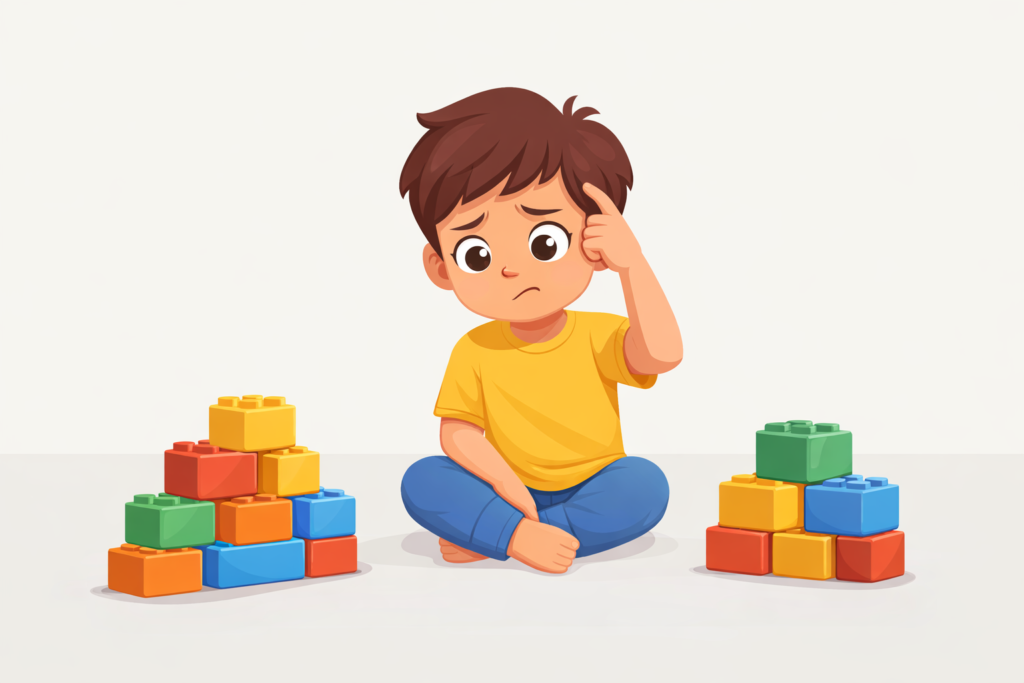
[bt_bb_section layout=”boxed_1200″ lazy_load=”yes” show_video_on_mobile=”” bb_version=”5.6.9″][bt_bb_row][bt_bb_column order=”0,;,,;,,;,,;,,;,,;,” lazy_load=”yes” shape=”inherit” bb_version=”5.6.9″ width=”1/1″ width_xl=”1/1″ width_lg=”1/1″ width_md=”1/1″ width_sm=”1/1″ width_xs=”1/1″ align=”center,;,,;,,;,,;,,;,,;,” vertical_align=”top,;,,;,,;,,;,,;,,;,” background_image=”” inner_background_image=”” color_scheme=”” inner_color_scheme=”” background_color=”” inner_background_color=”” opacity=”” padding=”normal,;,,;,,;,,;,,;,,;,” shadow=”” responsive=”” publish_datetime=”” expiry_datetime=”” animation=”no_animation,;,,;,,;,,;,,;,,;,” el_id=”” el_class=”” el_style=””][bt_bb_separator bb_version=”5.6.9″ top_spacing=”normal,;,,;,,;,,;,,;,,;,” bottom_spacing=”normal,;,,;,,;,,;,,;,,;,” border_style=”none” border_width=”” responsive=”” publish_datetime=”” expiry_datetime=”” animation=”no_animation,;,,;,,;,,;,,;,,;,” el_id=”” el_class=”” el_style=””][/bt_bb_separator][bt_bb_image lazy_load=”yes” bb_version=”5.6.9″ image=”” size=”medium” image_height=”” shape=”square” align=”inherit,;,,;,,;,,;,,;,,;,” caption=”” url=”” target=”_self” hover_style=”simple” content_display=”always” content_background_color=”” content_background_opacity=”” content_align=”middle” responsive=”” publish_datetime=”” expiry_datetime=”” animation=”no_animation,;,,;,,;,,;,,;,,;,” el_id=”” el_class=”” el_style=””][/bt_bb_image][/bt_bb_column][/bt_bb_row][bt_bb_row row_width=”default” shape=”inherit” bb_version=”5.6.9″][bt_bb_column order=”0″ lazy_load=”yes” shape=”inherit” bb_version=”5.6.9″ width=”1/1″ width_xl=”1/1″ width_lg=”1/1″ width_md=”1/1″ width_sm=”1/1″ width_xs=”1/1″][bt_bb_separator bb_version=”5.6.9″ top_spacing=”extra_small,;,,;,,;,,;,,;,,;,” bottom_spacing=”small,;,,;,,;,,;,,;,,;,” border_style=”none” border_width=”” responsive=”” publish_datetime=”” expiry_datetime=”” animation=”no_animation,;,,;,,;,,;,,;,,;,” el_id=”” el_class=”” el_style=””][/bt_bb_separator][bt_bb_text bb_version=”5.6.9″ bt_bb_toggled=”false” ai_prompt_helper=”eyJrZXl3b3JkcyI6IiIsInRvbmUiOiIiLCJtb2RlIjoiZ2VuZXJhdGUiLCJsYW5ndWFnZSI6IiIsImxlbmd0aCI6IiJ9″]
What Is Number Comparison?
Number comparison is the mathematical skill of examining two or more quantities or numerals to determine which is larger, smaller, or if they are equal. For example, recognizing that 8 is greater than 5, or that a group of 6 apples is smaller than a group of 9 apples.
This foundational skill helps learners make sense of number values, supports early number sense development, and prepares students for more advanced math concepts. Number comparison can involve comparing physical groups of objects, written numbers, or a combination of both, allowing learners to build understanding at multiple levels.
Why Number Comparison Matters in Early Learning
Understanding how numbers relate to one another, which comes first, which is bigger or smaller, is critical for mathematical thinking. It strengthens number sense, helps children see relationships between numerals, and builds confidence for future math concepts such as addition, subtraction, place value, and problem solving.
Number comparison also supports real-life decision making, like comparing quantities of objects, understanding amounts when sharing, or deciding which option gives “more.”

Foundational Skills Needed Before Comparing Numbers
Before learners can confidently compare numbers or quantities, several underlying skills need to be in place. These skills work together to support accurate and meaningful comparison:
- – Counting: Knowing the correct number sequence and being able to count objects reliably without skipping or repeating items.
- – Number Recognition: Identifying numerals and connecting them to the quantities they represent.
- – One-to-One Correspondence: Assigning one number word to one object when counting, ensuring accurate totals.
- – Subitising: Recognising small quantities instantly without needing to count each item.
- – Visual Discrimination: Noticing differences between groups, symbols, or quantities.
- – Understanding “More,” “Less,” and “Equal”: Grasping the concept of size difference and equality, both visually and numerically.
Gaps in any of these areas can make number comparison more challenging. Strengthening these foundations helps learners approach comparison tasks with greater confidence and success. Through Magrid’s wide range of tasks and sub-competencies, these foundational skills are continuously developed and reinforced alongside number comparison, supporting learners in a connected and meaningful way.
Visual Example:
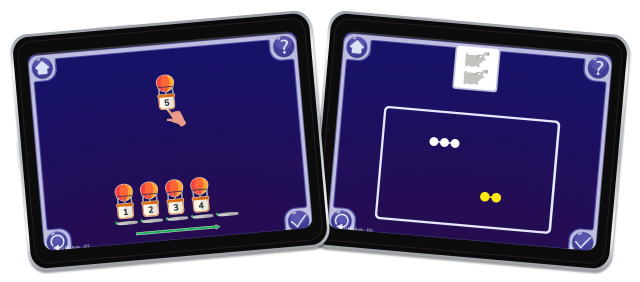
How Learners Develop Number Comparison Skills
Children typically develop number comparison skills through a gradual and predictable progression, moving from concrete experiences to more abstract thinking. Magrid’s progression of number comparison tasks is deliberately designed around this developmental approach, guiding learners step by step from visual and hands-on comparisons toward more symbolic and abstract reasoning as their confidence and understanding grow.
- Visual Comparison: Learners begin by noticing that one group looks bigger or smaller than another, often without counting.
- Counting to Compare: Children count each group and compare totals to decide which has more or less.
- Recognising Quantities and Numerals: With experience, learners rely less on counting every item and more on recognising known quantities or numbers.
- Symbolic Comparison: Learners begin to compare written numbers side-by-side, without visual representations to count.
As skills develop, learners become more flexible, choosing efficient strategies and moving smoothly between visual and symbolic representations.
The Role of Estimation in Number Comparison
Estimation plays an important role in number comparison, especially as quantities grow larger. Rather than counting every item, learners begin to make informed guesses about which group is larger or smaller based on visual cues and prior knowledge.
Estimation encourages flexible thinking, reduces cognitive load, and helps learners build confidence, particularly when exact counting would be time-consuming or overwhelming. Magrid tasks support estimation by allowing learners to compare visible groups and structured collections, promoting deeper number sense.
Understanding Equality and Balance
Comparing numbers isn’t only about identifying “more” or “less” — understanding equality is just as important. Equality means that two groups or numbers represent the same value, even if they look different.
Balancing tasks help learners develop this understanding by encouraging them to add or remove items until both sides match. These experiences strengthen one-to-one correspondence, promote careful observation, and support early algebraic thinking by showing that number representations can change while still remaining equal.
Engaging Number Comparison Activities (General)
Educators and families can support number comparison through a wide range of hands-on and meaningful activities:
- – Use Manipulatives or Toys: Compare groups of blocks, counters, or everyday objects.
- – Number Lines: Place numbers on a number line to see which is farther right (larger) or left (smaller).
- – Comparison Games: Simple card or dice games where players compare values.
- – Real-Life Comparisons: Compare snacks, collections, steps taken, or toys shared between people.
These activities help learners connect abstract ideas to real experiences.
How Magrid Supports Number Comparison
Magrid includes a collection of carefully designed tasks that build number comparison skills through visual supports, structured progression, and pressure-free interaction.
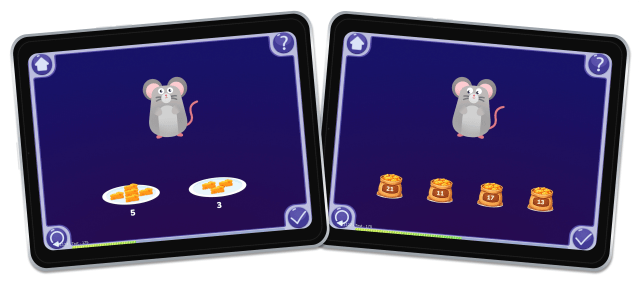
Selecionar o maior
Learners choose the largest amount of cheese for a hungry mouse by comparing quantities and numbers. The task begins with two clear options and gradually increases in complexity by adding more choices and introducing hidden quantities. This supports estimation, number recognition, and flexible thinking.
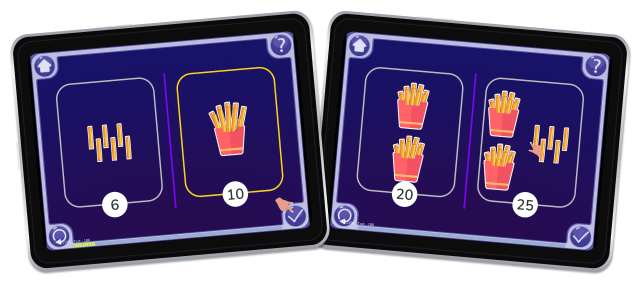
Choose the Largest Group
Children compare groups of items organised into tens and leftover pieces. This allows learners to succeed using counting, grouping by tens, or recognising numbers, while also building early place value understanding. Learners begin to see a group of ten as a single unit rather than counting each item individually.
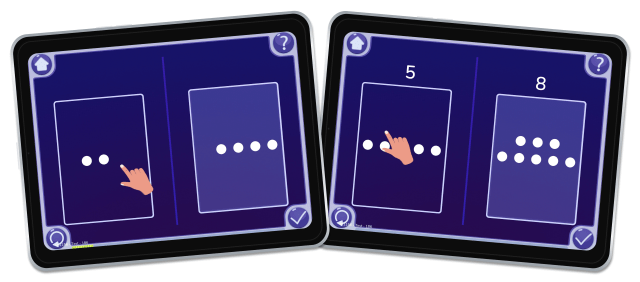
Create Equal Groups
Learners add or remove dots to balance two groups on the screen. Early levels focus on visual balance, while later levels introduce numerals to support quicker estimation and problem solving. The open-ended design keeps the activity accessible and low-pressure, particularly for learners who benefit from exploration.
Progressions for Number Comparison Development
Magrid supports number comparison across a wide range of levels, allowing learners to progress at their own pace, developing the following skills:
- – Find the Larger Group (1–5), (1–10), (1–30)
- – Find the Larger Number (1–10), (1–20), (1–100)
- – Create Equal Groups (1–5), (1–10), (1–20)
Each progression builds confidence while reinforcing key concepts needed for the next stage.
Further Practice for Number Comparison
Children can strengthen the number comparison skills they develop with Magrid through a variety of activities at school or at home. Ongoing practice also supports the use of appropriate comparison language and symbols, helping learners understand terminology commonly used within their country or cultural context.
– Number Lines & Ordering Activities
Once learners can compare numbers, ordering them from smallest to largest (or vice versa) deepens understanding of number relationships. Ordering activities support later skills such as estimation, pattern recognition, and skip counting.
– Core Vocabulary for Number Comparison
Teaching meaningful language helps learners articulate comparison ideas:
Greater Than
- – big → bigger → biggest
- – large → larger → largest
- – many → more → most
Less Than
- – small → smaller → smallest
- – few → fewer → fewest
- – little → less → least
Equality
- – equal
- – same
- – balanced
Introducing visual supports, such as open-mouth comparison symbols, balance scales, or number lines, helps learners internalise these terms in a clear and memorable way. At home, everyday moments like meals, snack times, or games also provide valuable opportunities to talk about quantities, whether groups are equal, and who has more or less of something.
– Comparison Exercises Using Symbols
For learners who are ready to explore more advanced concepts, number comparison can be extended through the use of mathematical symbols. Pairing sets of objects or numerals and practising the correct use of comparison symbols (>, <, = ) encourages learners to move from concrete experiences toward abstract mathematical thinking. These activities support the transition to symbolic language while reinforcing accuracy, understanding, and confidence.
Common Challenges When Learning Number Comparison
Learners may experience difficulties when first learning to compare numbers, including:
- – Relying on visual size rather than quantity
- – Counting errors or skipped objects
- – Difficulty comparing close numbers
- – Confusion between comparison the numbers when quantities are hidden
Recognising these challenges allows educators to provide targeted support and appropriate scaffolding. Magrid tasks include built-in tutorials and step-by-step guidance, helping students work through these challenges and progress confidently without frustration or concern.

Strategies for Special Needs Learners
Students with special educational needs often benefit from explicit, supportive approaches to number comparison:
- – Visual Supports: Ten-frames, structured groups, and clear visuals reduce cognitive load.
- – Structured Scaffolding: Gradually increasing difficulty helps learners build confidence step by step.
- – Consistent Routines: Predictable task formats support memory and understanding.
- – Multi-Sensory Experiences: Combining visual, tactile, and auditory input increases engagement and retention.
- – Flexible Pathways: Allowing multiple ways to solve tasks supports diverse learning profiles.
Magrid’s design supports these strategies by offering clear visuals, repetition, and opportunities for success without time pressure.
Real-World Applications of Number Comparison
Number comparison skills extend far beyond the classroom:
- – Comparing quantities when shopping
- – Deciding who has more or fewer items
- – Sharing fairly between groups
- – Making choices based on size or amount
These real-life connections help learners see the purpose and value of mathematics.
Taking Number Comparison Beyond the Basics
As learners gain confidence, number comparison can be extended to include:
- – Comparisons with multi-digit numbers
- – Comparisons between many different groups or numbers
- – Comparing lengths, weights, or measurements
- – Games involving dice, cards, or estimation strategies
Conclusão
Number comparison is a cornerstone of early numeracy, underpinning learners’ ability to think mathematically and reason about quantities, values, and relationships between numbers. Through engaging activities, thoughtful scaffolding, and tools like Magrid’s number comparison tasks, students of all abilities, including those with special educational needs, can build confidence, strengthen their reasoning skills, deepen understanding, and enjoy exploring how numbers relate to one another.
[/bt_bb_text][/bt_bb_column][/bt_bb_row][/bt_bb_section]
Hand-Eye Coordination
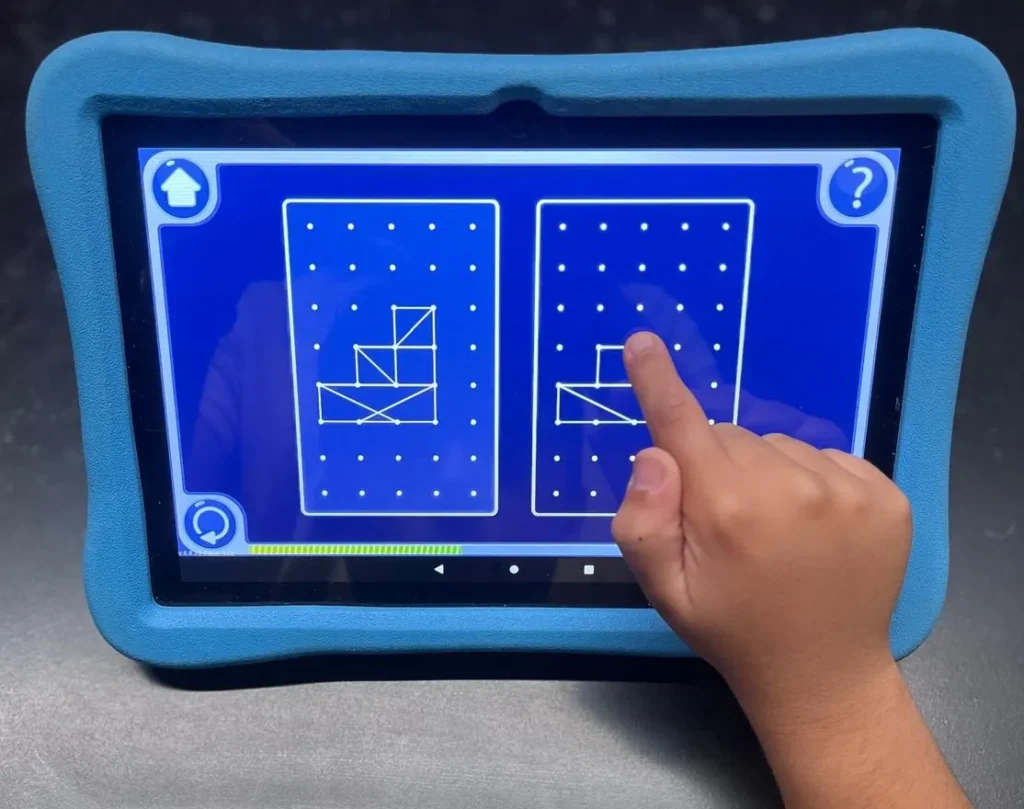
Developing Hand-Eye Coordination with Magrid Hand-eye coordination is a foundational skill that helps children translate what they see into purposeful movement with their hands. From catching a ball to tracing shapes, this coordination between visual input and motor control underlies many everyday tasks in school and life. In early childhood, hand-eye coordination develops through experience, […]
Como é diagnosticada a discalculia nas crianças

Introdução: Compreender como é diagnosticada a discalculia
Como é diagnosticada a discalculia e por que razão é importante para o futuro escolar de uma criança? A discalculia é um distúrbio específico da aprendizagem que afeta a capacidade de uma pessoa de compreender números e conceitos matemáticos fundamentais. Embora muitas crianças enfrentem dificuldades temporárias com a matemática, a discalculia envolve dificuldades matemáticas persistentes que interferem na aprendizagem, nas competências de resolução de problemas e nas tarefas quotidianas relacionadas com a matemática.
Na sala de aula, estes desafios podem manifestar-se como dificuldades em aprender as operações matemáticas básicas, em fazer os trabalhos de casa de matemática ou em resolver problemas matemáticos com texto. Em casa, uma criança pode ter dificuldade em contar o troco, ler um relógio analógico ou memorizar números de telefone. Uma vez que as competências matemáticas são fundamentais para a matemática e outras disciplinas, a identificação precoce é essencial.
Os pais e os professores frequentemente reparam em sinais comuns, mas não têm a certeza do que estes significam. Será ansiedade, falta de prática, TDAH ou uma dificuldade específica de aprendizagem? Compreender como é diagnosticada a discalculia ajuda as famílias a determinar o processo de avaliação adequado e a garantir o apoio adequado.
Este artigo explica o diagnóstico passo a passo, esclarece os sinais de discalculia em crianças em idade escolar e descreve como os profissionais determinam se as dificuldades matemáticas de uma criança refletem uma diferença de aprendizagem ou uma deficiência de aprendizagem formal.
O que é a discalculia enquanto perturbação específica da aprendizagem
A discalculia é uma dificuldade específica de aprendizagem que afeta a matemática. É formalmente classificada como um distúrbio específico da aprendizagem no Manual Diagnóstico e Estatístico, o manual estatístico utilizado pelos profissionais para diagnosticar distúrbios da aprendizagem. Ao contrário das dificuldades ocasionais em matemática, a discalculia reflete uma dificuldade persistente na compreensão de conceitos matemáticos básicos e no desenvolvimento do sentido numérico.
Por vezes designada por “dislexia matemática”, a discalculia é distinta da dislexia, que afeta principalmente a linguagem e a leitura. Embora ambas as condições possam envolver desafios relacionados com a memória de trabalho e dificuldades de processamento, a discalculia afeta especificamente as competências matemáticas, tais como contar, memorizar operações matemáticas, realizar cálculos mentais e resolver problemas de adição.
Uma criança com discalculia pode ter dificuldade em compreender quantidades, comparar números ou entender relações matemáticas básicas. Isto afeta a capacidade da criança de desenvolver conceitos mais avançados ao longo do tempo. A dificuldade não se deve a uma inteligência reduzida nem a um ensino inadequado. Pelo contrário, reflete uma diferença na forma como o cérebro processa a informação numérica.
Reconhecer a discalculia como uma dificuldade de aprendizagem legítima ajuda as famílias e os educadores a responderem com estratégias baseadas em evidências, em vez de presumirem uma falta de esforço ou de motivação.
Sinais precoces de discalculia em crianças em idade escolar
O sinais de discalculia surgem frequentemente na primeira infância, mas tornam-se mais evidentes durante o horário escolar nas crianças em idade escolar. Na pré-escola e nos primeiros anos do ensino básico, uma criança pode ter dificuldade em contar com precisão, em associar números a quantidades ou em compreender os números para além da simples memorização.
Muitas crianças enfrentam dificuldades temporárias quando começam a aprender matemática básica. No entanto, problemas persistentes com o sentido numérico são um dos indicadores mais evidentes de discalculia. Por exemplo, uma criança pode não compreender que o número 8 representa uma quantidade maior do que o 6, mesmo após repetidos exercícios. Pode recorrer frequentemente aos dedos muito tempo depois de os colegas já terem memorizado as operações matemáticas básicas.
Outros sinais precoces incluem dificuldade em aprender as tabuadas, confusão com problemas matemáticos simples e dificuldade em resolver problemas de texto adequados à idade. Uma criança também pode demonstrar ansiedade quando confrontada com tarefas matemáticas ou evitar completamente os trabalhos de casa de matemática.
É importante referir que muitas crianças apresentam dificuldades ocasionais em matemática. A diferença fundamental reside na consistência e na gravidade. Quando as dificuldades persistem, apesar de um ensino específico, e interferem na capacidade da criança para compreender conceitos matemáticos, poderá ser necessária uma avaliação mais aprofundada.
Sinais comuns e dificuldades em matemática que os professores observam

Na sala de aula, os professores são frequentemente os primeiros a observar sinais comuns de discalculia. Um aluno pode ter dificuldade em recordar operações matemáticas, realizar exercícios de cálculo mental ou seguir tarefas de resolução de problemas com várias etapas. Mesmo com a repetição, as respostas podem parecer inconsistentes ou baseadas em adivinhações, em vez de na compreensão.
Os professores podem notar dificuldades com problemas matemáticos descritos em palavras, especialmente quando é necessário integrar a linguagem e a matemática. A criança pode compreender as palavras, mas não conseguir associá-las aos conceitos matemáticos adequados. Durante atividades cronometradas, como a prática das tabuadas, o aluno pode demonstrar ansiedade ou frustração visíveis.
Outras dificuldades matemáticas incluem dificuldade em ler um relógio analógico, em memorizar sequências como números de telefone ou em organizar os passos em procedimentos matemáticos básicos. Em comparação com os colegas da mesma idade, a capacidade da criança para realizar tarefas relacionadas com a matemática pode parecer significativamente atrasada.
Estes padrões costumam chamar a atenção porque a criança tem um desempenho adequado noutras disciplinas. Quando as dificuldades em matemática são isoladas e persistentes, os professores podem recomendar que a criança seja submetida a testes para determinar se existe um distúrbio específico da aprendizagem, como a discalculia.
Em que medida as dificuldades em matemática diferem das dificuldades normais nesta disciplina
Nem todas as dificuldades em matemática indicam discalculia. Muitas crianças enfrentam dificuldades temporárias em matemática quando são apresentadas a novos conceitos ou a problemas matemáticos mais complexos. Por exemplo, uma criança pode achar as frações confusas no início ou cometer erros ao aprender as tabuadas. Com prática e estratégias de ensino eficazes, estas dificuldades costumam melhorar.
Em contrapartida, um dificuldades relacionadas com a discalculia é persistente e resistente ao ensino convencional. A criança pode continuar a ter dificuldade em recordar operações matemáticas básicas, resolver um problema de adição ou aplicar competências de resolução de problemas, mesmo após repetidas revisões. Estes padrões mantêm-se consistentes em todos os contextos e ao longo do tempo.
Outra diferença reside na capacidade da criança de generalizar a aprendizagem. Um aluno sem dificuldades de aprendizagem pode, com o tempo, compreender os números e aplicá-los de forma flexível. Uma criança com discalculia apresenta frequentemente lacunas no sentido numérico que afetam o desempenho geral em matemática e as tarefas relacionadas com esta disciplina.
Quando os trabalhos de casa de matemática se tornam uma fonte diária de frustração e ansiedade, e o progresso continua a ser limitado, isso pode indicar algo mais do que uma variação normal do desenvolvimento.
Quando é que uma criança deve ser submetida a exames para detetar uma dificuldade de aprendizagem?
Decidir quando uma criança deve ser submetida a um teste para detetar uma dificuldade de aprendizagem pode ser um desafio. Uma dificuldade persistente em contar, fazer cálculos mentais ou compreender conceitos matemáticos básicos, para além do que é esperado para a idade da criança, constitui um forte indicador. Se a criança continuar a ter dificuldades, apesar do apoio específico, uma avaliação mais aprofundada poderá ajudar a determinar a causa.
Os professores desempenham frequentemente um papel fundamental na identificação de situações em que uma criança apresenta dificuldades significativas em comparação com os seus colegas. Se as dificuldades em matemática interferirem no dia-a-dia escolar ou afetarem a gestão do tempo e a realização dos trabalhos de casa de matemática, poderá ser recomendado o encaminhamento para uma avaliação. Os pais também podem notar dificuldades em tarefas do quotidiano, tais como ler um relógio analógico ou memorizar números de telefone.
É importante avaliar se as dificuldades se limitam à matemática ou se se manifestam noutras áreas. Algumas crianças apresentam perturbações concomitantes, como o TDAH ou outras perturbações de aprendizagem. Uma abordagem abrangente ajuda a determinar se o padrão reflete uma perturbação específica da aprendizagem, como a discalculia.
O Processo de Avaliação: Como os Profissionais Avaliam as Competências Matemáticas
O processo de avaliação de casos suspeitos de discalculia é abrangente e estruturado. Normalmente, é um professor ou um pai que dá início ao processo de encaminhamento quando as dificuldades da criança em matemática persistem. Um psicólogo educacional ou outro profissional qualificado realiza então uma avaliação formal para avaliar as competências matemáticas da criança e o seu perfil de aprendizagem global.
Esta avaliação inclui testes padronizados que medem o desempenho em matemática, a precisão nas operações matemáticas básicas e a fluência nas operações aritméticas. Os profissionais também avaliam a memória de trabalho, a atenção e a capacidade da criança para compreender os números e os conceitos matemáticos fundamentais. As observações informais durante as tarefas de resolução de problemas proporcionam informações adicionais sobre as estratégias utilizadas e os erros cometidos.
É importante referir que o processo de avaliação analisa o desempenho da criança em relação às expectativas para a sua idade e às oportunidades educativas. O objetivo é determinar se as dificuldades em matemática refletem uma perturbação específica da aprendizagem, em vez de lacunas no ensino.
São também analisadas informações contextuais, incluindo o historial de desenvolvimento, boletins escolares e comentários do professor. Esta perspetiva abrangente ajuda a identificar padrões nas tarefas relacionadas com a matemática e garante que a avaliação capta toda a amplitude dos pontos fortes e das necessidades da criança antes de se proceder a um diagnóstico formal.
Como se diagnostica a discalculia, passo a passo
Como é que a discalculia é diagnosticada de forma clara e sistemática? O diagnóstico segue normalmente várias etapas, orientadas pelos critérios definidos no manual estatístico utilizado para identificar perturbações da aprendizagem.
Em primeiro lugar, as preocupações são documentadas. Os professores e os pais descrevem as dificuldades da criança em matemática, apresentando exemplos como erros persistentes em operações matemáticas básicas, dificuldade em resolver problemas de texto ou um sentido numérico limitado. Se estas preocupações persistirem apesar das intervenções específicas, recomenda-se uma avaliação formal.
Em segundo lugar, a criança é avaliada através de testes padronizados e tarefas estruturadas. Estes testes medem o desempenho em matemática, a precisão na aplicação de operações matemáticas básicas e a eficiência no cálculo mental. Os profissionais analisam a capacidade da criança para realizar tarefas relacionadas com a matemática, comparando-a com a dos seus pares da mesma idade.
Em terceiro lugar, o avaliador analisa se as dificuldades interferem significativamente no desempenho académico ou nas atividades diárias. Para se diagnosticar um distúrbio específico da aprendizagem, as dificuldades devem ser persistentes e não poderem ser melhor explicadas por deficiência intelectual, falta de instrução ou outros fatores.
Por fim, o profissional analisa os resultados dos testes, as observações e o historial de desenvolvimento para determinar se se deve diagnosticar discalculia. Esta abordagem cuidadosa garante que o diagnóstico reflete uma verdadeira dificuldade de aprendizagem e constitui a base para estratégias educativas e apoio adequados.
Testes utilizados para diagnosticar a discalculia em crianças
Para diagnosticar a discalculia com precisão, os profissionais recorrem a uma combinação de testes padronizados e ferramentas de avaliação específicas. Estes testes foram concebidos para avaliar diferentes aspetos da matemática, incluindo a precisão no cálculo, a fluência nas operações matemáticas básicas e a compreensão dos conceitos matemáticos.
Pode ser pedido à criança que resolva um problema de adição, que realize exercícios cronometrados sobre operações matemáticas básicas ou que resolva problemas matemáticos descritivos que avaliem as suas capacidades de raciocínio e de resolução de problemas. Os avaliadores também observam a forma como a criança aborda os problemas descritivos, se consegue explicar as suas respostas e com que eficiência aplica as estratégias aprendidas.
Para além dos testes de desempenho, são frequentemente incluídas avaliações cognitivas. Estas podem avaliar a memória de trabalho, a velocidade de processamento e a atenção, fatores que podem influenciar o desempenho em matemática. Observar a forma como a criança compreende os números e aplica o sentido numérico em tarefas estruturadas e informais proporciona uma visão mais aprofundada.
O objetivo destes testes não é apenas identificar pontos fracos, mas também identificar padrões. A dificuldade consistente em tarefas relacionadas com a matemática ajuda os profissionais a determinar se o diagnóstico de discalculia é a explicação mais precisa para as dificuldades persistentes da criança na matemática.
O papel do desempenho das crianças em idade escolar em diferentes contextos
Ao avaliar crianças em idade escolar, os profissionais têm em conta o desempenho em vários contextos. O desempenho de uma criança durante o dia letivo pode diferir do seu desempenho em casa, pelo que é essencial contar com o contributo tanto dos professores como dos pais.
Os professores podem referir dificuldades em resolver problemas matemáticos de forma autónoma, um progresso lento na aprendizagem das tabuadas ou uma confusão persistente em relação a conceitos matemáticos, apesar de repetidas explicações. Em casa, os pais podem observar dificuldades em contar dinheiro, ler um relógio analógico ou memorizar números de telefone. Estes desafios do dia a dia refletem deficiências subjacentes no sentido numérico e nas competências matemáticas básicas.
Comparar o desempenho em diferentes ambientes ajuda a determinar se as dificuldades em matemática são consistentes. Se uma criança apresentar um desempenho igualmente fraco em diferentes contextos, isso reforça a hipótese de uma dificuldade de aprendizagem, em vez de fatores situacionais, como a ansiedade durante os testes.
A análise dos padrões observados na escola, nos trabalhos de casa e nas rotinas diárias permite obter uma visão mais clara da capacidade global da criança para compreender e aplicar competências matemáticas.

Como o diagnóstico da discalculia em crianças mais velhas pode ser diferente
Quando a discalculia é diagnosticada em crianças mais velhas, os sintomas costumam mudar. Em vez de dificuldades evidentes na contagem, o aluno pode ter dificuldades com conceitos matemáticos mais avançados, como frações, decimais ou problemas matemáticos com várias etapas.
As crianças mais velhas com discalculia podem evitar disciplinas de matemática de nível mais avançado ou manifestar ansiedade significativa antes dos exames. O cálculo mental torna-se cada vez mais difícil, e as dificuldades na resolução de problemas podem estender-se a tarefas da vida quotidiana que exigem planeamento e gestão do tempo. Por exemplo, estimar custos ou calcular o tempo decorrido pode parecer uma tarefa avassaladora.
Como as expectativas aumentam com a idade, a diferença entre o aluno e os seus colegas pode acentuar-se. Os professores podem constatar que o desempenho do aluno noutras disciplinas continua a ser bom, o que realça que a dificuldade é específica da matemática.
Nesta fase, ainda é possível estabelecer um diagnóstico formal, desde que sejam cumpridos os critérios para um distúrbio específico da aprendizagem. Identificação da discalculia nas crianças mais velhas permite aos educadores ajustar as estratégias e prestar um apoio específico.
Diferenciar a discalculia de outras perturbações da aprendizagem
Distinguir a discalculia de outras perturbações de aprendizagem é uma parte importante do processo de avaliação. Embora a discalculia seja por vezes designada por «dislexia matemática», é distinta da dislexia, que afeta principalmente a leitura e o processamento da linguagem. Uma criança pode apresentar uma ou ambas as condições, mas cada uma delas requer uma avaliação separada.
As dificuldades de atenção, como o TDAH, também podem afetar o desempenho em matemática. Nestes casos, os erros podem resultar da falta de atenção e não de uma dificuldade intrínseca no domínio dos números ou na compreensão dos conceitos matemáticos. Uma avaliação cuidadosa ajuda a determinar se o problema principal é uma dificuldade de aprendizagem em matemática ou se se trata de desafios relacionados com a concentração e o funcionamento executivo.
Os profissionais analisam os resultados dos testes, as observações em sala de aula e o historial de desenvolvimento para esclarecer o diagnóstico. Esta abordagem minuciosa garante que os apoios correspondam às necessidades específicas da criança.
Uma identificação precisa não só ajuda a diagnosticar corretamente a discalculia, como também evita que uma dificuldade de aprendizagem seja erroneamente classificada como uma condição mais abrangente ou não relacionada.
Após o diagnóstico: como se trata a discalculia
Assim que é feito um diagnóstico formal, as famílias perguntam frequentemente como é que a discalculia pode ser tratada de forma eficaz na escola e em casa. Embora a discalculia não desapareça, os estudos demonstram que um ensino específico e estruturado pode melhorar significativamente as competências matemáticas e reduzir a ansiedade.
As estratégias eficazes centram-se no reforço do sentido numérico e na reconstrução da compreensão dos conceitos matemáticos básicos. O ensino explícito, a demonstração passo a passo e a prática guiada repetida ajudam as crianças a desenvolver representações mentais mais precisas dos números. Os recursos visuais, tais como retas numéricas, materiais manipuláveis e modelos visuais, apoiam a capacidade da criança de compreender conceitos matemáticos abstratos.
O ensino inclui frequentemente a divisão dos problemas matemáticos em passos mais pequenos e o ensino direto de estratégias de resolução de problemas. A prática de operações matemáticas básicas através de abordagens multissensoriais pode melhorar a fluência ao longo do tempo. Uma vez que a memória de trabalho pode ser afetada, reduzir a carga cognitiva e disponibilizar apoios escritos também pode ajudar.
É importante referir que as intervenções devem ser individualizadas. Um psicólogo ou especialista em educação pode recomendar adaptações durante o horário escolar, tais como tempo adicional nos testes ou formatos alternativos para demonstrar os conhecimentos. Com um apoio consistente, muitas crianças ganham confiança e melhoram o seu desempenho em tarefas relacionadas com a matemática.
Explicar de forma clara como é diagnosticada a discalculia
Compreender como A discalculia é diagnosticada capacita pais e educadores a intervir de forma precoce e eficaz. A discalculia é um distúrbio específico da aprendizagem caracterizado por dificuldades persistentes em matemática que vão além das dificuldades típicas do desenvolvimento nesta área. Através de um processo de avaliação estruturado, os profissionais avaliam as competências matemáticas, o sentido numérico, a memória de trabalho e o desempenho académico global.
O diagnóstico baseia-se em testes padronizados, observações e critérios claros definidos no manual estatístico. Exige ainda que se determine que a capacidade da criança em matemática está significativamente abaixo das expectativas para a sua idade e que essa dificuldade interfere na aprendizagem.
A identificação precoce permite que as escolas implementem estratégias adequadas e reduzam o impacto emocional do insucesso repetido. Com uma avaliação e um apoio adequados, uma criança com discalculia pode reforçar as suas competências de resolução de problemas, aumentar a sua autoconfiança e compreender melhor os números. Respostas claras conduzem a passos seguintes mais claros.
Como a Magrid apoia todas as crianças com discalculia
Quando as dificuldades em matemática persistem, o rastreio precoce e o apoio estruturado podem fazer uma diferença significativa. As escolas desempenham um papel fundamental na identificação de sinais de discalculia e no início de um processo de avaliação criterioso. Ao dotar os professores de estratégias baseadas em evidências, os educadores podem responder de forma proativa, em vez de esperar pelo fracasso repetido.
Magrid apoia as escolas no reforço das competências matemáticas fundamentais através de atividades baseadas em investigação, concebidas para desenvolver o sentido numérico, reforçar conceitos matemáticos básicos e melhorar as capacidades de resolução de problemas. A sua abordagem estruturada ajuda as crianças com dificuldades em matemática a desenvolver uma compreensão mais profunda, sem aumentar a ansiedade.
No caso de crianças em idade escolar com um diagnóstico de dificuldade de aprendizagem ou que apresentem sinais comuns de dificuldades persistentes, a prática regular com tarefas cuidadosamente sequenciadas pode melhorar a capacidade de compreender os números e de aplicar conceitos matemáticos de forma flexível. A intervenção precoce reduz as barreiras a longo prazo.
Se a sua escola estiver à procura de recursos eficazes para apoiar os alunos com discalculia ou outras dificuldades de aprendizagem, descubra como Magrid’s As ferramentas baseadas em dados comprovados podem complementar o ensino em sala de aula e promover alunos seguros e competentes em matemática.

11 Activities for Kids with Autism

Choosing meaningful activities for kids with autism is a powerful way to support a child’s development across multiple domains. Research shows that structured activities can strengthen communication skills, language skills, motor skills, and cognitive skills in autistic children. Because the autism spectrum includes a wide range of profiles, children with autism often benefit from predictable routines and a safe and supportive environment that respects their sensory preferences.
Well-designed activities for children do more than fill time. They help kids learn how to practice social skills, develop problem solving skills, and build essential skills for daily life. When adults intentionally teach communication skills through play, children regulate emotions more effectively and engage in richer social interactions. By focusing on the child’s interests and offering sensory play, movement, and guided interaction in a fun way, caregivers create opportunities that are highly beneficial for long-term growth and confidence.
Understanding the Autism Spectrum and Autism Spectrum Disorder
The autism spectrum refers to a broad range of developmental differences that influence how individuals communicate, interact socially, and process sensory information. Autism spectrum disorder is characterized by differences in communication skills, social interactions, and patterns of behavior that may include repetitive behaviors or strong preferences for predictable routines. Many children with autism experience unique sensory processing abilities, which affect how they respond to sensory input such as sound, touch, or movement.
For some children with autism, sensory sensitivities can lead to sensory overload in busy environments. Others may seek additional sensory stimulation to feel regulated. These differences influence emotional regulation, self regulation, and the way children regulate attention and behavior. Understanding sensory processing and sensory integration helps adults provide appropriate responses and structured activities that support the child’s development. Recognizing individual strengths and challenges across the autism spectrum allows educators and families to design supportive experiences that nurture cognitive abilities, language development, and developing social skills.
How Activities for Kids with Autism Support Development
Intentional activities for kids with autism create opportunities to strengthen cognitive skills, social skills, and motor skills simultaneously. Evidence from early intervention research shows that structured activities in a supportive environment are highly beneficial for improving communication skills and developing problem solving skills. When children engage in guided play, they practice logical thinking, critical thinking, and perspective taking in meaningful contexts.
Activities for autistic learners can also encourage social interaction by teaching social cues and appropriate responses during shared tasks. Whether through cooperative games, storytelling, or movement-based play, children build problem solving abilities while practicing turn taking and flexibility. Aligning tasks with the child’s interests increases motivation and helps kids learn more effectively. Over time, consistent engagement in thoughtfully planned activities for children supports emotional regulation, strengthens essential skills, and promotes steady progress across multiple areas of development.
1. Sensory Play and Activities for Autistic Children
Sensory play is a cornerstone of effective activities for autistic learners. Sensory activities provide controlled sensory input that helps children regulate arousal levels and improve sensory processing abilities. Sensory bins filled with rice, beans, or water beads offer tactile activities that expose children to different textures in a safe and supportive environment. These sensory play activities support body awareness, hand eye coordination, and fine motor skills while encouraging exploration.
Because many autistic children experience sensory sensitivities, carefully designed sensory experiences can prevent sensory overload and promote sensory integration. Tools such as sensory bottles, textured materials, and calming sensory stimulation allow children regulate their responses gradually. When adults observe a child’s sensory preferences and adapt accordingly, sensory play becomes a fun way to build cognitive abilities and support emotional regulation as part of everyday activities for children with autism.
2. Building Fine Motor Skills Through Structured Play
Developing fine motor skills is essential for independence in tasks such as writing, buttoning clothes, and using utensils. Structured activities for kids with autism can be designed to develop fine motor skills in a gradual and engaging way. Sensory bins, threading beads, stacking blocks, and using child-safe scissors all strengthen small hand muscles while improving hand eye coordination.
These activities also support cognitive skills and problem solving skills as children sort, classify, and manipulate objects. Tactile activities that include different textures provide valuable sensory input while maintaining a supportive environment. When adults model strategies and offer encouragement, crianças com autismo gain confidence and persistence. Over time, consistent practice helps improve motor skills and builds essential skills that positively influence academic readiness and everyday functioning.
3. Strengthening Motor Skills in Children with Autism
Gross motor skills play a central role in overall health, coordination, and confidence. Many autistic children benefit from movement-based activities that improve motor skills, balance, and body awareness. Obstacle courses, jumping games, and climbing structures provide structured activities that also encourage exploration and social interactions.
Swimming lessons are particularly highly beneficial for children with autism spectrum disorder. Water offers calming sensory stimulation while supporting muscle strength and coordination. Movement games that involve following directions also help teach communication skills and reinforce visual cues. By combining physical activity with clear guidance, adults support emotional regulation and self regulation. Regular practice of gross motor activities not only strengthens physical abilities but also enhances focus, resilience, and participation in daily routines.
4. Enhancing Communication Skills with Visual Supports
Supporting communication skills is a priority when planning activities for kids with autism. Many autistic children respond well to visual aids and visual cues that clarify expectations and reduce uncertainty. Picture schedules, labeled classroom materials, and gesture prompts are simple tools that improve communication skills and support language development.
Activities for children that involve matching images, sequencing events, or role play can teach communication skills in meaningful contexts. Social stories are especially effective for explaining social cues and guiding appropriate responses during social interactions. When adults consistently model language and encourage children to express choices, kids learn to initiate and maintain exchanges. Structured activities that integrate visual supports create a safe and supportive environment where improving communication skills becomes a natural part of daily routines.
5. Using Magrid to Strengthen Cognitive Skills
Magrid provides a structured and engaging way to support children with autism as they build cognitive skills and problem solving abilities. Its carefully designed learning approach encourages logical thinking, pattern recognition, and reasoning through interactive challenges that adapt to each child’s development. By presenting tasks in clear, structured steps supported by visual cues, Magrid helps children maintain focus and progress at their own pace.
For many autistic children, predictable routines and visually organized learning experiences are highly beneficial. Magrid aligns with these needs while encouraging children to develop problem solving skills and critical thinking in a fun way. Educators and families can integrate Magrid into daily learning routines to complement other activities for kids with autism while supporting attention, confidence, and overall cognitive development.
6. Using Board Games to Develop Problem Solving Skills

Board games are valuable activities for autistic learners because they combine structure with social engagement. Simple board games encourage turn taking, perspective taking, and developing social skills in a predictable format. Through play, children practice social cues and learn appropriate responses to both success and frustration.
In addition to strengthening social skills, board games help develop problem solving skills, logical thinking, and critical thinking. Children plan moves, anticipate outcomes, and adjust strategies, which enhances cognitive abilities. Adults can scaffold tasks to match the child’s development and encourage social interaction in a fun way. With consistent practice, board games become a supportive environment where children with autism build confidence while expanding both social and cognitive competencies.
7. Musical Instruments and Rhythm Activities for Children with Autism
Musical instruments can be powerful tools within activities for kids with autism. Rhythm-based experiences provide structured sensory input that supports self regulation and emotional regulation. Drums, xylophones, and simple percussion instruments offer predictable patterns that many autistic children enjoy, making participation less overwhelming.
Music sessions can also strengthen communication skills and language skills. Singing repetitive songs encourages language development, while call-and-response games promote social interactions and perspective taking. Group rhythm activities encourage social interaction in a supportive environment where children practice waiting, listening, and responding. Engaging with music allows children to express creativity while reinforcing cognitive skills such as memory and sequencing. When adapted to sensory preferences, music becomes a highly beneficial and motivating learning experience.
8. Bubble Play and Sensory Activities for Engagement
Bubble play is a simple yet effective addition to sensory activities. Blowing bubbles naturally promotes deep breathing, which supports emotional regulation and helps children regulate stress. Watching bubbles float provides gentle sensory stimulation, while popping them strengthens hand eye coordination and fine motor skills.
This sensory experience can also teach communication skills by prompting requests such as “more” or “again.” Adults can pause intentionally to encourage children to initiate interaction. Because bubble play is predictable and visually engaging, it reduces sensory overload while maintaining attention. As part of structured activities, it offers a fun way to combine sensory play, language development, and joyful social interactions.
9. Activities for Autistic Learners That Encourage Social Skills
Activities for autistic learners should intentionally target developing social skills. Structured role play, cooperative building tasks, and guided group games encourage children to practice social skills in realistic contexts. Adults can model social cues and coach appropriate responses, helping children understand how to navigate social interactions.
Small group activities for children provide opportunities to share materials, negotiate roles, and solve simple conflicts. These experiences strengthen problem solving abilities while encouraging perspective taking. Many autistic children benefit from predictable routines within social activities, which reduce anxiety and support self regulation. When aligned with the child’s interests, these experiences encourage exploration and increase motivation. Over time, consistent practice fosters confidence and meaningful peer connections.
10. Supporting Emotional Regulation and Self Regulation
Emotional regulation is closely connected to learning and participation. Supporting children with autism spectrum disorder involves teaching strategies that help children regulate their reactions to strong feelings. Breathing exercises and simple yoga poses are practical tools that promote self regulation and body awareness.
Creating calming corners with sensory bottles, soft lighting, and comforting materials provides controlled sensory input during moments of stress. These spaces offer a safe and supportive environment where children can recover from sensory overload. Adults play a key role by modeling calm behavior and guiding appropriate responses. When emotional regulation strategies are embedded in daily structured activities, children build resilience and essential skills that positively influence their child’s development and long-term well-being.
11. Cognitive Skills and Logical Thinking Activities for Children
Strengthening cognitive skills is an important goal of well-planned activities for children on the autism spectrum. Puzzles, matching tasks, sorting games, and construction toys encourage logical thinking and critical thinking in a structured format. These tasks also help develop problem solving skills as children analyze patterns, test solutions, and adjust strategies.
When adults scaffold challenges step by step, children build confidence while expanding their cognitive abilities. Integrating visual cues can clarify instructions and reduce frustration. Many autistic children respond positively to clear goals and predictable outcomes, which support emotional regulation. By connecting thinking tasks to the child’s interests, educators can develop problem solving skills in a motivating and meaningful way that strengthens both academic readiness and everyday decision making.
12. Outdoor Activities for Children to Explore Nature

Outdoor activities for children provide rich opportunities to explore nature while supporting sensory integration and physical development. Natural environments offer varied sensory experiences, including different textures, sounds, and movement patterns that enhance sensory processing. Walking on grass, climbing playground structures, or digging in soil strengthens gross motor skills and body awareness.
Time outdoors also encourages children to regulate attention and reduce stress. Activities such as simple scavenger hunts or cooperative ball games encourage social interaction in a less restrictive setting. For many autistic children, open spaces reduce sensory overload and promote calm engagement. With thoughtful supervision, outdoor play becomes a highly beneficial extension of structured activities.
Choosing Activities for Kids with Autism Based on a Child’s Interests
Selecting activities for kids with autism based on the child’s interests increases motivation and engagement. When tasks reflect what autistic children enjoy, participation becomes more natural and sustained. Whether a child prefers numbers, animals, music, or building materials, these preferences can be incorporated into structured activities that target communication skills, motor skills, or cognitive skills.
Interest-based planning also supports language development and improving communication skills because children are more likely to initiate conversation around familiar topics. Adults can embed goals such as practicing social skills or enhancing problem solving abilities within preferred themes. By observing and adapting to individual sensory preferences, caregivers create a supportive environment that respects the child’s development and maximizes meaningful learning opportunities.
Creating a Safe and Supportive Environment for Children with Autism
A safe and supportive environment is fundamental when implementing activities for kids with autism. Clear expectations, predictable routines, and consistent guidance reduce anxiety and promote participation. Visual aids and visual cues can clarify transitions, helping children move smoothly between structured activities.
Minimizing overwhelming noise or bright lights can prevent sensory overload and respect sensory sensitivities. Organized spaces with defined areas for learning, movement, and calming encourage independence and self regulation. Supporting children also involves recognizing signs of stress and offering appropriate responses before challenges escalate. When adults provide steady encouragement and adapt tasks to each child’s development, children with autism spectrum disorder are more likely to build essential skills and engage confidently in daily life.
Conclusion: Empowering Autistic Children Through Purposeful Activities
Thoughtfully selected activities for kids with autism can positively influence every dimension of a child’s development. From sensory play and board games to musical instruments and outdoor exploration, each experience offers opportunities to strengthen communication skills, social skills, motor skills, and cognitive skills. Structured activities grounded in research help develop fine motor skills, enhance problem solving skills, and support emotional regulation.
By aligning experiences with the child’s interests and sensory preferences, adults create a supportive environment where autistic children can thrive. Consistent guidance, visual supports, and predictable routines encourage social interactions and steady progress. When families and educators collaborate to provide meaningful, engaging opportunities, children with autism build confidence, resilience, and essential skills that support lifelong learning and well-being.
Discover Research-Based Activities for Kids with Autism with Magrid
Magrid offers research-informed activities for children designed to strengthen cognitive skills, logical thinking, and problem solving abilities in an engaging way. Our structured activities align with best practices for supporting children with autism spectrum disorder, helping educators and families foster essential skills within a supportive environment.
By integrating clear visual supports, purposeful challenges, and developmentally appropriate progression, Magrid encourages children to build confidence while improving communication skills and critical thinking. If you are looking for effective activities for kids with autism that complement sensory play, social development, and academic growth, explore how Magrid can support your educational approach and enrich each child’s development through meaningful learning experiences.

What Does Dyslexia Look Like in Children?

Introduction: What Does Dyslexia Look Like?
What does dyslexia look like in everyday classroom life? Dyslexia is a neurodevelopmental learning disorder that primarily affects reading skills, spelling, and writing, despite typical intelligence and access to instruction. According to the International Dyslexia Association, it is characterized by reading difficulties related to inaccurate or slow word recognition, poor spelling, and challenges in language processing.
Uma criança com dislexia may struggle to connect letters to sounds, recognize familiar words automatically, or read with fluency. These reading problems are not caused by lack of effort or poor education. Instead, research shows differences in how the brain processes language. A person with dyslexia often has strong reasoning ability, creativity, and problem solving skills, even while experiencing difficulty learning to read.
Understanding the signs of dyslexia is the first step toward early identification, appropriate support, and long term success for students in school and beyond.
What Does Dyslexia Look Like in Preschool Years
What does dyslexia look like before a child begins formal reading instruction? In preschool, the signs are often linked to spoken language rather than printed words. A child may have trouble recognizing rhymes, remembering songs, or identifying beginning sounds in common words.
Some children struggle to learn letter names or confuse similar sounds. They may have difficulty learning new words or recalling familiar words quickly. For example, a child might mix up the sounds in simple words or struggle to clap syllables.
These sinais precoces de dislexia reflect challenges in phonological awareness, a foundational skill for later reading development. While many young children develop at their own pace, persistent difficulty learning sound letter connections compared to other children can signal risk. Early identification allows parents and educators to provide helpful, targeted instruction before reading problems intensify in school.
Signs of Dyslexia in Elementary School Students
In elementary school, the signs of dyslexia often become clearer as students are expected to read independently. A student may read slowly, with limited fluency, and struggle to decode unfamiliar words. Even after repeated practice, poor spelling and inconsistent writing may persist.
Some children reverse letters beyond the age when most other children have mastered them. However, occasional mistakes are common, and reversing letters alone does not mean dyslexia. The key difference is persistence and the overall pattern of reading difficulties.
Students with dyslexia may have trouble recognizing sight words automatically. Instead of instantly identifying common words, they must sound them out each time, which slows reading and affects comprehension and meaning. This can impact the student’s ability to keep up with classroom tasks in subjects like history or math, where reading is required to understand instructions.
Teachers and parents may notice that the child can speak thoughtfully about a topic but struggles to express the same ideas in writing. This gap between oral language and reading performance is one of the important signs educators monitor.
What Does Dyslexia Look Like in Adolescents
What does dyslexia look like as students grow older? In middle and high school, reading difficulties may continue, but the symptoms can appear differently. Adolescents with dyslexia often read accurately yet very slow, which affects fluency and efficiency during exams or assignments.
They may struggle with complex grammar, spelling, and organizing writing. Learning a foreign language can be particularly challenging due to underlying language processing differences. Students might avoid reading aloud or feel frustration when comparing themselves to peers.
Despite these struggles, intelligence and reasoning ability remain intact. Many adolescents develop strong coping strategies, such as relying on context to recognize words or asking for extra time to complete tasks. With appropriate support, including a reading specialist or tutor, and access to accommodations such as a quiet space, students can continue overcoming dyslexia and achieve academic success.
How a Dyslexic Person Processes Language
A person with dyslexia processes written language differently at the level of the brain. Research using neuroimaging shows that areas responsible for phonological awareness and rapid word recognition are activated less efficiently. This affects how letters are linked to sounds and how words are stored for automatic retrieval.
Language processing involves building a strong connection between sounds, letters, and meaning. When this system develops differently, students may have trouble decoding unfamiliar words or quickly recognizing familiar words. As a result, reading can feel effortful and slow, even after repeated instruction.
This difference does not reflect low intelligence or lack of motivation. In fact, many students with dyslexia demonstrate strong reasoning skills and creative thinking. The difficulty lies specifically in learning to read and spell efficiently. Understanding these brain based differences helps educators design explicit, structured instruction that strengthens foundational reading skills and supports long term academic success.
Visual Dyslexia: Myths and Research Findings
The term visual dyslexia is sometimes used to describe reading problems that appear related to visual confusion, such as reverse letters or skipping words. However, scientific evidence indicates that dyslexia is primarily a language based learning disorder rather than a visual impairment.
While some students may show visual attention difficulties, the core issue usually involves phonological processing and difficulty connecting letters to sounds. A comprehensive diagnostic assessment helps distinguish between true dyslexia and other factors that may affect reading.
Relying only on surface signs can delay appropriate services. For this reason, a formal evaluation conducted by trained professionals is essential. Accurate identification ensures that instruction targets the underlying language challenges rather than unrelated visual concerns.

Academic Impact: Reading, Writing, and Beyond
Dyslexia affects more than reading class. Because reading skills support most areas of education, ongoing reading difficulties can influence performance in writing, math, science, and history. For example, difficulty understanding word problems in math may stem from challenges in reading rather than numerical ability.
Students may produce written work with poor spelling, inconsistent grammar, or limited organization. Completing tasks can take longer, especially when fluency is slow. Without accommodations such as extra time, the student’s ability may not be accurately reflected in grades.
Over time, repeated struggles can lead to frustration and reduced confidence. Yet with structured literacy instruction and appropriate special education services, many learners make steady progress. Matching instruction to the student’s needs is key to improving outcomes across academic subjects.
Emotional Support for Students with Dyslexia
Emotional support plays a central role in helping students with dyslexia thrive. Persistent difficulty learning to read can affect a child’s sense of competence, especially when comparing themselves to other children in school. Feelings of frustration or embarrassment may emerge if struggles are misunderstood.
Parents, teachers, and families can make a meaningful difference by acknowledging effort and emphasizing strengths. Creating a safe classroom environment, offering a quiet space for demanding tasks, and celebrating progress are helpful strategies.
Open communication between home and school also strengthens support. When students understand that dyslexia reflects a difference in how their brain processes language, not a lack of intelligence, they are more likely to develop resilience and confidence while overcoming dyslexia.
When Is Dyslexia Diagnosed? From Screening to Formal Evaluation
Many families wonder when dyslexia is diagnosed and what the process involves. Early identification often begins when a teacher notices persistent reading problems that do not improve with regular instruction. Warning signs may prompt a referral within the school district for further review.
A diagnostic assessment typically examines phonological awareness, decoding, fluency, spelling, and overall language skills. Professionals compare the child’s performance to age expectations and consider the student’s ability in other areas. If concerns remain, a formal evaluation may be conducted to determine eligibility for special education services.
Parents play an important role throughout this process. They can request testing and share observations from home. The goal is not simply to assign a label, but to understand the specific learning profile so that targeted instruction and support can begin as early as possible, improving long term educational outcomes.
Evidence Based Instruction and Special Education Services
Once dyslexia is diagnosed, structured and explicit instruction becomes essential. Research supports systematic phonics instruction that directly teaches how letters represent sounds and how words are decoded. Skills must be taught clearly, practiced frequently, and reinforced over time.
A reading specialist or trained teacher may provide small group or individualized lessons. Some students qualify for special education services through their school district, while others work with a private tutor. Accommodations such as extra time, access to audiobooks, or completing tasks in a quiet space can reduce barriers.
Allowing students to progress at their own pace while maintaining high expectations supports both growth and confidence. With consistent, evidence based instruction, many learners show measurable improvement in reading fluency and spelling.
Overcoming Dyslexia: Long Term Strategies for Success
Overcoming dyslexia is a gradual process that requires persistence, effective instruction, and coordinated support from families and educators. While dyslexia does not disappear, students can build strong coping strategies and academic skills.
Explicit teaching of decoding, spelling patterns, and vocabulary strengthens reading ability over time. Practice recognizing new words and reviewing common words improves automaticity. Older students may benefit from learning organizational strategies for writing and studying subjects such as history.
Equally important is reinforcing a growth mindset. When children understand that their struggles reflect a difference in language processing rather than intelligence, they are more likely to persevere. With appropriate support, many pessoas com dislexia achieve academic and professional success.
Supporting Every Child with Dyslexia
Understanding what dyslexia looks like helps parents, teachers, and schools respond effectively. Dyslexia is a language based learning disorder that affects reading, spelling, and fluency, yet it does not limit intelligence or potential. Recognizing the signs of dyslexia early and ensuring timely evaluation can significantly improve a child’s educational journey.
Providing structured instruction, emotional support, and appropriate services allows students to build essential skills with confidence. Every child deserves the opportunity to develop strong foundations for learning.
Magrid’s Language Free Learning Program for Children with Dyslexia
To strengthen early number sense and the cognitive foundations that support overall academic development, schools can benefit from approaches that remove unnecessary barriers to learning. Magrid’s language free program helps students, especially those with dyslexia, engage with early mathematics and key cognitive skills in a way that feels accessible and confidence building. By presenting activities without written instructions or heavy language demands, Magrid allows children to focus on reasoning, patterns, quantities, and spatial thinking rather than struggling with reading.
A language free learning environment can significantly reduce the pressure and stress many learners experience when traditional instruction relies heavily on text. Instead of feeling overwhelmed or discouraged, students can approach mathematical thinking through visual and interactive problem solving. This makes learning more approachable and helps children stay motivated as they build their understanding.
The program introduces concepts through small, targeted steps that gradually develop essential core skills. This structured progression ensures students build strong foundations in early learning math while strengthening cognitive abilities such as memory, attention, and logical reasoning. By supporting learning in manageable stages, Magrid helps ensure that students who learn differently can keep pace with their peers and develop the confidence needed for long term academic success.