






Cómo entender los síntomas de la dispraxia en los niños: una guía completa
Lo que los padres deben saber sobre la dispraxia
Cuando un niño tiene dificultades para realizar tareas cotidianas como atarse los cordones de los zapatos, atrapar una pelota o escribir al nivel que se espera para su edad, los padres pueden empezar a preguntarse si se trata de algo más que simple torpeza. La dispraxia, a menudo denominada en contextos médicos «trastorno del desarrollo de la coordinación», es un trastorno del desarrollo neurológico que afecta a la capacidad del niño para planificar, coordinar y ejecutar movimientos. Aunque los síntomas de la dispraxia en los niños varían en función de la edad, esta afección puede dar lugar a dificultades en las habilidades motoras, la interacción social y el rendimiento académico.
Dado que los niños difieren mucho en la forma en que adquieren nuevas habilidades, identificar un signo precoz de dispraxia puede resultar complejo. Algunos niños pueden presentar solo dificultades motoras sutiles, mientras que otros tienen dificultades para realizar las actividades cotidianas y las actividades físicas. La detección precoz y el apoyo de los padres, los profesores y los profesionales sanitarios pueden marcar una diferencia significativa a la hora de ayudar al niño a afrontar los retos, ganar confianza y desarrollarse plenamente.
Definición de los síntomas de la dispraxia en los niños
Los síntomas de la dispraxia en los niños son diversos y van mucho más allá de la torpeza ocasional. En esencia, la dispraxia —o trastorno del desarrollo de la coordinación (TDC)— se caracteriza por dificultades en la planificación motora y en la ejecución de movimientos físicos. Esto significa que un niño puede saber lo que quiere hacer, pero le cuesta organizar las funciones motoras necesarias para llevarlo a cabo.
En la primera infancia, los signos más comunes incluyen retrasos en el desarrollo de habilidades como gatear, caminar o hablar. A medida que los niños crecen, se hacen más evidentes los problemas con las habilidades motoras finas (como abrocharse los botones o usar tijeras) y las habilidades motoras gruesas (como correr o trepar). Estos síntomas de la dispraxia pueden interferir en la capacidad del niño para realizar tareas en casa o en el entorno escolar.
Dado que la mayoría de los niños aprenden a ritmos diferentes, es fundamental describir con detalle las dificultades motrices y compararlas con lo que cabe esperar para la edad del niño. Detectar estos signos y síntomas de forma precoz permite ofrecer un apoyo oportuno mediante intervenciones de terapia ocupacional o fisioterapia.
Explicación del trastorno del desarrollo de la coordinación
En términos clínicos, la dispraxia se clasifica como trastorno del desarrollo de la coordinación, tal y como figura en recursos diagnósticos como el Manual diagnóstico y estadístico de los trastornos mentales. Aunque el término “dispraxia” sigue siendo muy utilizado por padres, profesores e incluso algunos profesionales sanitarios, la comunidad médica suele preferir el término «trastorno del desarrollo de la coordinación» (TDC).
Esta afección es algo más que una simple torpeza física. Se trata de un trastorno de origen cerebral que altera la conexión entre el pensamiento y el movimiento, lo que dificulta el dominio de las habilidades necesarias para la vida cotidiana. Los niños con DCD pueden tener dificultades para jugar, problemas académicos y un rendimiento inferior en las actividades físicas en comparación con otros niños.
Un niño con DCD también puede experimentar aspectos psicosociales de la afección, como frustración, baja autoestima o dificultades en la interacción social. Dado que los síntomas varían en función de cada niño, para reconocer los signos de la dispraxia es necesario contar con la colaboración de los padres, los profesores y los profesionales sanitarios, que pueden observar el comportamiento del niño en distintos entornos.
Comprender el trastorno del desarrollo de la coordinación
El término «trastorno de coordinación del desarrollo» es simplemente una variante ortográfica de «trastorno de coordinación del desarrollo». Ambos describen la misma afección de por vida que afecta a la destreza motora del niño y a su capacidad para aprender determinadas habilidades al nivel esperado para su edad. Algunos países, colegios y sistemas sanitarios prefieren una variante ortográfica sobre la otra, pero el significado sigue siendo idéntico.
Independientemente de la grafía, este complejo proceso de diagnóstico y tratamiento de la afección pone de manifiesto cómo los síntomas del niño se ven influidos por factores de riesgo como los antecedentes familiares, el bajo peso al nacer o las lesiones cerebrales. Al comprender ambos términos, los padres y los educadores pueden orientarse mejor entre los recursos educativos, los informes clínicos y los sistemas de apoyo diseñados para ayudar a los niños con dispraxia.
El papel del terapeuta ocupacional en la dispraxia
Cuando un niño presenta dificultades motoras persistentes, el terapeuta ocupacional suele desempeñar un papel fundamental en su apoyo. Estos profesionales se especializan en mejorar las habilidades motoras del niño y en ayudarle a realizar actividades cotidianas que, de otro modo, podrían resultarle abrumadoras. A través de una terapia ocupacional estructurada, los niños pueden practicar el desarrollo de habilidades motoras finas, como escribir a mano o abrocharse los botones, así como las habilidades motoras gruesas necesarias para trepar, mantener el equilibrio o jugar a la pelota.
Un terapeuta ocupacional no solo trabaja directamente con el niño, sino que también colabora con los profesores, los padres y otros profesionales sanitarios. Diseña programas individualizados que tienen en cuenta los puntos fuertes, las dificultades y los síntomas de dispraxia del niño. Las sesiones de terapia pueden centrarse en mejorar la planificación motora, desarrollar las habilidades necesarias para las tareas escolares y reforzar la autoestima mediante objetivos alcanzables.
Para algunos niños, la dificultad para aprender nuevas rutinas o afrontar los retos académicos puede generar frustración. Con la ayuda de un terapeuta ocupacional, estos retos pueden dividirse en pasos más fáciles de manejar, lo que proporciona al niño las herramientas necesarias para prosperar.
Cómo se diagnostica la dispraxia en los niños
El diagnóstico de la dispraxia es un proceso complejo que requiere una observación minuciosa, el uso de herramientas de evaluación y la colaboración de diversos profesionales sanitarios. No existe una prueba única que permita confirmar un diagnóstico definitivo. En su lugar, los especialistas evalúan cómo realiza el niño las funciones motoras en comparación con lo que se espera para su edad.
Por lo general, los padres o los profesores detectan los primeros indicios, como un bajo rendimiento en las actividades físicas, dificultades para jugar con otros niños o retrasos en la adquisición de nuevas habilidades. Estas preocupaciones suelen plantearse al pediatra, quien puede derivar al niño a un terapeuta ocupacional o a un fisioterapeuta para que le realicen una evaluación más exhaustiva.
Los profesionales suelen describir las dificultades de movimiento, evaluar la destreza motora y descartar otras afecciones médicas o trastornos mentales que pudieran explicar estas dificultades. Aunque la causa exacta de la dispraxia sigue sin estar clara, comprender los signos y síntomas del niño en diferentes entornos, como el colegio y el hogar, ayuda a obtener una visión más precisa para el diagnóstico y la planificación.
Síntomas de la dispraxia en diferentes edades
Los síntomas de la dispraxia no son iguales en todos los niños; varían en función de la edad, el entorno y las afecciones concomitantes. En la primera infancia, el niño puede presentar retrasos a la hora de gatear, caminar o aprender a comer por sí mismo. Durante la etapa preescolar, se hacen evidentes las dificultades con las habilidades motoras gruesas, como trepar o mantener el equilibrio, junto con problemas en las tareas de motricidad fina, como cortar papel o sujetar lápices de colores.
En los niños en edad escolar surgen dificultades académicas, especialmente en la escritura, los deportes o las tareas que requieren habilidades motoras precisas. Estas dificultades pueden dar lugar a un rendimiento inferior al de otros niños de la clase. Los niños mayores pueden experimentar una frustración constante con las actividades físicas, la organización y el funcionamiento ejecutivo, lo que puede afectar a su autoestima y a su interacción social.
Dado que los niños presentan grandes diferencias entre sí, identificar los signos comunes requiere un seguimiento minucioso a lo largo del tiempo. Observar cómo un niño aprende nuevas habilidades, se adapta a las actividades cotidianas e interactúa con sus compañeros ayuda a los padres y a los profesores a distinguir entre el desarrollo típico y los problemas motores persistentes. dificultades relacionadas con la dispraxia.
Trastorno del desarrollo de la coordinación (TDC) y rendimiento escolar

El trastorno del desarrollo de la coordinación (TDC) puede tener un profundo impacto en la experiencia escolar del niño. Los niños con TDC suelen tener dificultades para alcanzar el nivel esperado en la escritura a mano, la organización del trabajo y la participación en las clases de educación física. Dado que la planificación motora y la destreza motora se ven afectadas, las actividades del aula que parecen sencillas pueden llevarles mucho más tiempo completarlas.
Estos retos pueden provocar frustración, la evitación de tareas o dificultades para aprender al mismo ritmo que sus compañeros. Algunos también pueden tener dificultades académicas en lectura y escritura, no por falta de inteligencia, sino porque sus habilidades motoras finas limitan su capacidad para plasmar sus ideas de forma eficaz.
Los profesores desempeñan un papel fundamental a la hora de detectar los síntomas de la dispraxia durante las actividades en grupo y de recomendar una evaluación más exhaustiva por parte de un terapeuta ocupacional. Con estrategias personalizadas en el aula y actividades de fisioterapia o de integración sensorial, el tratamiento precoz de la dispraxia puede reducir su impacto en el progreso del niño. Fomentar tanto las habilidades necesarias para el rendimiento académico como para la interacción social ayuda a los niños a participar más plenamente en la vida escolar.
¿Cómo afecta la dispraxia a la vida cotidiana?
La forma en que la dispraxia afecta a los niños va mucho más allá del rendimiento escolar. Las rutinas cotidianas, como vestirse, lavarse los dientes u organizar sus cosas, pueden requerir más tiempo y esfuerzo. Debido a que la planificación y la coordinación motoras se ven alteradas, estas actividades diarias suelen exigir una concentración más consciente que en el caso de otros niños.
Los entornos sociales también pueden resultar difíciles. Un niño puede evitar actividades físicas, como los juegos en el patio o los deportes de equipo, debido a su bajo rendimiento o a la dificultad para participar en ellos. Esto puede afectar a la interacción social y provocar aislamiento o frustración. Además, las dificultades para hacer los deberes o afrontar los retos académicos pueden reducir la confianza y la motivación.
Los padres suelen darse cuenta de cómo los síntomas del niño afectan a la dinámica familiar. Las salidas o los cambios cotidianos más sencillos pueden resultar estresantes cuando las dificultades físicas ralentizan las rutinas. Aunque los síntomas de la dispraxia no ponen en peligro la vida, constituyen una afección crónica que marca las experiencias del niño. Con el apoyo adecuado de profesores, terapeutas y profesionales sanitarios, los niños pueden desarrollar estrategias para tener éxito y crecer con mayor independencia.
La dispraxia en niños mayores: retos y puntos fuertes
En el caso de los niños mayores, la dispraxia se manifiesta de formas diferentes a las observadas en las primeras etapas del desarrollo. Las dificultades relacionadas con el funcionamiento ejecutivo y la destreza motora pueden persistir, lo que hace que los problemas académicos sean más pronunciados. Tareas como redactar redacciones más largas, utilizar la tecnología o gestionar horarios complejos pueden poner de manifiesto las dificultades motrices persistentes.
Sin embargo, muchos niños también desarrollan fortalezas únicas. Algunos destacan en la resolución creativa de problemas, demuestran resiliencia o desarrollan sólidas habilidades interpersonales. Comprender tanto los retos como los aspectos positivos ayuda a los profesores y a los padres a ofrecer un apoyo equilibrado. Aunque los signos y síntomas puedan seguir interfiriendo en las actividades cotidianas, fomentar la independencia y celebrar los avances en las habilidades necesarias para la vida puede reforzar la confianza y la sensación de logro del niño.
Cómo identificar los factores de riesgo de la dispraxia
Aunque se desconoce la causa exacta de la dispraxia, existen varios factores de riesgo relacionados con el desarrollo del trastorno del desarrollo de la coordinación (DCD). El peso muy bajo al nacer y el bajo peso al nacer son factores importantes, al igual que el parto prematuro y las complicaciones durante el embarazo. Los antecedentes familiares de trastornos cerebrales o de afecciones coexistentes, como los trastornos de atención o los trastornos mentales, también pueden aumentar la probabilidad de padecerlo.
En algunos casos, una lesión cerebral sufrida a una edad temprana se asocia con la dispraxia, aunque muchos niños presentan síntomas sin que se haya producido ningún incidente claro. Los investigadores siguen estudiando cómo interactúan las afecciones médicas, la genética y los factores ambientales en este complejo proceso.
Comprender los factores de riesgo es fundamental para los padres, los profesores y los profesionales sanitarios, ya que permite identificar a los niños que podrían beneficiarse de un seguimiento más estrecho. Detectar un signo temprano de dificultades de movimiento o de funciones motoras inusuales permite derivar al niño antes, lo que puede contribuir a que la dispraxia se diagnostique con mayor rapidez. La concienciación permite a las familias solicitar evaluaciones y apoyo antes de que las dificultades se arraiguen profundamente.
Herramientas de evaluación utilizadas para el diagnóstico
El diagnóstico de la dispraxia se basa en gran medida en herramientas de evaluación especializadas, diseñadas para medir la destreza motora y las habilidades motoras. Estas evaluaciones permiten a los profesionales sanitarios comparar las capacidades del niño con lo que se espera para su edad. Por ejemplo, las pruebas estandarizadas evalúan tanto las habilidades motoras finas, como el control del lápiz, como las habilidades motoras gruesas, como el equilibrio o la capacidad de atrapar una pelota.
La observación también es fundamental. Los padres, los profesores y los terapeutas pueden describir dificultades motrices en distintos entornos, como el hogar, el patio de recreo o el colegio del niño. Dado que los niños presentan grandes diferencias entre sí, las evaluaciones suelen requerir múltiples perspectivas para obtener una visión completa de los síntomas del niño.
Las herramientas de evaluación también ayudan a descartar afecciones médicas o trastornos mentales que podrían explicar problemas similares. El objetivo es llegar a un diagnóstico definitivo sin pasar por alto las afecciones coexistentes. Aunque el proceso puede parecer largo, garantiza que el niño reciba recomendaciones personalizadas —desde terapia ocupacional hasta fisioterapia— que aborden directamente sus síntomas de dispraxia y favorezcan su desarrollo general.
Signos clave de la dispraxia que los padres deben tener en cuenta

Reconocer los signos de la dispraxia es fundamental para poder ofrecer apoyo precoz. Aunque cada niño es diferente, hay algunos signos comunes a los que los padres pueden prestar atención. A una edad temprana, pueden aparecer retrasos a la hora de gatear, caminar o aprender a comer con cubiertos. En la etapa preescolar, suelen observarse dificultades con las habilidades motoras gruesas, como trepar o dar patadas a un balón, y con las habilidades motoras finas, como dibujar formas.
A medida que el niño crece, los problemas se hacen más evidentes. Los niños en edad escolar pueden tener dificultades con la escritura, la coordinación en las actividades físicas o el uso de las tijeras. Los profesores pueden observar un rendimiento inferior al de otros niños y una dificultad persistente para aprender nuevas tareas. En los niños mayores, pueden destacar los problemas de organización, de funcionamiento ejecutivo y de interacción social.
Dado que los síntomas varían en función de la edad y el entorno, identificar los primeros indicios no siempre resulta sencillo. Los padres que observen dificultades de movimiento en distintos entornos deberían comentar sus inquietudes con profesionales sanitarios, quienes podrán recomendarles herramientas de evaluación adicionales y estrategias de apoyo.
Cómo se trata la dispraxia en los niños
Aunque no existe una cura, la dispraxia, tratada con las intervenciones adecuadas, puede mejorar significativamente la calidad de vida del niño. La terapia ocupacional suele desempeñar un papel fundamental, centrándose en las habilidades necesarias para la autonomía en la vida cotidiana, desde vestirse hasta participar en el aula. Un terapeuta ocupacional puede recurrir a ejercicios basados en tareas, material de apoyo y adaptaciones del entorno para facilitar el aprendizaje.
La fisioterapia también desempeña un papel importante, sobre todo en el caso de los niños con dificultades en las habilidades motoras gruesas, como el equilibrio, la coordinación y la postura. Para algunos, las estrategias de integración sensorial ayudan a abordar los problemas relacionados con el procesamiento del tacto, el movimiento o el sonido, que pueden influir en el desempeño de las actividades cotidianas.
El apoyo no se limita a las sesiones de terapia. Los profesores pueden adaptar las clases, dividir las tareas en pasos más pequeños y fomentar la práctica de nuevas habilidades en un entorno propicio. Abordar los aspectos psicosociales —como la autoestima y la frustración— es igualmente importante. Con la colaboración constante de los profesionales sanitarios, las familias y los centros educativos, los niños pueden desarrollar estrategias de afrontamiento y ganar confianza a la hora de superar los retos.
Cómo reconocer los signos y síntomas en la vida cotidiana
Las señales y síntomas de la dispraxia A menudo se hacen más evidentes durante las actividades cotidianas. Un niño puede tardar más que otros en vestirse, tener problemas para organizar sus cosas o experimentar dificultades a la hora de participar en juegos que requieran coordinación. En el aula, un bajo rendimiento en la escritura o las dificultades con palabras más largas pueden poner de manifiesto problemas subyacentes relacionados con las funciones motoras y la planificación.
Dado que la dispraxia es una afección que dura toda la vida, la forma en que afecta al niño irá cambiando con el tiempo. Si bien los primeros signos pueden consistir en retrasos a la hora de gatear o caminar, los niños mayores pueden enfrentarse a dificultades académicas y a una menor participación en deportes o actividades en grupo. Reconocer cómo se manifiestan estos síntomas de la dispraxia en las rutinas diarias ayuda a los cuidadores a proporcionar un apoyo constante y específico.
Apoyo a los niños con dispraxia
La dispraxia, también conocida como trastorno del desarrollo de la coordinación, es una afección de origen cerebral que influye en la forma en que los niños aprenden y realizan las habilidades motoras. Aunque la causa exacta sigue sin estar clara, es fundamental que los padres, los profesores y los profesionales sanitarios conozcan los factores de riesgo, los signos más comunes y cómo afecta la dispraxia a los niños.
Al detectar las dificultades de movimiento a una edad temprana y solicitar evaluaciones oportunas, las familias pueden asegurarse de que los síntomas del niño se aborden con estrategias personalizadas. Ya sea mediante terapia ocupacional, fisioterapia o apoyo en el aula, las intervenciones pueden reducir las dificultades académicas y mejorar la participación en las actividades cotidianas.
Por encima de todo, apoyar a los niños con paciencia y ánimo les ayuda a desarrollar la resiliencia, la independencia y la confianza en sí mismos, lo que garantiza que adquieran las habilidades necesarias para prosperar junto a sus compañeros.
Ayuda a tu hijo a desarrollarse plenamente con Magrid
Si tu hijo presenta signos y síntomas de dispraxia o de trastorno del desarrollo de la coordinación (TDC), recibir apoyo desde el principio puede marcar una gran diferencia. Con la orientación de un terapeuta ocupacional, un fisioterapeuta y otros profesionales sanitarios, los niños pueden reforzar sus habilidades motoras, superar las dificultades académicas y desarrollar las habilidades necesarias para alcanzar la independencia.
Magrid ofrece herramientas digitales innovadoras y basadas en la investigación, diseñadas para ayudar a los niños con dificultades de aprendizaje, problemas de motricidad y dificultades en el funcionamiento ejecutivo. Al centrarse en el desarrollo cognitivo y motor, Magrid ayuda a los niños a practicar nuevas habilidades en un entorno seguro y atractivo que se adapta a sus necesidades.
Dale a tu hijo la oportunidad de desarrollarse plenamente: explora hoy mismo los recursos de Magrid y descubre cómo los pequeños pasos pueden conducir a grandes avances en el aprendizaje y en la vida cotidiana.
¿Es la dispraxia una dificultad de aprendizaje? Análisis detallado

Comprender la dispraxia en los niños
La dispraxia, también conocida como trastorno del desarrollo de la coordinación (TDC), es un trastorno del desarrollo neurológico que afecta a la capacidad del niño para planificar y realizar movimientos físicos coordinados. Aunque suele aparecer a una edad temprana, muchos niños no son diagnosticados hasta que se enfrentan a dificultades en la escuela primaria, sobre todo con las tareas de escritura, la práctica de deportes o el seguimiento de instrucciones de varios pasos. Estas actividades requieren habilidades motoras finas y gruesas, áreas en las que la dispraxia afecta más al rendimiento.
El término «dispraxia» se utiliza a veces indistintamente con «DCD», aunque «DCD» es la denominación clínica reconocida en el Manual diagnóstico y estadístico de los trastornos mentales (DSM-5). Niños con dispraxia pueden tener dificultades con los movimientos precisos, las señales visuales y el mantenimiento de una buena coordinación. Estos síntomas pueden afectar tanto a las tareas académicas como a las cotidianas, como atarse los cordones de los zapatos o utilizar los cubiertos.
Aunque no siempre se clasifica como una discapacidad del aprendizaje, la dispraxia puede afectar de manera significativa al aprendizaje, a las habilidades de comunicación y a la autoestima, por lo que es fundamental su detección precoz y el apoyo correspondiente.
¿Es la dispraxia una dificultad de aprendizaje o algo distinto?

La pregunta “¿es la dispraxia una dificultad de aprendizaje?” es habitual entre padres y educadores. La respuesta no es sencilla. En el Manual Diagnóstico y Estadístico, el trastorno del desarrollo de la coordinación (TDC) se clasifica dentro de los trastornos motores, no de los trastornos del aprendizaje. Esto significa que, en el ámbito clínico, la dispraxia no se considera oficialmente una dificultad de aprendizaje.
Sin embargo, en el ámbito escolar, especialmente cuando la capacidad de un niño para realizar tareas específicas se ve significativamente mermada, la dispraxia puede considerarse una dificultad de aprendizaje. Por ejemplo, cuando los niños tienen dificultades para tomar apuntes, resolver problemas matemáticos con texto o realizar tareas de expresión escrita, los centros educativos pueden ofrecer servicios de educación especial o elaborar un programa educativo individualizado (PEI) para proporcionarles apoyo.
Dado que la dispraxia afecta a la forma en que los niños planifican y ejecutan las acciones físicas, puede interferir en el procesamiento de la información necesaria para el aprendizaje. Aunque la dispraxia no es un trastorno mental clásico, puede presentarse junto con trastornos de salud mental, trastornos del lenguaje o dificultades específicas de aprendizaje, lo que complica tanto el diagnóstico como la intervención.
Cómo afecta la dispraxia a las habilidades motoras finas
Los niños con dispraxia suelen tener dificultades con las habilidades motoras finas, que son fundamentales para realizar tareas que exigen movimientos precisos de las manos y los dedos. Entre ellas se incluyen escribir, cortar con tijeras o incluso atarse los cordones de los zapatos. Estas habilidades son esenciales en el colegio, donde se espera que los alumnos realicen tareas de escritura, utilicen materiales de plástica o manejen el material del aula de la misma forma que el resto de los niños.
Dado que las habilidades motoras finas están relacionadas con la coordinación motora, incluso las actividades cotidianas del aula pueden convertirse en fuentes de frustración. Cuando el desarrollo motor grueso y fino de un niño presenta un retraso, esto suele afectar a su capacidad para adquirir nuevas habilidades, tanto en el ámbito académico como en el práctico.
Un terapeuta ocupacional o un fisioterapeuta puede evaluar estos retrasos mediante pruebas médicas y desarrollar estrategias personalizadas para reforzar la confianza. Con el apoyo adecuado, muchos niños con dispraxia pueden mejorar sus habilidades motoras finas y reducir el estrés relacionado con el aprendizaje.
Trastorno del desarrollo de la coordinación (TDC): término médico para la dispraxia
En términos clínicos, el trastorno del desarrollo de la coordinación (TDC) es el diagnóstico reconocido para lo que muchos denominan «dispraxia». Figura en el Manual diagnóstico y estadístico (DSM-5) como un trastorno motor dentro de los trastornos del desarrollo neurológico. El TDC es una afección crónica que afecta principalmente a la coordinación motora, lo que dificulta que los niños aprendan los movimientos físicos necesarios tanto en el colegio como en casa.
Aunque no todos los niños con DCD padecen una discapacidad de aprendizaje, esta afección suele ir acompañada de dificultades lingüísticas, dislexia u otros trastornos del aprendizaje habituales. Por ello, la detección precoz es fundamental.
La dispraxia afecta a la forma en que el cerebro planifica y envía mensajes al cuerpo para realizar movimientos coordinados, aunque los músculos en sí estén sanos. Como consecuencia, los niños pueden tener dificultades con las actividades físicas, los problemas matemáticos e incluso a la hora de interpretar expresiones faciales o indicaciones verbales, lo que puede dificultar su participación en el aula y sus habilidades de comunicación.
¿Se considera la dispraxia una discapacidad de aprendizaje reconocida en los centros educativos?
Aunque desde el punto de vista médico la dispraxia no siempre se clasifica como una dificultad de aprendizaje, muchos colegios la tratan como tal debido a su importante repercusión en la capacidad de aprendizaje del niño. En el ámbito educativo, especialmente cuando La dispraxia afecta a la escritura, problemas matemáticos con texto o instrucciones de varios pasos, los alumnos pueden tener derecho a recibir servicios de educación especial.
A través de un programa educativo individualizado (PEI), los profesores y especialistas pueden ofrecer intervenciones personalizadas mediante indicaciones verbales, señales visuales y ejercicios de desarrollo de habilidades para ayudar a los niños a seguir el ritmo del resto de sus compañeros.
Algunos niños de más edad pueden beneficiarse de adaptaciones en las tareas de escritura o recibir apoyo de un terapeuta ocupacional o un fisioterapeuta durante el horario escolar. Aunque no se considera un trastorno del aprendizaje en el sentido estricto del término, el efecto de la dispraxia sobre las habilidades motoras, la atención y las dificultades del lenguaje hace que, en muchos contextos educativos, sea funcionalmente similar a otras dificultades específicas del aprendizaje.
Cómo afecta la dispraxia al aprendizaje y a las habilidades motoras

La dispraxia afecta tanto a la motricidad fina como a la motricidad gruesa, habilidades que son esenciales para el éxito en el aula. Los niños afectados pueden tener dificultades con movimientos físicos como sentarse con la espalda recta, sujetar un lápiz o realizar los movimientos coordinados que se requieren en las clases de plástica o de educación física. Estas dificultades pueden influir en la forma en que los niños abordan las tareas de escritura, manipulan objetos o practican deporte.
Las dificultades motoras también influyen en la forma en que los niños procesan la información, sobre todo cuando las tareas exigen coordinación motora y organización, como resolver problemas matemáticos con texto u organizar materiales. Como consecuencia, la autoestima de los niños puede verse afectada cuando se comparan con otros niños que realizan las tareas con mayor facilidad.
Dado que estos problemas pueden solaparse con trastornos del lenguaje u otras afecciones de salud mental, la dispraxia suele coexistir con dificultades más generales en el aprendizaje, lo que hace necesario un apoyo integral para ayudar a los niños a desarrollar nuevas habilidades y reforzar su confianza.
Terapia ocupacional y estrategias de apoyo para la dispraxia
La terapia ocupacional desempeña un papel fundamental a la hora de ayudar a los niños con dispraxia a desarrollar tanto habilidades académicas como para la vida cotidiana. Un terapeuta ocupacional evalúa cómo afecta la dispraxia a la capacidad del niño para realizar tareas cotidianas que requieren habilidades de motricidad fina, como escribir a mano, utilizar herramientas o atarse los cordones de los zapatos.
Las sesiones de terapia suelen incluir actividades físicas guiadas, ejercicios para mejorar las habilidades motoras y estrategias de adaptación, como desglosar instrucciones de varios pasos o utilizar señales visuales. Estos métodos ayudan a los niños a establecer rutinas que favorecen su aprendizaje y su coordinación.
Los terapeutas también pueden colaborar con los profesores y los padres para poner en práctica estrategias en el aula y rutinas en casa. Por ejemplo, simplificar tareas concretas u ofrecer indicaciones verbales periódicas puede marcar una gran diferencia. Con una terapia constante, muchos niños aprenden a afrontar los retos con más confianza, adquiriendo nuevas habilidades y mejorando su autoestima.
Retos en las habilidades motoras: de las actividades físicas a las tareas de escritura
Los niños con dispraxia suelen tener dificultades con las habilidades motoras necesarias tanto para el aprendizaje como para el juego. Pueden tener problemas con las habilidades motoras gruesas, como correr, saltar o practicar deporte, y con las habilidades motoras finas, como escribir, recortar o abrocharse los botones.
Estos retos no se limitan únicamente a las actividades físicas. En el aula, las tareas de escritura, los problemas de matemáticas e incluso copiar de la pizarra pueden resultar abrumadores. Muchas tareas escolares requieren habilidades motoras finas, y tener dificultades en estos ámbitos puede provocar frustración y una baja autoestima.
Un terapeuta ocupacional o un fisioterapeuta puede ayudar proponiendo ejercicios que se centren en la coordinación motora y los movimientos coordinados, lo que mejora tanto el rendimiento académico como la participación en las tareas cotidianas. Con un apoyo constante, los niños pueden desarrollar una mayor independencia y confianza.
La dispraxia como trastorno del aprendizaje: lo que deben saber los educadores

Aunque no se clasifica como un trastorno del aprendizaje clásico, La dispraxia suele incluirse entre los trastornos del aprendizaje más comunes debido a su repercusión en la capacidad del niño para realizar las tareas escolares. Dado que la dispraxia afecta a la coordinación motora, los niños pueden tener dificultades para escribir, seguir instrucciones de varios pasos u organizar sus ideas con claridad, habilidades esenciales para el éxito académico.
Los educadores deben tener en cuenta que, aunque la dispraxia no siempre se clasifica como una dificultad de aprendizaje, a menudo se solapa con trastornos del lenguaje, problemas de salud mental y otros trastornos del desarrollo neurológico. Estos solapamientos hacen que el aprendizaje en el aula resulte especialmente complicado.
Al entender la dispraxia como parte del espectro más amplio de las dificultades específicas de aprendizaje, los profesores pueden ofrecer un mejor apoyo mediante programas educativos individualizados, rutinas estructuradas y el uso sistemático de indicaciones verbales y señales visuales para mejorar la participación y el rendimiento.
Dificultades lingüísticas y problemas de comunicación en la dispraxia
Muchos niños con dispraxia presentan dificultades lingüísticas, sobre todo a la hora de expresarse con claridad o de seguir instrucciones orales. Aunque no todos tienen diagnosticados trastornos del lenguaje, es habitual que presenten dificultades en las habilidades comunicativas. Entre ellas pueden figurar problemas para interpretar las expresiones faciales, comprender indicaciones verbales u organizar su propio discurso.
Estas dificultades pueden afectar a la participación en el aula y a las relaciones con los compañeros, sobre todo cuando los alumnos tienen problemas para procesar la información o responder a las preguntas de la misma forma que el resto de los niños. Los docentes pueden confundir estos indicios con problemas de comportamiento o falta de atención.
Puede resultar útil establecer rutinas estructuradas, dar más tiempo para responder y ofrecer instrucciones simplificadas. El apoyo de logopedas o de un terapeuta ocupacional también puede mejorar tanto los resultados lingüísticos como los de aprendizaje.
Las dificultades específicas de aprendizaje y el papel de la dispraxia

Las dificultades específicas de aprendizaje (SpLD) se refieren a trastornos que afectan a uno o más aspectos del aprendizaje. Entre ellos se incluyen la dislexia, el TDAH y la dispraxia. Aunque cada trastorno es diferente, a menudo comparten síntomas comunes, como la dificultad para escribir, seguir instrucciones o mantener la atención en el colegio.
Aunque la dispraxia es principalmente un trastorno motor, su impacto en las habilidades motoras finas, la coordinación y las dificultades del lenguaje la sitúa dentro del marco más amplio de los trastornos específicos del aprendizaje (SpLD). A algunos niños se les puede diagnosticar incluso varios trastornos específicos del aprendizaje.
Comprender cómo afecta la dispraxia tanto al rendimiento académico como al funcionamiento cotidiano ayuda a los educadores y a los padres a diseñar estrategias más eficaces para ofrecer apoyo, desarrollar nuevas habilidades y, en última instancia, reforzar la confianza de los alumnos con dificultades.
Apoyo a los niños mayores con dispraxia en el colegio
Más antiguo niños con dispraxia pueden enfrentarse a nuevos retos a medida que aumentan las exigencias académicas. Tareas como tomar apuntes, resolver problemas matemáticos con texto o desenvolverse en entornos escolares ajetreados requieren una gran coordinación motora y concentración, ámbitos en los que la dispraxia sigue planteando obstáculos.
Para apoyar a estos alumnos, los centros educativos pueden poner en marcha programas educativos individualizados, ofrecer indicaciones verbales periódicas y permitir formas alternativas de demostrar lo aprendido. Fomentar la participación en actividades físicas estructuradas también puede ayudar a mejorar las habilidades motoras gruesas y la confianza en sí mismos.
La plataforma de aprendizaje no verbal y basada en el movimiento de Magrid puede resultar especialmente eficaz. Al reducir la dependencia de las instrucciones escritas y mejorar las habilidades comunicativas, Magrid ayuda a los niños con dispraxia a participar de forma significativa y a aprender de una manera que se adapte a sus puntos fuertes.
Discover What’s New in Magrid: A Fresh Design and 400+ New Activities to Explore!
This September, Magrid is rolling out one of its most exciting updates yet — combining a refreshed app design with over 400 brand-new activities designed to support children’s early learning. Whether you’re a teacher or parent, these updates are all about making Magrid easier to use, more visually accessible, and even more engaging for young learners.
Let’s dive into what’s new!
400+ New Activities: Visual–Spatial Reasoning Meets Working Memory
In addition to visual polish, this update brings a major content expansion: over 400 new activities have been added to the Magrid universe! These include fresh challenges across all visual–spatial sub-skills, plus two brand-new tasks focused on memoria de trabajo — a vital cognitive function for early learners.
New Working Memory Activities
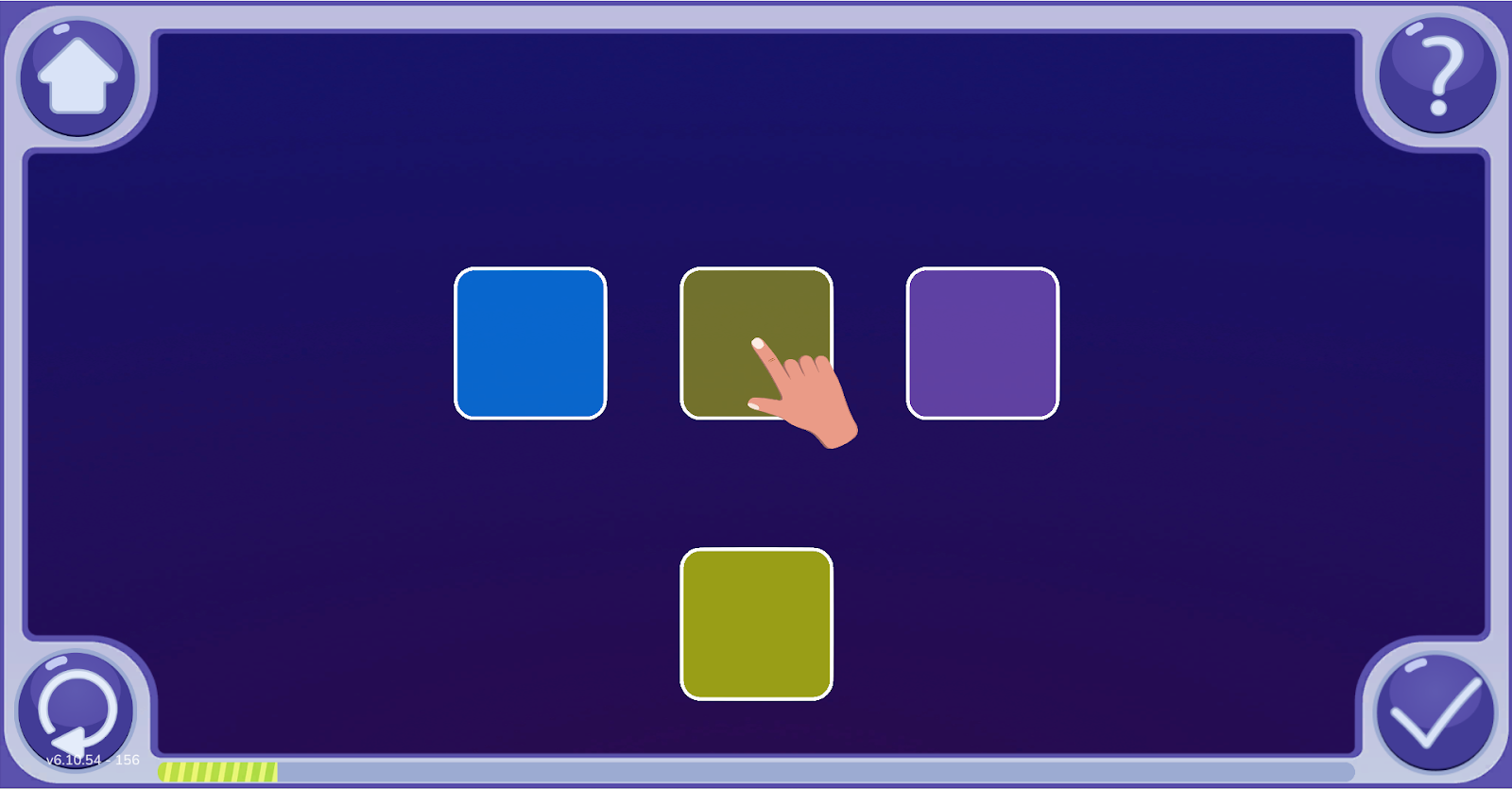
1. Visual Color Memory
Children identify and remember where specific colors appear on screen. This beginner-friendly activity introduces working memory without added distractions.
2. Color Fill Memory
A more advanced challenge where children view a colored diagram briefly, then fill in the correct colors on a blank version. Complexity increases as children progress.
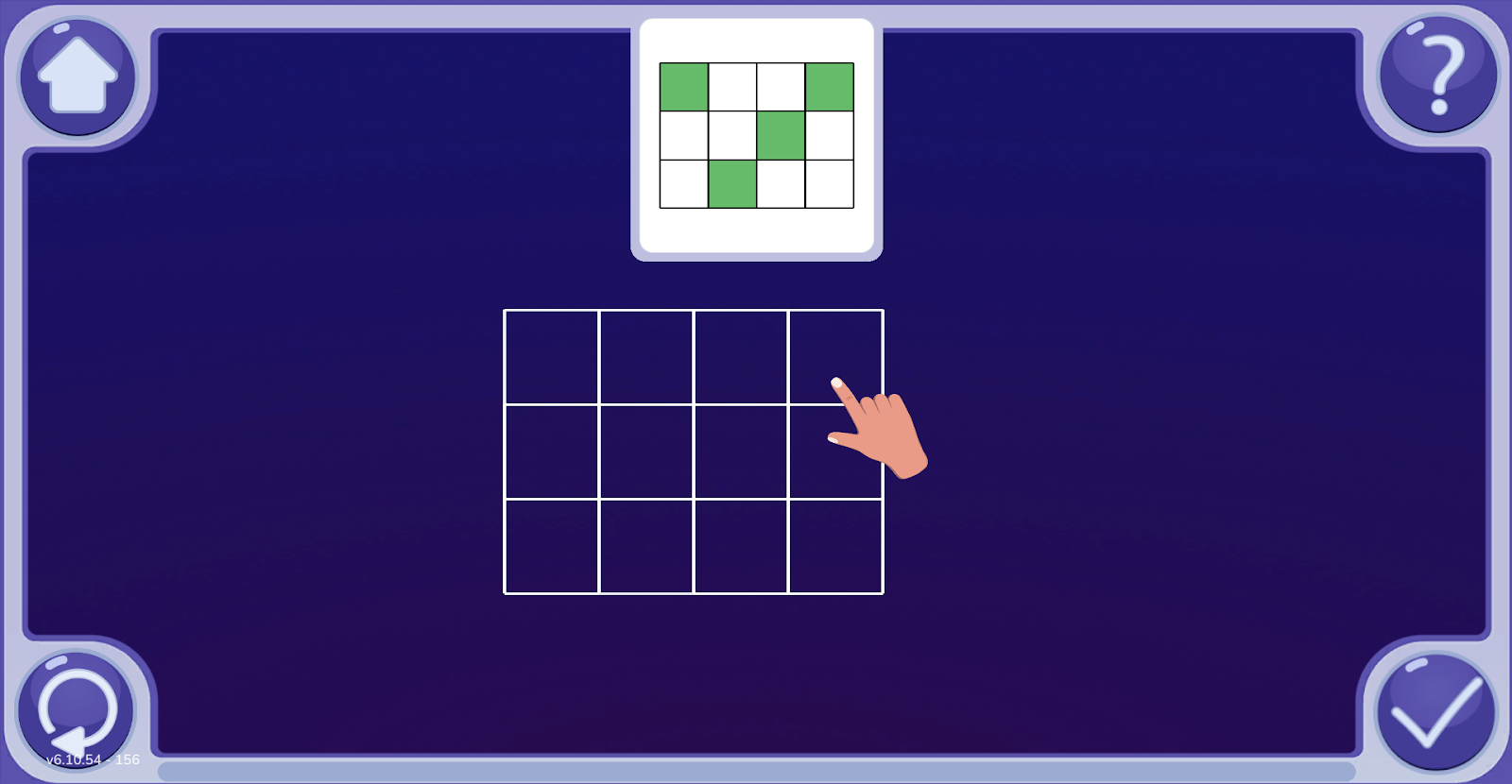
These new tasks complement Magrid’s existing memory-based games, making working memory training more dynamic and inclusive.
Why Working Memory Matters
Working memory is like a child’s mental scratchpad. It allows them to:
✅ Follow multi-step instructions
✅ Solve problems
✅ Retain and apply new information
Strong working memory helps build core skills in lectura, matemáticas, self-regulation, y focus — all of which are foundational for long-term learning success.
By strengthening working memory through interactive tasks, Magrid continues to support whole-child development in a way that’s both effective and fun.
How to Access the New Content
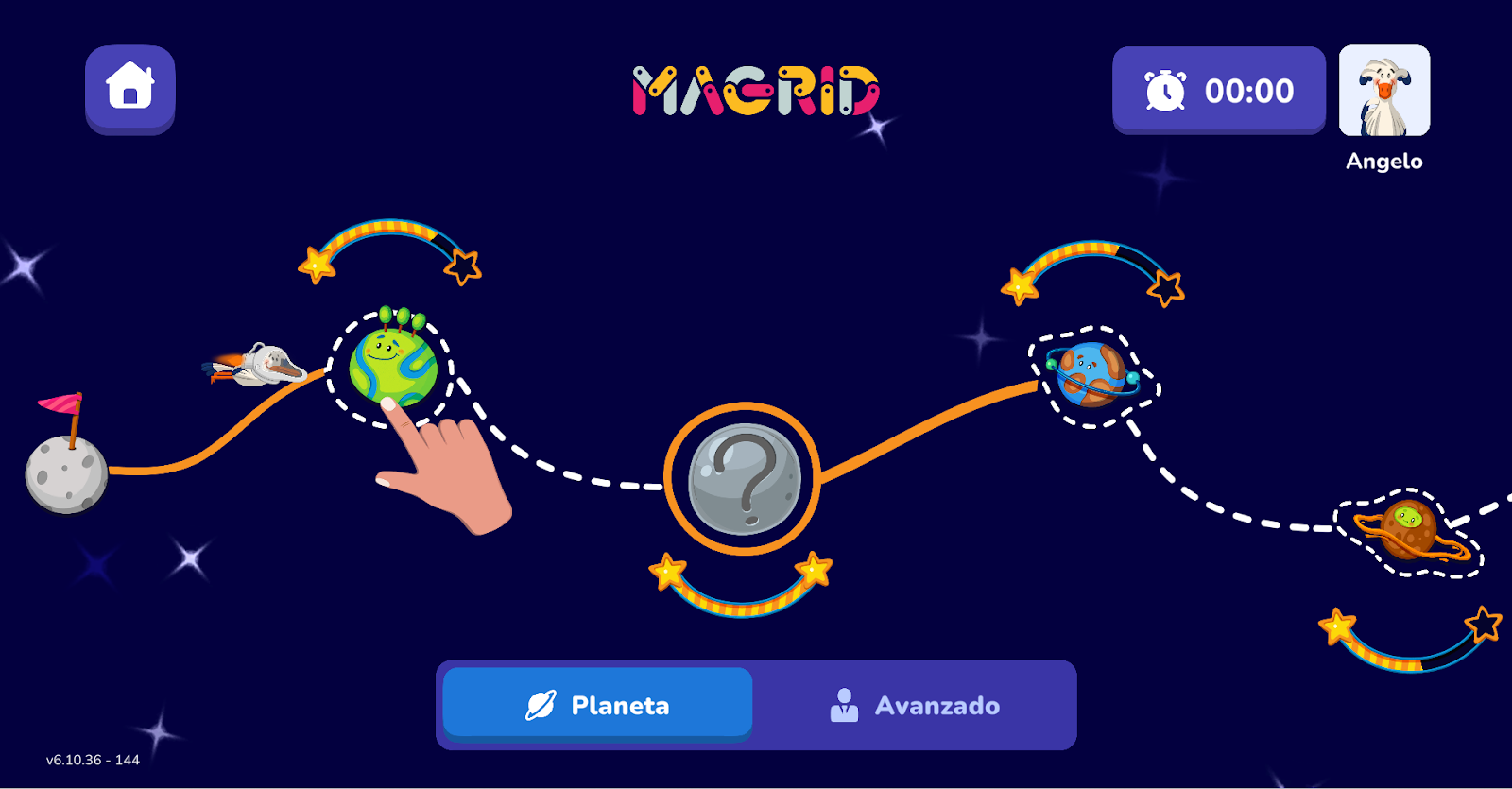
Magrid has recently released over 400 new activities, which have been seamlessly integrated across the existing 22 planets of the program. As a result, students will notice that the progress bars of planets they have not yet completed may now appear partially incomplete. We recommend that students return to the beginning of the program to identify which planets need to be revisited in order to access and benefit from the newly added content.
Getting started with these exciting new features is easy:
- Connect your device to the internet
- Open the App Store and update the Magrid app
- Launch the app and explore the new content immediately
If your device has automatic updates enabled, you might already have access to everything — just open Magrid and start exploring!
A Fresh New Look: Improved Design and Navigation for Teachers
Magrid’s latest update introduces a sleeker, more intuitive interface designed to simplify lesson planning and improve classroom flow. Here are the standout enhancements:
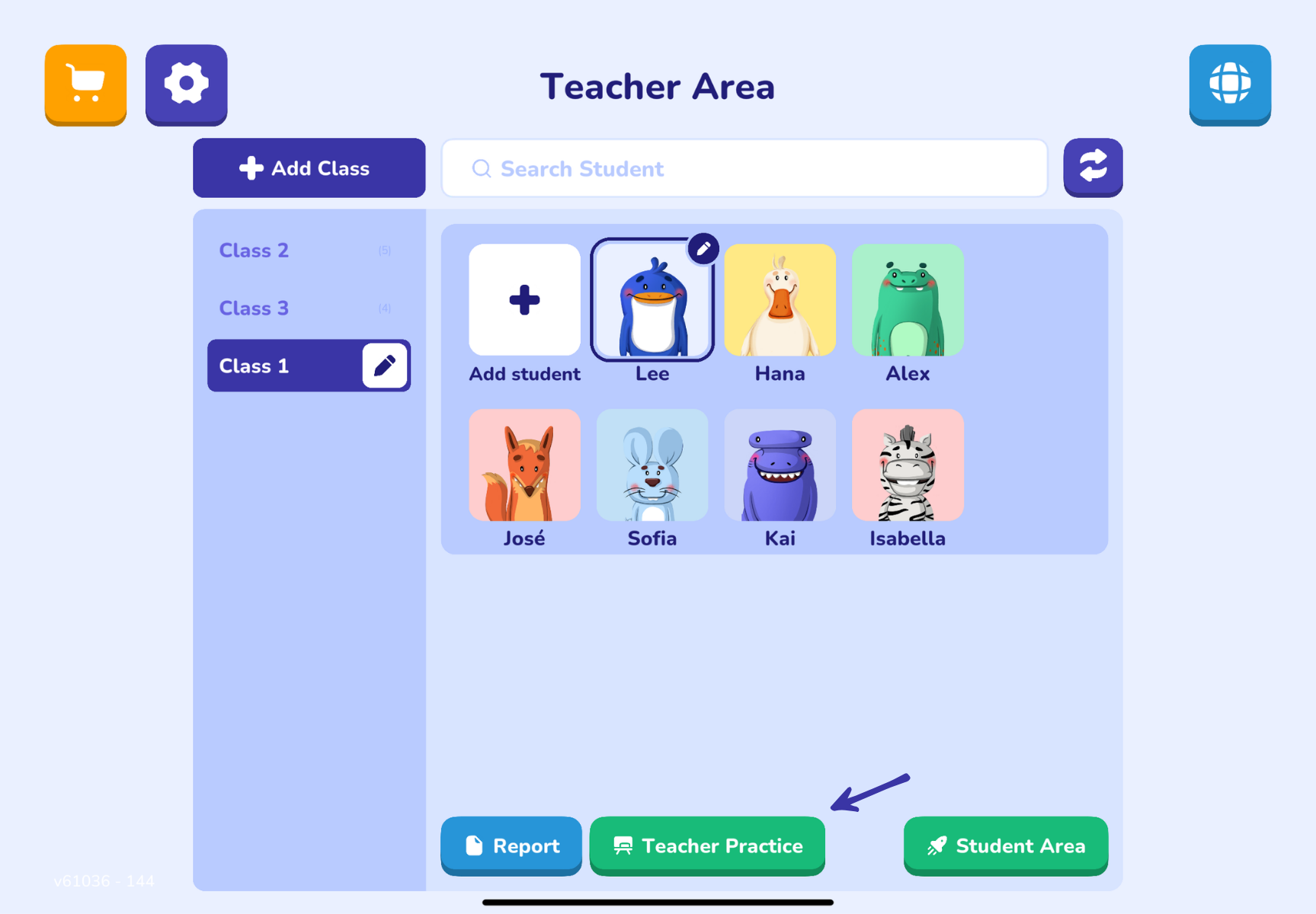
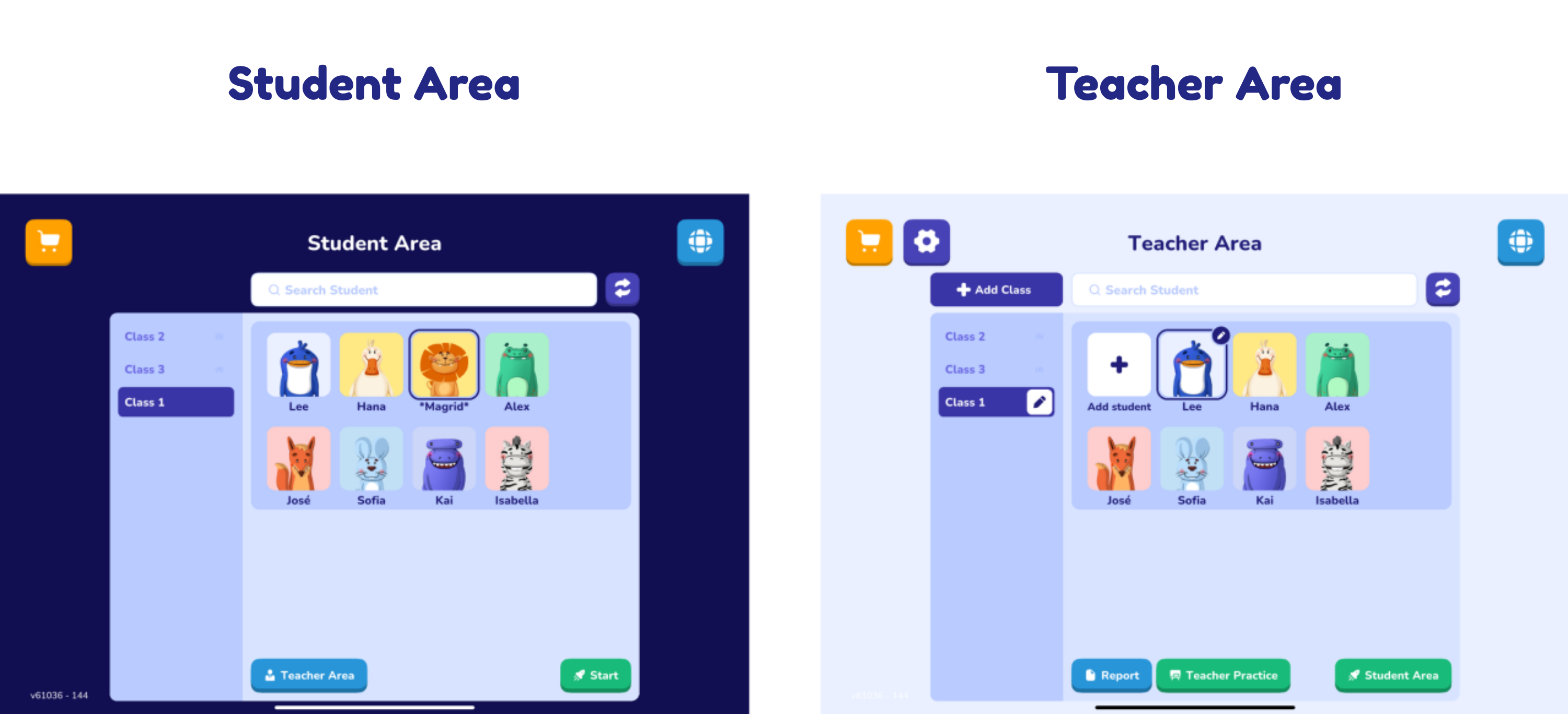
Teacher Practice Button
No more workarounds — teachers can now access all lessons and activities directly through a dedicated “Teacher Practice” button.
✅ No need to create an extra student profile
✅ Explore any lesson instantly
✅ Perfect for preparing or reviewing lessons
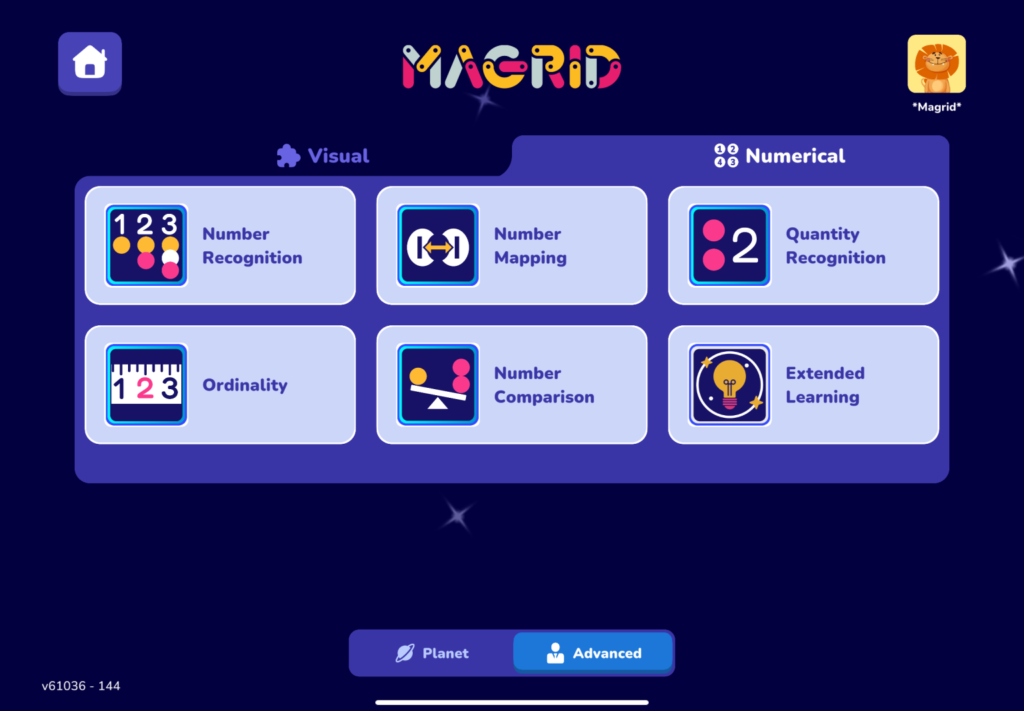
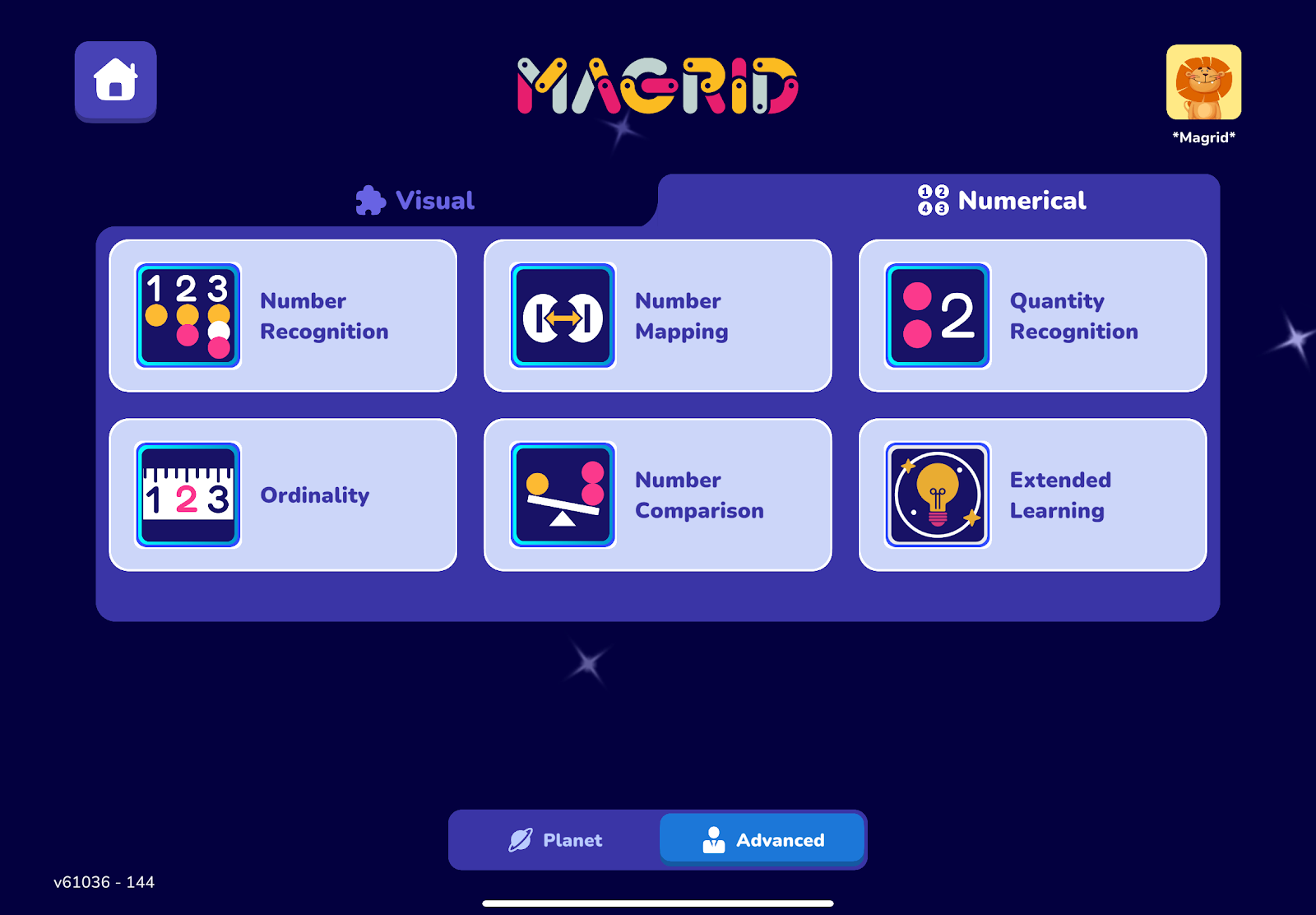
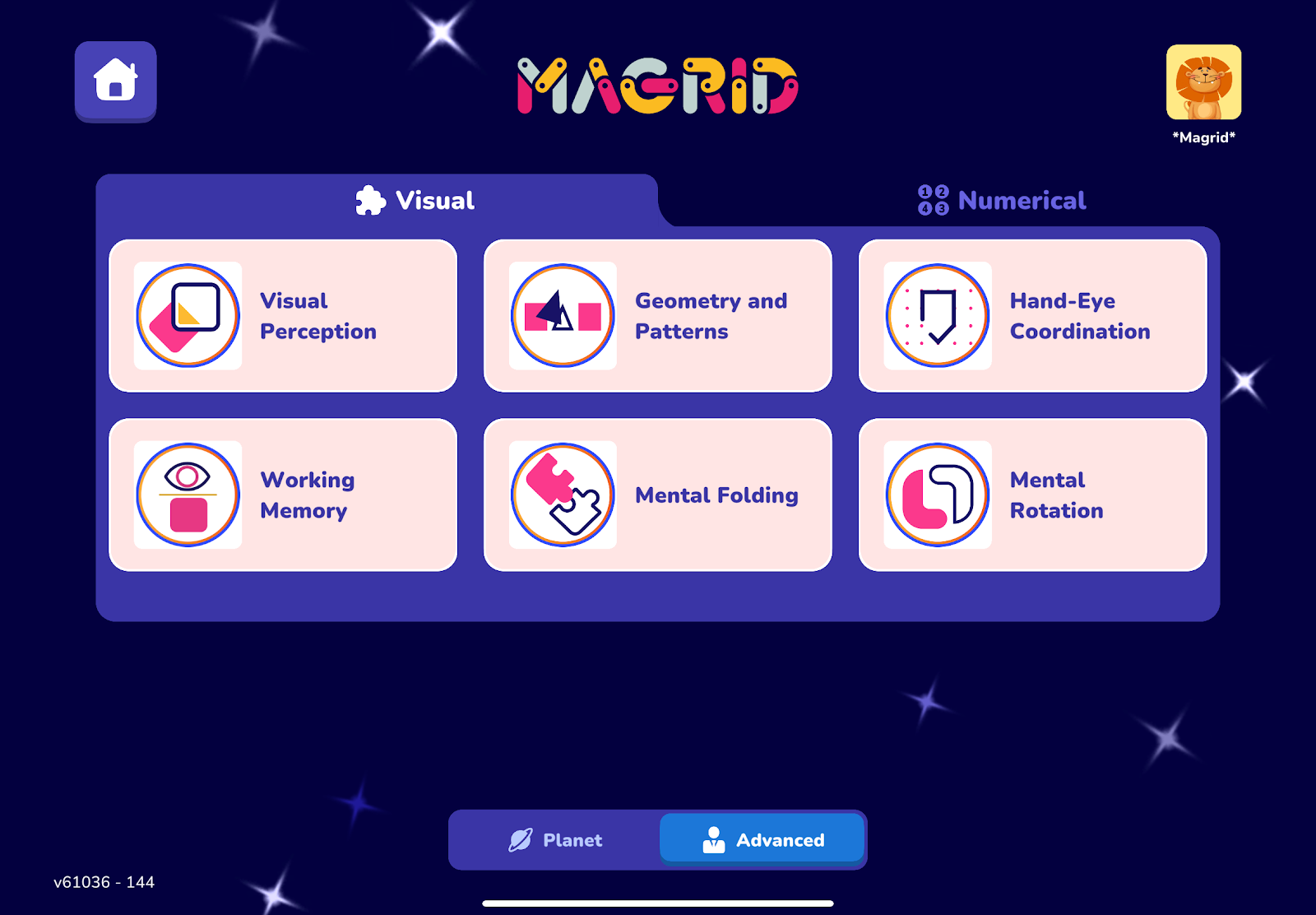
Smarter Advanced Menu Navigation
We’ve reimagined how teachers browse through lessons. The new advanced menu allows educators to filter and select activities based on specific skills or competencies — making it easier to find exactly what you’re looking for.
Whether you’re targeting visual-spatial skills or numerical skills, navigation is now faster, clearer, and more focused.
Numerical Skills:
‣ Number Recognition
‣ Number Mapping
‣ Quantity Recognition
‣ Comparación de números
‣ Ordinalidad
‣ Extended Learning (Addition)
Visual Skills:
‣ Visual Perception
‣ Geometry and Patterns
‣ Hand-Eye Coordination
‣ Memoria de trabajo
‣ Plegado mental
‣ Rotación mental
Clearer Interface for Teachers and Students
To enhance usability and accessibility, we’ve introduced distinct background colours for the teacher dashboard and the student learning environment.
This change helps teachers and students instantly recognise which mode they’re in — reducing confusion and supporting smoother transitions between planning and play.
Ready to Explore?
The latest update is designed to make Magrid even more intuitive, effective, and exciting — for both educators and learners. With 400+ new activities and a cleaner, smarter interface, now’s the perfect time to log in and see what’s new.
Update your app today and let the learning journey continue — brighter than ever.
Effective Strategies to Teach Number Recognition
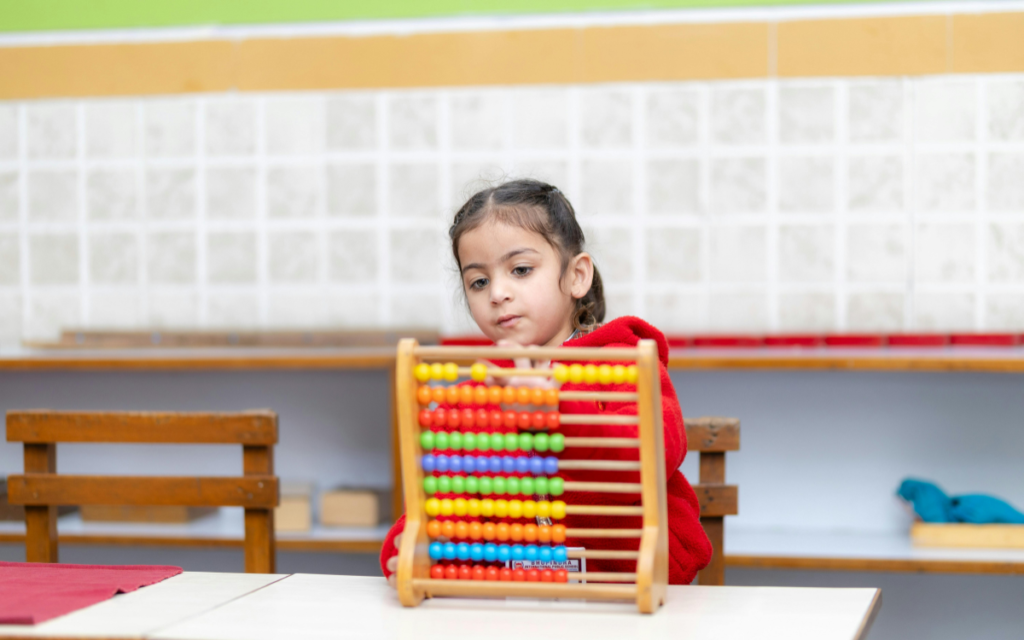
Number recognition is one of the most important skills young children develop in their early years. Before students count objects, compare number values, or explore place value, they must first be able to recognize numbers consistently and confidently. This foundational skill allows children to match number written symbols with representative quantities and lays the groundwork for more advanced number skills.
When teachers and parents practice number skills through engaging activities, kids learn not only to identify numbers but also to develop number sense and critical thinking. Supporting children as they learn number recognition helps ensure they can recognize numbers in the correct order, strengthen visual discrimination, and prepare for future math success.
What Is Number Recognition?
Number recognition is the ability to identify numbers when they are seen in written form. This skill may sound simple, but for a child just beginning to learn number recognition, connecting a number written on paper to a quantity of objects is a big step. Recognizing numbers helps students count accurately, develop number sense, and eventually apply counting principles to real-world math problems.
Teachers often teach number recognition using visual aids such as pocket charts, colored paper, or matching number cards. When students learn to identify numbers, they are building a foundational skill that supports later concepts like number relationships, place value, and number line activities.
The Importance of Number Sense in Learning
Strong number recognition skills go hand in hand with number sense, which is the understanding of how numbers work together and represent quantities. When children can identify numbers and connect them to representative quantities, they can begin to count numbers, understand same number versus different numbers, and explore number values.
Number sense helps children compare small numbers, match objects to the correct number, and apply counting principles in play or classroom activities. Teachers who focus on building number sense early create opportunities for kids to practice number skills in meaningful ways. This focus ensures that when students work on more complex tasks like counting teen numbers or place value, they have a strong foundation.
How One-to-One Correspondence Supports Counting
One-to-one correspondence is an essential part of teaching number recognition because it links counting objects to the number written symbol. For example, when a child places one block on each water bottle and counts “one, two, three,” they are learning to match numbers with representative quantities.
This practice helps students learn correct order, develop visual discrimination, and ensure they arrive at the correct number when they count. Parents and teachers can create engaging activities such as using popsicle sticks, classroom objects, or even drawing numbers on colored paper to reinforce one-to-one correspondence. Building this skill allows kids to connect abstract number symbols with concrete experiences, an important step in early math learning.
Engaging Activities with Counting Objects
Hands-on practice with counting objects is one of the most effective ways to teach number recognition. When kids learn by touching and moving real objects, they make stronger connections between a number written symbol and the quantity it represents. Teachers can use everyday items—blocks, buttons, water bottles, or even number cookies—to help students count and identify numbers.
Parents can also encourage kids to count numbers during daily conversations, such as matching number sets of toys or snacks. These engaging activities strengthen important skills like number identification, one-to-one correspondence, and visual discrimination. When children practice number skills in fun, meaningful ways, they not only recognize numbers but also begin to understand number relationships and counting principles.
Creative Number Recognition Games for Kids
Number recognition games are a powerful way to help students learn at their own pace while having fun. Teachers and parents can create matching number card games, simple memory challenges, or board games that require kids to identify numbers before moving forward. Counting games using popsicle sticks, pocket charts, or colored paper can add variety to classroom practice.
Kids love activities that allow them to play, and students love competing to find the correct number quickly. These games encourage children to practice number counting, strengthen number id skills, and apply critical thinking. By incorporating engaging activities into teaching number, educators can build both number recognition skills and a child’s confidence with math.
The Role of Number Formation in Recognition

Number formation is closely linked to learning how to recognize numbers. When students practice writing numbers or drawing numbers, they are reinforcing both visual discrimination and muscle memory. For instance, tracing a number written on colored paper or forming digits with play materials helps children connect number identification with movement. Number formation also supports correct order, ensuring kids learn to write and recognize numbers sequentially.
Teachers can introduce activities where students work in small groups to practice number formation using chalk, markers, or even finger tracing in sand. Developing these number skills early makes it easier for students to identify numbers quickly and apply them in counting principles and classroom math tasks.
Using Math Centers to Build Number Recognition
Math centers give children opportunities to learn number recognition in small groups at their own pace. In these structured areas, students work with counting objects, practice number identification, and engage in number recognition games. Teachers can design centers around specific skills, such as matching number cards, exploring number line activities, or practicing number formation.
Using visual aids like pocket charts, colored paper, or drawing numbers can further support learning. Students love the variety and independence math centers provide, and teachers can easily differentiate instruction to focus on different numbers or counting principles. These centers transform the classroom into a space where kids learn through engaging activities while building foundational skills in math.
Counting Games That Support Critical Thinking
Counting games are more than just fun—they help students practice number skills and build critical thinking. By asking children to identify numbers, apply counting principles, and find the correct number in a sequence, these games strengthen number recognition skills. Teachers might create activities where students count numbers on a number line, match different numbers to representative quantities, or use objects like popsicle sticks and colored paper to play.
Kids love games that allow them to move, sort, and compete while learning. These activities help students learn at their own pace, develop visual discrimination, and apply number relationships. As children play counting games, they practice important skills that prepare them for larger concepts like teen numbers and place value.
Strengthening Counting Principles in Daily Play
Daily play provides endless opportunities to teach number recognition and reinforce counting principles. When students count objects during classroom routines or at home, they learn to connect number written symbols with real quantities. Teachers and parents can use water bottles, toys, or even snacks to encourage kids to match and identify numbers.
Students love playful practice, especially when they can find the same number in different contexts or arrange numbers in the correct order. These engaging activities build important skills such as one-to-one correspondence, number counting, and number identification. By weaving counting into play, children strengthen their number sense while also developing confidence with math in everyday situations.
How Magrid Supports Teaching Number Recognition
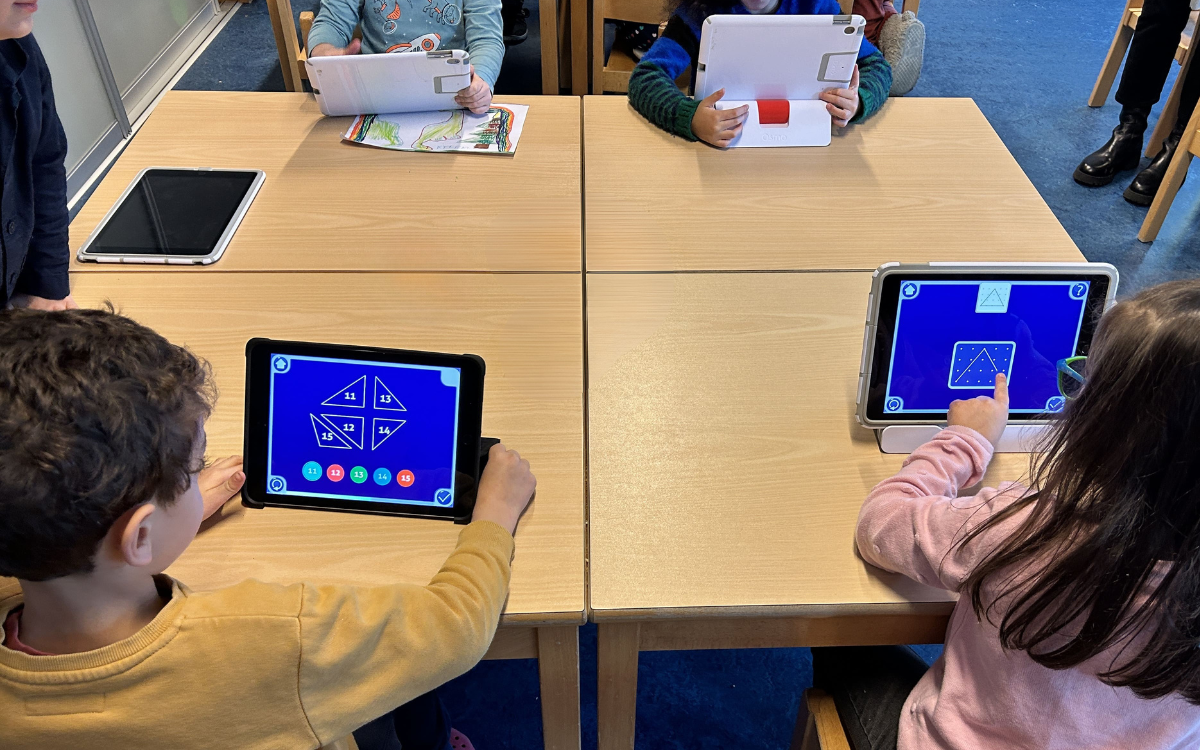
Magrid provides innovative ways to teach number recognition by combining engaging activities with research-based design. The program offers exercises where students work on number identification, practice number skills, and build number sense through visual discrimination tasks. Teachers can use Magrid in small groups or at math centers to help children learn number recognition at their own pace.
Parents can also benefit from Magrid’s structured exercises, which encourage kids to match number written symbols with representative quantities. Students love the colorful, interactive format, which makes learning fun and supports important skills like one-to-one correspondence and number counting. By incorporating Magrid, teachers and parents gain a powerful resource to strengthen foundational skill development in math.
Magrid’s “Color by Numbers” Activity
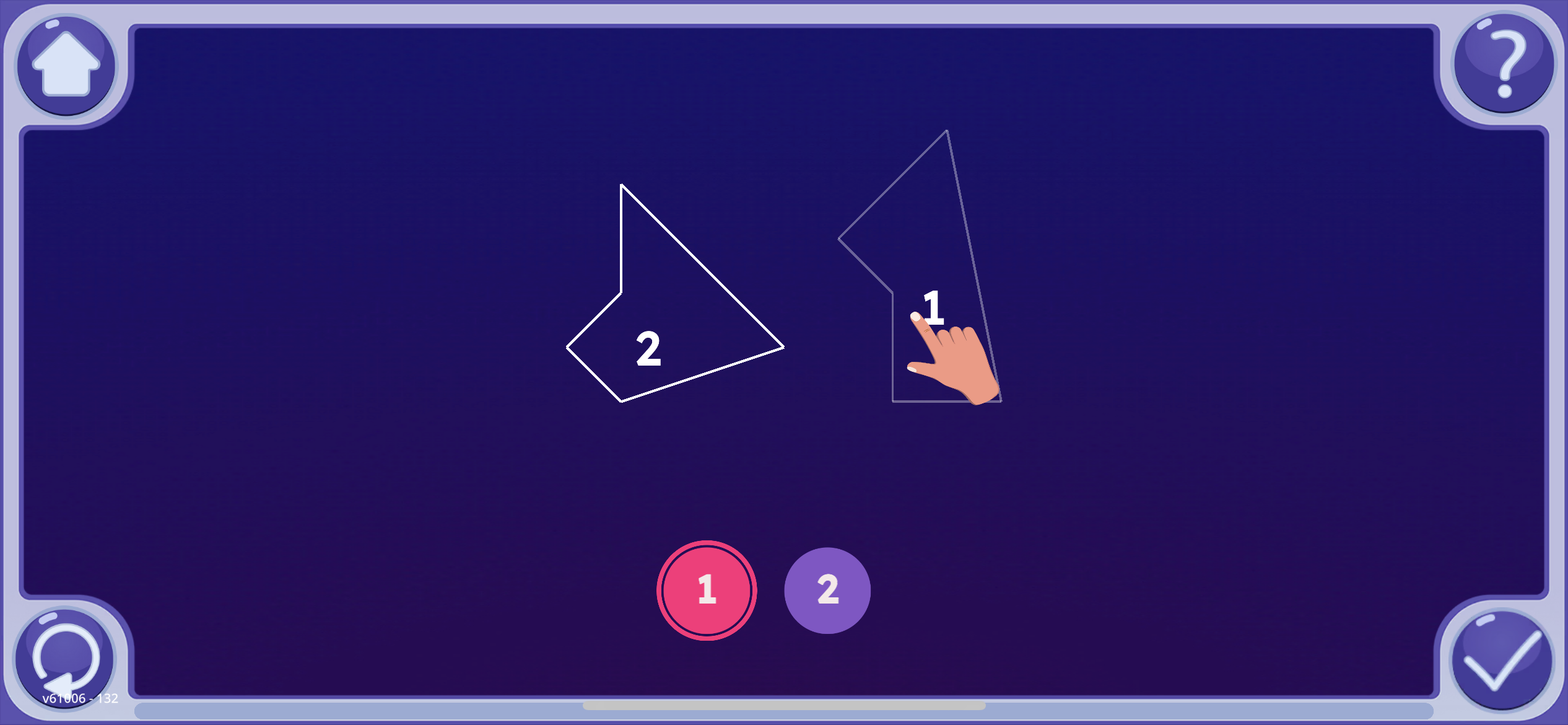
One of Magrid’s engaging activities is the “Color by Numbers” exercise, which encourages children to recognize numbers while applying number identification in a creative way. In this activity, students learn to match a number written with its correct placement in a design, reinforcing both number sense and visual discrimination. Kids love the process of coloring while they practice number skills, making it feel like play rather than work.
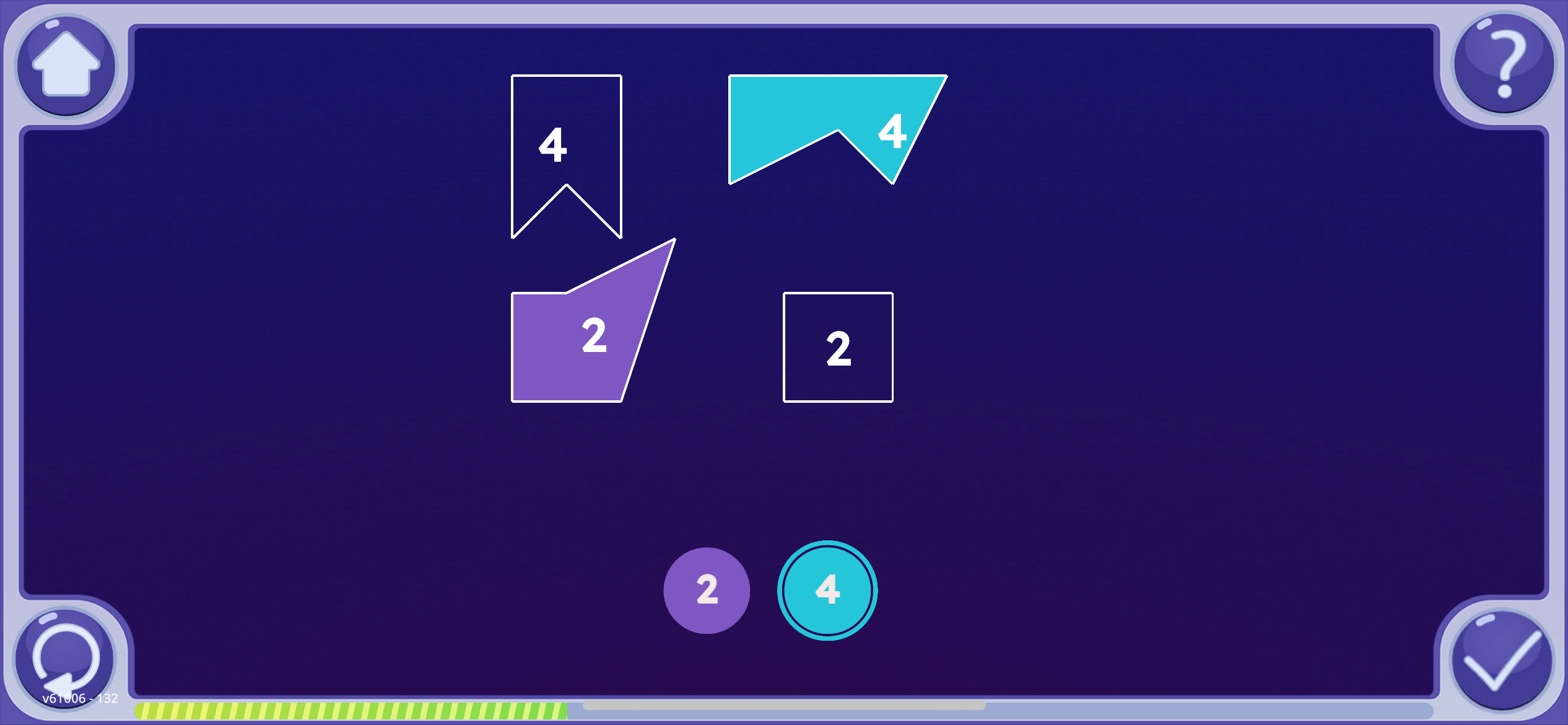
Teachers can use this exercise in math centers, while parents can easily support it at home. By combining drawing numbers, color recognition, and number id practice, Magrid helps students learn to identify numbers in a meaningful context. This exercise strengthens counting principles while promoting critical thinking and focus.
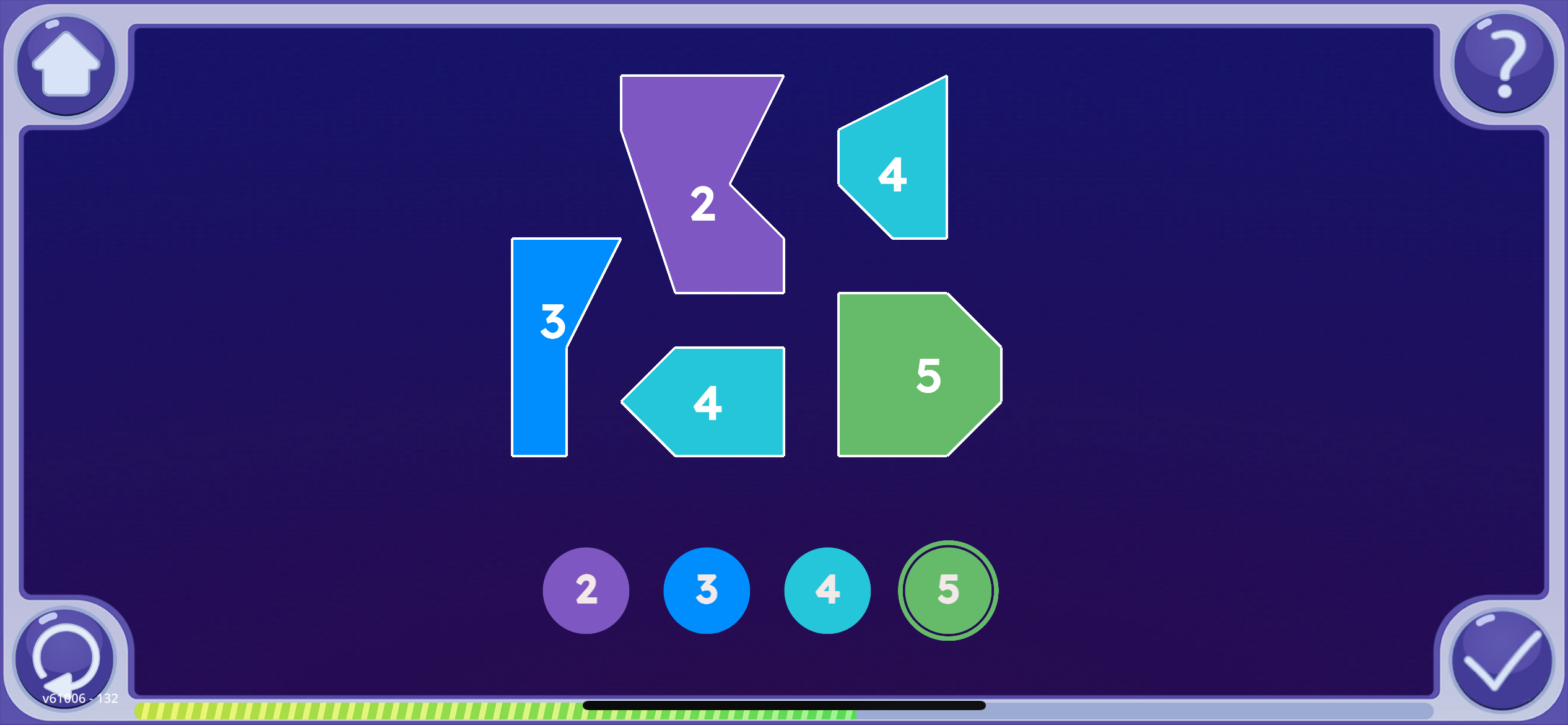
Magrid’s “Numbers Match Numerals” Activity
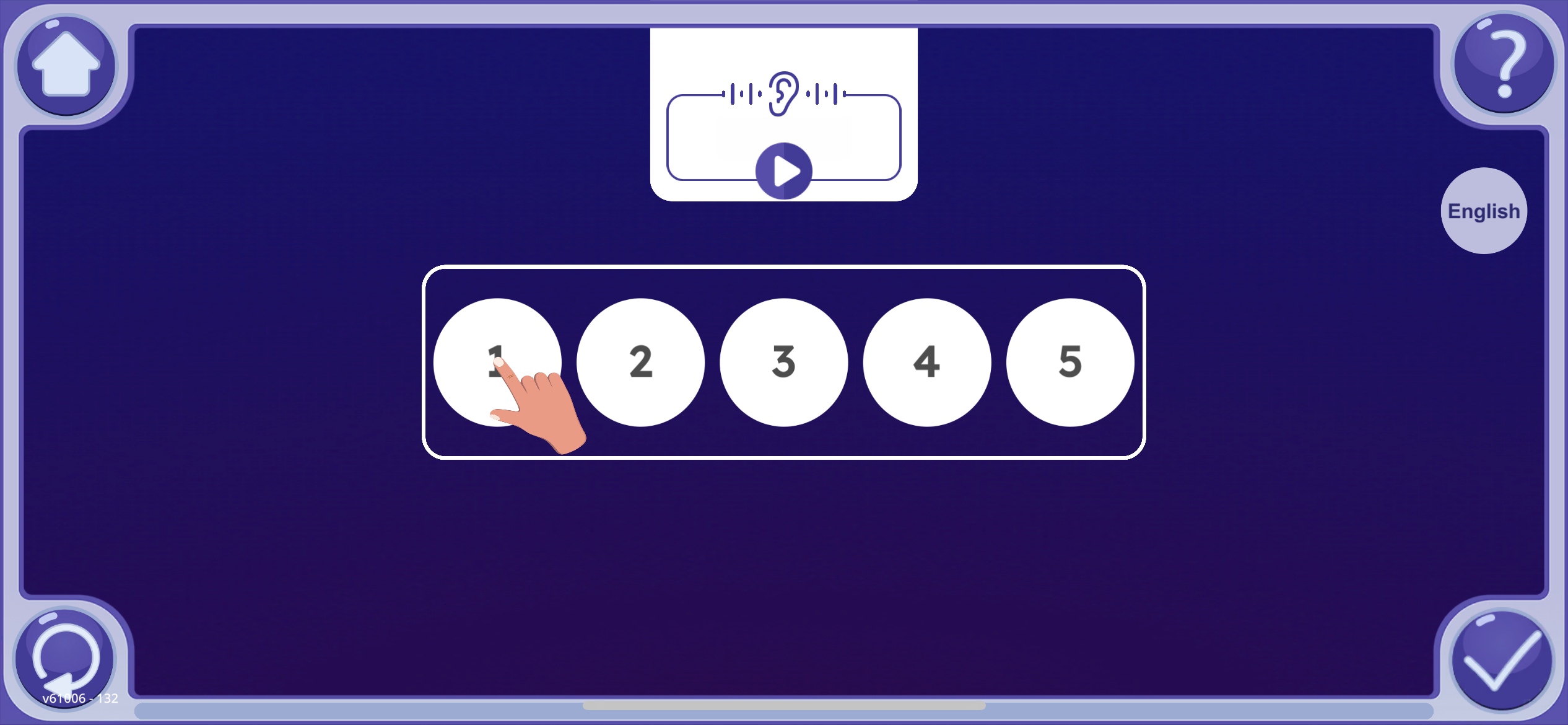
Another helpful Magrid exercise is the “Numbers Match Numerals” activity, designed to strengthen number identification and listening skills. In this task, children hear a number and then match it with the correct number written on the screen. This helps students recognize numbers through both auditory and visual channels, supporting phonological awareness and number sense.
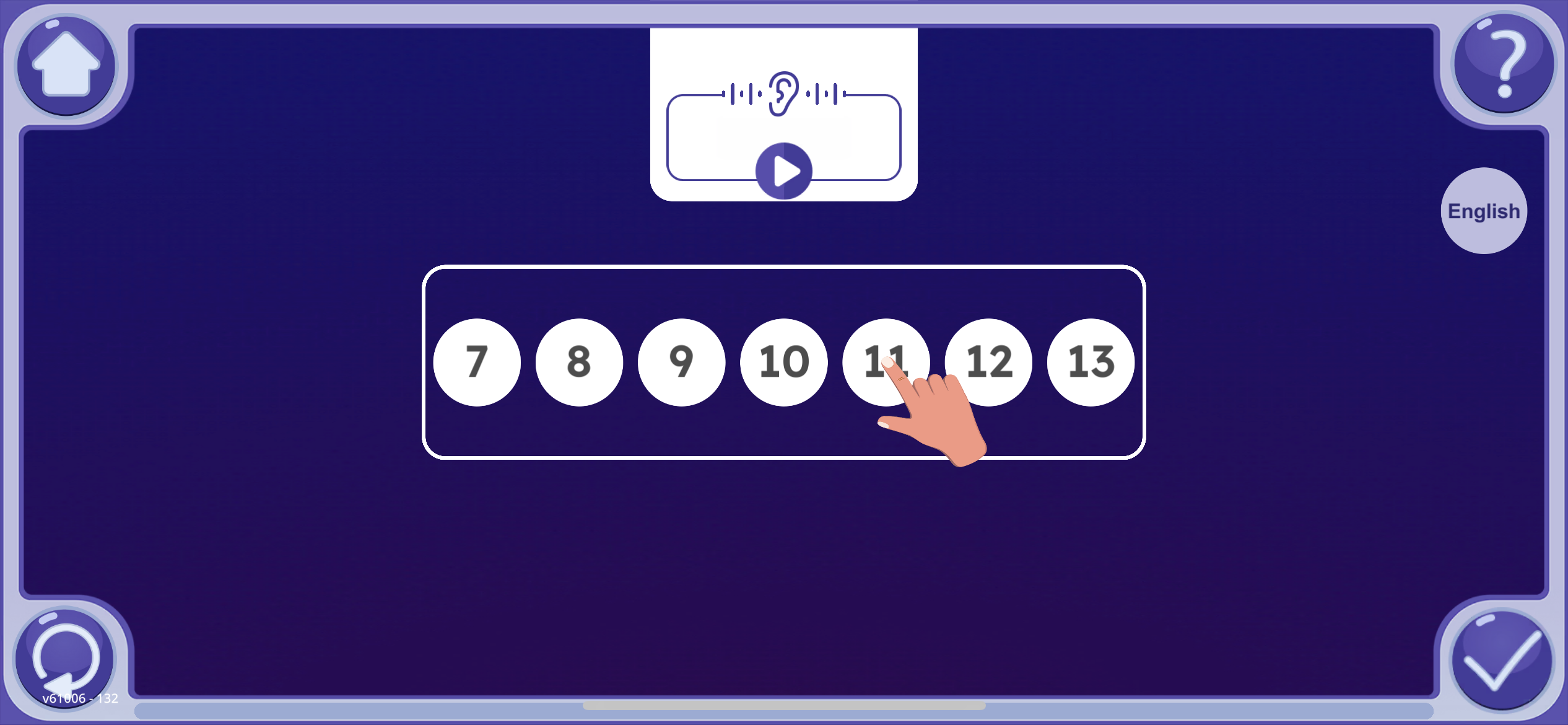
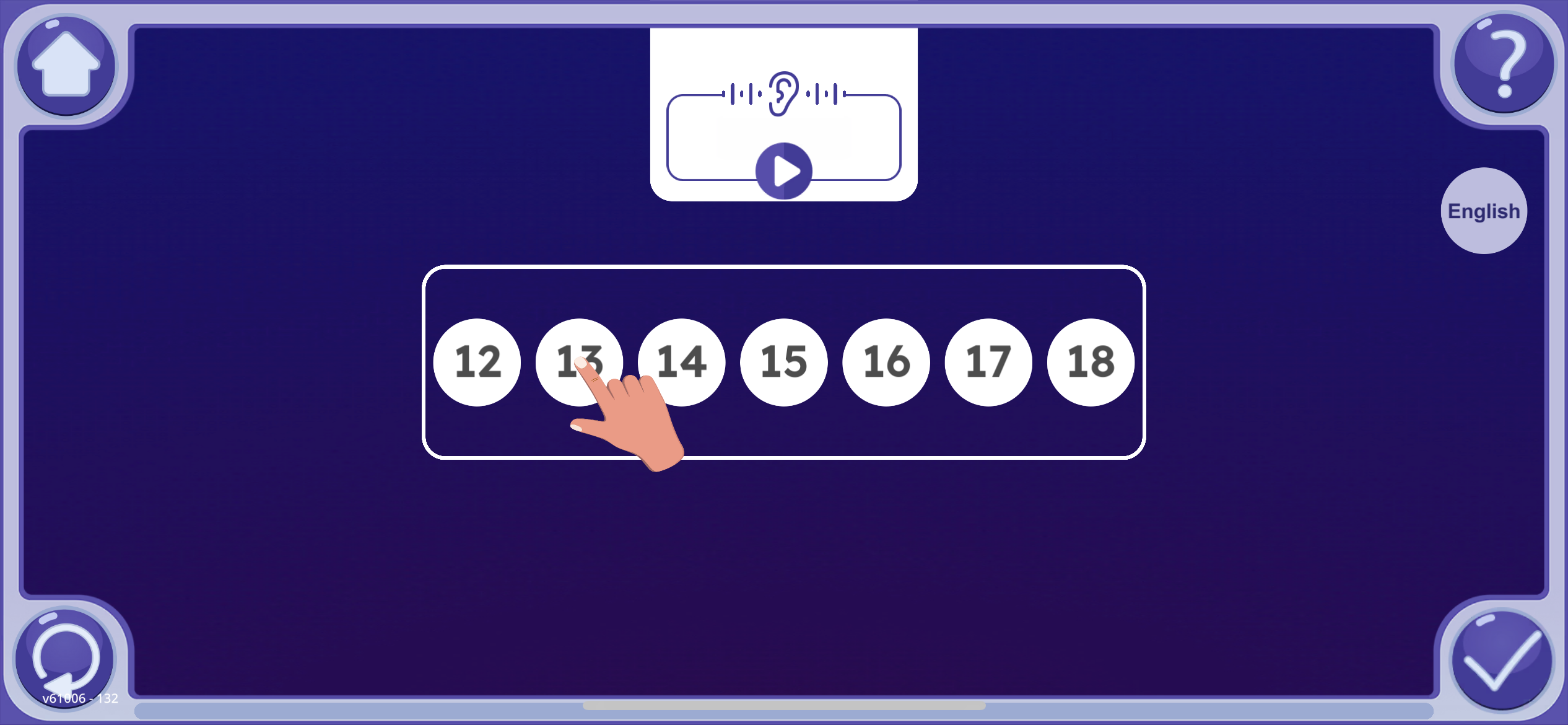
Teachers can use this activity in small groups to encourage focused practice, while parents can reinforce it at home for extra support. Students work at their own pace, ensuring they can learn number recognition without pressure. By combining sound with matching number visuals, Magrid promotes critical thinking, visual discrimination, and the ability to connect different number values to the correct order.
Supporting Students with Special Needs in Number Recognition
For children with special educational needs, developing number recognition skills often requires additional focus, structured practice, and supportive tools. Some students may struggle with visual discrimination, matching number symbols to representative quantities, or maintaining the correct order when they count numbers. Magrid is particularly effective in this context because it allows students to learn at their own pace, practice number identification repeatedly, and engage with interactive activities that make math feel approachable. Exercises such as “Color by Numbers” and “Numbers Match Numerals” provide multisensory experiences, helping children strengthen one-to-one correspondence, number sense, and number formation in a supportive environment. By combining classroom strategies with Magrid, teachers can better support diverse learners in mastering this foundational skill.
Supporting One-to-one Correspondence Through Engaging Practice
Practicing one-to-one correspondence allows students to connect number written symbols with representative quantities. Teachers might ask students to place one counter on each square of a grid or match objects like popsicle sticks to a number line. Students love these activities because they make learning feel like play while reinforcing number recognition skills.
Parents can create simple activities at home, such as counting water bottles or toys, to support the same number concepts. These practices ensure students learn counting principles and understand how to arrive at the correct number when counting objects. By focusing on one-to-one correspondence, teachers help children strengthen visual discrimination, critical thinking, and number relationships in meaningful ways.
Drawing Numbers to Reinforce Memory
Drawing numbers is another effective strategy to teach number recognition and improve memory. When students learn by physically writing numbers with pencils, markers, or even tracing in sand, they connect movement with number identification. This process reinforces number formation while helping kids learn the correct order and number values.
Teachers can provide activities that involve drawing numbers on colored paper or using pocket charts for practice in small groups. Students count while writing numbers, which strengthens counting principles and ensures they can recognize numbers in future tasks. Kids love the creativity of drawing numbers, and it allows them to practice number skills in a fun, hands-on way.
Building Number Sense Through Daily Conversations
Daily conversations are a simple yet powerful way to teach number recognition. Parents and teachers can integrate numbers into everyday talk by asking children to count objects, identify numbers on signs, or notice the correct order on a number line. For example, during snack time, a child might be asked to count numbers of crackers and match them to the number written on a card.
These small activities support number identification, strengthen one-to-one correspondence, and encourage practice of counting principles without feeling like formal lessons. When students hear and see numbers in daily conversations, they develop number sense, critical thinking, and confidence in math, making this approach one of the most natural resources for learning.
Incorporating Number Cookies into Fun Learning
Using number cookies is a playful way to help kids learn number recognition while combining fun with practice. Teachers and parents can bake or use ready-made cookies shaped like numbers, allowing children to match the correct number cookie to counting objects or arrange them in the correct order. Kids love this hands-on approach, which blends play and learning.
Activities like decorating cookies with colored icing can also reinforce number formation and number identification. These engaging activities encourage students to recognize numbers, strengthen visual discrimination, and apply number skills while enjoying a treat. By making learning delicious and interactive, number cookies help children practice number counting in a memorable way.
Connecting Number Recognition to Counting Teen Numbers
As students progress, counting teen numbers becomes an important step in expanding number recognition skills. Teen numbers can be challenging because they require understanding of both place value and number values. Teachers can design engaging activities where students count numbers using a number line, match teen numbers to representative quantities, or use pocket charts to visualize the correct order.
When students count objects in sets of ten plus extras, they begin to understand number relationships and different number values. Parents can also reinforce learning at home with daily conversations about teen numbers in real-life contexts. Supporting students as they learn number recognition with teen numbers prepares them for stronger math skills and future critical thinking.
Exploring Number Relationships with Number Lines
Number lines are excellent tools for teaching number recognition and building number sense. When students work with a number line, they can see the correct order of numbers, identify numbers, and explore number relationships like same number versus different numbers. Teachers can design counting games that involve jumping along a number line with objects or popsicle sticks, encouraging students to count numbers in sequence.
Visual tools such as number lines also help students develop critical thinking about number values, place value, and counting principles. By practicing with number lines, kids learn at their own pace while reinforcing number recognition skills and gaining a deeper understanding of foundational math concepts.
Building Lifelong Confidence Through Number Recognition
Number recognition is the foundation for many important skills in early math. When students learn to recognize numbers, connect them to representative quantities, and practice number skills daily, they gain confidence that carries into counting teen numbers, understanding place value, and applying critical thinking.
Teachers and parents can support this growth by encouraging children to practice through engaging activities, counting games, and visual tools. By focusing on number sense, one to one-to-one correspondence, and number identification, kids build a strong pathway toward math success. The next step is to provide students with resources that make learning both structured and fun.
Empower Students with Magrid’s Math Tools
Give your students the advantage of learning with Magrid’s interactive number recognition activities. From “Color by Numbers” to “Numbers Match Numerals,” Magrid transforms teaching number into engaging play, helping kids recognize numbers, practice number skills, and build number sense at their own pace.
Parents and teachers love how students work confidently with correct order, number identification, and counting principles while enjoying math. Empieza a utilizar Magrid hoy mismo to make number recognition fun and effective. And for extra practice, you can also download our free Number Recognition Worksheets for Pre-K, Guardería, y Grade 1.
Is Dyscalculia a Disability: What to Know

In classrooms across the world, children engage daily with mathematics—counting, solving word problems, and learning how numbers relate to the real world. But for some students, math isn’t just hard; it’s persistently confusing in a way that goes beyond typical struggles. These learners may be experiencing dyscalculia, a specific kind of mathematics learning disability that affects their number sense, problem solving, and overall math skills.
Dyscalculia is often called math dyslexia, though the two are not the same. While dyslexia affects reading and written expression, dyscalculia interferes with how a person’s brain processes numerical symbols, arithmetic, and math concepts. This condition is more than just a learning hiccup—it’s classified by experts as a neurodevelopmental disorder, part of the wider group of learning disorders and developmental disabilities that can significantly impact a person’s ability to function academically and in daily life.
Though commonly diagnosed in school age children, many adults remain undiagnosed. The effects can stretch beyond school, influencing education, public health, employment, and personal finances. A person with dyscalculia may have a hard time remembering multiplication tables, estimating time, reading prices, or even recalling phone numbers.
Recognizing and supporting children with dyscalculia is critical. With the right strategies, teacher awareness, and family support, learners can overcome many of the challenges posed by this often-misunderstood disorder. This article explores whether dyscalculia is a disability, how it’s identified, and what can be done to help those who struggle with numbers across different ages.
Is Dyscalculia a Disability? Exploring the Classification
The question “Is dyscalculia a disability?” isn’t just semantic—it has implications for diagnosis, legal rights, and access to educational support. In the United States and many other countries, dyscalculia is recognized as a specific learning disorder under diagnostic manuals like the DSM-5. It also qualifies as a specific learning disability in many education systems, meaning that children with dyscalculia are legally entitled to accommodations in school.
To qualify as a disability, a condition must significantly impair a person’s ability to carry out major life activities. In the case of dyscalculia, this involves math, which is a foundational skill used in counting, telling time, handling money, and planning daily routines. When a person struggles persistently with basic math, math facts, and understanding directions despite appropriate instruction, dyscalculia may be the cause.
Research has shown that dyscalculia is linked to differences in brain development and mathematical cognition, supporting its status as a neurodevelopmental disorder. It affects performance not only on tests, but in everyday tasks that involve numbers.
So, yes—dyscalculia is a disability when it meets the criteria for a learning disorder that substantially limits academic performance and life functioning. Understanding this helps pave the way for better resources and individualized learning plans.
Understanding Learning Disabilities in Education
Learning disabilities are neurologically-based conditions that affect how individuals acquire and use academic skills such as reading, writing, and arithmetic. They are not a reflection of intelligence or effort. Instead, they stem from variations in brain structure and function that impact cognitive development and learning processes.
Within the umbrella of learning disabilities are several types, including dyslexia, dysgraphia, and dyscalculia. Each type affects a specific domain of learning. For example, dyslexia impacts written expression and reading, while dyscalculia targets mathematics. A math learning disability can affect everything from counting and recognizing numerical symbols to solving math problems and understanding math facts.
School age children with learning disabilities often face challenges that go beyond poor test scores. They may experience frustration, lowered self-esteem, and behavioral concerns stemming from repeated struggles. These difficulties can also lead to more mistakes in class, especially in timed settings or when handling word problems and problem solving tasks.
Identifying and addressing learning disorders early is critical. With the help of trained educators, small group interventions, and targeted strategies, students with learning disabilities can access the curriculum in meaningful ways that align with their cognitive profiles and strengths.
Dyscalculia as a Specific Learning Disability

Dyscalculia is officially classified as a specific learning disability that affects a person’s ability to learn and apply mathematics. It is more than just having a hard time in math class—it is a persistent difficulty in grasping number sense, solving math problems, remembering math facts, and completing basic operations like arithmetic.
When a student consistently performs below grade level in math despite adequate instruction and effort, a diagnosis of dyscalculia may be considered. Professionals use different tests to assess cognitive development, mathematical cognition, and written expression, often comparing results across different ages to see where delays exist. A comprehensive evaluation often includes observations, academic history, and cognitive profiles to confirm whether the learner fits the criteria for a specific learning disorder.
It’s important to note that dyscalculia is a learning condition rooted in how the brain processes numerical and spatial information. It does not stem from poor teaching or lack of effort. In fact, many students with dyscalculia work extremely hard, but still make more mistakes than peers and may avoid math altogether due to anxiety or shame.
By recognizing dyscalculia as a legitimate mathematics learning disability, educators and parents can seek appropriate supports to improve outcomes and reduce unnecessary frustration.
Math Dyslexia vs Dyscalculia: Clearing Up Confusion
The term math dyslexia is often used informally to describe difficulties with numbers, but it’s not a recognized medical diagnosis. What people usually mean is dyscalculia, a condition with specific patterns of difficulty related to math skills and mathematical cognition. While both math dyslexia and dyscalculia involve struggles with learning, they affect different cognitive areas.
Dyslexia is a well-known learning disability that affects reading, spelling, and written expression. Dyscalculia, on the other hand, is a specific learning disability focused on mathematics. A person with dyscalculia may confuse numerical symbols, have trouble learning multiplication tables, and struggle with counting and solving math problems, even if their reading ability is strong.
The overlap in terminology can be confusing for teachers, parents, and even some professionals. However, distinguishing between the two is essential for accurate diagnosis and intervention. Different tests are used to determine whether the root of a student’s trouble is in language processing (as with dyslexia) or mathematics learning disability (as with dyscalculia).
Understanding these distinctions helps ensure that the right strategies and supports are in place. Each condition affects a person’s ability to learn but requires a tailored approach to meet the learner’s unique needs.
How Dyscalculia Affects School Age Children
School age children with dyscalculia often show early signs that may be misinterpreted as a lack of effort or interest in math. These children typically have a strong dislike or fear of anything that involves numbers, often expressing anxiety during math class or when faced with even basic math tasks. Parents and teachers may notice they take longer to solve word problems, avoid problem solving activities, or have difficulty following multi-step instructions.
Because math learning disability affects number sense and cognitive development, these children may struggle with concepts like quantity, direction, time, and sequencing. They may mix up phone numbers, forget how to read clocks, or get lost when understanding directions. Even recognizing patterns or learning math facts can be frustrating and confusing.
These challenges can affect a child’s grade level performance and self-confidence. In group activities or small group math instruction, they may fall behind their peers or need repeated instruction to grasp key ideas.
Early recognition and support are vital. Interventions should focus on visual and hands-on strategies that align with the child’s cognitive profile. With patience and the right tools, children with developmental dyscalculia can build a stronger foundation in math.
Distinguishing Math Difficulties from Math Disabilities
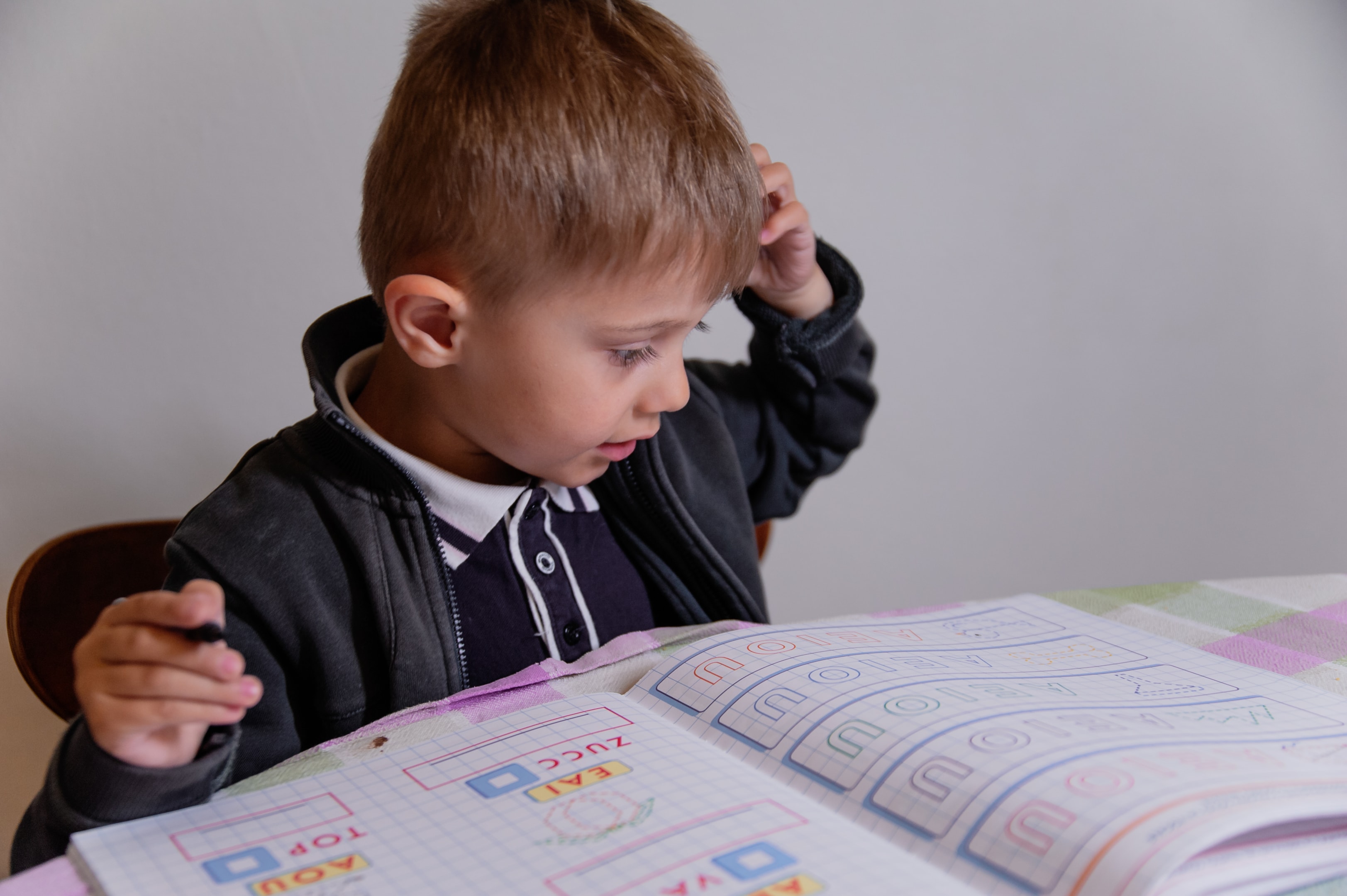
Not all math difficulties indicate a math learning disability. Many students encounter temporary struggles with math due to poor instruction, curriculum gaps, or personal stress. However, when a person struggles consistently and significantly despite adequate teaching, the problem may be deeper—such as dyscalculia, a recognized specific learning disorder.
Dyscalculia is a learning condition rooted in brain development and mathematical cognition. It is different from the kind of difficulty caused by missed lessons or a poor classroom fit. For example, a student who forgets a few math facts may simply need practice, but a student who consistently cannot grasp multiplication tables or estimate quantities may be showing signs of a mathematics learning disability.
Experts look for specific markers to differentiate between general difficulties and true learning disorders. These include persistent errors in basic math, difficulty recognizing numerical symbols, slow recall of math steps, and confusion with word problems across different ages and contexts.
Identifying the root cause of the issue helps educators and parents select the right tests, interventions, and support. It also helps prevent mislabeling or underestimating a child’s potential, especially if the child performs well in other areas like writing or reading.
Learning Disorders and Comorbid Conditions
Learning disorders, including dyscalculia, rarely occur in isolation. Many children and adults with dyscalculia also experience other developmental disabilities or cognitive challenges, often referred to as related conditions. The most common of these are ADHD, dyslexia, and anxiety disorders—all of which can compound the difficulties faced in academic settings.
For example, a child with both dyscalculia and dyslexia might struggle with both reading and math, making it difficult to interpret word problems or follow written instructions. If the child also has ADHD, issues with long term memory, focus, and task completion can make problem solving even harder.
Understanding these co-occurring conditions is essential for accurate diagnosis and effective treatment. Professionals use a variety of different tests and observations to map out the individual’s cognitive profile. These assessments explore brain development, cognitive development, and the person’s strengths in other areas, like verbal reasoning or visual processing.
When learning disabilities overlap, they require a holistic approach to intervention. Accommodations might include extended time on tests, visual aids, or modified assignments. Recognizing these related conditions helps ensure that learners receive comprehensive support, improving outcomes across both academic and personal spheres.
Developmental Dyscalculia and Brain-Based Origins
Developmental dyscalculia is a lifelong condition that begins in early childhood and is caused by differences in brain development that specifically affect how numbers and quantities are processed. This condition is not the result of poor teaching or lack of exposure to math but is a true neurodevelopmental disorder affecting mathematical cognition.
People with developmental dyscalculia often struggle to understand the meaning behind numerical symbols, find it difficult to estimate quantities, and may lack a foundational number sense. These challenges persist across different ages and typically do not improve without targeted support.
Research using brain imaging techniques shows that people with dyscalculia have structural and functional differences in areas of the brain responsible for arithmetic, spatial reasoning, and cognitive development. These findings reinforce the understanding that dyscalculia is a learning disorder rooted in biology, not behavior.
Because this condition affects early math skills, it can interfere with learning basic math, multiplication tables, and problem solving strategies. As learners grow, it may continue to impact their ability to manage time, budgets, or reading clocks.
Recognizing developmental disabilities like dyscalculia as brain-based is critical for developing compassionate, effective teaching approaches that meet students where they are.
How is Dyscalculia Diagnosed Across Different Ages?
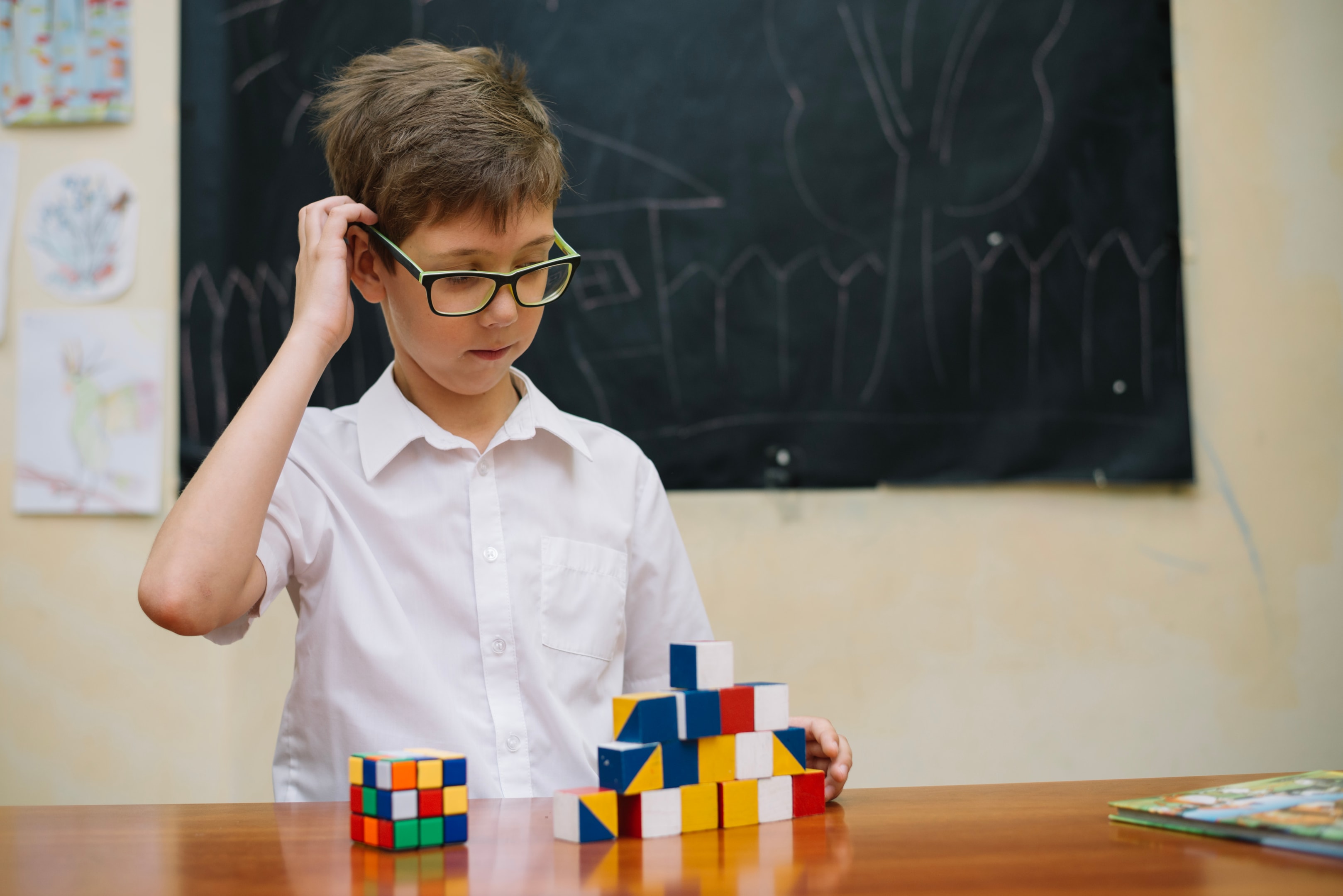
Getting dyscalculia diagnosed involves a multi-step process that includes input from teachers, parents, and specialists. The signs may be present in early school age children, but formal diagnosis often requires professional testing and observation.
For younger kids, common red flags include difficulty with counting, recognizing patterns, understanding quantities, and recalling math facts. Older students may have trouble solving word problems, estimating, learning multiplication tables, or remembering phone numbers. Many adults with undiagnosed dyscalculia may avoid tasks that involve numbers, struggle with basic math, or perform poorly on math-related tests despite being capable in other areas.
Specialists use different tests and tools to assess a learner’s cognitive profile, including their long term memory, working memory, spatial awareness, and problem solving ability. These evaluations often compare performance to expected grade level and examine consistency across tasks.
It’s also important to consider related conditions such as ADHD or dyslexia, which may affect test performance or coexist with dyscalculia. A clear diagnosis helps schools provide appropriate accommodations like extra time on math tests, small group instruction, or alternative teaching strategies.
Early and accurate diagnosis makes it easier to implement strategies that work, helping learners overcome daily math difficulties.
Common Symptoms and Related Conditions to Be Aware Of
Understanding the common symptoms of dyscalculia can help parents and educators recognize it early. One of the most frequent signs is a weak number sense—children may struggle with counting, identifying numerical symbols, or estimating quantities. They often confuse math signs, misplace numbers in columns, or struggle to solve math problems at their expected grade level.
Other symptoms include difficulty learning math facts, such as basic addition or multiplication tables, and poor long term memory for numbers. A child may repeatedly forget steps in arithmetic or be unable to apply problem solving strategies consistently.
Beyond academics, discalculia affects everyday tasks. Reading clocks, understanding schedules, calculating change, or recalling phone numbers can be difficult. Learners may also struggle with understanding directions or spatial concepts.
These challenges can sometimes be mistaken for general disabilities or lack of effort, especially when paired with related conditions like ADHD or dyslexia. In reality, dyscalculia is a distinct specific learning disorder that often overlaps with other learning disabilities.
Being aware of these signs allows for early diagnosis and appropriate support, reducing frustration and anxiety while improving outcomes in both school and daily life.
Recognize and Support Dyscalculic Learners
Understanding whether dyscalculia is a disability has real-world consequences. When it’s recognized as a specific learning disability, learners gain access to the support and resources they need to succeed academically and beyond. Whether in school, at home, or in the workplace, early identification of a math learning disability can make a significant difference in a person’s ability to manage everyday tasks that involve numbers.
Dyscalculia diagnoses are increasing as awareness grows, but many learners still go undetected. With appropriate tests, clear recognition of common symptoms, and knowledge of related conditions, we can ensure more children—and many adults—get the help they need. Addressing math difficulties early can prevent unnecessary struggles and increase confidence in tackling both academic and real-life challenges.
If you’re a parent, teacher, or caregiver supporting a learner with suspected or diagnosed dyscalculia, consider tools that focus on visual and conceptual math learning. Magrid offers a research-based platform that builds math skills without relying on language, making it ideal for students with developmental dyscalculia and other areas of learning difference. Explore how Magrid can complement your intervention strategies and foster more inclusive education.
What Does Dyspraxia Look Like in Children?

What does dyspraxia look like in children? Often referred to as developmental coordination disorder (DCD), dyspraxia is a developmental condition that affects how a child plans and carries out movements. You may first notice signs of dyspraxia when your child struggles to perform everyday tasks that come easily to other children—like tying shoelaces, writing, or playing sports. These early signs can emerge during early childhood and may worsen without the right support. Recognizing these coordination challenges early is crucial for treating dyspraxia effectively and helping children develop the skills needed for everyday life and learning.
What Is Developmental Coordination Disorder?
Developmental coordination disorder (DCD), also called developmental co ordination disorder, is a neurological condition that affects how the brain controls movement. It’s often first noticed in children who experience difficulties mastering basic motor skills, both fine and gross motor skills. Although not caused by other medical conditions, DCD can co-occur with ADHD, autism, or speech delays. The síntomas de la dispraxia vary by child, but the disorder generally affects the ability to learn and carry out sequences of actions required to perform everyday tasks smoothly.
Spotting Signs Through Fine Motor Skills Challenges
Children with dyspraxia often have difficulty with fine motor skills, which involve the coordination of small muscles in the hands and fingers. You might notice poor handwriting, trouble with tying shoelaces, or hesitation when using scissors or cutlery. These coordination challenges make it hard to complete tasks expected for their age. Such delays can interfere with learning new skills and succeeding in school. As these difficulties persist, an occupational therapist may suggest an evaluation to see if the child meets the diagnostic criteria for dyspraxia.
Delays and Difficulties in Motor Skills Development

Beyond fine motor struggles, dyspraxia affects gross motor skills—movements involving large muscles used in balance, jumping, running, or climbing. Children may seem clumsy, fall often, or have difficulty playing with peers due to poor coordination. Challenges in learning complex motor skills can affect how children develop physically and socially. These issues are not related to laziness or lack of effort—they stem from how the child’s brain processes movement. With early intervention, physical therapy and occupational therapy can help children build the skills needed for daily activities.
Gross Motor Skills: What to Watch For
Gross motor skills involve larger body movements that require strength, balance, and coordination. Niños con dispraxia may struggle with playing sports, hopping, skipping, or even walking up stairs without assistance. These challenges often lead to frustration and a reluctance to participate in group activities. You may notice your child tiring easily or appearing awkward during movement tasks. These are common signs of developmental coordination disorder and can interfere with both learning and social development in early age and beyond.
How Is Dyspraxia Diagnosed in Children?
Getting dyspraxia diagnosed involves a detailed process that looks at your child’s ability to learn and carry out everyday tasks. An occupational therapist, pediatrician, or psychologist may assess whether your child meets the diagnostic criteria for developmental coordination disorder DCD. The evaluation focuses on delays in acquiring motor skills, how those delays affect daily activities, and whether symptoms are inconsistent with the child’s age or intelligence level. Because dyspraxia can co-occur with other conditions, a complete developmental history is key for an accurate diagnosis.
The Role of an Occupational Therapist in Diagnosis and Support
An occupational therapist plays a central role in identifying and treating dyspraxia. Through observation and standardized assessments, they evaluate the child’s ability to complete everyday tasks like dressing, feeding, and handwriting. Once dyspraxia is diagnosed, therapy may focus on building both fine motor skills and gross motor skills in structured, supportive settings. Occupational therapists also guide families on how to help their child develop the skills needed for independence. They may work alongside professionals offering physical therapy, speech therapy, or vision therapy depending on the child’s individual needs.
Differentiating Dyspraxia from Other Conditions
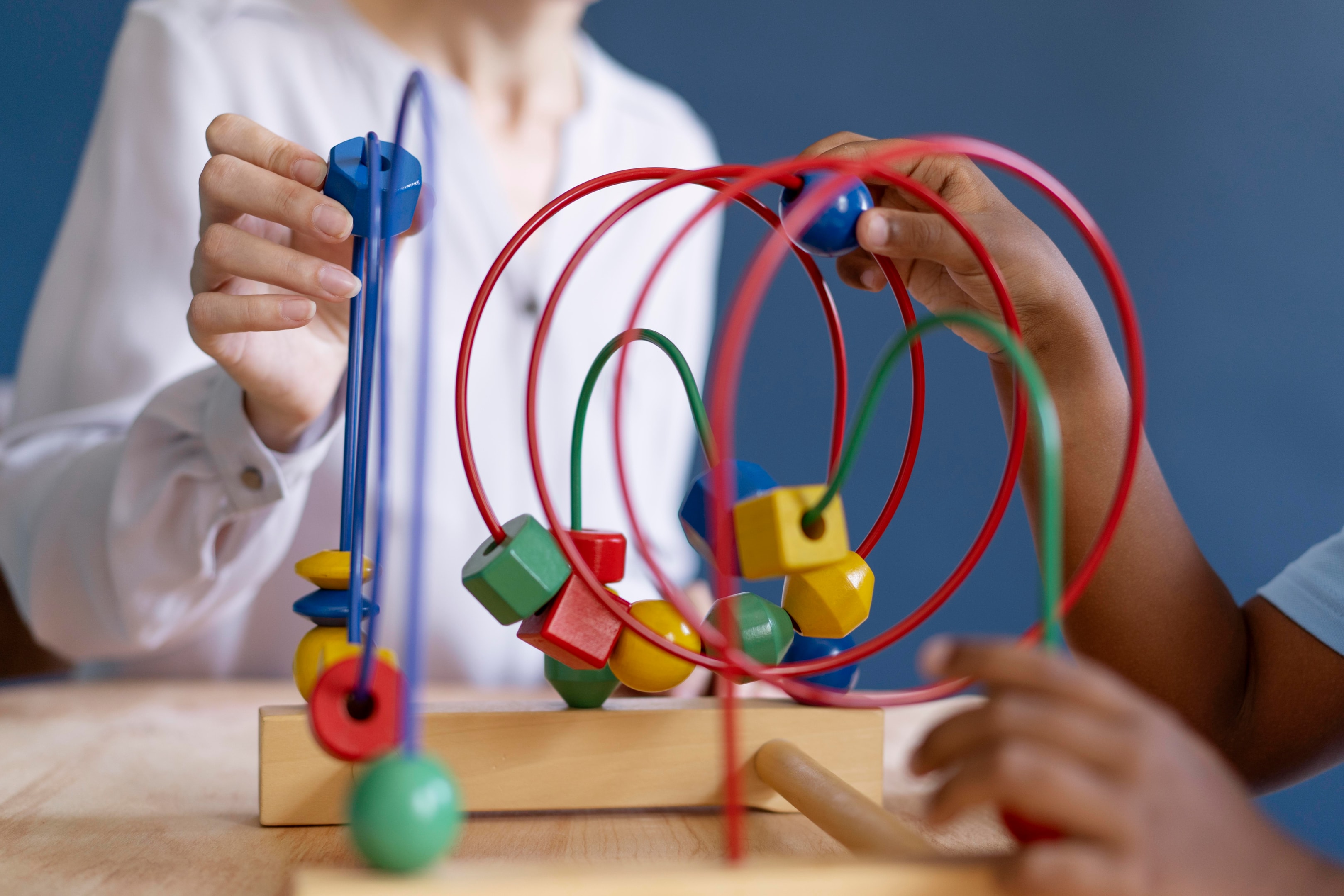
Dyspraxia is sometimes misinterpreted as laziness or clumsiness, but it is a life long condition rooted in the brain’s ability to plan and execute movements. While it can co-occur with ADHD, autism, or sensory issues, it is distinct in how it specifically affects motor skills and coordination. Understanding the signs and symptoms—like difficulty learning new movements or persistent trouble with writing—helps distinguish dyspraxia from other conditions. An accurate diagnosis allows families to pursue the right support and resources that can help their child thrive.
Developmental Co ordination Disorder vs. Developmental Coordination Disorder DCD
You may encounter both “developmental co ordination disorder” and “developmental coordination disorder DCD” when researching dyspraxia. These are simply two ways of referring to the same developmental condition. While the spelling may differ by region (e.g., UK vs. US), both terms describe a condition where children experience difficulties with motor skills, coordination, and the ability to perform everyday tasks at the level expected for their age and development.
How Does Dyspraxia Affect Daily Life and Development?
Dyspraxia can affect nearly every aspect of a child’s daily life. From difficulty playing with friends to struggles with writing, tying shoelaces, or managing time, children may feel constantly behind other children. These issues can lead to frustration, anxiety, and social withdrawal. As dyspraxia is diagnosed, families begin to understand that these challenges stem from the way the child’s brain processes movement and motor tasks. With the right support, children can build the confidence and skills needed to navigate life more independently.
What Dyspraxia Looks Like in Older Children
In older children, dyspraxia may present differently than in early years. As academic and social expectations grow, issues like poor time management, difficulty learning new motor sequences, or struggling with applying makeup become more noticeable. These children might have continued poor handwriting, avoid group sports, or feel overwhelmed by multi-step tasks. While some may find ways to compensate, many still need support through occupational therapy, speech therapy, or vision therapy to help improve their child’s motor skills and boost self-esteem.
How Is Dyspraxia Treated in Children?
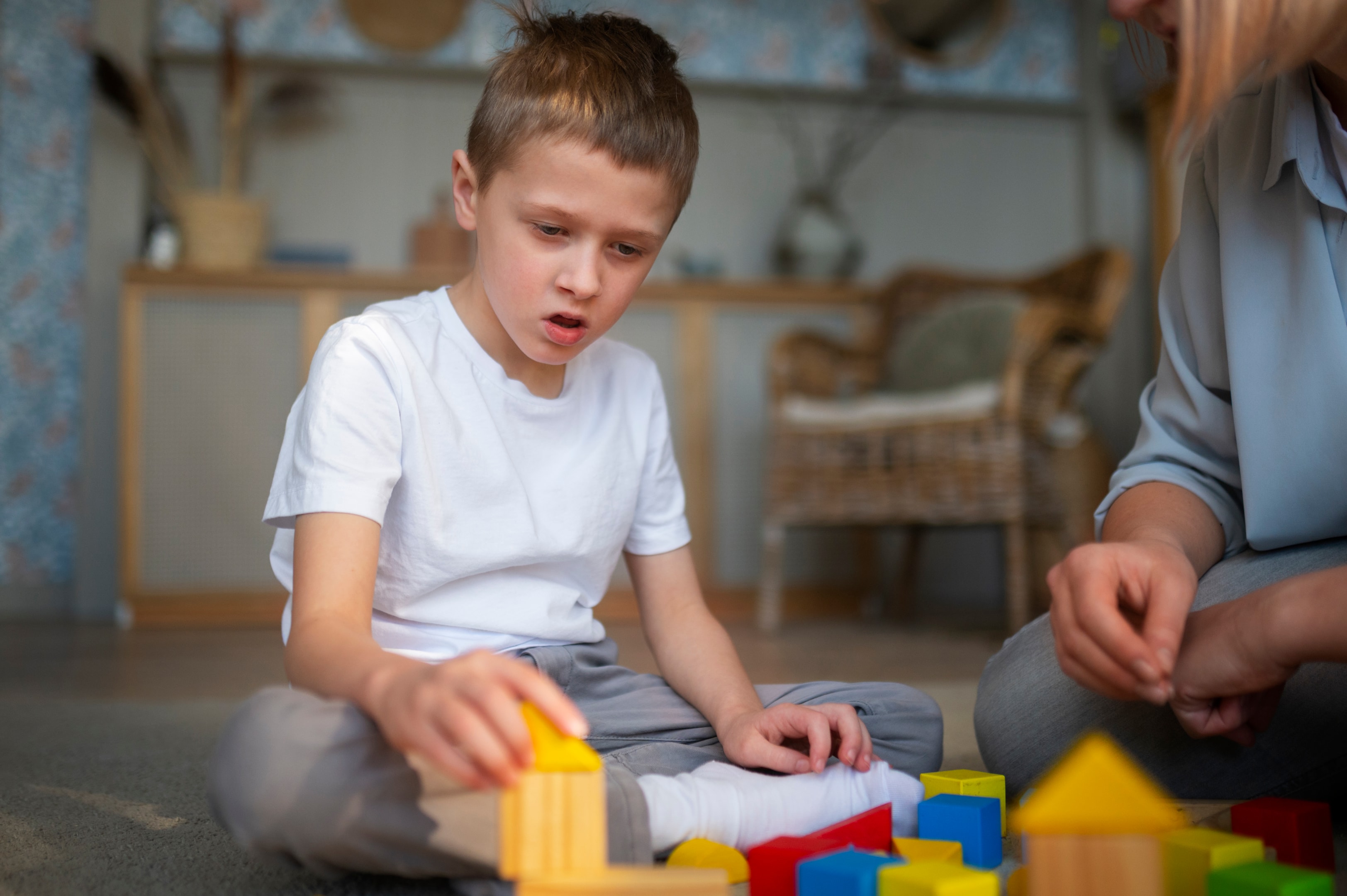
Though there’s no cure, dyspraxia is treated with a range of interventions tailored to each child’s needs. Occupational therapy helps improve both fine and gross motor skills, while physical therapy focuses on balance, muscle tone, and coordination. Speech therapy may be used if communication is affected. Some children benefit from vision therapy to address related visual-motor challenges. A structured, multidisciplinary approach is key to helping children learn new skills and gradually improve their ability to perform everyday tasks independently, both in school and at home.
Similarities and Differences in Children and Adults with Dyspraxia
While dispraxia is most often identified in children, it’s a life long condition that continues into adulthood. The core difficulties with motor skills, planning, and executing tasks remain, but they may look different over time. Children and adults both struggle with coordination challenges, but adults with dyspraxia often develop coping mechanisms to manage their daily lives. Despite this, both groups can experience difficulties with tasks like driving, cooking, or organizing. Early support helps children build lasting strategies that support independence in later life.
What to Know About Adults with Dyspraxia
Adults with dyspraxia may continue to face difficulties with coordination, multitasking, and memory. They might avoid activities that highlight their motor skill challenges or take longer to complete complex tasks. Many also report struggles with time management and writing at work. Since dyspraxia is diagnosed less frequently in adults, many remain undiagnosed. However, understanding childhood symptoms can offer insight. Support such as occupational therapy, workplace accommodations, or life coaching can help adults manage their challenges and build on their existing skills.
Helping Your Child Thrive: Right Support and Next Steps
Recognizing early signs of dyspraxia is the first step to helping your child succeed. Whether it’s difficulty playing, poor handwriting, or problems with coordination, seeking professional evaluation is key. With the right support, including therapies and tools that build foundational skills, children with dyspraxia can grow in confidence and independence. If you’re looking to support your child’s learning journey from an early age, consider trying Magrid—a research-based visual platform designed to strengthen motor, cognitive, and spatial reasoning skills through play.
Understanding the Difference Between Dyslexia and Dysgraphia

Dyslexia is the most common learning disorder among children, yet many early warning signs are missed during the first years of schooling. When early signs of dyslexia are spotted, families and educators can offer the right support at the right time. These signs often appear before a child starts school, but may go unnoticed due to the wide range of normal language development in young children. Early recognition can lead to early intervention, reducing the impact that dyslexia has on reading skills, spelling, and academic success. Identifying these difficulties early gives kids a better chance to thrive and reach their full potential.
¿Cuáles son los primeros síntomas de la dislexia?
The early signs of dyslexia are often subtle, but they can become clearer as a child begins to interact more with language, sounds, and words. These signs might include a hard time learning the alphabet, trouble recognizing rhyming patterns, or difficulty remembering familiar words. Dyslexia is a learning disorder that primarily affects the way the brain processes written and spoken language. Though most kids learn to blend sounds and develop basic reading abilities by the time they enter elementary school, those with dyslexia may show difficulty learning new vocabulary, confusion with similar-looking letters, or repeating the same word incorrectly. Noticing these patterns can help with early identification.
Recognizing Dyslexia Signs in Preschool-Aged Children
Even before a child starts school, there are dyslexia signs that parents, caregivers, and teachers can look for. In preschool, children might struggle to recognize letters, have trouble sounding out simple words, or find it difficult to speak clearly. Some may have a hard time naming familiar objects, recalling the right word, or identifying rhyming patterns in songs and stories. These early difficulties are often passed off as developmental delays, but they can be early warning signs of a common learning disorder. Children with a family history of learning disorders should be watched especially closely, as early support can make a significant difference before they reach third grade.
Early Signs of Dyslexia When a Child Starts School

When a child starts school, early signs of dyslexia may become more obvious. They might have trouble learning to spell, write, or understand basic instructions. These children often struggle with reading problems despite having had similar learning experiences as other children. They may confuse common words, forget them easily, or misread the same word multiple times. These patterns point to more than just a slow start—they’re indicators of a learning disorder. Early intervention at this age group is critical, as it sets the stage for academic success. With the right support, even struggling readers can begin overcoming dyslexia before difficulties compound in later grades.
Key Dyslexia Signs Related to Language and Speech
Some of the earliest signs of dyslexia show up in a child’s ability to understand and use spoken language. A child may struggle to speak clearly, often substituting or mixing up sounds in words. Others may have a hard time recalling familiar words or naming familiar objects. These challenges can lead to confusion when learning new words or understanding the meaning behind them. Because dyslexia affects how the brain processes language, it’s important to observe how a child listens, speaks, and responds to words and instructions early on.
Signs of Dyslexia in Elementary School Children
By the time a child enters elementary school, the signs of dyslexia often become more noticeable. Kids may show difficulty learning to read despite repeated efforts and quality teaching. They might struggle with spelling, have trouble sounding out words, or mix up letters like “b” and “d.” Reading aloud can be particularly stressful, revealing reading problems and gaps in alphabet knowledge. These children may need extra time to complete assignments and may fall behind their grade level. Without early intervention, these challenges can impact academic success and contribute to low self esteem in the classroom.
Common Signs That Often Go Unnoticed
Some of the most common signs of dyslexia are mistaken for lack of effort or attention. Children may consistently make mistakes reading the same word, confuse similar-looking letters, or skip small words entirely. They might have difficulty remembering verbal instructions or mixing up the order of sounds when trying to blend sounds. These subtle symptoms are easy to overlook, especially in the early grades. However, recognizing them as part of a broader pattern of difficulties can help identify children who are struggling before their challenges grow more serious.
Difficulty Learning Despite Regular Instruction
One key indicator of dyslexia is difficulty learning even when a child receives consistent, high-quality teaching. These children often fall behind in reading, spelling, and writing despite working hard. While other children start to make connections between letters and sounds, struggling learners may still be trying to recognize the alphabet or decode basic common words. This persistent gap in progress is a red flag—especially when there’s a family history of learning disorders. Teachers and parents should pay attention when a child makes limited progress, as it may point toward a need for a formal dyslexia diagnosis.
Trouble Sounding Out and Blending Words
One of the clearest early warning signs of dyslexia is trouble sounding out words and blending sounds. While most kids learn to connect letters with sounds in the early grades, children with dyslexia may show extreme difficulty forming full words from individual sounds. They might guess words based on shape or context rather than decoding them. These challenges can interfere with reading skills, spelling, and language development. Parents and teachers should note if a child avoids reading aloud or seems confused by new words, as these may be signs of a common learning disorder.
When Reading Problems Impact Confidence
As reading problems persist, they often begin to affect a child’s emotional well-being. Struggling readers may lose confidence, withdraw in class, or develop low self esteem. They may feel frustration when they can’t keep up with other children, especially as dyslexia affects tasks that seem simple to their peers, like reading common words or writing short sentences. These emotional symptoms are just as important to recognize as academic ones, especially in children who appear anxious or discouraged when faced with reading or writing assignments.
Comparing Struggling Readers to Other Children
When comparing struggling readers to other children, key differences emerge. A child with dyslexia may repeatedly misread the same word, reverse letters, or show difficulty remembering vocabulary that most of their classmates have mastered. These students often need extra time to complete tasks and may show trouble learning even with repetition. Dyslexia signs can be more noticeable when placed side by side with a peer group, especially by third grade, when more complex reading and writing skills are expected. Recognizing these disparities helps with earlier and more accurate identification.
The Role of Teachers and Parents in Noticing Early Signs
Both teachers and parents play a vital role in identifying the early signs of dyslexia. Because each child is different, it’s important to watch for consistent struggles in reading, spelling, and language development across settings. A teacher might notice that a student has difficulty following instructions or frequently confuses similar-looking letters, while a parent may observe that the child avoids books or can’t remember familiar words. Open communication between home and school makes it easier to connect patterns, raise concerns, and determine whether a child might benefit from an evaluation or early intervention.
Why Early Identification Is Crucial for Success

Early identification of dyslexia signs can make a profound difference in a child’s journey through school. When learning disorders like dyslexia are recognized early, children are more likely to receive the right support before frustration and failure set in. Early access to strategies like phonics-based instruction, extra reading time, and structured writing support can prevent long-term reading problems. For many, this is the turning point that leads to academic success. Identifying dyslexia in the early grades improves a child’s ability to build core skills and strengthens long-term confidence in learning.
Overcoming Dyslexia with the Right Support
Although dyslexia is a lifelong learning disorder, children can learn to thrive with the right support. Early intervention, personalized instruction, and supportive learning environments can help struggling readers overcome dyslexia and achieve real progress. With tools focused on phonemic awareness, structured spelling practice, and targeted reading help, children can develop essential skills despite early difficulties. Most importantly, knowing how dyslexia affects learning empowers both families and educators to take informed action that fosters growth, resilience, and educational success at every grade level.
Give Your Child the Tools for Success
If you’ve noticed any of the early signs of dyslexia in your child—such as difficulty learning letters, trouble sounding out words, or frequent reading mistakes—don’t wait. The sooner you act, the better the outcomes. Dyslexia diagnosis and early intervention open the door to customized strategies that help children succeed, especially during the critical elementary school years.
Magrid offers visual, multisensory learning tools designed to support children with diverse learning needs. Whether your child is showing early warning signs or is already one of many struggling readers, Magrid’s structured, language-free platform provides targeted help where it’s needed most.
Support your child’s learning journey today by exploring how Magrid can help transform challenges into opportunities for growth and lasting success.
How to Spot Early Signs of Dyslexia

Why Early Identification Matters
Dyslexia is the most common learning disorder among children, yet many early warning signs are missed during the first years of schooling. When early signs of dyslexia are spotted, families and educators can offer the right support at the right time. These signs often appear before a child starts school, but may go unnoticed due to the wide range of normal language development in young children. Early recognition can lead to early intervention, reducing the impact that dyslexia has on reading skills, spelling, and academic success. Identifying these difficulties early gives kids a better chance to thrive and reach their full potential.
¿Cuáles son los primeros síntomas de la dislexia?
The early signs of dyslexia are often subtle, but they can become clearer as a child begins to interact more with language, sounds, and words. These signs might include a hard time learning the alphabet, trouble recognizing rhyming patterns, or difficulty remembering familiar words. Dyslexia is a learning disorder that primarily affects the way the brain processes written and spoken language. Though most kids learn to blend sounds and develop basic reading abilities by the time they enter elementary school, those with dyslexia may show difficulty learning new vocabulary, confusion with similar-looking letters, or repeating the same word incorrectly. Noticing these patterns can help with early identification.
Recognizing Dyslexia Signs in Preschool-Aged Children
Even before a child starts school, there are dyslexia signs that parents, caregivers, and teachers can look for. In preschool, children might struggle to recognize letters, have trouble sounding out simple words, or find it difficult to speak clearly. Some may have a hard time naming familiar objects, recalling the right word, or identifying rhyming patterns in songs and stories. These early difficulties are often passed off as developmental delays, but they can be early warning signs of a common learning disorder. Children with a family history of learning disorders should be watched especially closely, as early support can make a significant difference before they reach third grade.
Early Signs of Dyslexia When a Child Starts School
When a child starts school, early signs of dyslexia may become more obvious. They might have trouble learning to spell, write, or understand basic instructions. These children often struggle with reading problems despite having had similar learning experiences as other children. They may confuse common words, forget them easily, or misread the same word multiple times. These patterns point to more than just a slow start—they’re indicators of a learning disorder. Early intervention at this age group is critical, as it sets the stage for academic success. With the right support, even struggling readers can begin overcoming dyslexia before difficulties compound in later grades.
Key Dyslexia Signs Related to Language and Speech
Some of the earliest signs of dyslexia show up in a child’s ability to understand and use spoken language. A child may struggle to speak clearly, often substituting or mixing up sounds in words. Others may have a hard time recalling familiar words or naming familiar objects. These challenges can lead to confusion when learning new words or understanding the meaning behind them. Because dyslexia affects how the brain processes language, it’s important to observe how a child listens, speaks, and responds to words and instructions early on.
Signs of Dyslexia in Elementary School Children
By the time a child enters elementary school, the signs of dyslexia often become more noticeable. Kids may show difficulty learning to read despite repeated efforts and quality teaching. They might struggle with spelling, have trouble sounding out words, or mix up letters like “b” and “d.” Reading aloud can be particularly stressful, revealing reading problems and gaps in alphabet knowledge. These children may need extra time to complete assignments and may fall behind their grade level. Without early intervention, these challenges can impact academic success and contribute to low self esteem in the classroom.
Common Signs That Often Go Unnoticed
Some of the most common signs of dyslexia are mistaken for lack of effort or attention. Children may consistently make mistakes reading the same word, confuse similar-looking letters, or skip small words entirely. They might have difficulty remembering verbal instructions or mixing up the order of sounds when trying to blend sounds. These subtle symptoms are easy to overlook, especially in the early grades. However, recognizing them as part of a broader pattern of difficulties can help identify children who are struggling before their challenges grow more serious.
Difficulty Learning Despite Regular Instruction
One key indicator of dyslexia is difficulty learning even when a child receives consistent, high-quality teaching. These children often fall behind in reading, spelling, and writing despite working hard. While other children start to make connections between letters and sounds, struggling learners may still be trying to recognize the alphabet or decode basic common words. This persistent gap in progress is a red flag—especially when there’s a family history of learning disorders. Teachers and parents should pay attention when a child makes limited progress, as it may point toward a need for a formal dyslexia diagnosis.
Trouble Sounding Out and Blending Words
One of the clearest early warning signs of dyslexia is trouble sounding out words and blending sounds. While most kids learn to connect letters with sounds in the early grades, children with dyslexia may show extreme difficulty forming full words from individual sounds. They might guess words based on shape or context rather than decoding them. These challenges can interfere with reading skills, spelling, and language development. Parents and teachers should note if a child avoids reading aloud or seems confused by new words, as these may be signs of a common learning disorder.
When Reading Problems Impact Confidence
As reading problems persist, they often begin to affect a child’s emotional well-being. Struggling readers may lose confidence, withdraw in class, or develop low self esteem. They may feel frustration when they can’t keep up with other children, especially as dyslexia affects tasks that seem simple to their peers, like reading common words or writing short sentences. These emotional symptoms are just as important to recognize as academic ones, especially in children who appear anxious or discouraged when faced with reading or writing assignments.
Comparing Struggling Readers to Other Children
When comparing struggling readers to other children, key differences emerge. A child with dyslexia may repeatedly misread the same word, reverse letters, or show difficulty remembering vocabulary that most of their classmates have mastered. These students often need extra time to complete tasks and may show trouble learning even with repetition. Dyslexia signs can be more noticeable when placed side by side with a peer group, especially by third grade, when more complex reading and writing skills are expected. Recognizing these disparities helps with earlier and more accurate identification.
The Role of Teachers and Parents in Noticing Early Signs
Both teachers and parents play a vital role in identifying the early signs of dyslexia. Because each child is different, it’s important to watch for consistent struggles in reading, spelling, and language development across settings. A teacher might notice that a student has difficulty following instructions or frequently confuses similar-looking letters, while a parent may observe that the child avoids books or can’t remember familiar words. Open communication between home and school makes it easier to connect patterns, raise concerns, and determine whether a child might benefit from an evaluation or early intervention.
Why Early Identification Is Crucial for Success
Early identification of dyslexia signs can make a profound difference in a child’s journey through school. When learning disorders like dyslexia are recognized early, children are more likely to receive the right support before frustration and failure set in. Early access to strategies like phonics-based instruction, extra reading time, and structured writing support can prevent long-term reading problems. For many, this is the turning point that leads to academic success. Identifying dyslexia in the early grades improves a child’s ability to build core skills and strengthens long-term confidence in learning.
Overcoming Dyslexia with the Right Support
Although dyslexia is a lifelong learning disorder, children can learn to thrive with the right support. Early intervention, personalized instruction, and supportive learning environments can help struggling readers overcome dyslexia and achieve real progress. With tools focused on phonemic awareness, structured spelling practice, and targeted reading help, children can develop essential skills despite early difficulties. Most importantly, knowing how dyslexia affects learning empowers both families and educators to take informed action that fosters growth, resilience, and educational success at every grade level.
Give Your Child the Tools for Success
If you’ve noticed any of the early signs of dyslexia in your child—such as difficulty learning letters, trouble sounding out words, or frequent reading mistakes—don’t wait. The sooner you act, the better the outcomes. Dyslexia diagnosis and early intervention open the door to customized strategies that help children succeed, especially during the critical elementary school years.
Magrid offers visual, multisensory learning tools designed to support children with diverse learning needs. Whether your child is showing early warning signs or is already one of many struggling readers, Magrid’s structured, language-free platform provides targeted help where it’s needed most.
Support your child’s learning journey today by exploring how Magrid can help transform challenges into opportunities for growth and lasting success.
Desarrollo de la memoria de trabajo en la primera infancia: estrategias para niños con un desarrollo típico
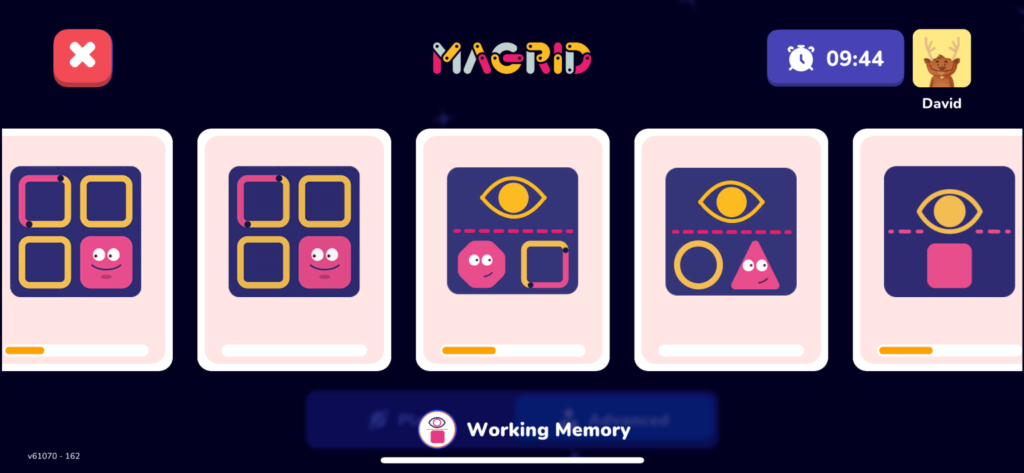
En los primeros años de vida, los niños no solo aprenden a contar o a leer, sino que aprenden a aprender. En el centro de este proceso se encuentra la memoria de trabajo, una habilidad cognitiva fundamental que permite a los niños retener y manipular información en su mente durante breves periodos de tiempo. Es lo que ayuda a un niño a recordar los pasos para lavarse los dientes, seguir las instrucciones de varios pasos de un profesor o llevar la cuenta de los números en un juego de contar.
Aunque a menudo se pasa por alto, la memoria de trabajo es un potente indicador del éxito académico, especialmente en matemáticas y en la alfabetización. En el caso de los niños con un desarrollo típico, desempeña un papel esencial en la transición de la exploración a través del juego a entornos de aprendizaje más estructurados. Este artículo analiza estrategias prácticas y adecuadas al nivel de desarrollo que los educadores y cuidadores pueden utilizar para ayudar a fortalecer la memoria de trabajo en los jóvenes estudiantes.
¿Qué es la memoria de trabajo y por qué es importante en la primera infancia?
La memoria de trabajo puede compararse con una nota adhesiva mental para los niños: les ayuda a retener fragmentos de información el tiempo justo necesario para utilizarlos. Esto puede incluir recordar el final de una frase mientras leen el principio, mantener un número en la mente mientras resuelven un problema matemático sencillo o recordar el siguiente paso de una rutina en el aula.
En la educación infantil, una memoria de trabajo sólida favorece la atención, la resolución de problemas y la capacidad de seguir instrucciones. Además, está estrechamente relacionada con la función ejecutiva, que incluye habilidades como el control de los impulsos y la capacidad de cambiar de tarea. Por ejemplo, un niño con una memoria de trabajo bien desarrollada tiene más probabilidades de mantenerse concentrado en la tarea, recordar las normas del aula y participar de forma activa en las actividades en grupo.
Un subtipo especialmente importante es la memoria de trabajo visoespacial, es decir, la capacidad de retener y manipular información visual y espacial. Esta habilidad es la base de las primeras habilidades numéricas, como estimar cantidades, reconocer patrones y comprender las formas y el espacio. Cuando los niños desarrollan esta capacidad desde una edad temprana, están mejor preparados para abordar los conceptos matemáticos fundamentales.
Utiliza recursos visuales y representaciones de la vida real
Una de las formas más eficaces de potenciar la memoria de trabajo en los niños pequeños es mediante el aprendizaje visual. A los niños pequeños a menudo les cuesta retener en la mente las instrucciones verbales, pero los elementos visuales les proporcionan algo concreto en lo que basar su comprensión. Por ejemplo, en lugar de limitarse a decir “primero guarda tu juguete y luego lávate las manos”, un profesor podría utilizar una tabla ilustrada con iconos sencillos que muestren cada paso. Esto ayuda a los niños a retener la información y a ponerla en práctica de forma más fiable.
Las representaciones de la vida real también ayudan a que los conceptos abstractos resulten más fáciles de asimilar. En las primeras etapas del aprendizaje de las matemáticas, el uso de objetos físicos como botones, bloques o frutas permite a los niños ver y tocar lo que están contando o agrupando. Esta interacción tangible reduce el esfuerzo mental que supone mantener los números en la cabeza y favorece la memoria a través de la participación sensorial.
El apoyo visual no es solo un complemento, sino una estrategia que aprovecha la forma en que el cerebro de los más pequeños procesa y retiene la información de forma natural. Ya sea mediante diagramas etiquetados, guiones gráficos o rutinas ilustradas, los elementos visuales ayudan a los niños a alcanzar el éxito al mantener la información clave visible, familiar y accesible.
Divide las tareas en pasos más pequeños y manejables
Incluso a los niños pequeños con un desarrollo típico les pueden resultar abrumadoras las instrucciones que constan de varios pasos. Cuantos más pasos incluya una tarea, mayor será la memoria de trabajo necesaria para llevarla a cabo. Una estrategia sencilla pero eficaz consiste en dividir las tareas en partes más pequeñas y secuenciales, y guiar a los niños de forma clara a lo largo de cada paso.
Este enfoque —conocido a menudo como “andamiaje educativo”— ayuda a los niños a centrarse en una parte manejable de información cada vez. Por ejemplo, en lugar de decir: “Dibuja tu casa, píntala y luego escribe tu nombre”, un profesor podría empezar diciendo: «Primero, dibuja tu casa. Avísame cuando hayas terminado». Una vez completado el primer paso, se da la siguiente instrucción.
El uso de indicaciones verbales junto con señales físicas (como señalar los materiales o mostrar cómo se realizan las acciones) puede reducir aún más la carga cognitiva. Las listas de verificación visuales también son eficaces, ya que permiten a los niños seguir su propio progreso paso a paso.
Al simplificar la cantidad de información que los niños deben retener mentalmente al mismo tiempo, los educadores les preparan para el éxito y desarrollan su capacidad para llevar a cabo tareas más complejas con el paso del tiempo.
La repetición y el ritmo para reforzar el aprendizaje
La repetición es fundamental en la primera infancia: es la forma en que los niños adquieren familiaridad, confianza y fluidez. En lo que respecta a la memoria de trabajo, la repetición y el ritmo ayudan a consolidar las conexiones neuronales, lo que facilita que los niños retengan y recuperen información con el paso del tiempo.
Las canciones, los cánticos y las actividades rítmicas son herramientas especialmente eficaces. Por ejemplo, un niño puede aprender a contar hasta diez no mediante la memorización mecánica, sino cantando una melodía pegadiza que integra los números en una estructura predecible. Las rimas y los patrones rítmicos reducen el esfuerzo cognitivo que supone recordar y fomentan la automatización, especialmente en entornos grupales, donde la repetición se convierte en parte de la rutina social.
La repetición también favorece el aprendizaje en diferentes contextos. Si los niños practican repetidamente la misma habilidad basada en la memoria (como ordenar secuencias o emparejar elementos) en diversos formatos —rompecabezas, juegos, actividades físicas—, es más probable que apliquen esas habilidades de forma flexible. De este modo, la repetición se convierte en un puente entre la retención a corto plazo y la comprensión a largo plazo.
Cómo Magrid refuerza la memoria de trabajo a través de la práctica lúdica
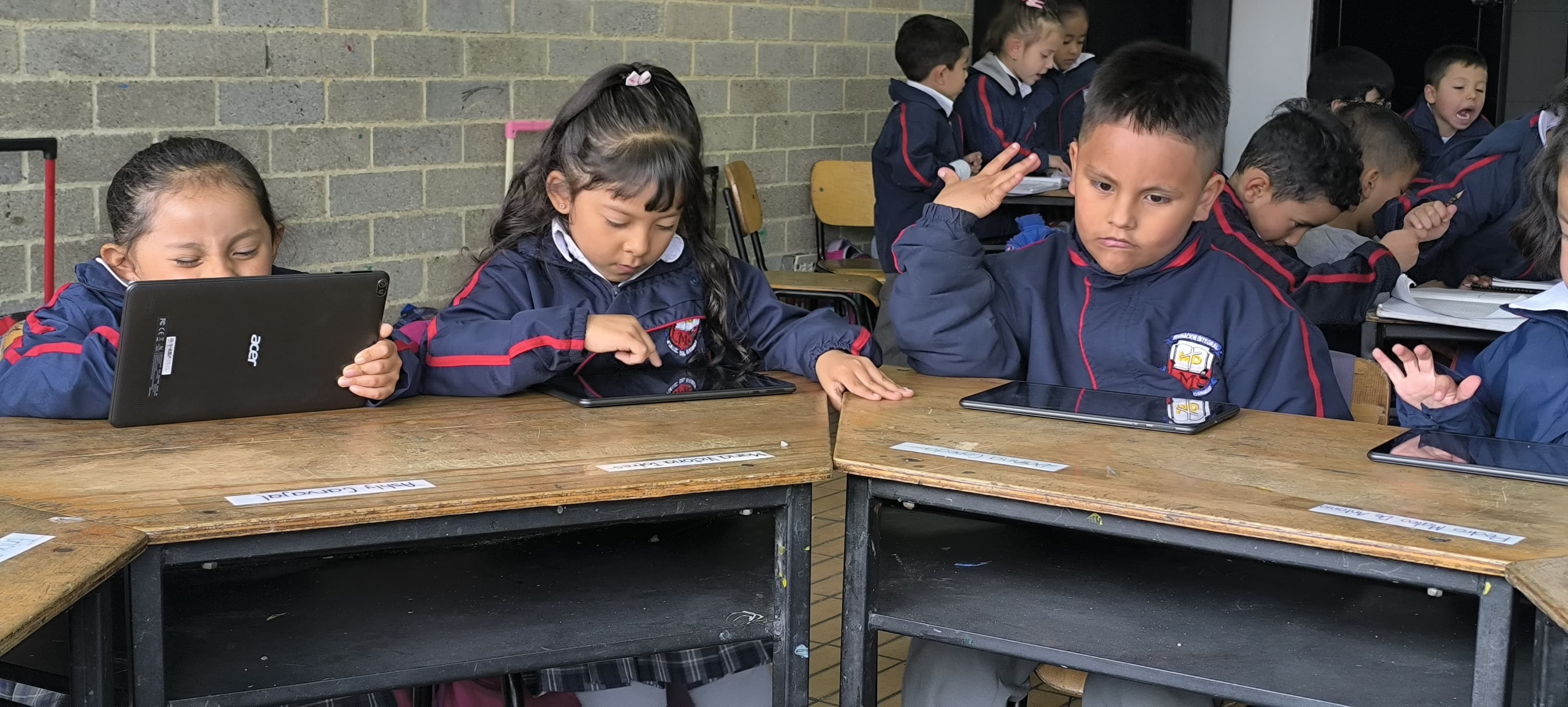
Aunque los docentes pueden hacer mucho para potenciar la memoria de trabajo en el aula, las herramientas adecuadas pueden amplificar ese impacto. Magrid es una de esas herramientas: una plataforma de aprendizaje inclusiva y basada en la investigación que integra el desarrollo de la memoria de trabajo directamente en sus actividades matemáticas.
Lo que hace que Magrid sea único es su capacidad para transformar las habilidades de memoria abstractas en experiencias atractivas y accesibles. Su diseño visual y sin lenguaje elimina las distracciones innecesarias, lo que permite a los niños centrarse por completo en la tarea que tienen entre manos. Muchas de sus más de 3.000 actividades están estructuradas para estimular la memoria de trabajo mediante retos breves y específicos cuya complejidad va aumentando progresivamente.
A continuación te ofrecemos algunos ejemplos de cómo Magrid entrena la memoria de trabajo:
- La actividad de colorear según el diagrama exige a los niños que observen un patrón de colores y luego lo reproduzcan en un espacio diferente, lo que les anima a retener la información visual en la memoria durante un breve instante antes de actuar en consecuencia.
- «Visual Color Memory» presenta una figura con secciones de colores que desaparecen antes de que los niños tengan que recordar y seleccionar la posición correcta.
- El juego «Color Fill Memory» aumenta la dificultad al exigir que se recuerden varios datos —posición, color y orden— en un breve lapso de tiempo.
- El juego «Memoria de ubicación de personajes» refuerza la memoria espacial al pedir a los niños que recuerden tanto lo que han visto como dónde aparecía.

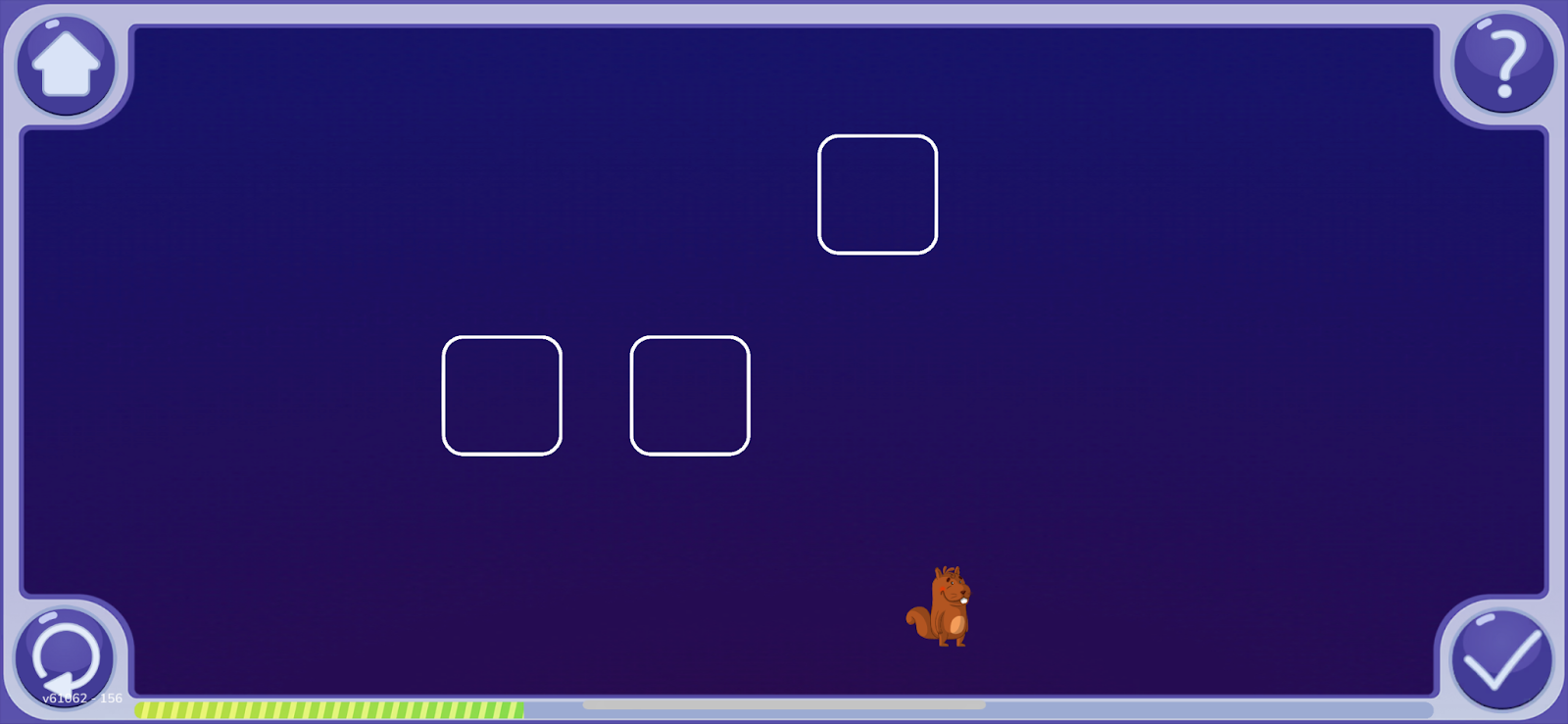
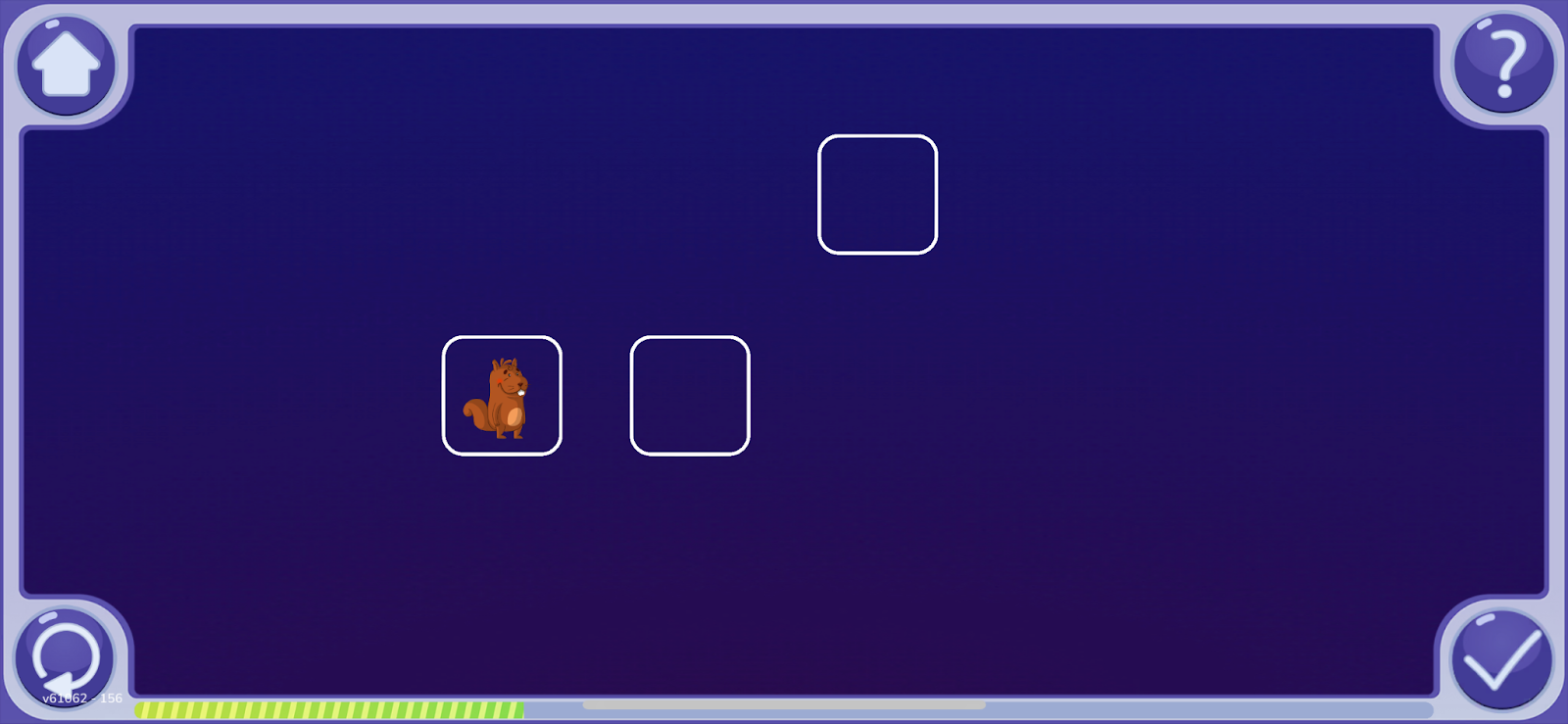
Estas actividades no son meros ejercicios de memoria, sino que son lúdicas, interactivas y adecuadas para cada etapa de desarrollo. Magrid combina las matemáticas y la memoria en una experiencia fluida, lo que refuerza tanto el desarrollo cognitivo como el académico. Su estructura, que permite a cada uno avanzar a su propio ritmo, está pensada para niños de entre 4 y 7 años y sigue siendo eficaz para alumnos con necesidades especiales hasta los 12 años.
Para los profesores, Magrid es fácil de integrar en las rutinas diarias. Y para los niños, ofrece una forma divertida y centrada de desarrollar habilidades cognitivas fundamentales que van mucho más allá de las matemáticas.
Utiliza el movimiento y los descansos para revitalizar la capacidad cognitiva
Los niños pequeños tienen una capacidad limitada de memoria de trabajo y se cansan mentalmente con rapidez. Para mantener la atención y favorecer la retención de la memoria, necesitan oportunidades para recargar pilas. Ahí es donde entran en juego los descansos cognitivos y el movimiento.
Las pausas breves y deliberadas entre tareas dan tiempo al cerebro para procesar la información y descansar. Un descanso de cinco minutos para moverse tras una actividad que requiera concentración puede ayudar a los niños a retomar la actividad con una atención renovada. Esto no tiene por qué alterar el ritmo de la jornada: se pueden incorporar directamente al ritmo de la clase estiramientos rápidos, bailes en los que hay que quedarse quietos o ejercicios de respiración consciente.
El propio aprendizaje basado en el movimiento también puede reforzar la memoria. Actividades como saltar a puntos numerados en el suelo o utilizar gestos con las manos para recordar las secuencias de un cuento combinan la memoria cinestésica con señales visuales y auditivas. Estas experiencias multisensoriales proporcionan múltiples puntos de acceso para la memorización y una mayor implicación.
En lugar de obligar a los niños a realizar largas sesiones de trabajo concentrado, alternar el esfuerzo con el descanso respeta las necesidades de desarrollo de los más pequeños y ayuda a preservar la memoria de trabajo para cuando más se necesita.
Fomentar el aprendizaje práctico: aprendizaje táctil e interactivo
Los niños aprenden mejor cuando participan activamente en su propio proceso de descubrimiento. Esto es especialmente cierto en el desarrollo de la memoria de trabajo, que se potencia con experiencias prácticas e interactivas.
Cuando los niños manipulan materiales físicos —como clasificar objetos, crear patrones o resolver rompecabezas—, no solo están aprendiendo sobre formas o números. También están fortaleciendo los sistemas cognitivos que les ayudan a retener y utilizar la información en tiempo real. Por ejemplo, ordenar bloques de colores para reproducir un modelo requiere tener ese modelo en mente, llevar la cuenta de lo que ya se ha colocado y decidir qué viene a continuación.
El aprendizaje interactivo también fomenta la participación. Los niños tienden a mantenerse más concentrados y a completar las tareas cuando pueden tocar, mover y explorar. Esta motivación natural favorece la memoria, ya que mantiene la atención y crea asociaciones significativas con la experiencia de aprendizaje.
Ya sea mediante cajas sensoriales, juegos de contar o estaciones de construcción, ofrecer a los niños oportunidades para aprender haciendo es una de las formas más eficaces de desarrollar la memoria y profundizar en la comprensión.
Hacer de la memoria de trabajo un tema central en el día a día del aula
La memoria de trabajo no es solo una habilidad cognitiva, sino un elemento fundamental para el éxito del aprendizaje en la primera infancia. Cuando los niños son capaces de retener y utilizar la información de forma eficaz, están mejor preparados para seguir instrucciones, resolver problemas e interactuar de forma significativa con los contenidos académicos.
La buena noticia es que potenciar la memoria de trabajo no requiere una revisión a fondo del plan de estudios. Todo empieza por tomar decisiones deliberadas: utilizar elementos visuales, estructurar las tareas en partes más manejables, incorporar la repetición y el movimiento, y ofrecer a los niños oportunidades para aprender a través de la acción. Estas estrategias no solo mejoran la memoria, sino que también potencian la concentración, la independencia y la confianza.
Al integrar estas prácticas en las rutinas diarias del aula, los educadores pueden garantizar que el desarrollo de la memoria de trabajo no sea un elemento secundario, sino una parte natural y esencial de la educación infantil.
Crea unas bases de aprendizaje más sólidas con Magrid
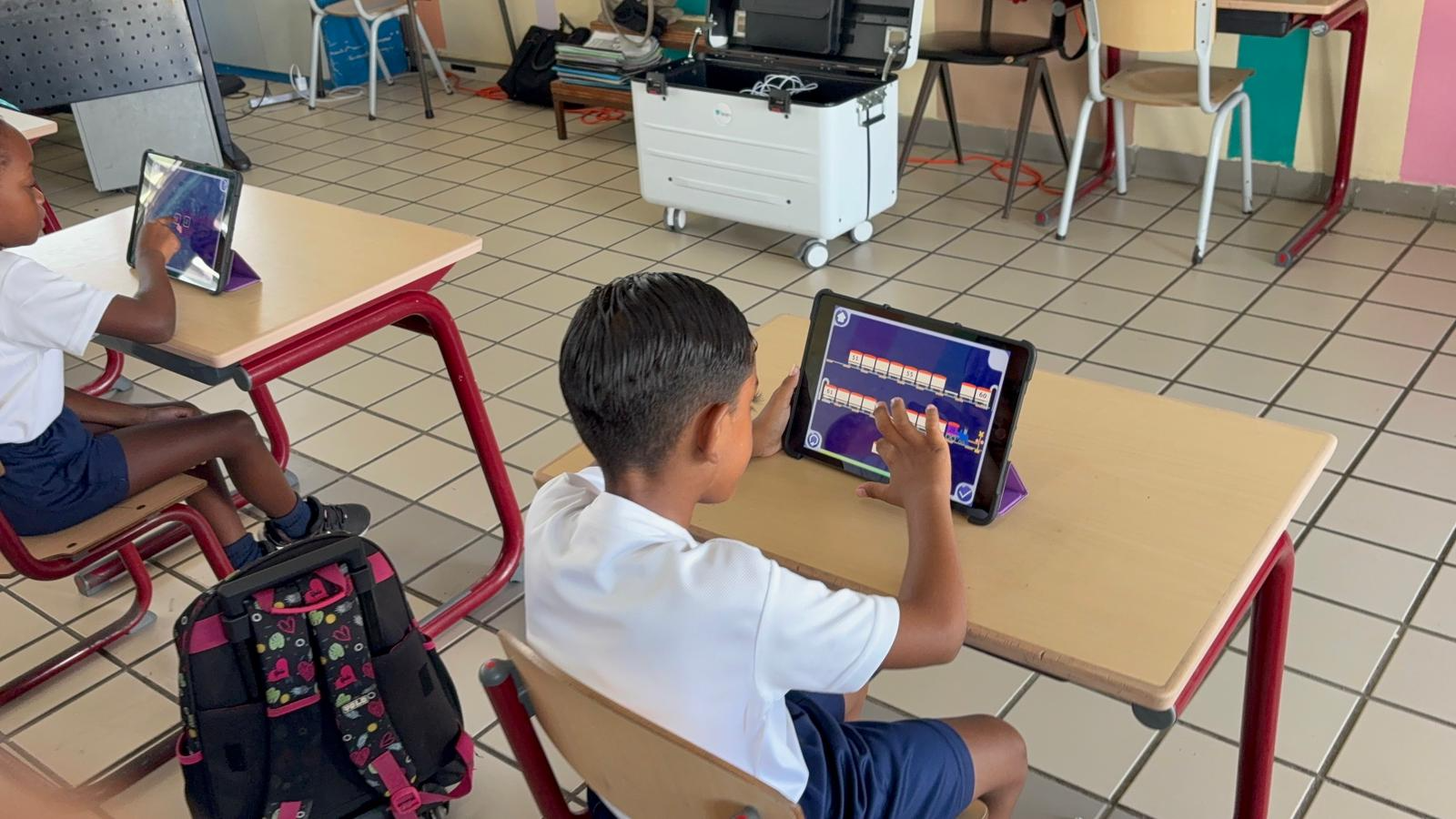
Si buscas una forma eficaz de potenciar la memoria de trabajo al tiempo que enseñas las competencias académicas básicas, Magrid ofrece una solución práctica y respaldada por la investigación. Diseñado específicamente para los más pequeños, Magrid convierte cada interacción en una oportunidad para desarrollar la memoria, a través de tareas visuales, retos interactivos y actividades adaptadas a su nivel de desarrollo.
Tanto si eres un profesor que busca herramientas para apoyar a todos los alumnos como si eres un padre o una madre que busca que el tiempo que sus hijos pasan frente a la pantalla en casa sea provechoso, Magrid ofrece un espacio tranquilo e inclusivo en el que los niños pueden reforzar sus bases cognitivas al tiempo que ganan confianza en las matemáticas.
Visita magrid.com para descubrir cómo Magrid puede convertirse en un socio de confianza en tu entorno de aprendizaje.
Recursos para seguir aprendiendo
- Working Memory and Learning: A Practical Guide for Teachers by Susan Gathercole & Tracy Alloway
- Centro de Harvard para el Desarrollo Infantil – Investigación sobre la función ejecutiva y el desarrollo cognitivo
- Magrid.com – Más información sobre el enfoque de Magrid respecto a las matemáticas y la memoria
What Causes Dyscalculia? Understanding the Root Problems

Dyscalculia is a math learning disability that affects a person’s ability to understand math concepts, recognize numbers, and perform calculations. Often referred to as math dyslexia, this condition impacts more than just math tests—it interferes with everyday life activities like reading phone numbers, managing time concepts, or estimating distances. As students struggle with basic math skills, their math anxiety and math failure may increase. Understanding what causes dyscalculia is essential for teachers, parents, and professionals to support children with dyscalculia through early identification and effective interventions. In this article, we’ll explore the underlying causes and highlight ways to improve math skills and learning math outcomes.
What Causes Dyscalculia? Exploring the Leading Theories
So, what causes dyscalculia? While no single factor explains all cases, research shows that dyscalculia often stems from a combination of genetic, neurological, and developmental influences. Developmental dyscalculia can arise early in life and may be linked to differences in brain development, particularly in the parietal lobe, which is involved in mathematical reasoning, number sense, and processing math facts. Environmental and biological factors—like fetal alcohol syndrome, low birth weight, or Turner’s syndrome—also play a role. In some cases, a brain injury may lead to acquired dyscalculia. Understanding these causes of dyscalculia helps explain why some children struggle with math problems, counting, and even grasping basic number concepts despite having strong abilities in other subjects.
The Role of Brain Development and Structure
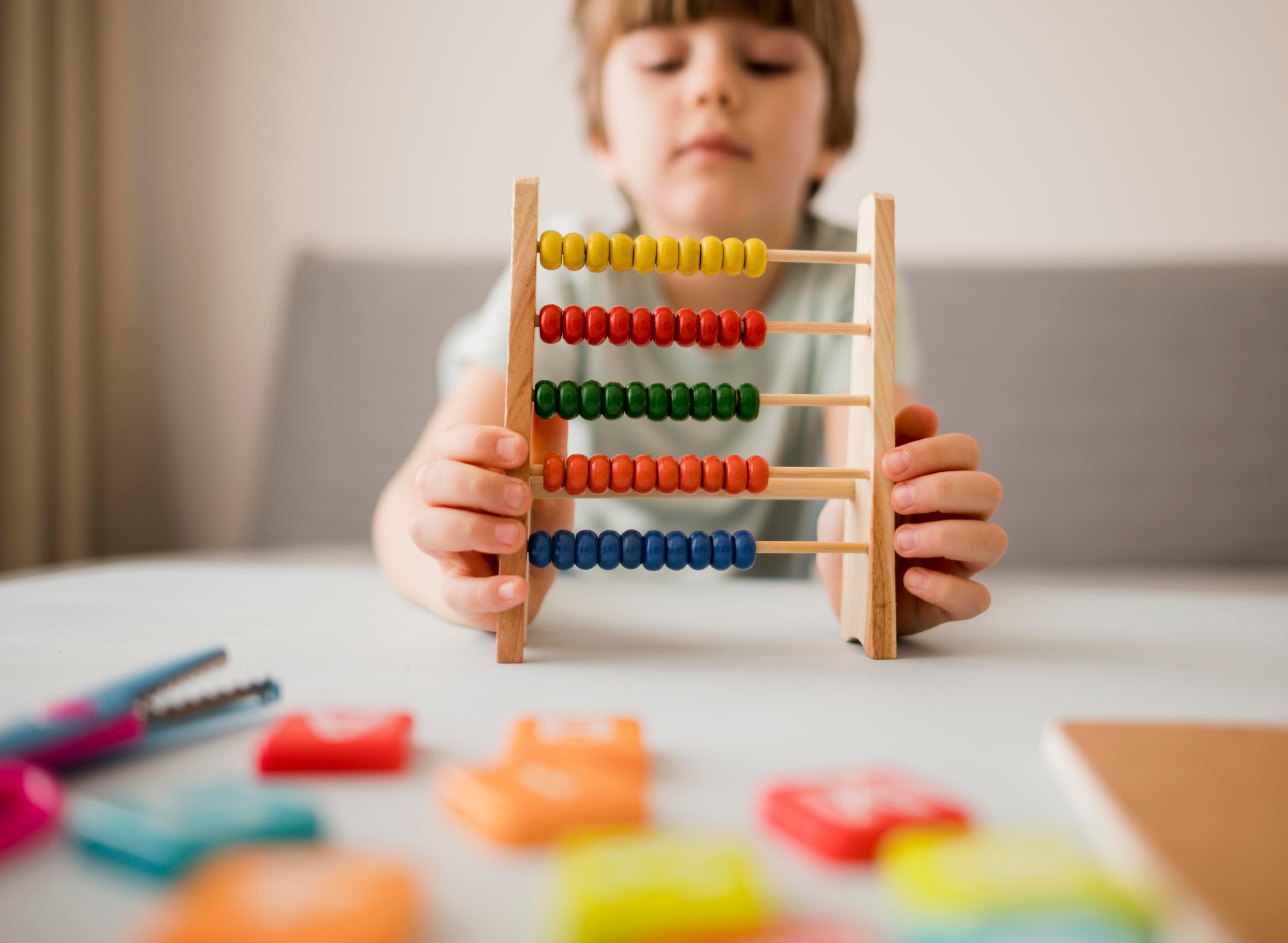
Brain development plays a critical role in how we understand and work with numbers. Studies link dyscalculia to structural and functional differences in the right parietal lobe, an area essential for processing number lines, place value, and two-digit comparisons. In addition to the parietal lobe, the frontal lobe is involved in working memory, helping us hold and manipulate numbers when solving problems or interpreting word problems. Differences in these brain regions can make it difficult for students to process math facts quickly or maintain focus, especially when filtering out irrelevant information. This neurological difference is central to understanding what causes dyscalculia and how it impacts a child’s ability to learn.
How Learning Disability Factors into Math Challenges
Dyscalculia is classified as a specific learning disorder, specifically a learning disability affecting numerical understanding. Unlike general academic struggles, this learning disorder primarily interferes with basic math, math concepts, and number sense, making tasks like keeping track of steps in math problems or recalling math rules more difficult. Many children with dyscalculia also have related conditions like dyslexia or ADHD, which can further complicate learning math. These overlapping conditions may reduce a child’s ability to connect symbols to quantities or perform calculations fluently. Recognizing dyscalculia as a true learning disability helps ensure appropriate support is provided in school and at home through targeted strategies.
Genetics and First Degree Family Members
Genetics can play a significant role in what causes dyscalculia. Research indicates that if first degree family members—like parents or siblings—have a learning disability such as dyslexia or dyscalculia, children are at a higher risk of developing similar difficulties. These inherited traits can affect brain development, including regions responsible for mathematical reasoning and visual memory. This may result in early struggles with basic number concepts, math facts, or the ability to understand place value, even before formal math instruction begins.
Developmental Dyscalculia vs. Acquired Dyscalculia
It’s important to distinguish between developmental dyscalculia and acquired dyscalculia. The former usually appears in childhood and can be related to early neurological or developmental differences, which may include genetics. Acquired dyscalculia, however, can develop later in life as a result of a brain injury affecting areas like the parietal lobe. Both types can lead to difficulty understanding math concepts, retaining math facts, or interpreting number lines. Recognizing the difference helps educators choose appropriate interventions tailored to the child’s ability and developmental stage.
Math Dyslexia and Visual Memory Difficulties
Often referred to as math dyslexia, dyscalculia involves more than just trouble with numbers. One key issue is poor visual memory, which affects the ability to recognize patterns, remember math facts, or track positions on number lines. Many students with dyscalculia struggle to differentiate symbols like + and × or to align two digits correctly in multi-step math problems. These challenges can lead to confusion when solving word problems or recalling basic math procedures. When visual memory and working memory are impaired, the process of learning math becomes far more difficult, increasing frustration and math anxiety.
Understanding the Signs of Dyscalculia in Children
Recognizing the signs of dyscalculia early can make a big difference. Children with dyscalculia may have difficulty with counting, memorizing math facts, understanding time concepts, or estimating quantities in everyday life. They often struggle with basic number concepts, such as what “more” or “less” means, and may avoid math tests due to fear of failure. Teachers may notice issues with sequencing steps or keeping track of operations. Identifying these signs allows for early identification, which is essential to improving a child’s ability and reducing long-term impacts on their math skills.
How Math Anxiety Impacts Learning Math
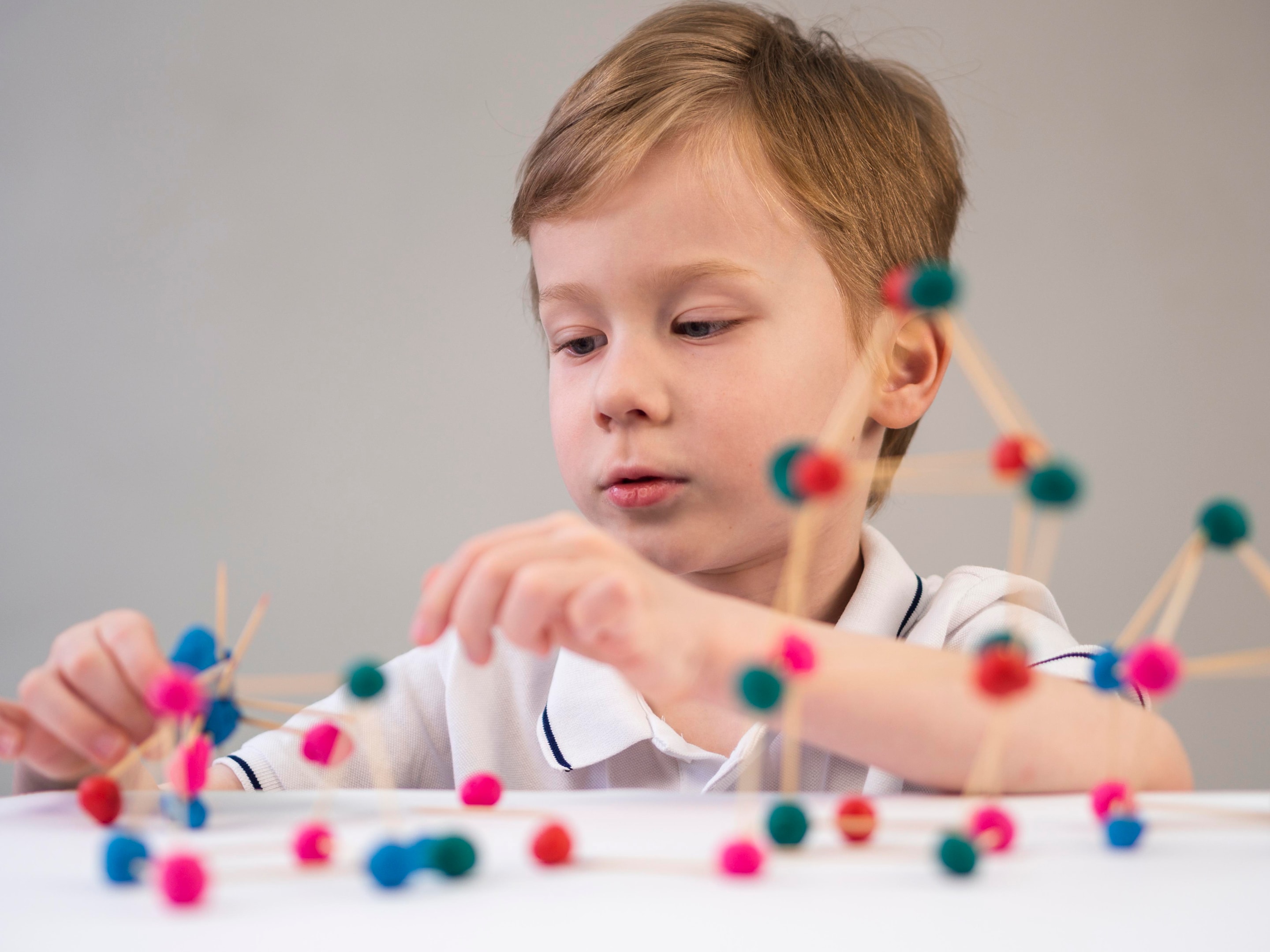
Math anxiety is a common emotional barrier that worsens difficulties for people with dyscalculia. When students feel anxious, their working memory becomes overloaded, making it harder to process math problems, understand place value, or retain math facts. This emotional stress may stem from repeated math failure, poor test experiences, or being compared to peers in school. Over time, math anxiety can lead to avoidance, reducing exposure to math concepts and hindering learning math altogether. Addressing emotional well-being is just as important as teaching math skills for long-term improvement.
Children with Dyscalculia in Everyday Life
The effects of dyscalculia stretch far beyond the classroom. In everyday life, children with dyscalculia may struggle with tasks involving phone numbers, telling time, measuring ingredients, or estimating change. These challenges arise from weak number sense, poor understanding of time concepts, and difficulty with mathematical reasoning. Without support, this can impact self-esteem and independence. Even recreational activities involving scoring or spatial judgment can be confusing. Recognizing that math is woven into daily routines helps parents and teachers provide more real-world support for children navigating learning disorders like dyscalculia.
Challenges with Math Skills and Number Sense
One of the most consistent issues for people with dyscalculia is weak number sense — the intuitive grasp of numbers and their relationships. This impacts basic math skills such as comparing quantities, estimating, and understanding place value. Students often struggle with math facts, counting, and making sense of two digits or decimals. As these core difficulties accumulate, learning math becomes more frustrating, especially when compared to progress in other subjects. Teachers need to focus on reinforcing basic number concepts to help students rebuild confidence and strengthen foundational math understanding.
Trouble in Math Tests and Other Subjects
Children with dyscalculia often perform poorly on math tests, especially those involving multi-step word problems, equations, or mental calculations. These challenges aren’t limited to math—subjects like science and geography, which also require mathematical reasoning, can be difficult too. The inability to process numbers, remember math facts, or interpret data can affect learning across the board. Different tests that measure conceptual understanding, rather than speed, may offer a fairer way to assess progress. Adapting assessment strategies supports students in demonstrating their skills without triggering math anxiety or confusion.
Key Takeaways: Understanding the Underlying Causes

Understanding what causes dyscalculia is crucial for educators, parents, and specialists seeking to support struggling learners. From genetic predispositions and brain development to environmental influences like low birth weight or fetal alcohol syndrome, multiple underlying causes contribute to this complex learning disability. Differences in the right parietal lobe, weak working memory, and impaired visual memory all interfere with a child’s ability to grasp math concepts and apply math skills in both school and everyday life. Awareness and early response are key. Through tailored support and inclusive strategies, we can make learning math easier for all students.
Helping Students: Support Dyscalculia with Magrid
At Magrid, we believe that every child deserves the tools to succeed—especially those facing learning disabilities like dyscalculia. Our visual, language-free learning platform is designed to strengthen math skills, build number sense, and support basic math understanding without adding pressure. Whether it’s improving math concepts, reinforcing working memory, or building confidence, Magrid offers a safe space for children with dyscalculia to thrive. With a research-based approach and accessible design, Magrid helps make learning math easier. Support your learners today with inclusive, effective tools tailored for real mathematics success.