






Pourquoi la perception visuelle est une compétence fondamentale pour l'apprentissage des enfants
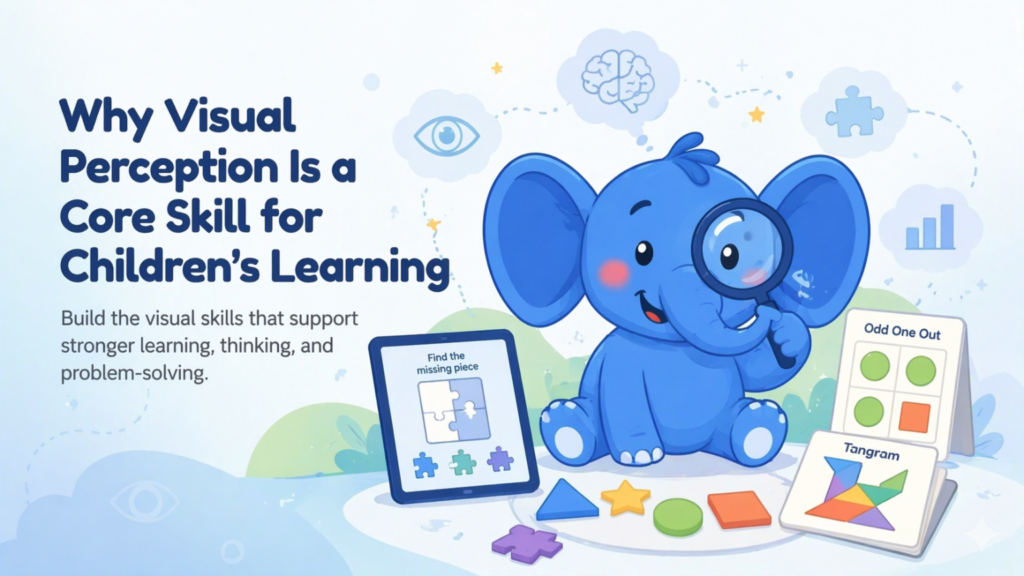
Comprendre la perception visuelle
La perception visuelle est la capacité du cerveau à interpréter et donner un sens à ce que voient les yeux. Tandis que nos yeux captent des informations visuelles telles que les formes, les couleurs, les motifs et les mouvements, le cerveau traite ces informations et les transforme en une compréhension cohérente.
Chez les enfants, la perception visuelle leur permet de :
- Reconnaître des formes, des objets, des lettres et des chiffres
- Identifier les similitudes et les différences
- Comprendre les relations spatiales
- Reconnaître des motifs et des suites
Par exemple, lorsqu'un enfant associe des formes présentant des caractéristiques similaires ou identifie une lettre parmi d'autres symboles, il fait appel à sa perception visuelle.
Il est important de noter que la perception visuelle est ce n'est pas la même chose que la vue. Un enfant peut avoir une vision parfaitement normale, mais éprouver néanmoins des difficultés à interpréter ou à organiser les informations visuelles.
Ces compétences se développent progressivement tout au long de l'enfance et constituent une base essentielle pour de nombreux types d'apprentissage.
Pourquoi la perception visuelle est-elle importante pour l'apprentissage ?
La perception visuelle joue un rôle central dans la manière dont les enfants interagissent avec leur classe et le monde qui les entoure. De nombreuses activités d'apprentissage reposent en grande partie sur des informations visuelles, ce qui rend ces compétences indispensables à la réussite scolaire.
Les enfants font appel à la perception visuelle dans leurs activités d'apprentissage quotidiennes, telles que :
- Lire et reconnaître les lettres et les mots
- Rédaction et copie d'informations
- Résoudre des énigmes et des problèmes de séries
- Réalisation d'exercices de mathématiques
- Rangement du matériel et des objets
- Comprendre les indications et les relations spatiales
De solides capacités de perception visuelle constituent un atout l'attention, la mémoire et la résolution de problèmes, en aidant les enfants à structurer les informations et à repérer des schémas récurrents dans leur environnement.
Lorsque ces compétences sont bien acquises, les enfants peuvent aborder les supports pédagogiques avec davantage d'assurance et d'autonomie.
Les bases de la lecture, de l'écriture, des mathématiques et de la motricité
La perception visuelle favorise de nombreuses autres capacités d'apprentissage importantes et constitue un élément fondamental de plusieurs compétences scolaires.
Développement de la lecture et de l'écriture
La perception visuelle aide les enfants à :
- Distinguer les lettres similaires telles que b et d
- Reconnaître les structures des mots lors de la lecture
- Suivre les mots sur une page
Lorsque les capacités de discrimination visuelle sont faibles, les tâches de lecture et d'écriture peuvent s'avérer plus difficiles.
Pensée mathématique
De nombreux concepts mathématiques élémentaires reposent sur le raisonnement visuel. La perception visuelle aide les enfants à :
- Reconnaître des schémas
- Reconnaître les formes et les relations spatiales
- Comprendre les schémas et les modèles visuels
- Développer ses capacités de raisonnement spatial
Ces compétences jouent un rôle important dans l'apprentissage précoce des mathématiques et la résolution de problèmes.
Motricité et coordination
La perception visuelle vient également étayer intégration visuo-motrice, qui allie la compréhension visuelle au mouvement physique. Les enfants font appel à cette compétence lorsqu'ils :
- Dessine ou écris
- Découpez avec des ciseaux
- Attraper une balle
- Construire avec des blocs ou des jouets de construction
Le développement de ces compétences aide les enfants à interagir avec plus d'assurance avec leur environnement.
Accompagnement des élèves ayant des besoins éducatifs particuliers
Certains enfants peuvent rencontrer des difficultés liées à la perception visuelle. Ces difficultés peuvent se manifester chez les élèves présentant :
- troubles d'apprentissage
- TDAH
- troubles du spectre autistique
- troubles de la coordination du développement
Lorsque la perception visuelle est difficile, les tâches d'apprentissage quotidiennes peuvent devenir source de frustration. Les enfants peuvent avoir du mal à organiser les informations visuelles ou à interpréter les motifs et les formes.
Proposer des activités ciblées et des supports d'apprentissage visuel structurés peut aider ces apprenants à renforcer leurs compétences et à gagner en confiance.
Signes indiquant qu'un enfant pourrait avoir besoin d'un accompagnement en matière de perception visuelle
La perception visuelle se développe progressivement, et les enfants renforcent ces compétences à travers le jeu et l'apprentissage au quotidien. Cependant, certains enfants peuvent avoir besoin d'un soutien supplémentaire.
Un enfant peut avoir besoin d'aide pour développer ses capacités de perception visuelle s'il :
- Confondre des lettres ou des chiffres similaires, par exemple b et d ou 6 et 9
- Difficultés à copier des informations sur un tableau ou dans un livre
- Avoir des difficultés à reconnaître des motifs ou à compléter des suites
- A du mal à repérer des objets dans des espaces visuellement chargés
- Se sentir frustré face à des casse-têtes ou à des activités de construction
- Les espacements sont irréguliers lorsqu'on écrit ou qu'on dessine
Ces difficultés ne sont pas nécessairement le signe d'un trouble de l'apprentissage, mais elles peuvent indiquer qu'il serait bénéfique pour l'enfant de disposer de davantage d'occasions de s'exercer au traitement visuel et au raisonnement spatial.
Utiliser Magrid pour renforcer les capacités de perception visuelle
Les outils d'apprentissage numériques peuvent également favoriser le développement de la perception visuelle. Magrid est conçu comme un programme d'apprentissage entièrement visuel et sans recours à la langue, ce qui le rend accessible à tous les apprenants, quels que soient leur niveau de maîtrise de la langue ou leurs capacités de lecture.
En supprimant les instructions écrites, Magrid permet aux enfants de se concentrer entièrement sur les informations visuelles, telles que les formes, les motifs et les relations spatiales. Bon nombre des activités proposées dans le cadre de ce programme développent naturellement la perception visuelle en encourageant les élèves à observer attentivement, à comparer les formes et à reconnaître les motifs.
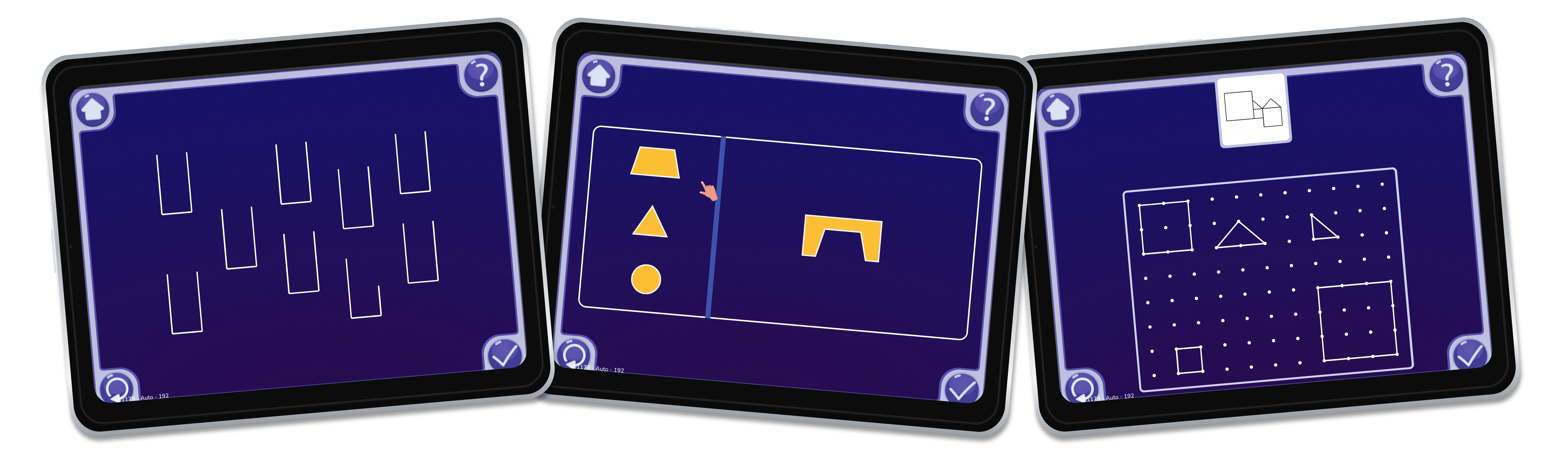
Outre ces expériences d'apprentissage visuel plus générales, Magrid propose des activités spécifiques destinées à renforcer les capacités de perception visuelle:
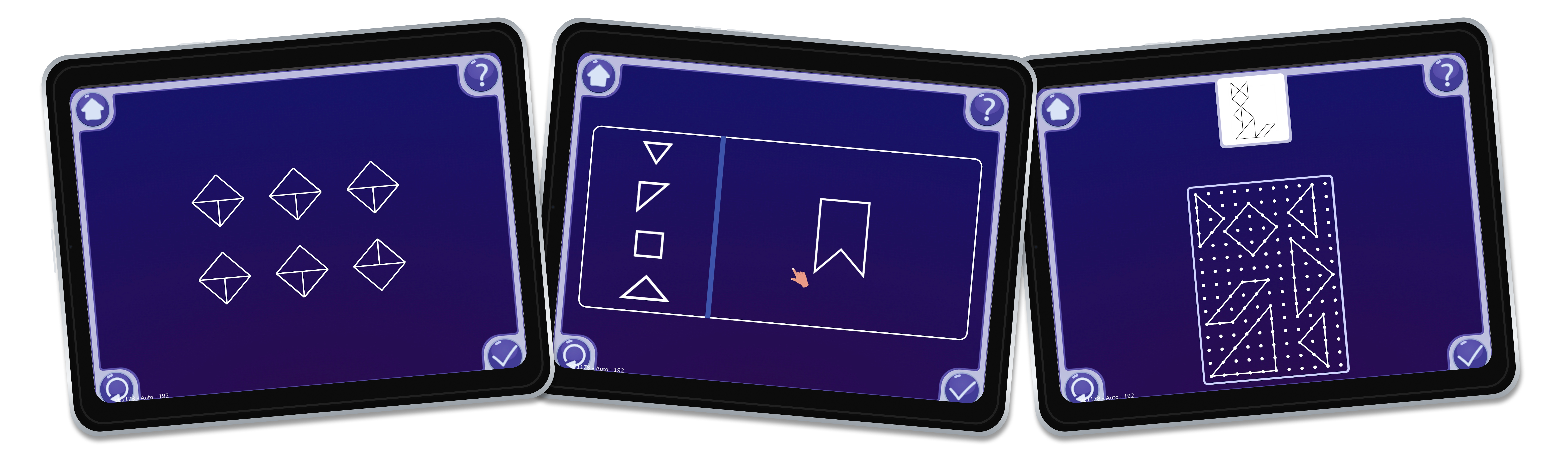
- Trouvez la pièce manquante – Les élèves déterminent quelle forme permet de compléter une figure plus grande en identifiant la partie manquante d'une forme entière.
- Le mouton noir – Les élèves repèrent l’élément qui se distingue des autres. Les activités commencent par des formes clairement différentes, en petits groupes, puis évoluent progressivement vers des ensembles plus grands présentant des différences visuelles subtiles.
- Tangram – Les élèves associent et disposent des formes pour reproduire un motif, ce qui leur permet de développer leur raisonnement spatial et de comprendre comment les différentes parties s'assemblent pour former un tout.
Grâce à ce genre de défis visuels, Magrid aide les élèves à s'entraîner à analyser des informations visuelles et à mettre au point des stratégies de résolution de problèmes.
Des activités simples pour développer la perception visuelle
La bonne nouvelle, c'est que la perception visuelle peut être améliorée grâce à des activités ludiques et captivantes à la maison ou en classe.
Voici quelques activités efficaces :
Correspondance des formes et des motifs
Les jeux d'association aident les enfants à repérer les similitudes et les différences entre les formes et les motifs.
En voici quelques exemples :
- jeux de paires de cartes
- activités de tri par forme
- exercices de complétion de motifs
Jeux de réflexion et jeux de construction
Les puzzles, les tangrams et les jeux de construction aident les enfants à comprendre les relations spatiales et la manière dont les pièces s'emboîtent les unes dans les autres.
Jeux d'objets cachés
Les activités consistant à rechercher des objets au milieu d'un environnement visuellement encombré renforcent perception figure-fond.
En voici quelques exemples :
- jeux d'images cachées
- chasses au trésor
- “ Je vois ”
Dessiner et copier des formes
Copier des formes, des motifs ou des images contribue à développer la coordination visuo-motrice et la perception spatiale.
Tri et classification
Le tri des objets selon leur couleur, leur forme, leur taille ou leur orientation aide les enfants à repérer les similitudes et les différences visuelles.
Jeter des bases visuelles solides pour l'apprentissage
La perception visuelle est l'une des compétences cognitives fondamentales qui favorisent l'apprentissage précoce. En renforçant cette capacité, les enfants acquièrent de meilleures aptitudes pour interpréter les informations visuelles, reconnaître des schémas et résoudre des problèmes.
Des activités telles que les puzzles, les jeux de motifs et les jeux de construction aident toutes les enfants à développer ces compétences. Des outils d'apprentissage visuel structurés peuvent également apporter un soutien supplémentaire. Des programmes tels que Magrid proposent des défis soigneusement conçus qui encouragent les élèves à analyser des formes, à identifier des motifs et à comprendre les relations spatiales.
Parce que Magrid est un système entièrement visuel et sans langage, il s'adresse à un large éventail d'apprenants, notamment aux classes multilingues et aux élèves pour qui les méthodes d'apprentissage visuelles sont particulièrement adaptées. Grâce à des activités telles que Trouvez la pièce manquante, Le mouton noir, et Tangram, Magrid aide les enfants à développer leurs capacités de raisonnement visuel, qui sont à la base des mathématiques et de la pensée logique..
En fin de compte, développer la perception visuelle, c'est aider les enfants à observer attentivement, reconnaître des schémas et donner un sens au monde visuel qui les entoure. Que ce soit par le jeu au quotidien, les activités en classe ou des programmes structurés tels que Magrid, le renforcement de ces compétences contribue à établir des bases solides pour un apprentissage autonome et en toute confiance.
Difference Between ADD and ADHD Explained Simply

The difference between ADD and ADHD often causes confusion among parents and educators. While both relate to attention difficulties, the terms are not identical. Attention deficit hyperactivity disorder is the official name used today, while attention deficit disorder is an older term still used informally. Many people use ADD and ADHD interchangeably, which can lead to misunderstandings about symptoms and support needs. Recognizing the difference between ADD helps ensure a correct diagnosis and appropriate support. Since this mental health condition affects learning and behavior, understanding its terminology is essential for identifying challenges early and guiding children and adults effectively.
What Is Attention Deficit Hyperactivity Disorder (ADHD)?
Attention deficit hyperactivity disorder is a neurological or psychological disorder recognized by the American Psychiatric Association. It is classified among mental disorders in the diagnostic and statistical manual, which outlines clear symptom criteria for an ADHD diagnosis. This mental health condition involves patterns of inattention, hyperactivity, and impulsive behaviors that interfere with daily functioning. Common ADHD symptoms include being easily distracted, showing poor working memory, and struggling to require sustained mental effort. These two cognitive functions: working memory and sustained attention, are the exact mechanisms that Magrid’s activities are designed to strengthen. Some individuals display hyperactive behaviors such as being talkative fidgety or having excessive nervous energy. Others may struggle more with impulse control. The range of associated symptoms explains why ADHD tend to appear differently across individuals.
What Is Attention Deficit Disorder (ADD)?
Attention deficit disorder, often called attention deficit disorder in the past, is now considered an outdated term. Today, it falls under attention deficit hyperactivity disorder and typically refers to inattentive ADHD. This form, also known as primarily inattentive type or predominantly inattentive type ADHD, does not include a strong hyperactivity component. Individuals with this presentation may seem lost in their own world, display apathetic behavior, or make careless mistakes. The confusion in ADD vs ADHD terminology persists because ADD attention deficit disorder was once a separate label. Understanding that it is now called ADHD helps clarify modern classifications and supports more accurate identification of inattentive subtypes.
Key Difference Between ADD and ADHD Explained
The core difference between ADD and ADHD lies in the presence of hyperactive or impulsive behaviors. While ADD refers to inattentive type ADHD, attention deficit hyperactivity disorder includes a broader range of symptoms. These include hyperactive impulsive ADHD, where individuals show hyperactive impulsive symptoms such as restlessness, impulsive behaviors, and difficulty with impulse control. In contrast, inattentive ADHD focuses on attention challenges like difficulty organizing tasks and being easily distracted. Experts now recognize three distinct presentations: predominantly inattentive, predominantly hyperactive impulsive ADHD, and combined presentation. These distinct presentations highlight that the difference between ADD is not about separate conditions, but about how symptoms are expressed within the same medical diagnosis framework.
Supporting learners across all three presentations requires approaches that do not rely on language fluency or prior curriculum knowledge. This is where Magrid’s language-independent design makes it particularly effective: the same activity adapts to a predominantly inattentive child and a combined-type child without requiring teacher reconfiguration.

Types of ADHD: Three Distinct Presentations

Clinicians recognize three distinct presentations within attention deficit hyperactivity disorder. These types of ADHD are defined in the diagnostic and statistical manual and help guide a correct diagnosis. The predominantly inattentive type ADHD, sometimes called primarily inattentive ADHD, involves attention difficulties without a strong hyperactivity component. The predominantly hyperactive impulsive ADHD, also referred to as predominantly hyperactive type ADHD, includes hyperactive or impulsive behaviors such as constant movement and impulsive behaviors. Finally, combined type ADHD occurs when both inattentive and hyperactive impulsive symptoms are present. This combined presentation reflects overlapping associated symptoms and is one of the most commonly identified forms in clinical practice.
ADHD Symptoms and ADD Symptoms Compared
Understanding ADHD symptoms helps clarify the difference between ADD and ADHD in daily life. Individuals with inattentive ADHD often show signs such as careless mistakes, difficulty organizing tasks, and poor working memory. They may appear easily distracted or struggle to require sustained mental effort, especially during academic tasks. In contrast, hyperactive impulsive ADHD includes hyperactive behaviors like being talkative fidgety, displaying nervous energy, and struggling with impulse control. These impulsive behaviors can lead individuals to demonstrate behavior problems in structured environments. While ADD attention deficit disorder focuses on inattentive subtypes, attention deficit hyperactivity disorder includes a wider range of ADHD symptoms exhibited. Recognizing these differences supports better understanding of distinct presentations and more targeted support strategies.
ADD vs ADHD in Children and Adults
The way ADD and ADHD appear can vary depending on age. In many cases, symptoms are first noticed in a child, as a child’s behaviors may include hyperactive behaviors or difficulty staying focused. Child’s teachers often play a key role in identifying when children demonstrate behavior problems or seem easily distracted. However, ADHD adults may present differently. Adults with inattentive ADHD may struggle with sustained mental effort, difficulty organizing tasks, or apathetic behavior. Hyperactivity may appear less obvious and instead show as internal restlessness. Research from organizations like the Child Mind Institute shows that ADHD tend to evolve over time, making early recognition important for long term mental health.
How ADHD Is Diagnosed: Criteria and Process
An ADHD diagnosis requires careful evaluation by a mental health professional. According to the American Psychiatric Association’s diagnostic guidelines in the statistical manual, clinicians assess specific symptom criteria before confirming that ADHD diagnosed criteria are met. Typically, six or more symptoms must be present for a certain period and across multiple settings. The process may include a physical exam, behavioral observations, and input from caregivers or child’s teachers. Because ADHD is a complex mental health condition and a recognized psychological disorder, ensuring a correct diagnosis is essential. An official diagnosis helps distinguish it from other psychiatric conditions, such as a mood disorder, and ensures that support strategies align with individual needs.
Combined Presentation and Symptom Overlap
The combined presentation highlights how attention deficit hyperactivity disorder can include both inattentive and hyperactive impulsive symptoms. In combined type ADHD, individuals may be easily distracted while also displaying hyperactive or impulsive behaviors. This overlap can make it harder for a diagnosis align clearly with one dominant profile. A prominent symptom may shift over time, especially as children grow. Because combined type ADHD includes multiple associated symptoms, it often reflects the complexity of this mental health condition and reinforces the importance of careful evaluation when identifying distinct presentations.
ADHD Diagnosis and Common Misconceptions

Many misconceptions persist about ADD and ADHD, especially when the terms are used ADHD interchangeably. One common misunderstanding is that attention deficit disorder and attention deficit hyperactivity disorder are separate psychiatric conditions. In reality, ADD vs ADHD reflects outdated language rather than different diagnoses. Another issue involves ADHD’s stereotypical traits, such as assuming all individuals are hyperactive. Some may instead show inattentive ADHD without obvious hyperactive behaviors. Misinterpretation can also lead to confusion with other mental disorders, including a mood disorder. A proper ADHD diagnosis requires a medical diagnosis based on standardized criteria, helping avoid errors and ensuring individuals receive appropriate support for their mental health.
Behavioral Therapy and Support Strategies
Behavioral therapy is a common and effective approach for managing attention deficit hyperactivity disorder. It focuses on improving impulse control, supporting sustained mental effort, and reducing impulsive behaviors. For children, strategies often involve structured routines and clear expectations to help manage child’s behaviors. Child’s teachers may use classroom adaptations to support focus and reduce situations that require sustained mental effort for long periods. For individuals with impulsive ADHD or hyperactive impulsive ADHD, interventions may target hyperactive behaviors and emotional regulation. Adults may also benefit from tools that address difficulty organizing tasks and poor working memory. These approaches demonstrate how support can be adapted across different types of ADHD and developmental stages.
Digital learning tools like Magrid can complement behavioral strategies by providing structured, self-paced cognitive activities that adapt to each child’s pace. In schools implementing Magrid alongside behavioral support plans, teachers reported reduced need for individual attention re-direction during independent work sessions.
Why Understanding ADD vs ADHD Matters
Understanding the difference between ADD and ADHD is essential for accurate identification and support. While the difference between ADD once suggested separate conditions, both now fall under attention deficit hyperactivity disorder. Recognizing inattentive subtypes, hyperactive impulsive ADHD, and combined presentation helps clarify how symptoms appear in real life. This knowledge supports a correct diagnosis and ensures that interventions match individual needs. Whether in a child or among ADHD adults, early recognition can improve outcomes. Consulting a qualified mental health professional is key to navigating this mental health condition and ensuring that each individual receives an official diagnosis and appropriate guidance.
Supporting Early Learners with Magrid
Understanding the difference between ADD and ADHD is only the first step toward meaningful support. Children with attention deficit hyperactivity disorder often benefit from structured learning approaches that strengthen focus, reasoning, and problem solving.
Magrid offers engaging activities designed to support cognitive development in learners with diverse needs, including those with inattentive ADHD or combined type ADHD. By helping children build skills like sustained mental effort and organization, educators and families can better respond to each child’s unique profile. Explore how Magrid can complement existing strategies and contribute to stronger learning foundations for every child.

How Common Is Dyscalculia in Children Today

Dyscalculia refers to a specific learning disorder that affects a child’s math skills and overall understanding of numbers. Often described as math dyslexia, it is one of several mathematical learning disabilities that can influence how children engage with basic math, mathematical reasoning, and problem solving. Many educators and families ask the same question: how common is dyscalculia, and how does it affect school age children in real classrooms?
People with dyscalculia often struggle with number sense, basic arithmetic, and recognizing patterns in mathematical concepts. These challenges can appear early and may persist without early intervention. In a typical math class, a child with dyscalculia may find it difficult to perform mathematical operations or solve simple math problems at grade level.
Understanding how dyscalculia impacts learning is essential for improving educational outcomes and supporting students with dyscalculia in both school and everyday life.
How Common Is Dyscalculia: Prevalence and Statistics
When examining how common is dyscalculia, research suggests that it affects approximately 3 to 7 percent of school age children. This places it among the more prevalent learning disabilities, alongside other learning disorders such as dyslexia. According to the diagnostic and statistical manual published by the American Psychiatric Association and American Psychiatric Publishing, dyscalculia falls under the category of a specific learning disorder with impairments in mathematics.
The exact prevalence can vary because developmental dyscalculia depend on how diagnostic criteria are applied across studies and educational systems. Some children may not be formally identified, especially if their difficulties are mistaken for general learning difficulties or lack of practice in math tasks.
Compared to other disorders, dyscalculia often receives less attention, even though its impact on mathematical reasoning and basic math skills can be significant. Students with dyscalculia may struggle silently in math class, particularly when expectations increase with grade level.
Understanding these statistics helps educators and learning specialists prioritize screening and early intervention for children at risk.
Dyscalculia Diagnosed: Definitions and Diagnostic Criteria
Dyscalculia diagnosed as a specific learning disorder requires a careful evaluation based on established diagnostic criteria. The diagnostic and statistical manual outlines that difficulties must persist over time and significantly affect a child’s ability to perform mathematical operations, understand mathematical concepts, and solve math problems.
Professionals such as learning specialists and organizations like the Child Mind Institute emphasize that diagnosing dyscalculia involves more than observing poor performance in math class. A comprehensive assessment considers the child’s working memory, number sense, and ability to process basic math facts compared to their age and grade level.
It is also important to distinguish between developmental dyscalculia and acquired dyscalculia. Developmental dyscalculia is linked to brain related differences in neurodevelopmental disorders, while acquired dyscalculia may result from brain injury or trauma affecting a person’s ability to process numbers.
Accurate identification ensures that children receive appropriate support. Without proper evaluation, dyscalculia may be confused with other learning difficulties, intellectual disabilities, or even gaps in instruction.
Symptoms of Dyscalculia in Early Learners
Recognizing the symptoms of dyscalculia early can make a significant difference in a child’s learning journey. Young learners may show difficulty estimating quantities, struggle to recognize numbers, or have trouble recalling basic arithmetic and multiplication tables. These challenges often go beyond occasional mistakes and reflect deeper issues with number sense and working memory.
Children with dyscalculia may find it hard to keep track of steps when solving math problems or repeatedly make errors when faced with the same math problem. Tasks involving number lines, visual representations, or spatial reasoning can also be particularly challenging.
In addition to academic signs, some children display physical symptoms such as slow processing or confusion during math tasks. Emotional symptoms may also emerge, including frustration, anxiety, or avoidance of math games and classroom activities.
Because dyscalculia impacts both basic math and higher level mathematical reasoning, early detection is essential. Identifying these signs allows educators and a child’s math teacher to adapt instruction and introduce supportive strategies.
Learning apps that approach number sense through visual, non-verbal activities can reduce the frustration and anxiety associated with these symptoms. Magrid’s activities are built around the cognitive building blocks of mathematical reasoning, allowing early learners to engage with patterns, quantities, and sequences without the pressure of traditional math instruction.
Diagnose Dyscalculia: Assessment and Screening Methods

To diagnose dyscalculia accurately, professionals rely on a combination of standardized assessments and classroom observations. Learning specialists evaluate how a child approaches math tasks, including their ability to perform mathematical operations, understand mathematical concepts, and apply problem solving strategies. These assessments often compare a child’s performance to expected grade level benchmarks.
Input from a child’s math teacher is essential, as teachers observe how students handle daily math class activities, including word problems, basic arithmetic, and math facts. Patterns such as difficulty keeping track of steps or consistently struggling with the same math problem can signal deeper learning difficulties.
Organizations like the Child Mind Institute recommend evaluating working memory, number sense, and spatial reasoning as part of the process. It is also important to rule out other disorders, such as hearing problems or intellectual disabilities, that may affect performance.
Early screening supports early intervention, helping ensure that students with dyscalculia receive timely and targeted support to improve their educational outcomes.
Dyscalculia in School Age Children and Development
Dyscalculia in school age children is closely linked to brain development and the way numerical information is processed. Research on neurodevelopmental disorders shows that differences in brain related functions can affect number sense, spatial reasoning, and a child’s ability to perform mathematical operations.
Younger children may struggle to recognize numbers or grasp basic math concepts, while older kids often face challenges with multiplication tables, word problems, and more advanced mathematical reasoning. As academic demands increase, these difficulties can become more visible, especially when students are expected to solve complex math problems independently.
Developmental dyscalculia depend on how these challenges evolve over time. Some children may show steady improvement with support, while others continue to experience persistent difficulties. Gender differences in prevalence have been explored, but current research suggests similar rates among boys and girls.
Understanding how dyscalculia impacts development helps educators tailor instruction, ensuring that each child’s individual’s ability is supported throughout their learning journey.
Learning Difficulties and Other Learning Difficulties Linked to Dyscalculia
Dyscalculia often coexists with other learning difficulties, making it part of a broader profile of learning disorders. Children with dyscalculia may also experience challenges in reading, writing, or attention, which can complicate both diagnosis and intervention. These overlapping difficulties are common in neurodevelopmental disorders and can influence a child’s overall academic progress.
In some cases, dyscalculia appears alongside other disorders, including intellectual disabilities or conditions that affect working memory and processing speed. Hearing problems can also contribute to misunderstandings in math class, especially when instructions are delivered verbally.
These combined challenges may extend to other subjects, as difficulties with problem solving and logical reasoning can affect performance beyond mathematics. For example, tasks that require sequencing or interpreting data may become more demanding.
Recognizing the connection between dyscalculia and other learning difficulties allows educators and learning specialists to design more comprehensive support strategies tailored to each student’s needs.
Students With Dyscalculia: Classroom Challenges

Students with dyscalculia often encounter persistent obstacles in the classroom, particularly during math class activities that require quick recall and flexible thinking. They may struggle with basic math facts, have difficulty solving word problems, or find it challenging to apply mathematical reasoning to new situations.
One common issue is the inability to approach the same math problem using different strategies. This can make problem solving frustrating and time consuming. Students may also find visual representations, such as graphs or number lines, confusing rather than helpful.
Math tasks that involve multiple steps, such as performing mathematical operations or interpreting mathematical concepts, can overwhelm working memory. As a result, students may lose track of their progress or make repeated errors.
Structured digital activities that reduce working memory load by presenting one cognitive step at a time can make a significant difference for these students. In schools using Magrid, teachers observed that students who previously disengaged from math tasks were able to sustain attention in shorter, self-paced activity sequences.
These challenges can affect confidence and participation. Without appropriate support, students with dyscalculia may disengage from math games or avoid classroom activities, which can further impact their learning and long term educational outcomes.
Emotional Symptoms and Psychological Impact
The emotional symptoms associated with dyscalculia are often as significant as the academic challenges. Children who experience repeated difficulty with math tasks may develop anxiety, frustration, or a strong dislike of math class. Over time, this dyscalculia struggle can affect a child’s confidence and willingness to engage in learning.
A person struggles not only with numbers but also with the fear of making mistakes in front of peers. This can lead to avoidance behaviors, such as reluctance to participate in math games or hesitation when asked to solve math problems. People with dyscalculia may begin to believe that their ability in mathematics is fixed, which can limit motivation.
These emotional responses can influence educational outcomes and may even extend into other subjects. Addressing both academic and emotional needs is essential to help students rebuild confidence and reengage with mathematical learning.
Acquired Dyscalculia vs Developmental Dyscalculia
It is important to distinguish between developmental dyscalculia and acquired dyscalculia, as each presents unique challenges. Developmental dyscalculia is a lifelong condition linked to brain related differences in brain development, typically identified in early childhood. It affects an individual’s ability to understand mathematical concepts and perform mathematical operations from the start.
In contrast, acquired dyscalculia occurs after a brain injury or neurological event that disrupts previously developed math skills. A child or adult who once managed basic arithmetic or more advanced math tasks may suddenly struggle with number sense, calculations, or spatial reasoning.
While both forms impact mathematical reasoning, their causes and progression differ. Developmental dyscalculia depend on neurodevelopmental pathways, whereas acquired dyscalculia is often linked to trauma or illness.
Understanding these differences helps learning specialists design appropriate interventions that match each individual’s ability and learning profile.
Dyscalculia in Everyday Life and Practical Challenges
Dyscalculia impacts more than academic performance; it also affects everyday life in meaningful ways. People with dyscalculia may struggle with money management, managing finances, or estimating costs while shopping. Tasks that require basic math, such as calculating change or measuring ingredients, can become stressful.
Real life examples include difficulty estimating time, interpreting schedules, or following directions that involve numbers. Even simple activities like keeping track of scores in a game or understanding distances can present challenges.
People with dyscalculia may also find it hard to apply calculating tips in practical situations, which can affect independence over time. These difficulties highlight how dyscalculia refers to a broader challenge with numerical understanding, not just classroom performance.
Recognizing these daily obstacles helps caregivers and educators provide meaningful support that connects math skills to real world contexts.
Supporting Students: Strategies, Tools, and Online Tutoring
Supporting students with dyscalculia requires a combination of structured instruction, targeted tools, and consistent practice. Early intervention is key to improving math skills and helping children build confidence in their abilities. Educators can use visual aids, visual representations, and hands on tools to make abstract mathematical concepts more concrete.
Incorporating activities such as play math games and structured math games can strengthen number sense and make learning more engaging. Tools like number lines and step by step approaches help students keep track of processes when solving math problems or performing mathematical operations.
Collaboration with a child’s math teacher and learning specialists ensures that instruction is adapted to each student’s needs. Online tutoring can also provide personalized support, allowing students to practice at their own pace and revisit challenging topics.
By combining these strategies, educators can help students with dyscalculia improve problem solving skills, better understand basic arithmetic, and gradually succeed in math class and beyond.
Raising Awareness About How Common Is Dyscalculia
Understanding how common is dyscalculia is essential for improving support systems in education. As a specific learning disorder recognized by the American Psychiatric Association, it affects a significant number of school age children and often goes unnoticed among other learning disabilities. Increasing awareness helps ensure that students with dyscalculia are identified early and supported effectively.
Collaboration between educators, families, and learning specialists can make a meaningful difference in addressing learning difficulties and improving educational outcomes. With the right tools and strategies, children can strengthen their math skills and approach mathematical concepts with greater confidence.
Magrid offers structured, research-based activities designed to build number sense, support problem solving, and help students develop strong foundations in basic math for long term success.



Is Dyslexia a Disability? A Complete Guide

Dyslexia is one of the most common reading disorders affecting children and adults across the world. It is a learning disorder that primarily impacts reading skills, writing, and word recognition, even though most people with dyslexia have typical intelligence and access to education. This raises an important question for parents, teachers, and school administrators alike: is dyslexia a disability, and what does that mean for support in school?
Dyslexia occurs when the brain has difficulty processing language, particularly in connecting speech sounds to written words. This can lead to reading difficulties, trouble with pronouncing words, and challenges in reading fluency. Many children begin to show symptoms during early reading stages in early childhood, when differences in phonological processing and phonemic awareness become more visible.
Understanding dyslexia is essential for providing appropriate accommodations and support. With early diagnosis, effective teaching methods, and the right educational environment, students with dyslexia can learn, build confidence, and achieve long-term success in school and beyond.
In addition to structured teaching methods, digital tools like Magrid can support early intervention by strengthening the cognitive foundations needed for learning.
Is Dyslexia a Disability? Definitions and Perspectives
The question “is dyslexia a disability” depends on how the term is defined across medical, legal, and educational contexts. According to the American Psychiatric Association, dyslexia is classified as a specific learning disorder within a broader group of neurodevelopmental disorders. It is considered a medical condition that affects how the brain processes written and spoken language.
From a scientific perspective, developmental dyslexia is linked to differences in brain development, particularly in areas like the cerebral cortex that support language processing. These differences can make it harder for a person with dyslexia to develop reading ability, especially when decoding unfamiliar words or improving reading fluency.
In educational systems, dyslexia is recognized as a learning disability under laws such as the Individuals with Disabilities Education Act and the Americans with Disabilities Act. These frameworks ensure that students receive appropriate accommodations and support to succeed in school.
It is also important to distinguish between developmental dyslexia and acquired dyslexia, which can occur after brain injury. While both affect reading skills, their causes differ. Regardless of type, dyslexia is widely acknowledged as a lifelong condition that requires understanding, proper diagnosis, and structured support for many individuals.
Dyslexia as a Learning Disability in Modern Education
In modern education systems, dyslexia is formally recognized as a learning disability that can significantly affect a student’s academic experience. Under the Individuals with Disabilities Education Act, students with dyslexia are entitled to special education services and special instruction tailored to their needs. This ensures that they can access the curriculum alongside their peers.
The Disabilities Act and the Disabilities Act ADA, along with the Americans with Disabilities Act, also protect individuals with dyslexia from discrimination. These laws require schools to provide appropriate accommodations, such as extra time, modified materials, or opportunities to read aloud in supportive settings.
For many students, these supports are essential. Dyslexia can create persistent reading problems, including difficulty with word recognition, slow reading fluency, and trouble processing written language. Without proper support, these challenges may impact self esteem and overall academic progress.
Teachers and school administrators play a key role in identifying students who struggle and ensuring they receive the help they need. With the right evaluation and access to resources, students with dyslexia can overcome barriers, improve their reading skills, and experience success in education.
How Dyslexia Affects Reading Skills and Language Processing
Dyslexia primarily affects how individuals process language, especially when it comes to reading and writing. One of the core challenges involves phonological processing, which is the ability to recognize and manipulate speech sounds. When this process is disrupted, students may have trouble connecting letters to sounds, making it harder to read and write accurately.
This difficulty often impacts word recognition and reading fluency. A child with dyslexia may struggle to decode unfamiliar words, confuse similar-looking words, or read at a slower pace than peers. Pronouncing words correctly can also be challenging, especially when encountering new words in early reading stages.
These reading difficulties are not related to intelligence but rather to how the brain processes information. Research shows that differences in brain activity affect how individuals with dyslexia interpret written and spoken language. As a result, many individuals experience ongoing reading problems that require structured teaching methods and targeted support.
Over time, these challenges can influence a student’s confidence and willingness to engage with reading tasks. However, with appropriate instruction, including phonemic awareness training and guided reading practice, students can strengthen their reading ability and develop more effective strategies to learn and succeed.
Why Dyslexia Occurs: Brain Development and Research Insights
Dyslexia occurs as a result of differences in brain development that affect how language is processed. It is part of a group of neurodevelopmental disorders, meaning it originates early in life and is linked to how the brain organizes information. Research using brain imaging has shown that regions in the cerebral cortex involved in reading and language function differently in individuals with dyslexia.
These differences impact phonological processing, which is essential for connecting speech sounds to written symbols. When the brain has trouble processing these connections efficiently, reading ability and fluency can be affected. This is why many individuals experience persistent reading difficulties despite adequate instruction and exposure to language.
It is important to note that dyslexia is not caused by lack of effort, poor teaching, or low intelligence. Most people with dyslexia have average or above-average cognitive abilities. Instead, the difficulty lies in how the brain processes written and spoken language.
Ongoing research continues to explore how genetic and environmental factors contribute to developmental dyslexia, helping educators and specialists design more effective support strategies.
Common Symptoms and Reading Difficulties in Children

Le symptoms of dyslexia often appear during early childhood, especially as a child begins early reading activities. Many children show signs such as difficulty recognizing letters, trouble learning speech sounds, and challenges with phonemic awareness. These early indicators can signal future reading difficulties if not addressed.
As students progress in school, symptoms may include slow reading fluency, poor word recognition, and frequent mistakes when pronouncing words. A child may struggle to read unfamiliar words or have trouble remembering common words, which can affect overall reading ability and comprehension.
Writing can also be difficult. Some children reverse letters, spell inconsistently, or avoid tasks that involve reading and writing altogether. These challenges may lead to frustration, lower self esteem, and even anxiety related to school performance.
It is important to remember that symptoms vary widely. While some children show clear signs early on, others may develop coping strategies that mask their struggles. Recognizing these differences allows teachers and parents to provide timely support and prevent long-term reading problems.
How Dyslexia Is Diagnosed Through Comprehensive Evaluation
Dyslexia diagnosed accurately requires a comprehensive evaluation conducted by trained professionals. This process typically involves assessing a child’s reading skills, language abilities, and cognitive development. Specialists look closely at phonological processing, word recognition, and reading fluency to determine whether a specific learning disorder is present.
The evaluation may include input from teachers, parents, and school administrators to build a complete picture of the student’s learning experience. Reviewing classroom performance, early reading progress, and any ongoing reading problems helps ensure that no important detail is overlooked.
A formal diagnosis also helps distinguish dyslexia from other conditions, such as mental health conditions or general learning delays. Without careful assessment, incomplete information can lead to misidentification or delayed support.
Early diagnosis is especially valuable. When dyslexia is identified in early childhood, targeted interventions and teaching methods can be introduced sooner. This allows students to develop essential reading skills and reduce long-term challenges.
Ultimately, a thorough evaluation and accurate diagnosis provide the foundation for effective support, helping each student access the resources and instruction they need to succeed in school.
Why Early Diagnosis Matters for Many Children
Early diagnosis plays a critical role in helping many children with dyslexia reach their full potential. When reading difficulties are identified during early childhood, educators and parents can respond quickly with targeted support and appropriate teaching methods.
Without early diagnosis, students may continue to struggle with reading skills, leading to ongoing reading problems and reduced confidence. Over time, this can affect self esteem and increase the risk of developing related mental health conditions, such as anxiety about school performance.
Providing support early allows children to build strong foundations in phonemic awareness, word recognition, and reading fluency. These skills are essential for academic success and for engaging with new words and increasingly complex texts.
Early intervention also benefits teachers and school administrators by offering clear guidance on how to support each student. With the right strategies in place, children can learn to manage dyslexia effectively and participate more fully in classroom activities.
By prioritizing early diagnosis, schools and families can reduce long-term challenges and create better opportunities for success, ensuring that every child receives the support they need to thrive.
Special Education Services and Legal Support Systems
Students with dyslexia often qualify for special education services that provide structured and individualized support. Under the Individuals with Disabilities Education Act, schools are required to identify eligible students and offer special instruction tailored to their specific learning needs. This may include targeted reading interventions, small group instruction, and adjustments to classroom expectations.
Legal protections also extend through the Americans with Disabilities Act and the broader disabilities act ADA framework. These laws ensure that students with disabilities, including dyslexia, receive appropriate accommodations that allow them to access education on equal terms. Examples include extended time on tasks, alternative formats for materials, or opportunities to read aloud when appropriate.
School administrators and teachers are responsible for implementing these supports effectively. Collaboration between educators, specialists, and parents is essential to create a plan that reflects the student’s strengths and areas of difficulty.
With the right combination of legal protections and educational practices, students can overcome barriers linked to reading disorders. Providing consistent support helps improve reading ability, builds confidence, and promotes long-term academic success.
Effective Teaching Methods to Support Reading Development

Effective teaching methods are essential to help students with dyslexia develop strong reading skills. Research supports structured, explicit instruction that focuses on phonemic awareness, phonological processing, and the connection between speech sounds and written words. These approaches help students understand how language works and improve their ability to decode text.
Teachers often use step-by-step strategies to introduce new words, reinforce learning through repetition, and guide students as they practice reading. Breaking words into smaller parts can make unfamiliar words easier to process and reduce confusion during reading tasks.
Fluency is another key area of focus. Guided practice, repeated reading, and feedback can help students improve reading fluency over time. These strategies allow learners to read more smoothly and with greater confidence.
It is also important to adapt instruction to each student’s needs. Some students benefit from visual supports, while others may need more time or alternative ways to demonstrate understanding. By using flexible and evidence-based approaches, teachers can support students as they learn to read, write, and engage more fully in the classroom.
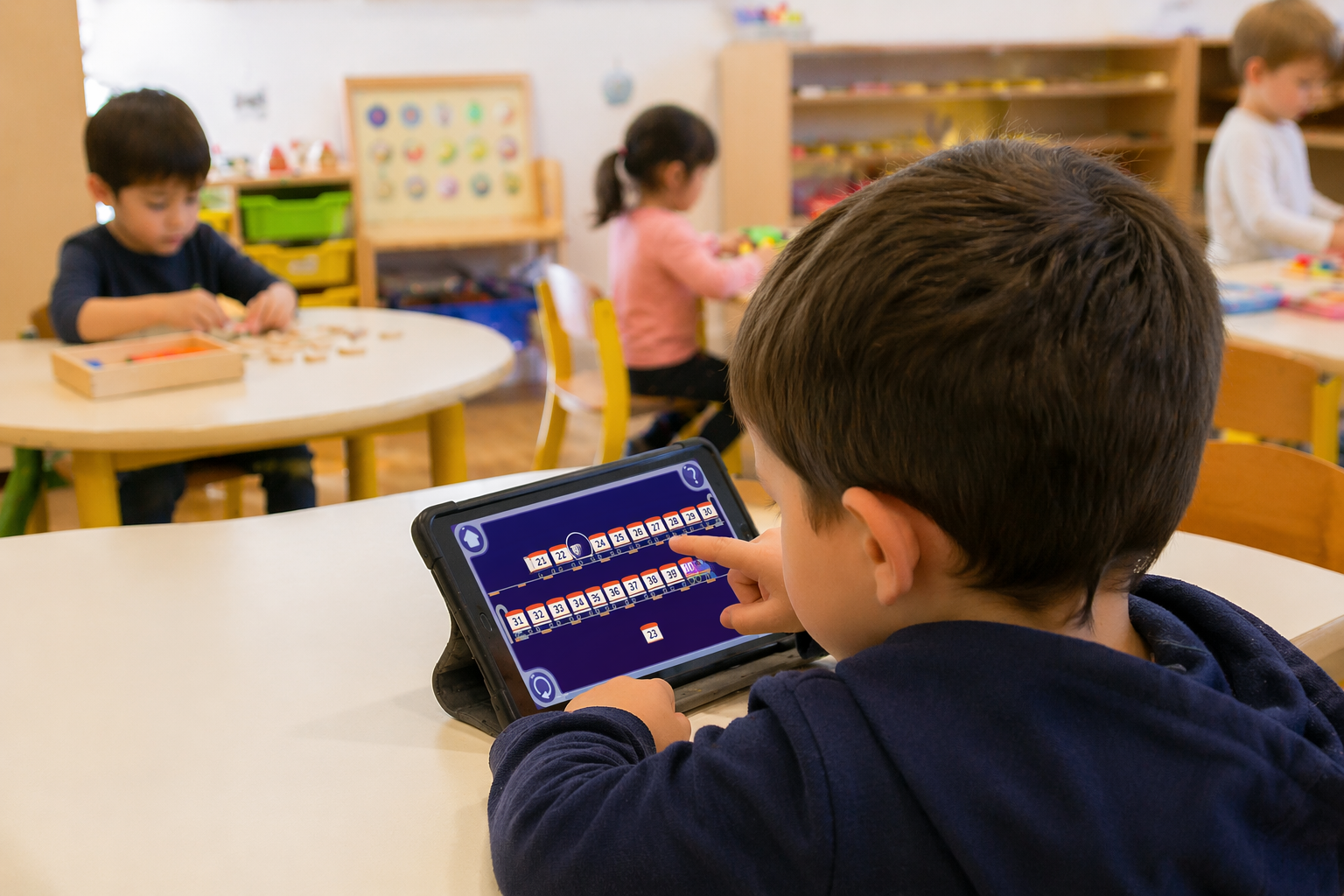
Magrid is a research-based learning app designed to strengthen foundational skills like reasoning, visual processing, and problem solving, which are essential for learning development, especially for students who experience difficulties with written language.
See how Magrid can support your classroom
Practical Strategies to Manage Dyslexia Daily
Learning to manage dyslexia involves consistent strategies that support both academic and everyday tasks. At school, students benefit from clear routines, structured lessons, and access to tools that make reading and writing more manageable. Breaking assignments into smaller steps can reduce overwhelm and help students stay focused.
At home, parents play a key role in reinforcing learning. Encouraging regular reading practice, introducing new words gradually, and creating a supportive environment can make a meaningful difference. It is important to focus on progress rather than perfection, allowing the child to build confidence over time.
Assistive strategies can also help. For example, using audiobooks or listening to text while following along can strengthen reading ability. These approaches support comprehension while reducing the pressure associated with decoding every word independently.
Managing dyslexia is an ongoing process, but with the right support systems in place, students can develop effective coping strategies. Over time, these efforts contribute to greater independence, improved skills, and a more positive learning experience.
The Power of Read Aloud and Language Exposure
When adults read aloud to a child, it provides valuable exposure to language that supports reading development. Listening to fluent reading helps children understand sentence structure, vocabulary, and the rhythm of spoken language. This is especially beneficial for students who struggle with decoding written words on their own.
Reading aloud also introduces children to new words that they may not yet be able to read independently. Hearing these words in context supports comprehension and helps build connections between spoken and written language.
For a child with dyslexia, this practice can reduce frustration while still promoting learning. It allows them to engage with stories and information without being limited by their current reading ability. Over time, this exposure contributes to stronger language skills and improved confidence.
In both home and school settings, reading aloud creates opportunities for interaction, discussion, and deeper understanding, all of which support long-term success in reading and learning.
Supporting Each Person with Dyslexia for Lifelong Success
Dyslexia is widely recognized as a lifelong condition, which means that support should evolve as each person grows. A person with dyslexia may face different challenges at various stages of life, from early childhood through adulthood, but with the right strategies, success is entirely achievable.
Support begins with understanding individual differences. No two dyslexic individuals experience the same level of difficulty, so personalized approaches are essential. In school, students benefit from tailored instruction, while older learners may rely on tools and strategies that help them manage reading and writing tasks more efficiently.
Confidence plays a crucial role. Struggles with reading can affect self esteem, especially if a student feels misunderstood. Encouragement from teachers, parents, and peers helps build resilience and motivation to learn.
It is also important to recognize strengths. Many individuals with dyslexia excel in problem solving, creativity, and critical thinking. By focusing on abilities as well as challenges, support systems can empower each person to reach their full potential and navigate education and life with confidence.
Rethinking Dyslexia and Supporting Every Learner
So, is dyslexia a disability? The answer depends on the context, but in education and law, it is clearly recognized as a learning disability that requires appropriate support. Understanding dyslexia as a specific learning disorder helps shift the focus from limitations to opportunities for growth.
With accurate diagnosis, effective teaching methods, and access to special education services, students with dyslexia can overcome reading difficulties and succeed academically. Early diagnosis and ongoing support are key factors in helping learners build strong reading skills and confidence.
Collaboration is essential. Teachers, parents, and school administrators must work together to ensure that each student receives the resources and accommodations they need. When this support is in place, students are better equipped to manage challenges and achieve their goals.
Continued research and awareness will further improve how dyslexia is understood and addressed, creating more inclusive learning environments for all.
How Magrid Supports Students with Dyslexia
Supporting students with dyslexia requires tools that align with how the brain learns and processes information. Magrid offers structured, research-based activities designed to strengthen core cognitive and early learning skills that are essential for reading development.
By focusing on foundational abilities such as pattern recognition, logical reasoning, and problem solving, Magrid helps prepare learners for success in language and mathematics. These skills are closely linked to how students process information, making them especially valuable for those who experience trouble processing written language.
Magrid can be integrated into classroom routines or used at home, giving teachers and parents flexible ways to support each child. Its approach complements existing teaching methods and can be part of a broader strategy to manage dyslexia effectively.
For educators and families seeking further information and practical solutions, Magrid provides an accessible way to support diverse learners. Explore how Magrid can help students build confidence, strengthen learning foundations, and achieve success across their educational journey.

Magrid Update: Introducing “Cognitive Skills”
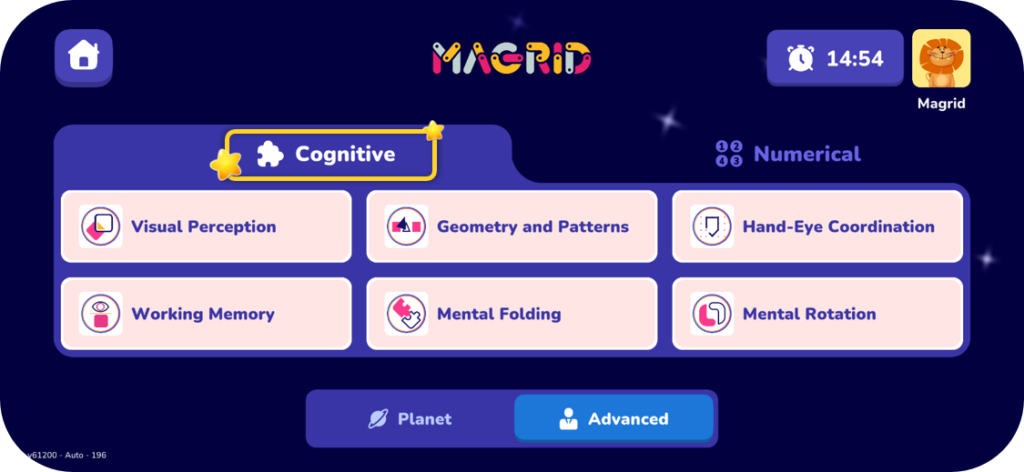
At Magrid, we are continually evolving to better reflect the learning experiences our platform provides. That’s why we’re introducing an update across the Magrid learning solution: the term “Visual Spatial Skills” will now be replaced with “Cognitive Skills.”
While spatial reasoning remains an important part of Magrid, our activities support a broader range of mental abilities. With the addition of working memory activities last year, and with the continued expansion of our content, this new terminology better reflects the full set of thinking skills children develop when learning with Magrid. It’s a small change in wording, but an important step in recognising the broader cognitive foundations behind the Magrid experience.
What Do We Mean by Cognitive Skills?
Cognitive skills are the mental processes that allow us to think, learn, remember, and solve problems. They help children interpret information, recognise relationships, process patterns, and make decisions.
These skills form the foundation of learning by enabling children to organise and understand information effectively. Developing cognitive skills helps children approach new challenges, build problem-solving strategies, and make sense of the world around them.
Magrid’s Cognitive Skills
Magrid activities are designed to develop a range of cognitive skills that support early learning and reasoning:
– Visual Perception – the ability to interpret and make sense of visual information. (For example, identifying and matching shapes that share similar characteristics.)
– Mental Rotation – the ability to rotate objects mentally and understand their orientation. (For example, matching a rotated shape to its original form.)
– Hand-Eye Coordination – the ability to use visual information to guide and control hand movements. (For example, tracing a shape or connecting dots with lines.)
– Geometry and Patterns – the ability to recognise and manipulate shapes and repeating sequences. (For example, identifying individual shapes or continuing a pattern of colours.)
– Working Memory – the ability to temporarily hold and use visual information to complete a task. (For example, remembering where an object was after it disappears.)
– Mental Folding – the ability to visualise how shapes can be manipulated and folded while understanding their symmetry. (For example, drawing a line of symmetry to split a shape into two identical halves.)
Together, these skills help children interpret visual information, understand spatial relationships, and develop logical strategies for solving problems.
How Cognitive Skills Support Early Learning
Cognitive skills play a crucial role in early childhood development and form an important foundation for many areas of learning.
Skills such as recognising patterns, understanding spatial relationships, and holding information in working memory help children organise information and approach new problems with confidence. These abilities support early mathematical thinking, reasoning, and problem solving.
Although Magrid is language-free, the cognitive skills it develops also contribute to développement pré-alphabétique. Pattern recognition, visual perception, and working memory are important building blocks for later skills such as reading, writing, and understanding sequences. In addition, mental rotation and mental folding help children develop the spatial awareness needed for letter recognition, enabling them to distinguish between similar letters and recognise them more easily.
By strengthening these foundational cognitive abilities, Magrid helps children develop the mental tools they need for learning across many subjects.
A Small Change That Reflects a Bigger Vision
This terminology update reflects Magrid’s ongoing commitment to continually improving the learning experience for students, parents, and teachers. As our platform grows and new activities are introduced, we want the language we use to accurately represent the wide range of thinking skills children develop through Magrid.
The update is now rolling out across the Magrid learning solution. Availability may vary slightly by region, but you can see the change by updating the Magrid app through your app store.
While the change may appear simple, it represents an important step forward. It reflects the expanding scope of Magrid and our continued commitment to helping children develop the cognitive skills that support confident learning, problem solving and a brighter future.
Auto Draft
Is ADHD a Learning Disability?

Understanding Is ADHD a Learning Disability? Attention deficit hyperactivity disorder, commonly known as ADHD, is a neurodevelopmental disorder that affects how the brain manages attention, behavior, and the learning process. Many parents and educators ask the same question: is ADHD a learning disability? This confusion often arises because ADHD affects learning in noticeable ways, especially […]
Dysgraphia Accommodations for Kids

Dysgraphia is a learning disability that affects a student’s ability to produce clear and organized writing. It often appears as poor handwriting, inconsistent letter formation, and difficulty with written expression. For many children in elementary school, this can make everyday classroom tasks challenging, especially when they are expected to complete written assignments or fill a page with structured responses.
How to Explain Autism to Kids

Why Talking About Autism Matters Talking about autism with kids is an important step toward building understanding, empathy, and inclusion. Many parents and adults may feel unsure about how to explain autism to kids, especially when a child in the family, classroom, or peer group has received a diagnosis. However, early conversations create a strong […]
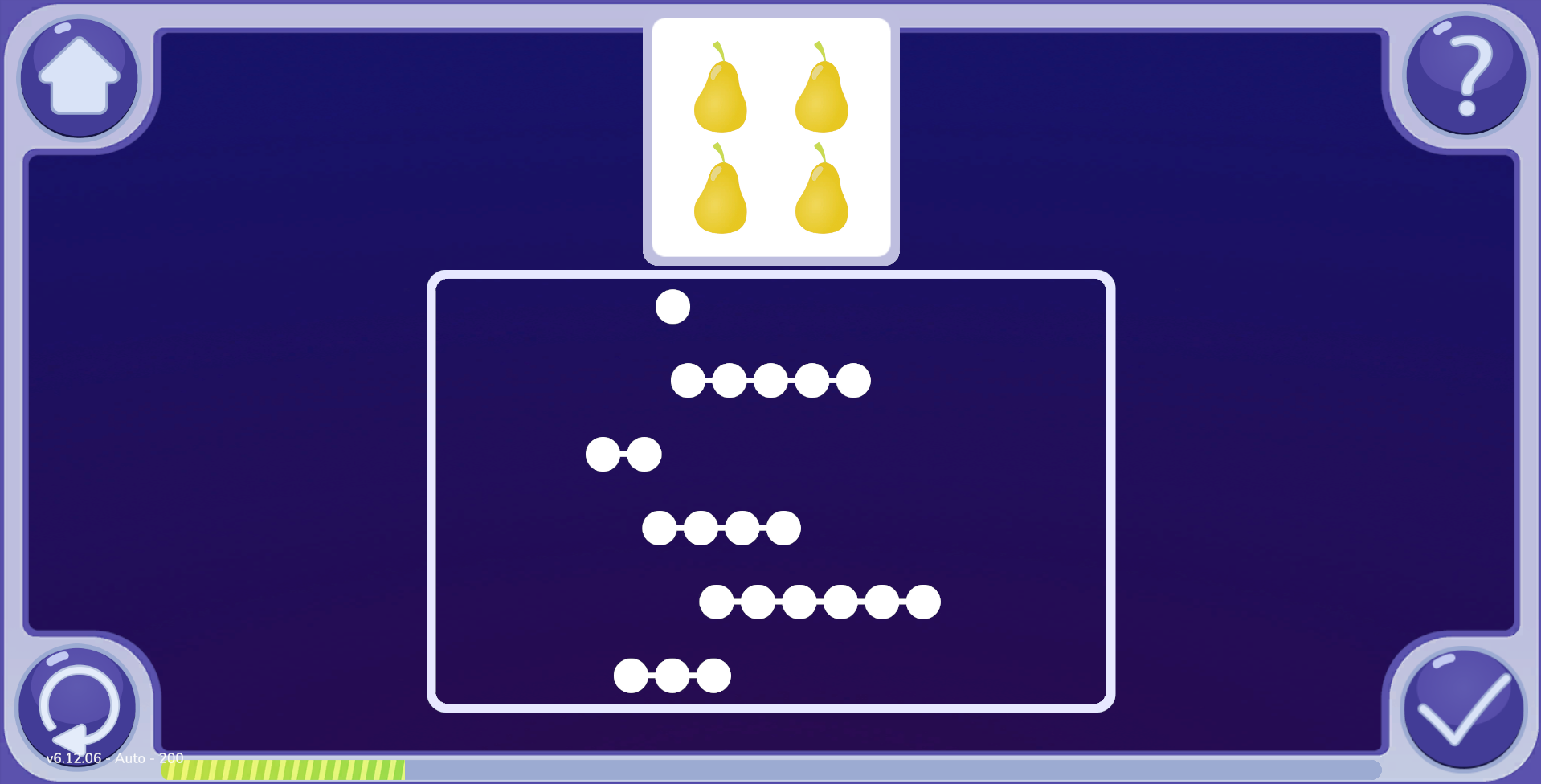
Understanding Quantity Recognition: A Foundational Skill in Early Learning
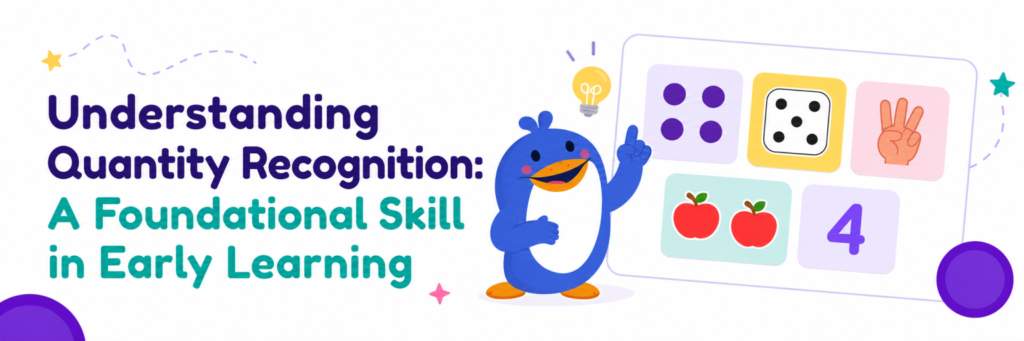
When children begin learning about numbers, counting is often the first thing that comes to mind. However, there is another important skill that develops alongside, and often before counting: quantity recognition.
This skill plays a key role in how children begin to understand numbers in a meaningful way.