






Tailoring Education for Children with ADHD

ADHD is a neurodevelopmental disorder characterized by challenges with attention, impulsivity, and executive functioning. It could then be a challenge also for the teachers (Ewe, 2019) and the parents (Marquet-Doléac et al., 2023 ; Gavin et al., 2023). These core deficits can manifest in various ways, leading to:
– Attentional Difficulties: Children with ADHD may struggle to focus, easily get distracted, and have difficulty sustaining attention over time. (Barkley, 2014)
– Executive Functioning Challenges: These skills involve planning, organizing, managing time, and regulating behavior. Children with ADHD often experience difficulties in these areas. (Sonuga-Barke, 2005)
– Impulsivity: They may act before thinking, interrupt frequently, and struggle with self-control, leading to behavioral issues in the classroom. (Willcutt, 2005)
– Not an exhaustive list.

These challenges can significantly impact academic performance, leading to frustration, lower grades, and difficulties with social interactions (Loe et al., 2007). For instance, several studies have demonstrated that ADHD students can struggle with cognition and mathematics, as highlighted by a systematic review (Kanevski et al., 2021). Focus should be on developing evidence-based strategies that target specific cognitive deficits:
– Creating a Supportive Environment: Structured classrooms with minimal distractions, clear expectations, and regular breaks can be beneficial (Loe et al., 2007). Visual aids, organizational tools, and routines can help establish predictability and reduce anxiety. (Barkley, 2014)
– Breaking Down Tasks: Large assignments can be overwhelming. Breaking down tasks into smaller, manageable steps can improve focus and a sense of accomplishment. (DuPaul, 2014)
– Providing Visual and Auditory Support: Using visual aids like charts, diagrams, and graphic organizers, along with read-aloud instructions and audio recordings, can enhance comprehension for children with ADHD. (Fuchs, 2013)
– Addressing Executive Functioning: Target specific executive function challenges with exercises that improve working memory, planning, and self-regulation. (Dawson, 2013)
– Encouraging Active Learning: Hands-on activities, movement breaks, and interactive learning experiences can increase engagement and retention. (Pellegrini, 2008)
– Promoting Positive Reinforcement: Celebrate successes, acknowledge effort, and focus on individual progress rather than comparing with peers. (DuPaul, 2014)
Collaboration and training: Crucial Elements
Teachers, parents, and therapists, such as nurses (Heuer, 2016) are encouraged to work together to create a supportive and consistent learning environment. Open communication, shared goals, behavior management training for parents (Feng et al., 2023) or for teachers (for a systematic review and meta-analysis: Ward et al., 2020 ; Östberg et al, 2011), and individualized strategies can be essential for promoting academic success and personal growth.
Technology and Tools
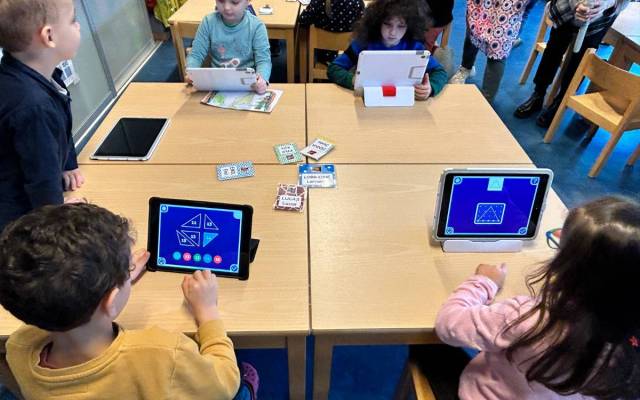
Technology can be a valuable tool for supporting individuals with ADHD (see a systematic review: Păsărelu et al, 2020). Apps, software, and online resources can provide personalized learning experiences, track progress, and offer additional support in terms of mental health management (Knouse et al., 2022). However, it’s essential to carefully evaluate the effectiveness of these tools and ensure they align with individual needs.
The Importance of Individualization
No two children with ADHD are the same. It is critical to conduct individualized assessments to identify each child’s specific strengths, challenges, and preferred learning approaches. This information can then inform the development of tailored educational plans that maximize their potential.
Note: If you would like to know more about ADHD and common misconceptions, we could recommend watching this short video from the Centre for Educational Neuroscience.
Last scientific review in August/September 2024
References:
– Chaulagain, A., Lyhmann, I., Halmøy, A., Widding-Havneraas, T., Nyttingnes, O., Bjelland, I., & Mykletun, A. (2023). A systematic meta-review of systematic reviews on attention deficit hyperactivity disorder. European Psychiatry, 66(1), e90. doi:10.1192/j.eurpsy.2023.2451
– Barkley, R. A. (2014). Attention-Deficit/Hyperactivity Disorder: A Handbook for Diagnosis and Treatment. Guilford Press.
– Dawson, P., & Guare, R. (2013). Executive Functions in Children with Autism Spectrum Disorders: A Comprehensive Guide to Assessment and Intervention. Guilford Press.
– DuPaul, G. J., & Stoner, G. (2014). ADHD in the Schools: Assessment, Treatment, and Management. Guilford Press.
Ewe, L. P. (2019). ADHD symptoms and the teacher–student relationship: a systematic literature review. Emotional and Behavioural Difficulties, 24(2), 136–155. https://doi.org/10.1080/13632752.2019.1597562
– Feng, M., Xu, J., Zhai, M., Wu, Q., Chu, K., Xie, L., Luo, R., Li, H., Xu, Q., Xu, X., & Ke, X. (2023). Behavior Management Training for Parents of Children with Preschool ADHD Based on Parent-Child Interactions : A Multicenter Randomized Controlled, Follow-Up Study. Behavioural Neurology, 2023, 1‑13. https://doi.org/10.1155/2023/3735634Fuchs, D., Fuchs, L. S., & Compton, D. L. (2013). Interventions for Students with Learning Disabilities. Pearson.
– Heuer, B., & Williams, S. (2016). Collaboration Between PNPs and School Nurses : Meeting the Complex Medical and Academic Needs of the Child With ADHD. Journal Of Pediatric Health Care, 30(1), 88‑93. https://doi.org/10.1016/j.pedhc.2015.09.001
– Gavin, B., Twomey, C., Minihan, E., O’Reilly, G., & McNicholas, F. (2023). Parenting interventions, ADHD and homework: a systematic review. Irish Educational Studies, 1–21. https://doi.org/10.1080/03323315.2023.2174572
– Irene M. Loe, Heidi M. Feldman, Academic and Educational Outcomes of Children With ADHD, Journal of Pediatric Psychology, Volume 32, Issue 6, July 2007, Pages 643–654, https://doi.org/10.1093/jpepsy/jsl054
– Kanevski, M., Booth, J. N., Oldridge, J., McDougal, E., Stewart, T. M., McGeown, S., & Rhodes, S. M. (2021). The relationship between cognition and mathematics in children with attention-deficit/hyperactivity disorder: a systematic review. Child Neuropsychology, 28(3), 394–426. https://doi.org/10.1080/09297049.2021.1985444
– Knouse, L. E., Hu, X., Sachs, G., & Isaacs, S. (2022). Usability and feasibility of a cognitive-behavioral mobile app for ADHD in adults. PLOS Digital Health, 1(8), e0000083. https://doi.org/10.1371/journal.pdig.0000083
– Marquet-Doléac, J., Biotteau, M., & Chaix, Y. (2024). Behavioral Parent Training for School-Aged Children With ADHD: A Systematic Review of Randomized Control Trials. Journal of Attention Disorders, 28(3), 377-393. https://doi.org/10.1177/10870547231211595
– Östberg, M., & Rydell, A. M. (2011). An efficacy study of a combined parent and teacher management training programme for children with ADHD. Nordic Journal of Psychiatry, 66(2), 123–130. https://doi.org/10.3109/08039488.2011.641587
– Pellegrini, A. D., & Galda, L. (2008). Play and Education: A Developmental Perspective. Pearson.
– Păsărelu, C. R., Andersson, G., & Dobrean, A. (2020). Attention-deficit/ hyperactivity disorder mobile apps : A systematic review. International Journal Of Medical Informatics, 138, 104133. https://doi.org/10.1016/j.ijmedinf.2020.104133
– Salari, N., Ghasemi, H., Abdoli, N. et al. The global prevalence of ADHD in children and adolescents: a systematic review and meta-analysis. Ital
– J Pediatr 49, 48 (2023). https://doi.org/10.1186/s13052-023-01456-1
– Sonuga-Barke, E. J. S. (2005). Attention-Deficit/Hyperactivity Disorder: A Handbook for Clinicians. Cambridge University Press.
– Ward, R. J., Bristow, S. J., Kovshoff, H., Cortese, S., & Kreppner, J. (2022). The Effects of ADHD Teacher Training Programs on Teachers and
– Pupils: A Systematic Review and Meta-Analysis. Journal of Attention Disorders, 26(2), 225-244. https://doi.org/10.1177/1087054720972801
– Willcutt, E. G., & Pennington, B. F. (2005). Attention-Deficit/Hyperactivity Disorder: A Neurodevelopmental Perspective. Guilford Press.
Spatial Visualization: A Key Skill In Early Math Learning

Many children struggle with spatial visualization, which is the ability to mentally manipulate and rotate objects in space. But don’t worry, there are ways to boost math learning by mastering spatial visualization.
In this article, we’ll explore the importance of spatial visualization in math, how it impacts problem-solving skills, and strategies to improve spatial reasoning abilities beyond individual differences. Whether you’re a parent looking to improve your child’s math performance or a teacher who wants to enhance your student’s cognitive skills, this article will provide you with valuable techniques and resources.

The Importance Of Spatial Visualization In Math Learning
Spatial visualization refers to the mental manipulation and visualization of objects in space, which helps in understanding and solving mathematical problems. When children have strong spatial visualization skills, they can easily comprehend geometric concepts, visualize patterns, and mentally rotate objects in their minds. This ability is particularly important in building the foundation for fields such as geometry, trigonometry, and calculus, where visualizing shapes and manipulating them is essential.
Spatial visualization is important for young children aged 3-9 as well, albeit in a more simplified form. Developing spatial visualization skills in this age group can lay a strong foundation for their cognitive development. Here’s why spatial visualization is important for young children:
Early Math Skills: Spatial visualization helps young children understand basic mathematical concepts. For instance, it aids in comprehending the concepts of size, shape, and relative position, which are fundamental to early math learning.
Geometry and Spatial Awareness: Spatial visualization is crucial for developing spatial awareness and understanding basic geometric shapes, such as squares, circles, triangles, and rectangles. These concepts are often introduced in early childhood education.
Puzzle Solving: Spatial reasoning skills are honed when children play with puzzles and spatial games. Solving puzzles and arranging shapes can improve their problem-solving abilities, even at a young age.
Measurement and Comparison: Young children learn about measurement and comparison through spatial activities. For example, comparing the sizes of objects, understanding concepts like “bigger” and “smaller,” and estimating quantities involve spatial thinking.
Patterns and Symmetry: Spatial visualization helps children recognize and create patterns and understand symmetry, which are important mathematical concepts introduced in early education.
Spatial Language: Developing spatial vocabulary, such as words like “above,” “below,” “beside,” “in front of,” and “behind,” helps children communicate spatial relationships and enhances their mathematical language skills.
Preparation for Later Learning: Building a strong foundation in spatial visualization during early childhood sets the stage for more advanced math learning in later years. It helps children transition into more complex mathematical concepts with greater ease.
Fine Motor Skills: Spatial activities often involve manipulating objects, which can improve fine motor skills. Developing hand-eye coordination and dexterity is important for various aspects of learning, including math.
Creativity and Imagination: Spatial visualization encourages creativity and imagination in young children. They can use their spatial skills to create art, build structures, and explore their unique ideas.
Play-based Learning: Many educational activities for children aged 3-9 are designed to incorporate spatial thinking through play. Games, building blocks, and interactive toys encourage children to think spatially while having fun.

How Spatial Visualization Skills Impact Math Performance
Students with strong spatial visualization skills tend to perform better in math. They can easily understand and apply geometric concepts, visualize patterns, and solve complex mathematical problems. Spatial visualization skills help in the development of logical reasoning, critical thinking, and problem-solving abilities.
On the other hand, students with weak spatial visualization skills may struggle to grasp geometric concepts, find it challenging to visualize and understand shapes, and face difficulties in solving math problems. They may rely heavily on rote memorization rather than understanding the underlying concepts, which can hinder their overall math performance.
Challenges Students Face With Spatial Visualization
Many children face challenges when it comes to spatial visualization. Some may find it difficult to mentally rotate shapes or visualize objects in different orientations. Others may struggle with understanding and applying geometric concepts, such as symmetry or congruence. These challenges can hinder their spatial ability to comprehend complex math problems and hinder their overall math performance.
One common challenge is the inability to see the relationship between 2D representations, such as diagrams or graphs, and their corresponding 3D objects. For example, students may struggle to understand how a 2D representation of a cube relates to the actual 3D shape. This difficulty in making connections between different representations can impede their ability to solve geometry problems effectively.
Cognitive Tests For Spatial Visualization
Spatial visualization is an important cognitive skill that plays a crucial role in a child’s overall development. It refers to the ability to mentally manipulate and understand spatial relations between objects in the physical environment. This skill is necessary for various tasks such as reading maps, understanding directions, and solving complex problems in subjects like mathematics and science. To assess a child’s spatial visualization abilities, cognitive tests specifically designed for this purpose are used.
Cognitive tests for children’s development in spatial visualization are designed to measure their ability to mentally rotate and manipulate objects in their mind’s eye. These tests typically involve tasks such as identifying rotated or mirrored images, assembling puzzles, or mentally transforming shapes. By assessing a child’s performance on these tasks, educators and psychologists can gain insights into their spatial reasoning skills and identify any areas that may require further development.
Mental Rotation Test (MRT)
One commonly used cognitive test for spatial visualization is the Mental Rotation Test (MRT). In this test, children are presented with pairs of two-dimensional or three-dimensional objects and are asked to determine if they are the same or different when rotated or mirrored. The MRT measures a child’s ability to mentally rotate objects and visualize them from different angles. This test provides valuable information about a child’s spatial reasoning abilities and can help identify any difficulties they may have in this area.
Block Design Task
Another cognitive test used for assessing spatial visualization in children is the Block Design task. In this task, children are given a set of blocks and asked to recreate a pattern or design using the blocks. This task requires children to mentally visualize the final design and manipulate the blocks accordingly. The Block Design task assesses a child’s ability to mentally manipulate objects in space and is often used as part of a comprehensive cognitive assessment.
Surface Development Test
The surface development test is a standardized assessment that evaluates a child’s ability to mentally unfold and visualize two-dimensional shapes into three-dimensional objects. This test typically involves presenting a series of flat patterns or nets of geometric shapes, and the child is required to mentally fold and assemble the shapes to recreate the original three-dimensional object. The test measures the child’s spatial reasoning, mental rotation, and ability to understand spatial relationships.
Paper Folding Test
The paper folding test is another assessment tool used to evaluate children’s spatial visualization abilities. In this test, children are presented with a series of folded papers and asked to predict where holes or markings will appear when the paper is unfolded. This task requires children to mentally unfold the paper and imagine its original state before it was folded. By correctly predicting the outcome, children demonstrate their ability to mentally manipulate and visualize two-dimensional shapes in three-dimensional space.

Strategies To Support Spatial Visualization Development
The good news is that spatial thinking can be developed and improved with practice. Here are some techniques and exercises that can help enhance your child’s spatial reasoning abilities:
Drawing and sketching: Practice drawing and sketching different geometric shapes from various angles. This exercise helps in visualizing shapes in different orientations and enhances spatial awareness.
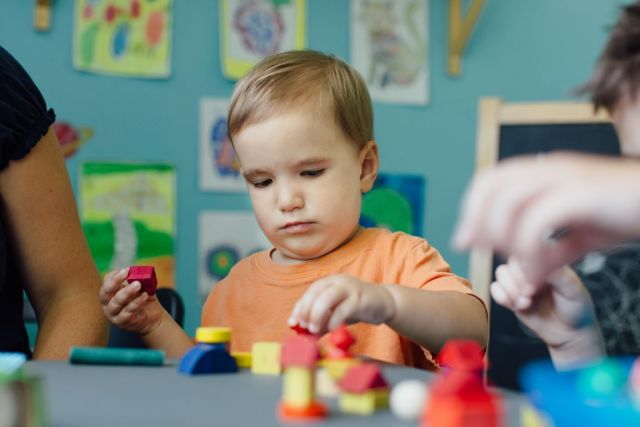
Building models: Use materials like blocks, clay, or Legos to create 3D models of geometric shapes. Children can construct 3D shapes using clay or toothpicks and visualize the relationships between different parts. This hands-on activity allows physical manipulation of objects and understanding of their properties in a tangible way.
Mental rotation: Engage in mental rotation exercises by visualizing objects and mentally rotating them in the mind. Start with simple shapes and gradually progress to more complex ones. This exercise strengthens the ability to mentally manipulate objects.
Puzzles and games: Have them solve puzzles and play games that require spatial visualization skills. Activities like jigsaw puzzles, Rubik’s cubes, or tangrams can help improve spatial visualization ability. Play games like chess, Tangram, or Sudoku that require spatial reasoning. These games help develop problem-solving skills and enhance spatial abilities.
Group work and collaboration: Encourage children to work in groups and collaborate on problem-solving tasks that require spatial visualization skills. This fosters peer learning and allows them to share different perspectives and strategies.
Virtual reality and digital apps: Use virtual reality technology or digital apps like Magrid specifically designed to improve spatial visualization skills. These tools provide an interactive and immersive learning experience that enhances their spatial awareness. Children can take up an age-appropriate spatial visualization course that can aid in understanding complex concepts.
Practice these methods consistently to see improvements in your child’s spatial skills. Make it a habit to incorporate spatial visualization exercises into a daily math practice routine. Teachers can also help develop the students’ spatial skills by incorporating spatial visualization activities in math lessons and creating an engaging and interactive learning environment.

Learn With Magrid – An Evidence-Based Early Math Learning Solution
Spatial visualization is a fundamental skill that can significantly enhance the math learning experience. By developing your child’s spatial visualization abilities, they can better understand geometric concepts, visualize patterns, and solve complex mathematical problems suited to their age.
Magrid provides an effective and evidence-based pedagogical program that focuses on developing early spatial-visual, mathematical, and cognitive abilities for preschool, early childhood, and special needs learning.
Designed By Experts: The Magrid app is designed, developed, tested, and validated by experts in respective fields such as psychology, education, computer science, neuroscience, and cognitive science. As concerned parents, rest assured your children are learning the best standards of math skills.
Practical And Engaging: While parents may worry about the use of technology in educating children, Magrid ensures a healthy balance and a hands-on environment that effectively utilizes technology to complement learning while also simultaneously reducing screen time and cutting down on sensory overload.
Individualized Learning Approach: Magrid employs a two-year comprehensive and curriculum-aligned program that acts as a roadmap for teachers to meet their specific teaching objectives while also imparting students with independent learning opportunities so they can learn and grow at their comfortable pace.
With over 2,500 training activities actively implemented in public schools all over Luxembourg, Magrid transcends beyond language to be a fun, interactive, and educational math learning solution. Whether it is kids who are on the Autism spectrum, those with hearing difficulties and language-related disorders, suspected dyslexia, dyscalculia, and dyspraxia, those who find it difficult to understand instructions, and also children who are second-language learners, all have an inclusive opportunity to learn and grow with Magrid.
Discover all about Magrid and the challenges we help our educators and parents overcome in their journey to nurturing their children.
Simple Tips on How to Help a Child with Dyspraxia

Dyspraxia, also known as developmental coordination disorder (DCD), affects a child’s ability to plan and execute coordinated movements. This condition can make everyday tasks, such as tying shoelaces or writing, particularly challenging. Children with dyspraxia often struggle with both fine motor skills (such as writing) and gross motor skills (like running or jumping). These difficulties can lead to frustration and impact a child’s self-confidence.
While dyspraxia is a lifelong condition, early intervention can significantly help children develop new motor skills and find ways to manage their challenges. Children with dyspraxia may also face other difficulties, such as language difficulties or symptoms of attention deficit hyperactivity disorder (ADHD), which can complicate their development further. Understanding these challenges is the first step in helping a child navigate everyday life with more ease.
What is Dyspraxia? An Overview of Developmental Coordination Disorder
Dyspraxia, officially known as developmental coordination disorder (DCD), is a learning difficulty that affects the brain’s ability to process movement information correctly. This condition impacts a child’s ability to carry out both fine motor and gross motor tasks, meaning that activities requiring hand-eye coordination or full-body movement can be challenging. For example, tasks that seem simple, like tying shoelaces or using a pencil, require effort and concentration for a child with dyspraxia.
It’s also important to note that dyspraxia often overlaps with other conditions, such as attention deficit hyperactivity disorder (ADHD) and language difficulties. Children diagnosed with dyspraxia may experience additional challenges, including poor planning and difficulty with visual cues, which can affect their ability to navigate daily activities.
Early identification and a supportive approach can help dyspraxic individuals develop new motor skills and improve their ability to function in school and other environments.
Signs to Look For: Recognizing Dyspraxia in Children
Recognizing dyspraxia in children can be challenging because its symptoms often overlap with other developmental conditions. Children with dyspraxia typically struggle with motor skills, particularly those that require fine motor coordination, like writing or using utensils. They may also have difficulty with gross motor skills, such as running, jumping, or balancing.
In addition to movement difficulties, children may show signs of poor planning, difficulty following visual cues, and an inability to complete tasks that require coordinated movements. These challenges can become more apparent as a child grows older and faces more complex tasks, such as writing or performing well in school. Identifying these signs early is key to providing the right support.
How to Help a Child with Dyspraxia Improve Motor Skills

Helping a child with dyspraxia develop motor skills requires patience, practice, and a structured approach. Both fine motor skills and gross motor skills need attention, as each plays a crucial role in everyday tasks. Encouraging the child to engage in activities that are fun yet challenging is key to progress. Start with simple tasks that involve working on motor coordination, such as building blocks or using utensils during mealtimes.
It’s important to gradually increase the difficulty of tasks to improve coordination without overwhelming the child. For example, practicing simple hand movements like threading beads or catching a ball can help build new motor skills. Positive reinforcement and repetition are essential for these children as they work through motor challenges. Engaging in tasks that focus on both fine and gross motor coordination will help a child develop confidence in their abilities over time.
Supporting Fine Motor Skills Development: Practical Tips
Children with dyspraxia often struggle with activities that require fine motor skills, such as handwriting, using scissors, or buttoning clothes. To support the development of fine motor skills, start by introducing tools that can help make tasks easier. For example, adding special grips to pencils or utensils can provide extra support for children having difficulty holding items.
Activities like drawing, cutting out shapes, or playing with modeling clay are great for improving dexterity. These tasks help the child practice individual movements and improve their hand-eye coordination. Be sure to break tasks down into smaller steps, giving clear, simple instructions. Offering extra time to complete tasks is crucial in reducing frustration.
Additionally, integrating play that emphasizes fine motor coordination will make the learning process enjoyable. Over time, these repeated actions will help strengthen the child’s motor skills, making daily activities less of a struggle.
Learn more about the differences between dyslexia and dyspraxia in this article.
Gross Motor Skills: Activities to Encourage Coordinated Movements

Improving gross motor skills is just as important as developing fine motor skills for children with dyspraxia. Engaging them in activities that promote coordinated movements helps improve their physical abilities. Simple outdoor games, such as throwing and catching a ball, running, or balancing on a beam, can be highly effective. These tasks are great for building gross motor coordination while also being fun.
Incorporating physical exercises into everyday life helps a child practice without feeling overwhelmed. Activities like jumping, climbing, or cycling help to improve balance, coordination, and overall movement abilities. As with fine motor tasks, it’s essential to gradually increase the complexity of these activities to maintain progress.
By practicing regularly, children can strengthen their gross motor skills, making it easier to navigate more complex physical tasks. This can also have a positive effect on their ability to perform everyday tasks independently.
The Role of Occupational Therapy in Dyspraxia Support

Occupational therapy plays a crucial role in helping a child with dyspraxia manage everyday challenges. Occupational therapists work closely with children to improve both fine motor and gross motor skills, focusing on practical strategies that help with coordinated movements. These sessions often involve practicing tasks that the child may find difficult, such as writing, using utensils, or tying shoelaces.
Through occupational therapy, children can learn how to break down complex activities into simpler steps, making them easier to manage. This therapy is especially helpful for teaching children to perform essential daily activities more independently.
Additionally, therapists use adaptive techniques and tools, such as special grips or modified equipment, to support children in developing new abilities. Occupational therapy not only improves motor function but also boosts the child’s overall self-confidence, helping them thrive in school and other environments.
Using a Multi-Sensory Approach for Learning New Skills

A multi-sensory approach is highly effective in teaching children with dyspraxia new motor skills. Since these children often face sensory processing challenges, using multiple senses simultaneously—such as sight, sound, and touch—can make learning easier. Incorporating visual cues like images or videos can help the child better understand tasks that involve movement.
For example, practicing a sequence of movements while watching a demonstration helps reinforce the child’s ability to mimic the actions. Additionally, tactile activities, such as feeling different textures or manipulating objects, provide sensory input that aids in learning.
This approach can also be used to improve language difficulties and social skills by integrating speech and gestures. By engaging more than one sense at a time, children with dyspraxia are better equipped to grasp complex concepts and gradually increase their abilities.
School Support: How Teachers Can Help Children with Dyspraxia

Teachers play a vital role in supporting children with dyspraxia in the classroom. Implementing strategies that break down tasks into manageable steps helps children overcome their coordination difficulties and thrive academically. For instance, tasks that require fine motor skills, such as writing, can be simplified by using special grips or providing additional resources.
Providing extra time for assignments or tests allows children to complete their work without feeling rushed. Teachers can also use visual cues and hands-on activities to accommodate different learning styles. Collaboration with parents and occupational therapists ensures that children receive consistent support both at school and at home.
By creating an inclusive classroom environment, teachers empower children with dyspraxia to succeed, building their academic skills and their confidence in their abilities.
Conclusion: How Early Intervention Can Make a Difference

Early intervention is key to helping a child with dyspraxia develop essential motor skills and navigate daily challenges. By understanding the symptoms and working with professionals like occupational therapists, parents and teachers can offer targeted support.
Simple strategies, from using a multi-sensory approach to breaking tasks into smaller steps, can significantly improve the child’s ability to perform tasks and gain self-confidence. Early identification, combined with patience and structured support, enables children with dyspraxia to thrive, whether at home, in school, or in social settings.
Early intervention, along with the right tools, can make a significant difference for children with dyspraxia. One such tool is Magrid, which offers a variety of activities designed to help strengthen motor skills.
Its multi-sensory approach supports children who face challenges with fine motor coordination and coordinated movements. By working through engaging tasks at their own pace, children can gradually build confidence and improve their abilities in a supportive, stress-free environment. Get started here.
Ce qui motive un enfant à apprendre – Votre guide vers la réussite

Introduction : L'essence de la motivation dans l'apprentissage
Comprendre ce qui motive un enfant à apprendre est un élément fondamental de concevoir un parcours éducatif qui ne se contente pas de transmettre des connaissances, mais qui inculque également l'amour de l'apprentissage pour toute la vie. Cette réflexion fondamentale va au-delà des indicateurs académiques traditionnels pour toucher au cœur même de ce qui fait de l'apprentissage une expérience profondément personnelle et stimulante pour chaque enfant. La motivation, par essence, est le carburant qui alimente le moteur de l'éducation, stimulant la curiosité, l'engagement et la persévérance.
On ne saurait trop insister sur l'importance de la motivation. Elle détermine la manière dont les enfants abordent les tâches d'apprentissage, influence leur capacité à surmonter les difficultés et a un impact sur leur développement scolaire et personnel dans son ensemble.
Un enfant motivé est plus enclin à s'investir pleinement dans ses études, à explorer les matières avec enthousiasme et à persévérer face aux difficultés. Cette soif d'apprendre a des répercussions profondes non seulement sur la réussite scolaire, mais aussi sur le développement de compétences telles que l'esprit critique, la résolution de problèmes et la capacité à travailler de manière autonome.
En substance, il est essentiel de comprendre et de stimuler la motivation chez les jeunes apprenants. Il ne s'agit pas seulement de les encourager à exceller dans leurs études actuelles, mais aussi de leur donner l'état d'esprit et les outils nécessaires à leur réussite future. Cette première exploration de la nature même de la motivation ouvre la voie à la découverte de stratégies capables de susciter et d'entretenir la motivation intérieure de chaque enfant, rendant ainsi son parcours scolaire à la fois enrichissant et transformateur.
La dynamique de la motivation

Motivation intrinsèque et motivation extrinsèque
Le parcours d'apprentissage est animé par deux types fondamentaux de motivation : la motivation intrinsèque et la motivation extrinsèque. La motivation intrinsèque vient de l'intérieur ; elle se caractérise par le désir profond de l'apprenant d'explorer, de comprendre et de maîtriser un sujet pour la satisfaction et l'épanouissement que cela lui procure.
Ce type de motivation est essentiel pour garantir un engagement à long terme et des expériences d'apprentissage profondes et enrichissantes. À l'inverse, la motivation extrinsèque est alimentée par des récompenses externes ou par la volonté d'éviter des conséquences négatives.
Les récompenses, telles que les félicitations, les notes ou les prix, ainsi que les facteurs dissuasifs, comme la critique ou la peur de l'échec, constituent des facteurs de motivation extrinsèques typiques. Si la motivation extrinsèque peut efficacement déclencher ou orienter certaines activités d'apprentissage, elle ne permet pas toujours de maintenir l'intérêt ou l'engagement à long terme aussi efficacement que la motivation intrinsèque.
Il est essentiel de trouver un équilibre entre ces forces de motivation, car un recours excessif aux récompenses extrinsèques peut affaiblir la curiosité naturelle et le plaisir d'apprendre inhérents à la motivation intrinsèque.
Renforcement positif et encouragement
Le renforcement positif et les encouragements jouent un rôle essentiel pour stimuler la motivation d'un enfant à apprendre. Reconnaître et valoriser les efforts et les progrès d'un enfant, plutôt que de se concentrer uniquement sur les résultats, permet de mettre en avant l'importance de la persévérance et du processus d'apprentissage lui-même.
Cette approche favorise un état d'esprit orienté vers la croissance, en aidant les enfants à comprendre que l'intelligence et les capacités peuvent se développer grâce à l'effort, à la stratégie et à la maîtrise des défis. Les encouragements constituent un outil puissant pour renforcer l'estime de soi et la confiance en soi de l'enfant, faisant ainsi de l'apprentissage une activité plus accessible et plus agréable.
Lorsque les enfants se sentent soutenus et valorisés, leur motivation intrinsèque s'épanouit, ce qui les pousse à s'investir davantage et avec plus de persévérance dans leurs activités d'apprentissage.
Comprendre les besoins de chacun
Une approche uniforme ne permet pas de répondre à la diversité des sources de motivation des apprenants. Il est essentiel de reconnaître que “ tous les enfants ” ne sont pas motivés par les mêmes facteurs pour pouvoir adapter les expériences pédagogiques de manière à ce qu’elles trouvent un écho chez chaque apprenant.
Les enfants présentent de grandes différences en termes d’intérêts, de modes d’apprentissage et de ce qu’ils trouvent difficile ou gratifiant. Certains s’épanouissent dans la compétition et la reconnaissance, tandis que d’autres trouvent leur motivation dans la collaboration et le plaisir intrinsèque de la découverte. Comprendre ces différences individuelles et y répondre est essentiel pour libérer le potentiel de motivation de chaque enfant.
En proposant des expériences d'apprentissage personnalisées, adaptées aux centres d'intérêt et aux capacités propres à chaque enfant, les enseignants et les parents peuvent considérablement renforcer la motivation de l'enfant, faisant ainsi de l'apprentissage un processus plus captivant et plus enrichissant sur le plan personnel.
En tissant ensemble les fils complexes de la motivation intrinsèque et extrinsèque, du renforcement positif et de la compréhension des besoins individuels, nous pouvons créer une tapisserie d’expériences éducatives qui non seulement motivent, mais inspirent également.
Cette approche globale de la motivation met l'accent sur l'importance de cultiver un goût pour l'apprentissage qui va au-delà des récompenses extérieures, afin de favoriser une envie tenace et durable d'explorer, de découvrir et de s'épanouir.
Stimuler l'esprit et susciter l'intérêt de l'enfant

S'aligner sur les intérêts
Adapter les expériences d'apprentissage aux centres d'intérêt propres à chaque enfant constitue une stratégie fondamentale pour susciter une motivation profonde et durable. Identifier ce qui passionne un enfant — qu'il s'agisse des dinosaures, de l'exploration spatiale ou des contes — et intégrer ces éléments dans les activités pédagogiques permet de transformer l'apprentissage, qui passe ainsi d'une corvée imposée à une aventure passionnante.
Cette approche encourage les enfants à explorer les matières avec enthousiasme, ce qui favorise un engagement plus profond et plus significatif vis-à-vis du contenu pédagogique. Les éducateurs et les parents peuvent favoriser cette approche en observant les jeux spontanés et les questionnements de l’enfant, afin d’identifier ses véritables centres d’intérêt, qui peuvent servir de points d’entrée vers des expériences d’apprentissage plus larges.
En tirant parti de ces centres d'intérêt, les contenus pédagogiques gagnent en pertinence, ce qui rend le processus d'apprentissage agréable et intrinsèquement gratifiant.
Esprit critique et résolution de problèmes
Il est essentiel de développer l'esprit critique et la capacité à résoudre des problèmes chez l'enfant afin de le préparer à faire face aux complexités du monde qui l'entoure. Proposer aux enfants des activités qui mettent à l'épreuve leur raisonnement et leurs capacités d'analyse les encourage à penser par eux-mêmes, à poser des questions et à chercher des solutions.
Des stratégies telles que la présentation de problèmes concrets, l'encouragement aux questions ouvertes et la promotion du débat ou de la discussion stimulent la pensée critique. Les compétences en résolution de problèmes peuvent être développées grâce à des casse-têtes, des jeux et des activités pratiques qui amènent les enfants à mettre en pratique ce qu'ils ont appris dans des situations nouvelles.
Ces activités permettent non seulement de motiver les enfants en rendant l'apprentissage interactif et pratique, mais aussi de leur fournir les outils cognitifs nécessaires à leur réussite scolaire et à leur vie quotidienne.
Le rôle de l'enseignant et des parents d'un enfant
La collaboration entre les enseignants et les parents est essentielle pour créer un environnement d'apprentissage stimulant. Les enseignants disposent de l'expertise nécessaire pour concevoir des programmes scolaires conformes aux normes éducatives, tout en tenant compte des centres d'intérêt des élèves et en favorisant leur esprit critique.
À la maison, les parents peuvent renforcer ces expériences d’apprentissage par des échanges constructifs, des mises en pratique et en proposant des ressources adaptées à la curiosité de leur enfant. Une communication ouverte entre les enseignants et les parents garantit une approche cohérente en matière de motivation, permettant aux deux parties d’échanger leurs points de vue sur les centres d’intérêt de l’enfant, ses réussites et les domaines dans lesquels il a besoin d’un accompagnement.
Ce partenariat joue un rôle essentiel dans la mise en place d'un environnement cohérent et stimulant, qui incite les enfants à apprendre et à s'épanouir.
Créer un environnement d'apprentissage favorable

Célébrer les réussites
Reconnaître et célébrer les efforts et les réussites d’un enfant joue un rôle essentiel dans le développement de son estime de soi et de sa confiance en soi. La célébration ne se limite pas à la reconnaissance des bons résultats obtenus aux examens ou aux devoirs ; elle consiste à valoriser le parcours, les efforts et la persévérance qui ont conduit à ces résultats.
Se fixer des objectifs réalisables et célébrer les étapes franchies, aussi modestes soient-elles, permet de mettre en avant la valeur du travail acharné et de la résilience. Ce renforcement positif encourage les enfants à se fixer des objectifs plus ambitieux et à persévérer, sachant que leurs efforts sont remarqués et appréciés. Cette approche stimule non seulement leur motivation, mais aide également les enfants à développer une image de soi saine et à prendre conscience de leur propre progression.
Favoriser un état d'esprit orienté vers la croissance
Un état d’esprit orienté vers la croissance, c’est-à-dire la conviction que les capacités et l’intelligence peuvent être développées grâce à l’engagement et au travail acharné, est essentiel pour motiver les enfants à s’investir dans l’apprentissage et à surmonter les difficultés. Parmi les techniques permettant de cultiver cet état d’esprit, on peut citer le fait de valoriser l’effort plutôt que le talent inné, de présenter les difficultés comme des occasions d’apprendre et d’expliquer aux enfants que le cerveau est capable de se développer grâce à l’apprentissage.
En encourageant les enfants à considérer les échecs comme des étapes naturelles du processus d'apprentissage, on les aide à persévérer face aux difficultés et à aborder les tâches avec curiosité et détermination. En favorisant un état d'esprit de croissance, les éducateurs et les parents peuvent aider les enfants à réaliser leur potentiel et à considérer l'effort et l'apprentissage comme des voies menant à la réussite.
L'impact des interactions sociales
Les interactions sociales jouent un rôle important dans la motivation à l'apprentissage et favorisent une participation active. Les expériences d'apprentissage collaboratif, les discussions entre pairs et les projets de groupe favorisent le développement de liens sociaux et enrichissent l'apprentissage grâce à des expériences partagées. Ces interactions offrent des perspectives variées, encourageant les enfants à exprimer leurs pensées, à écouter les autres et à travailler en coopération pour atteindre des objectifs communs.
Le sentiment d'appartenance et le soutien issus d'interactions sociales positives renforcent la motivation, faisant de l'apprentissage un parcours partagé et agréable. De plus, enseigner aux enfants la valeur de l'empathie, du respect et de la communication dans le cadre de ces interactions les prépare à nouer des relations épanouissantes et enrichissantes tout au long de leur vie.
En veillant à adapter l'apprentissage aux centres d'intérêt des enfants, en encourageant la réflexion critique et la résolution de problèmes, et en favorisant des environnements propices à leur épanouissement tant à l'école qu'à la maison, nous pouvons créer des expériences éducatives qui sont non seulement motivantes, mais aussi transformatrices, jetant ainsi les bases d'une curiosité et d'un épanouissement qui dureront toute la vie.
Approches innovantes de l'apprentissage

Tirer parti des outils numériques
L'avènement de l'ère numérique a marqué le début d'une période de transformation pour les méthodes pédagogiques, où l'utilisation des outils numériques est devenue un élément essentiel pour susciter l'intérêt des jeunes esprits. Les logiciels interactifs, les applications éducatives et les plateformes en ligne offrent des expériences d'apprentissage dynamiques et personnalisées, capables de captiver l'intérêt des enfants bien au-delà des méthodes traditionnelles.
Ces ressources numériques recourent à des animations, des simulations et des éléments ludiques pour rendre l'apprentissage des concepts plus accessible et plus agréable., ce qui permet de maintenir un engagement actif. Par exemple, les applications de narration qui donnent vie aux personnages et aux intrigues littéraires peuvent transformer la lecture en une aventure interactive, suscitant ainsi l'amour des histoires et de la lecture.
De plus, les jeux vidéo éducatifs peuvent améliorer les capacités de résolution de problèmes en proposant des défis sous des formes ludiques. Il est toutefois essentiel de veiller à une approche équilibrée du temps passé devant les écrans, en associant la technologie à des activités pratiques afin de favoriser une expérience d'apprentissage complète.
Activités extrascolaires
L'intégration d'activités extrascolaires dans le parcours d'apprentissage d'un enfant offre une approche éducative à multiples facettes, enrichissant l'expérience d'apprentissage au-delà des activités scolaires. Ces activités, qui vont des ateliers artistiques et manuels aux clubs sportifs et scientifiques, permettent de mettre en pratique les connaissances acquises en classe, favorisant ainsi une meilleure compréhension et une plus grande appréciation des différentes matières.
La participation à ces activités peut considérablement renforcer la motivation des enfants en leur permettant de relever de nouveaux défis et d'accéder à de nouvelles réussites dans des contextes qu'ils trouvent attrayants et agréables. De plus, les activités extrascolaires favorisent le développement des compétences sociales, l'esprit d'équipe et le leadership, car les enfants interagissent avec des camarades qui partagent les mêmes centres d'intérêt.
Le sentiment d'accomplissement et d'appartenance que procurent ces activités renforce l'estime de soi et peut se traduire par une attitude plus engagée vis-à-vis de l'apprentissage scolaire.
Surmonter les difficultés liées à la motivation

Identifier et remédier à la perte de motivation
La motivation des enfants peut s'affaiblir pour diverses raisons, notamment un contenu trop facile, une pression scolaire trop forte ou un décalage entre les supports pédagogiques et leurs centres d'intérêt. Il est essentiel de savoir reconnaître ces signes de perte de motivation afin d'intervenir à temps.
Parmi les stratégies permettant de remédier à cette situation, on peut citer la mise en place d’activités pédagogiques variées, adaptées au style d’apprentissage et aux centres d’intérêt de l’enfant, afin de raviver sa curiosité et son enthousiasme. Des parcours d’apprentissage personnalisés, adaptés au rythme de l’enfant, peuvent également atténuer les sentiments de frustration ou d’ennui. Les encouragements et le soutien des éducateurs et des parents sont essentiels : ils permettent de rassurer l’enfant en lui montrant que les difficultés sont surmontables et font partie intégrante du processus d’apprentissage.
La création d'un environnement bienveillant, où les enfants se sentent valorisés et écoutés, les encourage à exprimer leurs préoccupations et à participer activement à la recherche de solutions, ce qui favorise leur résilience et leur donne une attitude positive vis-à-vis de l'apprentissage.
Fixer et atteindre des objectifs
Une définition efficace des objectifs permet de transformer des aspirations abstraites en objectifs concrets, offrant ainsi aux enfants des étapes claires vers lesquelles tendre. Ce processus implique une collaboration entre l'enfant, les éducateurs et les parents afin de fixer des objectifs à la fois ambitieux et réalisables, garantissant ainsi que l'enfant reste motivé et impliqué.
Célébrer chaque étape franchie, aussi modeste soit-elle, valorise les efforts fournis et les progrès accomplis, tout en insufflant un sentiment de fierté et d’accomplissement. Intégrer des récompenses, telles que des petits plaisirs ou des marques de reconnaissance, peut constituer une source de motivation supplémentaire, faisant de la réalisation des objectifs un événement à célébrer. Encourager les enfants à réfléchir à leurs réussites et à se fixer de nouveaux objectifs favorise un cycle continu de motivation, de croissance et d'apprentissage.
Cette approche proactive de la définition et de la réalisation des objectifs favorise un engagement à vie en faveur du développement personnel et de l'apprentissage.
Conclusion : un parcours d'apprentissage tout au long de la vie

Motiver les enfants à apprendre est un parcours en constante évolution, et non une fin en soi. Cela nécessite un soutien, des ajustements et des encouragements permanents afin de développer chez eux un état d’esprit résilient et capable de s’adapter face à l’éducation. Les éducateurs et les parents jouent un rôle essentiel dans ce processus, en agissant comme des guides et des soutiens qui éclairent le chemin de la découverte et de la curiosité pour chaque enfant.
En tenant compte des besoins individuels de chaque élève, en reconnaissant ses efforts et en célébrant ses réussites, nous posons les bases d’un goût pour l’apprentissage qui durera toute la vie. Ce parcours est enrichi par la compréhension et la mise à profit des différentes façons dont les enfants apprennent, qu’il s’agisse d’outils numériques ou d’activités extrascolaires, ce qui garantit que l’apprentissage reste captivant, pertinent et agréable.
L'objectif est de susciter non seulement la réussite scolaire, mais aussi une passion profonde pour la découverte et l'épanouissement personnel, qui perdurera toute la vie.
Rejoignez-nous dans cette aventure avec Magrid
Découvrez comment Magrid peut s'intégrer pleinement au parcours d'apprentissage de votre enfant. Notre plateforme est conçue pour soutenir et renforcer la motivation grâce à des outils pédagogiques innovants qui s'adaptent à divers styles d'apprentissage et centres d'intérêt.
En rejoignant Magrid, vous ne vous contentez pas d'offrir à votre enfant une ressource pédagogique ; vous lui ouvrez les portes d'un univers de découvertes, conçu pour éveiller sa passion pour l'apprentissage et lui permettre d'acquérir les compétences indispensables pour réussir à l'ère du numérique. Commencez dès aujourd’hui à tracer la voie vers un avenir meilleur et plus motivant pour votre enfant.
Ressources pour la formation continue
Pour ceux qui souhaitent approfondir leurs connaissances sur les mécanismes de motivation des jeunes apprenants, voici une sélection de ressources :
Livres :
• “L'état d'esprit : la nouvelle psychologie de la réussite” de Carol S. Dweck
• “La motivation : la vérité surprenante sur ce qui nous anime” » de Daniel H. Pink
Sites web:
• Edutopia (www.edutopia.org) : Une ressource complète proposant des stratégies, des conseils et des idées pour susciter l'intérêt et motiver les élèves.
• MindShift (www.kqed.org/mindshift) : Explore l'avenir de l'apprentissage, en abordant les méthodes et pratiques pédagogiques innovantes.
Signes de dyslexie chez un enfant de 7 ans

Introduction : Comprendre la dyslexie chez les jeunes enfants
Le dépistage précoce de la dyslexie favorise le parcours scolaire et le bien-être général de l’enfant. La dyslexie est un trouble de l’apprentissage courant qui affecte principalement les capacités de lecture et d’écriture. Elle se manifeste chez les enfants par des difficultés de traitement du langage, ce qui peut nuire à leurs résultats scolaires et à leur estime de soi.
Les enfants atteints de dyslexie éprouvent souvent des difficultés en lecture, en orthographe et en écriture, ce qui peut être source de frustration et de stress émotionnel. Ces difficultés ne reflètent pas leur intelligence, mais plutôt une différence dans la manière dont leur cerveau traite l'information. Le dépistage précoce des symptômes de la dyslexie permet une intervention rapide, ce qui améliore considérablement l'expérience d'apprentissage et le bien-être émotionnel de l'enfant.
Les parents et les enseignants jouent un rôle essentiel dans la détection des premiers signes de dyslexie. Leur vigilance et leur proactivité peuvent aider les enfants à bénéficier du soutien nécessaire pour s’épanouir à l’école et au-delà. Les stratégies d’intervention précoce, telles que les méthodes pédagogiques et les outils spécialisés, peuvent atténuer l’impact de la dyslexie, permettant ainsi aux enfants d’acquérir les compétences essentielles en lecture et en écriture.
Comprendre et prendre en charge la dyslexie dès le plus jeune âge permet aux enfants d'atteindre leur plein potentiel malgré leurs difficultés d'apprentissage.
Qu'est-ce que la dyslexie ?
La dyslexie est un trouble neurologique qui affecte la capacité à lire, à écrire et à orthographier. Elle se caractérise par des difficultés à reconnaître et à traiter les lettres et les sons, ce qui rend difficile le décodage précis des mots. La dyslexie est un trouble spécifique de l'apprentissage dont la gravité peut varier d'une personne à l'autre.
Les enfants atteints de dyslexie présentent souvent des signes courants, tels que difficulté à percevoir les sons, c'est-à-dire la capacité à percevoir et à manipuler les sons qui composent les mots. Ce trouble de l'apprentissage peut entraîner des difficultés en matière de fluidité de lecture et de compréhension, ce qui a des répercussions sur les résultats scolaires. Malgré ces difficultés, de nombreuses personnes dyslexiques possèdent une excellente mémoire à long terme et des capacités créatives pour résoudre des problèmes.
Pour bien comprendre la dyslexie, il faut prendre conscience qu’elle n’est en rien liée à un manque d’intelligence ou d’efforts. Il s’agit plutôt d’une manière différente de traiter l’information. En dépistant la dyslexie dès le plus jeune âge et en mettant en place des stratégies pédagogiques adaptées, les enfants peuvent surmonter bon nombre des obstacles liés à ce trouble de l’apprentissage, ce qui leur permet de réussir à l’école et dans la vie.
Signes précoces de dyslexie chez un enfant de 7 ans
Il est essentiel de repérer les premiers signes de dyslexie chez les enfants de 7 ans afin de leur apporter un soutien et une prise en charge en temps opportun. La dyslexie, un trouble de l'apprentissage courant, affecte les capacités des enfants en lecture, en écriture et en orthographe. Reconnaître ces premiers signes peut aider les parents et les enseignants à accompagner plus efficacement les enfants dyslexiques.
Parmi les signes précurseurs courants de la dyslexie chez les enfants de 7 ans, on peut citer :
• Difficulté à reconnaître des mots courants : A des difficultés à reconnaître et à lire des mots simples et courants.
• Difficultés liées à la conscience phonémique : Des difficultés à identifier et à manipuler les sons individuels des mots, ce qui rend la lecture et l'orthographe difficiles.
• Orthographe incohérente : Les variations orthographiques d'un même mot au sein d'un même texte indiquent des difficultés de reconnaissance des mots.
• Vitesse de lecture lente : La lecture peut être lente, ponctuée de pauses fréquentes, de fautes de prononciation et d'erreurs.
• Faibles compétences en matière de rimes : Une difficulté à reconnaître et à créer des rimes, signe d'un trouble du traitement phonologique.
• Confusion entre des lettres similaires : Confondre des lettres qui se ressemblent visuellement ou phonétiquement, comme le ‘ b ’ et le ‘ d ’, ou le ‘ p ’ et le ‘ q ’.
• Difficultés à organiser les étapes : Difficultés à mémoriser des enchaînements tels que les jours de la semaine ou l'alphabet.
Ces signes peuvent varier en intensité et tous les enfants ne présenteront pas nécessairement l'ensemble de ces symptômes. Cependant, une détection précoce de ces indicateurs peut permettre une intervention rapide, aidant ainsi les enfants à acquérir les compétences dont ils ont besoin pour réussir sur le plan scolaire et affectif.
Symptômes de la dyslexie chez les enfants en âge d'aller à l'école primaire

Au fur et à mesure que les enfants avancent dans leur parcours à l'école primaire, les symptômes de la dyslexie peuvent devenir plus marqués et plus variés. Il est essentiel de reconnaître ces symptômes afin d'apporter un soutien et des mesures d'accompagnement adaptés pour aider les enfants dyslexiques à réussir.
Chez les enfants âgés d'environ 7 ans, les symptômes courants de la dyslexie sont les suivants :
• Difficultés à lire à voix haute : Des erreurs de prononciation fréquentes, une vitesse de lecture lente et des hésitations lors de la lecture à voix haute.
• Problèmes liés à l'écriture manuscrite : Une écriture peu lisible, avec des lettres et des mots souvent entremêlés, ce qui rend les travaux écrits difficiles à lire.
• Difficultés à orthographier des mots simples : Des fautes d'orthographe récurrentes sur des mots courants, indiquant des difficultés de reconnaissance et de mémorisation des mots.
• Difficultés à suivre des consignes : Les difficultés à suivre des consignes comportant plusieurs étapes entraînent des problèmes pour mener à bien les tâches en classe.
• Confusion entre la gauche et la droite : Difficultés d'orientation spatiale, avec une tendance fréquente à confondre la gauche et la droite.
• Difficultés à se souvenir des dates et des noms : Difficultés à mémoriser des dates, des noms et des enchaînements importants.
Au fur et à mesure que les enfants avancent dans leur parcours à l'école primaire, d'autres symptômes peuvent apparaître :
• Refus de lire et d'écrire : Réticence à participer à des activités impliquant la lecture et l'écriture, due à la frustration et à des échecs répétés.
• Difficultés à gérer son temps : A du mal à s'organiser, à gérer efficacement son temps et à rendre ses devoirs dans les délais.
• Manque de confiance en soi : Les difficultés scolaires récurrentes peuvent entraîner une faible estime de soi, ce qui amène les enfants à se sentir inférieurs par rapport à leurs camarades.
• Problèmes de comportement : Certains enfants peuvent adopter un comportement turbulent ou devenir le “ clown de la classe ” pour détourner l'attention de leurs difficultés d'apprentissage, ce qui peut entraîner des problèmes de comportement.
Ces symptômes peuvent présenter différents degrés de gravité et se confondre avec d'autres troubles d'apprentissage. Le fait de les repérer et d'y remédier dès le plus jeune âge peut avoir un impact considérable sur le développement scolaire et affectif des enfants atteints de dyslexie.
Le fait de leur apporter un soutien et des mesures d'accompagnement adaptés les aide à prendre confiance en eux, à améliorer leurs résultats scolaires et à acquérir des compétences essentielles pour la vie quotidienne.
Comment la dyslexie affecte l'apprentissage et le développement
La dyslexie a un impact significatif sur divers aspects de l'apprentissage et du développement de l'enfant. L'un des effets les plus marqués concerne la lecture. Les enfants dyslexiques ont souvent du mal à décoder les mots, ce qui rend leur lecture lente et laborieuse.
Cette difficulté trouve son origine dans une faible conscience phonémique, c'est-à-dire la capacité à entendre, à identifier et à manipuler les sons individuels qui composent les mots. Par conséquent, les enfants dyslexiques ont du mal à reconnaître les mots courants, ce qui nuit à leur fluidité de lecture et à leur compréhension.
L'écriture est un autre domaine dans lequel les enfants dyslexiques rencontrent des difficultés importantes. Leur écriture est souvent médiocre, caractérisée par des lettres mal formées et des mots difficiles à lire. L'orthographe pose un problème particulier, avec des fautes fréquentes, même dans les mots simples.
Ces difficultés sont dues au fait que la dyslexie affecte la capacité à mémoriser et à appliquer les règles d'orthographe, ce qui fait de la communication écrite une tâche intimidante.
La dyslexie entrave également le développement du langage. Les enfants peuvent présenter des retards dans l'apprentissage de la parole et rencontrer des difficultés dans l'acquisition du vocabulaire et la construction des phrases. Cela peut entraîner des difficultés de communication plus générales, tant pour comprendre les autres que pour s'exprimer.
Les difficultés liées à la perception des sons se traduisent notamment par des problèmes pour former des rimes et distinguer des sons similaires, deux compétences essentielles au développement du langage et à l'apprentissage de la lecture et de l'écriture.
L'effet combiné de ces difficultés peut avoir un impact considérable sur les résultats scolaires et l'estime de soi d'un enfant. Celui-ci peut avoir du mal à suivre le rythme de ses camarades, ce qui peut entraîner de la frustration et un stress émotionnel.
Il est essentiel de comprendre comment la dyslexie affecte l'apprentissage et le développement afin d'apporter le soutien et les mesures d'accompagnement adaptés qui permettront aux enfants dyslexiques de réussir à l'école et au-delà.
Signes de dyslexie chez l'enfant à son entrée à l'école

Lorsqu'un enfant entre à l'école, l'environnement structuré et les exigences scolaires peuvent rendre les signes de dyslexie plus évidents. L'un des premiers indicateurs est la difficulté à apprendre l'alphabet. Les enfants dyslexiques ont souvent du mal à mémoriser les noms et les sons des lettres, ce qui peut ralentir leurs progrès en lecture.
Lorsqu'ils essaient d'écrire, des difficultés dans la formation des lettres apparaissent clairement. Leur écriture peut être irrégulière et difficile à lire, avec de fréquentes inversions et confusions de lettres.
Les progrès en lecture sont généralement lents. Les enfants dyslexiques peuvent mettre beaucoup plus de temps à apprendre à lire que leurs camarades et lisent souvent beaucoup plus lentement. Ils peuvent également avoir du mal à suivre les consignes données en classe, en particulier celles qui comportent plusieurs étapes. Cette difficulté à traiter et à mémoriser les consignes verbales peut les amener à ne pas mener à bien les tâches qui leur sont confiées, ou à les réaliser de manière incorrecte.
Sur le plan comportemental, ces enfants peuvent souvent se plaindre des exercices de lecture et d'écriture. La frustration qu'ils éprouvent face à ces activités peut les amener à les éviter et à se montrer réticents à participer aux travaux en classe. Leurs performances peuvent également être irrégulières, avec des bons et des mauvais jours, ce qui rend d'autant plus difficile l'évaluation de leurs véritables capacités.
Le fait de repérer ces signes à un stade précoce permet de mettre en place des mesures pour aider les enfants à s'adapter au milieu scolaire et à acquérir les compétences essentielles en lecture et en écriture.
Signes comportementaux et émotionnels de la dyslexie
Les enfants atteints de dyslexie présentent souvent des signes comportementaux et émotionnels distincts qui trahissent leurs difficultés. L'un des signes comportementaux courants est le fait d'éviter les tâches de lecture ou d'écriture. Ces enfants peuvent tout mettre en œuvre pour échapper aux situations qui les obligent à lire à voix haute ou à réaliser des exercices écrits, souvent parce que ces activités mettent en évidence leurs difficultés.
Un comportement perturbateur en classe peut également être un signe de dyslexie. Certains enfants peuvent adopter un comportement perturbateur, cherchant ainsi à détourner l'attention de leurs difficultés et à éviter l'embarras.
Sur le plan émotionnel, les enfants dyslexiques éprouvent souvent une grande frustration. Les difficultés persistantes qu’ils rencontrent en lecture et en écriture peuvent entraîner un sentiment d’inadéquation et d’impuissance. Cette frustration chronique peut avoir un impact significatif sur leur estime de soi, car ils peuvent commencer à se considérer comme moins capables que leurs camarades.
À long terme, cela peut se traduire par une réticence à participer en classe, un repli sur soi et une baisse de la motivation à apprendre. Il est essentiel de comprendre ces signes comportementaux et émotionnels afin d’apporter le soutien et les mesures d’accompagnement adaptés pour aider les enfants dyslexiques à prendre confiance en eux et à réussir sur le plan scolaire.
Le rôle des enseignants et des parents dans le dépistage de la dyslexie

La collaboration entre les enseignants et les parents est essentielle pour repérer et accompagner les enfants atteints de dyslexie. Les uns comme les autres jouent un rôle crucial dans l'observation et la consignation des signes de dyslexie, ce qui permet un dépistage précoce et précis.
Les enseignants sont souvent les premiers à repérer les signes potentiels de dyslexie en classe. Ils peuvent observer des schémas récurrents dans les difficultés de lecture et d’écriture d’un enfant, suivre ses progrès et les comparer à ceux de ses camarades. Les enseignants peuvent consigner ces signes à l’aide d’observations et d’évaluations structurées, fournissant ainsi des informations précieuses pour une évaluation plus approfondie.
D'autre part, les parents ont l'avantage de pouvoir observer le comportement de leur enfant et ses modes d'apprentissage dans divers contextes en dehors de l'école. Ils peuvent ainsi apporter des informations précieuses sur le développement précoce de leur enfant, son acquisition du langage et les éventuelles difficultés rencontrées en lecture et en écriture à la maison.
Les parents peuvent faire part de leurs observations aux enseignants en entretenant une communication ouverte, ce qui permet de dresser un tableau complet des capacités et des difficultés de l'enfant. Parmi les stratégies favorisant une collaboration efficace, on peut citer les réunions régulières, le partage de notes et d'observations, ainsi que l'élaboration conjointe de plans d'action visant à soutenir l'enfant.
Ce travail d'équipe permet de garantir que les enfants atteints de dyslexie bénéficient d'un accompagnement cohérent et adapté à leurs besoins, ce qui les aide à s'épanouir tant sur le plan scolaire qu'émotionnel.
Diagnostic de la dyslexie : quand faire appel à un professionnel
Le diagnostic de la dyslexie repose sur l'observation de difficultés persistantes en lecture, en écriture et en orthographe qui ne correspondent pas à ce qui est habituel pour l'âge de l'enfant. Le processus commence souvent lorsque les parents ou les enseignants remarquent ces difficultés. Des signes précurseurs, tels que des difficultés à reconnaître des mots courants, des problèmes de perception des sons et une progression lente en lecture, peuvent conduire à une évaluation plus approfondie.
Dès l'apparition de ces symptômes, il est essentiel de solliciter l'aide d'un professionnel. Les parents doivent consulter l'enseignant de leur enfant et le psychologue scolaire afin de faire part de leurs inquiétudes et de demander une évaluation. Les établissements scolaires disposent souvent de protocoles pour évaluer les difficultés d'apprentissage, comprenant notamment des tests psychologiques et des évaluations scolaires visant à détecter la dyslexie.
Des spécialistes tels que les psychologues scolaires ou les neuropsychologues peuvent réaliser des évaluations approfondies à l'aide de divers outils et tests afin d'évaluer les capacités en lecture, en langage et les capacités cognitives. Une intervention précoce permet de garantir que les enfants bénéficient du soutien nécessaire, ce qui améliore leur réussite scolaire et leur bien-être émotionnel.

Une prise en charge efficace des enfants atteints de dyslexie passe par des programmes d'alphabétisation structurés mettant l'accent sur la sensibilisation aux sons, la méthode phonétique, le vocabulaire et la compréhension écrite. Des programmes tels que Orton-Gillingham et Système de lecture Wilson utiliser des approches multisensorielles, en faisant appel à plusieurs sens pour renforcer l'apprentissage.
L'enseignement individualisé permet aux enseignants d'adapter leurs cours aux besoins de l'enfant, par exemple grâce à des cours particuliers axés sur le décodage des mots ou l'amélioration de la fluidité en lecture.
Les aménagements en classe, notamment l'octroi de temps supplémentaire lors des évaluations et l'utilisation de livres audio, aident les élèves dyslexiques en rendant l'apprentissage plus accessible. Les outils technologiques, tels que les logiciels de reconnaissance vocale, peuvent également s'avérer utiles.
Une évaluation et un suivi réguliers sont essentiels pour mesurer les progrès réalisés et adapter les interventions. Ces stratégies aident les enfants dyslexiques à acquérir les compétences essentielles en lecture et en écriture, à prendre confiance en eux et à réussir sur le plan scolaire.
Accompagner les enfants dyslexiques à la maison
Les parents jouent un rôle essentiel dans l'accompagnement des enfants dyslexiques à la maison en créant un environnement d'apprentissage favorable. Aménager un espace calme et à l'abri des distractions pour faire les devoirs et mettre en place une routine régulière aide à maintenir la concentration.
La lecture quotidienne en famille permet d'améliorer les compétences et de développer le goût de la lecture. Les activités d'apprentissage multisensorielles, comme l'utilisation de lettres magnétiques pour s'entraîner à l'orthographe ou les jeux de mots, rendent l'apprentissage ludique.
Le recours à des ressources telles que les livres audio et les applications éducatives conçues pour les enfants dyslexiques, comme Magrid, apporte un soutien supplémentaire. Une communication ouverte avec les enseignants permet aux parents de rester informés des progrès et des difficultés de leur enfant, ce qui favorise un accompagnement cohérent à la maison et à l'école.
Encourager les enfants à défendre eux-mêmes leurs intérêts les aide à comprendre leurs difficultés d'apprentissage et à exprimer leurs besoins, ce qui renforce leur confiance en eux et leur autonomie. Ces stratégies améliorent l'expérience d'apprentissage et le bien-être des enfants dyslexiques.
Conclusion : aller de l'avant en toute conscience et avec le soutien de tous

Il est essentiel de repérer et d'accompagner les enfants dyslexiques pour assurer leur réussite scolaire et leur bien-être émotionnel. Le dépistage précoce des signes de dyslexie, tels que les difficultés en lecture, en écriture et en perception des sons, permet une intervention rapide.
Parmi les stratégies efficaces, on peut citer les programmes structurés d'apprentissage de la lecture et de l'écriture, un enseignement individualisé et des aménagements adaptés en classe. Les parents jouent un rôle essentiel en créant un environnement propice à l'apprentissage à la maison et en collaborant avec les enseignants.
Une sensibilisation constante et un soutien proactif sont essentiels. En comprenant la dyslexie et en mettant en œuvre des stratégies adaptées, nous pouvons aider les enfants dyslexiques à prendre confiance en eux et à réaliser leur potentiel.
Nous encourageons les parents à découvrir des outils tels que Magrid, une solution d’apprentissage des mathématiques fondée sur des données scientifiques et conçue pour aider les enfants présentant des difficultés d’apprentissage, notamment la dyslexie. Magrid propose des ressources captivantes et efficaces pour développer les capacités cognitives et améliorer les résultats scolaires, ce qui en fait un excellent complément à la panoplie d’outils d’apprentissage de votre enfant. Essayez-le gratuitement ici →
Vous souhaitez en savoir plus ? Découvrez nos autres articles sur le sujet :
- Mesures d'adaptation indispensables pour les élèves dyslexiques à l'école
- Dyslexie, dysgraphie, dyscalculie – Définition des termes
- Les défis scolaires des enfants atteints de dyslexie auditive
- Distinguer la dyslexie de la dysgraphie
Consultez ces publications scientifiques exhaustives pour acquérir une compréhension approfondie des troubles de la lecture et de la dyslexie :
- Catts, H. W. (2017). Détection précoce des troubles de la lecture. Théories du développement de la lecture, p. 311-332.
- Hudson, R. F., High, L. et Otaiba, S. A. (2007). « La dyslexie et le cerveau : que nous apprennent les recherches actuelles ? ». *The Reading Teacher*, 60(6), p. 506-515.
- Peterson, R. L., Pennington, B. F., Olson, R. K. et Wadsworth, S. J. (2014). Stabilité longitudinale des sous-types phonologiques et de surface de la dyslexie développementale. Scientific Studies of Reading, 18(5), 347-362.
- Regtvoort, A. G., & van der Leij, A. (2007). Intervention précoce auprès d’enfants dont les parents sont dyslexiques : effets de l’apprentissage de la lecture à domicile à l’aide d’un ordinateur sur l’acquisition de la lecture et de l’écriture. Learning and individual differences, 17(1), 35-53.
Que signifie « différences d'apprentissage » ?

The Broad Spectrum of Learning Differences
Learning differences represent a broad and nuanced spectrum of cognitive variations that significantly influence how individuals perceive, process, and retain information. The term itself encompasses a wide array of specific challenges, from difficulty with reading and writing to struggles in understanding mathematical concepts. However, it’s imperative to distinguish at the outset that learning differences are not indicative of intelligence levels; rather, they highlight diversity in learning styles.
The concept of learning differences is crucial in educational and developmental contexts, as it underscores the need for tailored approaches to teaching and learning. Recognizing and understanding these differences is the first step towards providing effective support and creating inclusive environments that cater to the diverse needs of learners. This recognition not only aids in mitigating potential frustrations experienced by students with learning differences but also celebrates the unique perspectives and skills they bring to the table.
Central to the discussion on learning differences is the distinction between learning differences and learning disabilities. While all learning disabilities fall under the broader category of learning differences, not all learning differences qualify as disabilities. Learning disabilities are officially diagnosed conditions that affect specific cognitive functions such as reading (dyslexia), math (dyscalculia), or writing (dysgraphia). In contrast, learning differences can encompass a wider range of learning styles that don’t fit the typical educational mold but don’t necessarily impair the learning process to the extent of necessitating a formal diagnosis.
The journey towards understanding and effectively supporting individuals with learning differences begins with acknowledging the diversity in how we learn. By adopting this perspective, educators, parents, and society at large can move towards a more inclusive and empathetic approach.
This article aims to delve into what constitutes learning differences, the challenges and opportunities they present, and the pathways to support those who experience the world through a different educational lens. Through fostering an environment of understanding and support, we can ensure that all learners have the opportunity to succeed and thrive, irrespective of their cognitive makeup.
Understanding Learning Difference and Disability
Learning differences refer to a wide range of cognitive variations that impact how individuals understand, process, and engage with information. These differences underscore the unique ways in which people perceive their educational and environmental stimuli, often requiring distinct approaches to learning and instruction. At the heart of understanding learning differences is the recognition that each individual’s brain operates in a unique manner, influencing their ability to read, write, calculate, or perform other academic tasks.
A crucial aspect of this understanding is distinguishing between learning differences and learning disabilities. Learning disabilities are specific, diagnosable conditions that significantly hinder oneâs ability to perform certain academic tasks, falling under the broader umbrella of learning differences. Conditions such as dyslexia, which affects reading, dyscalculia, which impacts mathematical abilities, and dysgraphia, which influences writing, are categorized as learning disabilities.
They are characterized by a clear discrepancy between an individual’s intellectual capabilities and their academic performance in specific areas. In contrast, learning differences might not always stem from neurological issues and may not significantly impair learning to the extent of a disability but still signify a departure from conventional learning methods.
Recognizing and respecting learning differences is essential for fostering an inclusive educational environment. Understanding these differences not only helps in identifying the need for specialized instructional strategies but also promotes a culture of empathy and support. By acknowledging the diverse learning needs of students, educators can tailor their teaching methods to accommodate various learning styles, thereby enhancing the educational experience for all students. This approach not only benefits those with specific learning disabilities but also enriches the learning environment by embracing a wide range of perspectives and learning strategies.
The Spectrum of Learning Disabilities

Learning disabilities represent a specific category within the broader spectrum of learning differences, characterized by neurological disorders that lead to difficulties in acquiring and using academic skills. These disabilities are not indicative of intelligence levels but rather highlight discrepancies between an individual’s potential and actual performance in areas such as reading, writing, and mathematics.
Among the most recognized learning disabilities are dyslexia, dyscalculia, and dysgraphia. Dyslexia is a reading disorder marked by challenges in recognizing words, decoding letter sounds, and understanding sentences, significantly impacting reading fluency and comprehension. Dyscalculia affects an individual’s ability to understand numbers and perform mathematical calculations, leading to difficulties in grasping basic math concepts, solving problems, and managing time. Dysgraphia is characterized by difficulties with writing, including problems with spelling, handwriting, and organizing ideas on paper, which can affect a student’s ability to express knowledge effectively.
The impact of these learning disabilities on school-aged children can be profound, affecting not only their academic achievements but also their self-esteem and social interactions. Students with learning disabilities may struggle with tasks that appear simple to their peers, leading to frustration, anxiety, and a sense of isolation. The challenges faced in the classroom can extend to other areas of life, affecting organizational skills, time management, and the ability to follow instructions. Recognizing and addressing these disabilities early is crucial for providing the necessary support and interventions to help students overcome obstacles and achieve their full potential.
The Role of Executive Functioning
Executive functioning refers to a set of cognitive processes that enable individuals to plan, focus attention, remember instructions, and juggle multiple tasks efficiently. These processes include working memory, flexible thinking, and self-control, playing a crucial role in learning, behavior, and navigating daily activities.
Challenges in executive functioning can significantly impact a person’s ability to learn and perform routine tasks. Students with executive functioning difficulties may struggle with organizing their thoughts, prioritizing tasks, following through on assignments, and managing their time effectively. These challenges can lead to problems in academic performance, as students might find it hard to start tasks, stay focused in class, or remember instructions.
There is a notable link between executive functioning challenges and attention disorders, such as Attention Deficit Hyperactivity Disorder (ADHD). Individuals with ADHD often experience impairments in executive functions, which can exacerbate difficulties in paying attention, controlling impulses, and remaining organized. Understanding the role of executive functioning in learning and daily activities is essential for identifying strategies that can support individuals facing these challenges. By addressing executive functioning difficulties, educators and parents can help students develop the skills needed to succeed academically and in life.
Attention Disorders and Learning

Attention Deficit Hyperactivity Disorder (ADHD) is a prevalent neurodevelopmental disorder that significantly impacts learning and academic performance. It is characterized by symptoms of inattention, hyperactivity, and impulsivity, which can pose considerable challenges in an educational setting. Students with ADHD may struggle to focus on tasks, follow detailed instructions, or remain seated and quiet, which can interfere with both their own learning and the learning environment of their peers.
The relationship between attention issues and learning difficulties is complex and multifaceted. Inattention can lead to missed instructions and details, making it hard for students to keep up with lessons or complete assignments accurately. Hyperactivity and impulsivity can disrupt classroom activities and hinder the ability to engage in sustained, effortful tasks. These challenges often result in academic underperformance, not necessarily due to a lack of understanding or ability but because of difficulties in managing attention and behavior.
To support students with attention disorders, educators and caregivers can implement several strategies. Structured routines, clear and concise instructions, and consistent feedback can help manage expectations and improve focus. Breaks for physical activity, along with accommodations such as extra time for tasks or the option to work in a quieter space, can also be beneficial. Individualized education plans (IEPs) or 504 plans can provide formal structures for accommodations and support, ensuring that students with ADHD receive the resources they need to succeed in an educational context.
Understanding Other Challenges
Beyond learning disabilities and attention disorders, students may face other challenges that impact their educational experiences. Language disorders, for instance, can affect a child’s ability to understand and produce spoken language, leading to difficulties in reading, writing, and engaging in classroom discussions. Fine motor skill difficulties can impact a student’s ability to write neatly or perform tasks requiring precise hand movements, such as cutting with scissors or typing on a keyboard. Brain injuries, whether congenital or acquired, can lead to a wide range of cognitive, physical, and emotional challenges, further complicating the learning process.
The importance of interventions such as occupational therapy cannot be overstated in addressing these challenges. Occupational therapy can help students develop the fine motor skills necessary for writing and handling classroom materials, while speech therapy can support language development. Additionally, tailored educational strategies and accommodations can make a significant difference in helping students with these challenges access the curriculum and participate fully in school activities. By recognizing and addressing these additional challenges, educators and parents can create a more inclusive and supportive educational environment for all students.
The Impact of Learning Differences in the Classroom

Students with learning differences often face significant challenges in traditional classroom settings, where teaching methods and assessment standards are typically designed for neurotypical learning styles. These challenges can manifest as difficulties in following lectures, understanding written instructions, keeping up with peers during activities, or expressing knowledge in conventional test formats. Consequently, students may experience frustration, decreased motivation, and a sense of isolation.
To mitigate these challenges, teachers and educators must adapt their teaching methods to accommodate diverse learning needs. This adaptation can include incorporating multisensory teaching techniques, providing written and oral instructions, allowing alternative demonstration of knowledge (such as verbal explanations instead of written answers), and implementing technology-assisted learning tools. Such strategies can help create a more inclusive learning environment that recognizes and values different learning styles.
Individualized Education Plans (IEPs) play a crucial role in this context. IEPs are tailored documents designed to set out a plan for meeting the unique educational needs of a child with a disability. They ensure that students receive the specific support they need, such as modified assignments, extra time on tests, or the use of particular aids like calculators or speech-to-text software. IEPs are developed collaboratively by teachers, parents, and other professionals, ensuring that educational interventions are comprehensive and aligned with the student’s strengths and challenges.
Supporting Students with Learning Differences: Parental and Educational Perspectives
Parents play an essential role in supporting their children with learning differences. They are often the first to recognize their child’s unique needs and can advocate for them within the educational system. Parental involvement includes working closely with teachers to understand their child’s learning profile, participating in the development of IEPs, and providing consistent support at home through reinforcement of skills and encouragement.
Schools and teachers can support students with learning differences by ensuring access to the right resources, such as specialized educational materials, technology aids, and support services like tutoring or counseling. Professional development for teachers on the nature of learning differences and effective strategies for inclusion can also enhance their ability to support diverse learners.
The Learning Disabilities Association and National Institutes play significant roles in advocating for and supporting individuals with learning differences. These organizations provide resources for education, research, and policy development, aiming to improve the educational and social outcomes for people with learning differences. They offer guidance for parents and educators, promote awareness and understanding of learning differences, and advocate for changes in educational policy to ensure that all students have the opportunity to succeed. The collaboration between parents, educators, and advocacy organizations is vital in creating an educational landscape where every student, regardless of their learning differences, is given the tools to thrive.
Success with the Right Learning Disability Support

The journey of students with learning differences can be transformed through the right support, understanding, and patience. Tailored educational strategies, when applied effectively, have the power to unlock the potential of these students, enabling them to succeed both academically and personally. There are countless examples of individuals who, with accommodations suited to their unique learning styles, have gone on to achieve remarkable success. From utilizing technology in the classroom to adapt teaching methods to individual learning needs, the key lies in recognizing and nurturing the inherent strengths of each student.
The role of educators, parents, and the broader community is pivotal in this process. A nurturing environment that fosters growth, resilience, and self-confidence can make all the difference. Understanding and patience from teachers and family members help in building a supportive ecosystem around the student, encouraging them to overcome challenges and thrive. Success, therefore, is not just about academic achievements but also about personal growth, self-awareness, and the ability to navigate the world with confidence.
Embracing Magrid: A Leap in Early Math Learning
Magrid is a pioneering early learning application designed to revolutionize math education for children aged 3 to 9, including those with special needs. This evidence-based program, developed by experts across various fields, offers a unique, engaging learning experience. It focuses on developing visual-spatial, cognitive, and mathematical abilities through an individualized learning approach, minimizing screen time while maximizing educational impact.
Adopted in all public schools in Luxembourg and celebrated with numerous awards, Magrid demonstrates its effectiveness and versatility. Whether for children on the autism spectrum, those facing learning challenges like dyslexia, or early learners from diverse language backgrounds, Magrid provides a language-free, inclusive educational solution.
It empowers educators with a full two-year program and offers parents a dashboard to actively participate in their child’s learning journey. Discover how Magrid can give your child or students a competitive edge in STEM fields, making learning math an engaging, rewarding experience. Commencer.
Être parent d'un enfant TDAH âge par âge : conseils pour réussir

Introduction: Understanding ADHD and Its Impact on Parenting
Attention Deficit Hyperactivity Disorder (ADHD) affects approximately 5-10% of children worldwide, presenting unique challenges due to symptoms like inattention, hyperactivity, and impulsivity. Tailored, age-specific parenting strategies are essential for effectively managing these challenges as children grow.
This article offers practical tips for parenting an ADHD child at different developmental stages, focusing on supporting their behavior, self-esteem, and overall development. By understanding ADHD symptoms and implementing effective techniques, parents can help their children thrive.
Parenting an ADHD Child Age by Age: Why Age Matters
ADHD symptoms and challenges evolve significantly as children grow, necessitating age-specific parenting strategies. For younger children, hyperactivity and impulsivity are often more pronounced, leading to difficulties with sitting still, following instructions, and waiting their turn.
As children reach school age, inattention becomes a primary concern, impacting their ability to focus on tasks and perform academically.
Adolescents with ADHD may struggle with executive functioning, time management, and social relationships. Understanding these developmental changes is crucial for parents to support their child’s needs effectively.
Adapting parenting strategies to each growth stage helps address specific symptoms and behaviors, fostering a supportive environment that promotes positive development. By recognizing and responding to the unique challenges presented at each age, parents can better guide their ADHD child towards success and well-being.
ADHD Symptoms and Their Effects on a Child’s Behavior
ADHD symptoms manifest differently across various age groups, affecting children’s behavior and development uniquely. In younger children, common symptoms include excessive fidgeting, difficulty remaining seated, and impulsive actions like interrupting others or acting without thinking. These behaviors can lead to conflicts with peers and challenges in structured settings like preschool. For more activities that can help improve behavior, check out these 7 engaging sequencing activities for kids.
As children enter school age (6-12 years), inattention becomes more prominent. They may struggle to focus on schoolwork, follow multi-step instructions, or complete tasks. This often results in academic difficulties and negative teacher feedback, affecting the child’s self-esteem and motivation.
During adolescence, ADHD symptoms often include challenges with organization, time management, and sustaining attention on long-term projects. Teenagers may also experience heightened impulsivity, leading to risky behaviors and difficulties in social interactions. These symptoms can hinder academic performance and strain relationships with peers and family members.
Understanding how ADHD symptoms impact a child’s behavior at different ages enables parents to implement targeted strategies that address these challenges. By doing so, they can help their child navigate the complexities of ADHD, fostering better behavioral outcomes and overall development.
Parenting Younger Children with ADHD

Parenting younger children (ages 3-6) with ADHD presents unique challenges, as these children often exhibit high levels of hyperactivity and impulsivity. They may have difficulty sitting still, following simple instructions, or waiting their turn, leading to frustration for both the child and the parents. Managing these behaviors requires patience and consistency. Explore these 20 fun math activities for toddlers to help build a strong foundation in learning.
Parents should establish a predictable daily routine to foster a nurturing environment that provides structure and stability. Visual schedules can help children understand and anticipate their day, reducing anxiety and improving compliance. Clear, concise instructions and breaking tasks into smaller, manageable steps are crucial.
Positive reinforcement is effective in encouraging good behavior. Praising and rewarding children immediately for desired actions reinforces positive conduct. Additionally, creating a calm and organized home environment minimizes distractions and overstimulation, which can exacerbate ADHD symptoms.
Remaining calm and patient is essential, as younger children often respond better to gentle guidance than to punishment. Consistent routines, positive reinforcement, and a nurturing environment can help manage ADHD symptoms in younger children, laying a strong foundation for their future development.
ADHD Parenting Strategies for School-Age Children
For children ages 6-12, ADHD parenting strategies must adapt to the increased demands of school and social interactions. Key strategies include establishing structured routines, implementing behavioral management techniques, and fostering a strong partnership with the child’s school.
Consistency in daily routines helps school-age children manage their time and responsibilities more effectively. Visual schedules, checklists, and clear rules provide the structure to navigate their day successfully. Positive reinforcement remains crucial; rewarding good behavior and achievements encourages continued effort and compliance.
Parent training programs can equip parents with effective techniques for managing ADHD behaviors. These programs often focus on positive communication, conflict resolution, and behavior modification strategies tailored to ADHD.
Collaboration with the child’s school is essential. Developing an Individualized Education Plan (IEP) or a 504 Plan ensures the child receives the necessary accommodations and support to succeed academically. Regular communication with teachers allows parents to monitor progress and promptly address issues.
By implementing structured routines, participating in parent training, and working closely with the school, parents can provide a supportive environment that helps their school-age child with ADHD thrive academically and socially.
Helping Older Children with ADHD Succeed

Adolescents (ages 13-18) with ADHD face unique challenges, such as managing time, handling increased academic demands, and navigating social relationships.
Effective parenting strategies for this age group include teaching time management skills, helping with organizational strategies, and promoting self-advocacy.
Providing teens with tools like planners, digital calendars, and reminders can help them manage their responsibilities. Encouraging open communication and offering emotional support is vital in helping them develop self-confidence and independence.
Involvement in extracurricular activities provides a positive outlet for their energy and helps them discover and pursue their interests. Promoting self-advocacy empowers teens to communicate their needs effectively and take responsibility for their actions, fostering a sense of autonomy and self-worth.
Supporting adolescents in building these skills can significantly enhance their ability to cope with ADHD-related challenges and succeed in both academic and social settings.
Building Self-Esteem and Social Skills in Children with ADHD

Children with ADHD often struggle with low self-esteem and social skills. Parents can build their children’s self-esteem by focusing on their strengths and providing opportunities for success. Encouraging participation in activities they enjoy and excel at can boost their confidence and help them feel valued (discover what motivates a child to learn and how you can support their success).
Teaching social skills through role-playing, coaching, and providing opportunities for social interaction helps children with ADHD develop meaningful relationships. Positive reinforcement, such as praising and rewarding good social behaviors, further enhances their social competence and self-esteem.
Creating an environment where children feel safe and supported enables them to take risks, learn from their mistakes, and grow. By reinforcing positive behaviors and celebrating small achievements, parents can help their ADHD child develop a strong sense of self-worth and the social skills needed to navigate their world successfully.
Behavioral Management Techniques for ADHD Children
Effective behavioral management techniques include setting clear boundaries, using positive reinforcement, and implementing consistent consequences for negative behaviors. Behavior therapy, often guided by a professional, can help parents develop and apply these techniques effectively.
At home, creating a reward system to recognize and encourage good behavior can motivate children to follow the rules and complete tasks. Consistency and patience are key to successfully managing ADHD behaviors.
Parents should establish clear, simple rules and consistently apply them to help the child understand expectations. Positive reinforcement, such as verbal praise, stickers, or extra playtime, encourages repeated good behavior. Implementing consequences for negative behaviors should be immediate and appropriate to help children learn from their actions.
By combining professional guidance with consistent and patient behavior management techniques at home, parents can effectively address ADHD behaviors and promote positive development in their child.
The Role of ADHD Medications and Treatment Options

ADHD medications can be an important part of a comprehensive treatment plan. Stimulant and non-stimulant medications help manage symptoms by improving attention and reducing hyperactivity and impulsivity.
However, a healthcare professional must prescribe and monitor them to ensure safety and effectiveness. Parents should stay informed about these medications’ benefits and potential side effects, including changes in appetite, sleep patterns, and mood.
Combining medication with behavioral therapies often yields the best results, as this approach helps children develop coping strategies and improve their overall functioning.
Behavioral therapies, such as cognitive-behavioral therapy (CBT) and parent training programs, complement medication by addressing emotional and social challenges. They enable children to better manage their symptoms and enhance their quality of life.
Creating a Structured Environment for ADHD Children
A structured environment is crucial for children with ADHD. Consistent routines, clear expectations, and organized spaces help reduce distractions and increase focus. Parents can use tools like visual schedules, timers, and checklists to support their child’s daily activities.
Visual schedules provide a clear day outline, helping children anticipate and prepare for upcoming tasks. Timers can aid in managing time and transitions between activities. A quiet, clutter-free study area minimizes distractions, enhancing concentration and productivity.
Additionally, establishing regular sleep and meal times promotes stability and well-being. Clear expectations and consistent rules ensure children understand their expectations, reducing confusion and frustration. By creating a structured environment, parents can support their child’s ability to manage ADHD symptoms effectively.
Seeking Professional and Parental Support

Seeking professional support, such as therapists, counsellors, and ADHD specialists, can provide valuable guidance and strategies tailored to a child’s needs. These professionals can offer individualized treatment plans and support for managing ADHD symptoms.
Joining support groups for parents of children with ADHD offers a sense of community and shared experiences. These groups provide emotional support and practical advice, connecting parents with others who understand the challenges of raising a child with ADHD and fostering a network of mutual support.
Building a comprehensive support network helps parents navigate the complexities of ADHD, ensuring their child receives holistic care. Accessing resources, such as books, workshops, and online forums, further empowers parents with knowledge and tools to advocate for their child and enhance their development.
Conclusion: Empowering Parents and Children for Long-Term Success
Tailored parenting approaches make a world of difference in managing ADHD and helping your child thrive. Stay proactive and supportive—your efforts truly matter!
Dive deeper with:
- “Parenting Children with ADHD” by Vincent J. Monastra, PhD
- “The ADHD Parenting Handbook” by Colleen Alexander-Roberts.
Our other articles on the topic:
- Comprendre l'iceberg du TDA/H
- Adapter l'éducation aux styles d'apprentissage du TDAH
- 12 activités simples pour les enfants atteints de TDAH
For an extra boost, try Magrid to make math learning fun and effective. Together, we can empower our children for a bright and successful future!
Développer les compétences en calcul : comment aider un enfant atteint de dyscalculie

Navigating the world of numbers is a fundamental skill, yet for some children, understanding math concepts can feel like traversing a maze without a map. Dyscalculia, a specific learning disability impacting numerical comprehension, often presents unique challenges that require specialized approaches to learning.
In this guide, we’ll delve into effective strategies and supportive measures tailored to empower parents, educators, and caregivers in guiding children with dyscalculia toward unlocking their number skills. From targeted interventions to fostering a positive learning environment, join us on a journey to discover the keys to assisting these remarkable young minds in conquering the world of mathematics.
Understanding Dyscalculia
Dyscalculia is a specific learning difficulty that affects a child’s ability to understand numbers, and mathematical concepts, and perform arithmetic operations. Children with dyscalculia often struggle with basic number recognition, counting, understanding mathematical symbols, and grasping the concept of quantity. Like dyslexia and other learning disabilities, dyscalculia is a condition that lasts a lifetime. However, with the right support and strategies, it’s possible to help these children develop their number skills and build confidence in mathematics.
Identifying Signs of Dyscalculia
Recognizing signs of dyscalculia in a child is the first step toward providing appropriate help. Some common signs include:
1. Difficulty with Basic Number Concepts: Struggling to grasp number magnitude, quantity, and understanding the order of numbers.
2. Challenges with Arithmetic Operations: Difficulty performing basic arithmetic, such as addition, subtraction, multiplication, and division.
3. Trouble Understanding Mathematical Symbols: Difficulty understanding symbols like +, -, x, ÷, =, and other mathematical notations.
4. Difficulty with Measurement and Time: Struggles in understanding measurements, telling time, and comprehending spatial concepts.

Strategies to Support Children with Dyscalculia
Encouraging Practical Application and Real-World Connections
Integrating real-world applications into math lessons offers children with dyscalculia a tangible context to understand mathematical concepts. Connecting math to daily activities like cooking, shopping, or measuring objects bridges the gap between abstract ideas and practical use. For instance, involving them in measuring ingredients while baking or calculating change during shopping instills relevance and demonstrates the importance of math in everyday life. This approach not only enhances understanding but also fosters a deeper appreciation for the relevance of mathematical skills beyond the classroom.
Breaking Down Math Anxiety and Building Confidence
Creating a safe and non-judgmental environment where mistakes are viewed as part of the learning process alleviates anxiety. Employing relaxation techniques, such as deep breathing exercises or mindfulness practices, helps manage stress during math-related tasks. Encouraging a growth mindset, emphasizing the power of perseverance and effort over immediate success, nurtures resilience. Providing opportunities for small successes and recognizing progress cultivates a sense of accomplishment, boosting self-esteem and confidence.
Tracking Progress and Adjusting Strategies
Monitoring their performance and understanding which approaches yield better results allows for informed adjustments. Flexibility in teaching methods ensures the adaptation of strategies that resonate with the child’s learning style. Evaluating their strengths and weaknesses helps refine intervention plans, allowing for targeted support and continuous improvement. This dynamic approach ensures that the child receives tailored assistance, maximizing their learning potential.
Encouraging Self-Advocacy and Independence
Teaching them to recognize their strengths, express their challenges, and seek help when required fosters independence. Encouraging them to ask questions, seek clarification, and communicate their learning preferences to teachers and peers develops self-confidence. Providing opportunities for independent problem-solving and decision-making cultivates self-reliance, enabling them to navigate challenges confidently.
Multisensory Learning Approach
Incorporating visual, auditory, and tactile elements in learning allows for varied comprehension avenues. Visual aids such as number lines, charts, and diagrams offer concrete representations of abstract concepts. Auditory cues, like chanting multiplication tables or counting aloud, reinforce learning through sound. Tactile engagement, using manipulatives like blocks or beads, provides a hands-on experience, enhancing understanding and retention. This holistic approach caters to diverse learning styles, reinforcing mathematical concepts through multiple sensory pathways.
Individualized Instruction and Differentiated Learning
Tailoring instruction to match their pace and learning style ensures effective comprehension. Breaking down complex concepts into manageable steps and providing additional practice for specific areas of struggle enables gradual mastery. Offering varied explanations and using alternative methods when necessary help reinforce understanding. By employing a differentiated approach, educators can cater to individual needs, fostering a more supportive and inclusive learning environment.
Explicit Teaching of Math Concepts
Clear, step-by-step instructions accompanied by ample examples and repetition are essential. Presenting concepts in a structured manner and explicitly explaining mathematical symbols and terms reduces confusion. Additionally, providing ample opportunities for guided practice and reviewing previously learned concepts reinforces understanding and confidence in tackling mathematical problems independently.
Assistive Technology and Tools
Integrating assistive technology and specialized tools can significantly enhance the learning experience for children with dyscalculia. Educational apps, computer software, and digital tools designed specifically for dyscalculia offer interactive and engaging ways to reinforce mathematical skills. These tools often provide personalized learning experiences tailored to individual needs, allowing children to practice at their own pace. Physical tools such as abacuses, number lines, or manipulative math games can also aid in visualizing and understanding abstract mathematical concepts.

Emotional Support and Encouragement
Creating a nurturing and encouraging environment where mistakes are viewed as opportunities for learning is crucial. Celebrating small victories and efforts, rather than focusing solely on correct answers, boosts confidence and motivation. Addressing math-related anxiety by acknowledging challenges and providing reassurance cultivates a positive attitude toward math, fostering resilience and a willingness to persist despite difficulties.
Collaborative Efforts and Professional Guidance
Collaboration between educators, parents, and specialists is key to providing comprehensive support for children with dyscalculia. Regular communication allows for sharing insights on the child’s progress and adjusting strategies accordingly. Seeking guidance from educational psychologists, special education teachers, or learning specialists enables access to personalized interventions and strategies tailored to the child’s specific needs. This collaborative approach ensures a holistic support system that considers various perspectives and expertise to better assist the child.
Sharing Success Stories and Inspirational Examples
Presenting success stories of individuals who have overcome dyscalculia can inspire both children and their caregivers. Hearing about others who faced similar challenges and succeeded can instill hope and determination.
Sharing milestones achieved by children with dyscalculia, illustrating their progress and growth over time reinforces the message that progress is achievable with persistence and support.

Tips on How to Teach Math Concepts to Children with Dyscalculia
Teaching basic math concepts to children with dyscalculia requires patience, creativity, and tailored approaches to address their specific needs. Here are some tips to effectively teach students the basics either at home or in a math class:
Use Concrete Manipulatives and Visual Aids
Utilize physical objects, manipulatives, and visual aids to represent numbers and mathematical operations. Objects like blocks, counters, or beads help in visualizing and understanding abstract concepts like addition, subtraction, multiplication, and division. Concrete representations provide a tangible way for children with dyscalculia to grasp mathematical ideas.
Break Down Concepts into Smaller Steps
Divide complex math problems into smaller, more manageable steps. Provide clear and sequential instructions, ensuring each step is understood before moving forward. This approach prevents overwhelming the child and allows for gradual comprehension of mathematical concepts.
Emphasize Understanding over Rote Memorization
Encourage conceptual understanding rather than relying solely on memorization. Help children comprehend the “why” behind mathematical operations by explaining the logic and reasoning behind each concept. Relate mathematical ideas to real-life situations to enhance relevance and understanding.
Incorporate Multisensory Techniques
Engage multiple senses—visual, auditory, and tactile—in teaching math. Utilize auditory methods like chants, songs, or verbal instructions, visual aids such as diagrams or number lines, and tactile experiences using manipulatives. Don’t be afraid to play games and integrate math concepts. This multisensory approach reinforces learning through different pathways, accommodating diverse learning styles.
Provide Ample Practice and Repetition
Offer opportunities for repeated practice to reinforce learning. Allow children to practice skills in various contexts and settings to enhance retention. Regular review of previously learned concepts helps solidify understanding and builds confidence in applying math skills.
Use Alternative Methods for Computation
Introduce alternative methods for computation to accommodate different learning styles. For instance, allow the use of calculators or alternative strategies for multiplication, addition, subtraction, and division. Focus on understanding the underlying principles rather than solely on traditional methods.
Encourage Self-Paced Learning
Allow children to progress at their own pace. Provide flexibility in learning, allowing extra time or additional support when needed. Tailor instruction based on the child’s individual strengths and weaknesses to create a supportive and accommodating learning environment.
Offer Positive Reinforcement and Support
Provide positive reinforcement and encouragement for efforts and progress. Celebrate small achievements and offer constructive feedback to motivate children. Foster a supportive environment where mistakes are viewed as part of the learning process, promoting a positive attitude towards math.
Foster Confidence and a Growth Mindset
Encourage a growth mindset by emphasizing the importance of effort and perseverance in learning math. Help children recognize their strengths and build confidence in their ability to tackle math challenges. Encourage a belief in continuous improvement and the understanding that mistakes are opportunities for learning and growth.
Magrid – The Best Tool to Help Children With Dyscalculia
Encouraging a child who struggles with math, or even other learning disorders, requires a multifaceted approach. It involves creating a supportive environment, personalized learning strategies, and fostering a positive attitude towards learning. By employing the strategies discussed here consistently and with patience, you can help your child build confidence, overcome challenges, and develop a healthier relationship with mathematics.
If you’re looking for an assistive tool to help your child who is struggling with dyscalculia, consider using Magrid.
Magrid, an innovative math app, revolutionizes early math education for 3 to 9-year-olds, particularly aiding children with diverse needs:
• It’s language-free, supporting typical learners and those on the autism spectrum.
• Specifically designed for dyslexia, dyspraxia, and dyscalculia.
• Accommodates hearing impairments and aids second-language learners.
• Ideal for children facing language-related disorders or language proficiency challenges.
Magrid’s adaptable, evidence-based approach caters to diverse learners, especially benefiting those with dyscalculia. Its focus on visual-spatial and cognitive skills creates an inclusive and empowering learning environment, fostering fundamental math skills effortlessly.
Gérer la dyspraxie et l'autisme dans le milieu scolaire

Introduction: Understanding Dyspraxia and Autism
Awareness of dyspraxia and autism is crucial in education to support diverse student needs. Dyspraxia, also known as developmental coordination disorder (DCD), affects motor skills, causing difficulties in physical coordination and planning movements.
Autism spectrum disorder (ASD) is characterized by challenges in communication, social interaction, and repetitive behaviors. Both conditions can co-occur, complicating diagnosis and intervention. Educators play a vital role in recognizing these disorders and implementing appropriate support strategies.
Understanding the unique challenges faced by children with dyspraxia and autism can enhance their educational experience, helping them thrive in school settings.
What are Dyspraxia and Autism?

Dyspraxia and autism are developmental disorders affecting learning and interaction. Dyspraxia, or developmental coordination disorder (DCD), is characterized by difficulties in motor planning and coordination, impacting both gross and fine motor skills.
Children with dyspraxia struggle with tasks like writing, tying shoelaces, or participating in sports. Autism spectrum disorder (ASD) encompasses conditions marked by challenges in social interaction, communication difficulties, and repetitive behaviors. Unlike dyspraxia, autism primarily affects social and communication skills.
Both conditions require tailored support and interventions to help children navigate daily life and educational environments effectively.
Autism Spectrum Disorder: Key Features
ASD includes conditions with varying severity. Key characteristics of ASD include communication difficulties, such as delayed speech and language development, and social interaction challenges, including trouble understanding social cues and making eye contact.
Repetitive behaviors, like hand-flapping or insistence on routines, are common. Many children with ASD have sensory processing issues, reacting strongly to stimuli like bright lights or loud noises. Other autism spectrum disorders, such as Asperger’s syndrome, share these features but may present with higher intellectual abilities and fewer language difficulties.
Early diagnosis and intervention help children with ASD develop essential skills and improve their quality of life.
Developmental Coordination Disorder Explained
DCD, known as dyspraxia, is a neurological condition affecting the ability to plan and execute physical movements. This disorder impacts gross motor skills, like running and jumping, and fine motor skills, such as writing and buttoning clothes.
Children with DCD often struggle with coordination, appearing clumsy or uncoordinated. Unlike autism, which affects social and communication skills, DCD primarily affects motor skills. However, both conditions can co-occur, complicating diagnosis and intervention strategies.
Understanding DCD is essential for educators and parents to provide targeted support, helping children develop the motor skills necessary for daily tasks and school participation.
Motor Skills and Their Importance
Motor skills are divided into gross motor skills, involving large muscle movements like running and jumping, and fine motor skills, involving precise movements such as writing. These skills are crucial for a child’s physical development and daily functioning.
Children with dyspraxia DCD often face significant challenges in both areas, impacting their ability to participate in physical activities and perform everyday tasks. In educational settings, motor skills are vital for tasks like writing, using scissors, and participating in sports.
Early intervention and targeted support can help children with motor skill difficulties improve their physical coordination, boosting their confidence and ability to engage fully in school and social activities.
Gross Motor Skills vs. Fine Motor Skills

Gross motor skills involve large muscle movements such as running, jumping, and climbing, while fine motor skills require precise movements like writing, buttoning clothes, and using scissors. Children with dyspraxia often struggle with both types of motor skills, which can impact their ability to participate in physical activities and complete everyday tasks.
For example, a child may have difficulty coordinating their limbs to catch a ball (gross motor skill) or struggle to hold a pencil properly (fine motor skill). These challenges can affect their performance in sports, playground activities, and classroom tasks, leading to frustration and lower self-esteem.
Early intervention and targeted support can significantly improve motor skill development and overall participation in various activities.
Motor Planning and Coordination Difficulties
Motor planning is the ability to conceive, plan, and execute physical movements. In children with dyspraxia, motor planning is often impaired, leading to significant coordination difficulties. These children may struggle to sequence movements correctly, making activities like tying shoelaces, riding a bike, or participating in sports challenging.
Coordination difficulties can manifest as clumsiness, difficulty with hand-eye coordination, and problems with balance. These issues not only affect physical tasks but can also impact academic performance, as tasks like writing and cutting with scissors require precise motor planning.
Understanding the role of motor planning in dyspraxia is crucial for developing effective interventions and support strategies to help affected children improve their coordination and motor skills.
Role of Occupational Therapy in Managing Symptoms

Communication Difficulties in Autism Spectrum Disorders
Communication difficulties are a hallmark of autism spectrum disorders (ASD), impacting a child’s ability to express and understand others. Challenges include delayed speech, nonverbal communication issues, and difficulty understanding social cues.
Children with ASD often struggle with eye contact and interpreting facial expressions. Strategies to support communication include using visual aids, implementing speech therapy, and creating structured environments. Visual aids help children understand and express themselves, while speech therapy develops verbal and nonverbal skills.
Consistent and predictable environments reduce anxiety and improve communication, enabling children with ASD to interact more effectively with peers and adults.
Repetitive Behaviors and Sensory Processing Issues

Repetitive behaviors like hand-flapping, rocking, or strict routines are common in children with autism spectrum disorders (ASD) and can help manage anxiety and sensory overload.
Sensory processing issues, where children overreact or underreact to stimuli like bright lights or loud noises, are also prevalent. These difficulties affect focus, learning, and interaction. Understanding these behaviors is crucial for providing support. Strategies include creating sensory-friendly environments, using sensory integration techniques, and teaching self-regulation skills.
Addressing sensory processing issues helps children with ASD engage more comfortably and effectively in various activities.
Social Interaction and Social Cues
Children with dyspraxia and autism often face significant challenges in social interaction. They may struggle to interpret social cues, such as body language and facial expressions, making it difficult to engage in typical social exchanges.
Understanding these social cues is essential for developing meaningful relationships and effective communication. To support these children, educators and parents can use role-playing exercises, social stories, and direct teaching of social skills.
By fostering a supportive and inclusive environment, we can help children with dyspraxia and autism improve their social interactions and build stronger connections with their peers.
Educational Strategies for Dyspraxia and Autism

Effective teaching methods for children with dyspraxia and autism include the use of visual aids, structured routines, and targeted support. Visual aids, such as picture schedules and charts, can help children understand and follow instructions more easily.
Structured routines provide a predictable environment, reducing anxiety and enhancing learning. Additionally, individualized support, including one-on-one instruction and tailored activities, addresses each child’s unique needs.
Managing Sensory Overload in the Classroom
Managing sensory overload in the classroom is crucial for children with dyspraxia and autism. Strategies to reduce sensory overload include minimizing background noise, using soft lighting, and providing sensory breaks.
Creating designated quiet areas where children can retreat when overwhelmed is also beneficial. Incorporating sensory-friendly tools, such as noise-canceling headphones and fidget toys, can help students self-regulate.
By creating a supportive environment that addresses sensory needs, educators can improve focus, reduce anxiety, and enhance the overall learning experience for children with sensory processing issues.
Supporting Intellectual Abilities and Executive Functioning

Children with dyspraxia and autism often face challenges with executive functioning, which includes skills like planning, organization, and problem-solving. To support these abilities, educators can use visual schedules, step-by-step instructions, and clear, consistent routines.
Techniques such as breaking tasks into smaller, manageable steps and using checklists can help children stay organized and focused. Encouraging the development of intellectual abilities through engaging, hands-on activities also fosters learning and growth.
Providing targeted support in these areas enables children to develop the skills needed for academic success and daily life.
Promoting Self-Regulation and Time Management
Self-regulation and time management are crucial skills for children with dyspraxia and autism. Teaching self-regulation involves helping children recognize and manage their emotions and reactions.
Techniques such as mindfulness exercises, deep breathing, and sensory breaks can be effective. Time management skills can be developed using visual timers, clear schedules, and time-based tasks. Encouraging the use of planners and setting specific goals helps children understand the concept of time and manage it effectively.
By promoting these skills, educators and parents can empower children to navigate their daily routines more independently and efficiently.
Co-Occurring Conditions and Their Impact
Many children with dyspraxia and autism also have co-occurring conditions, such as attention deficit hyperactivity disorder (ADHD), anxiety, , or sensory processing disorders.
These additional conditions can complicate diagnosis and intervention, requiring a comprehensive approach to manage multiple symptoms. Effective management involves coordinated care from healthcare professionals, tailored interventions, and consistent support from educators and parents.
Understanding the interplay between these conditions is essential for providing holistic care and ensuring that each child receives the appropriate support to address their unique challenges and enhance their overall well-being.
Parental and Educator Support: Building a Network

Collaboration between parents and educators is vital for supporting children with dyspraxia and autism. Open communication and regular meetings help ensure that everyone is on the same page regarding the child’s needs and progress.
Sharing resources, strategies, and observations can lead to more effective interventions and a consistent support system. Building a network of support, including healthcare professionals, therapists, and support groups, provides a comprehensive approach to addressing the child’s challenges.
By working together, parents and educators can create a nurturing environment that fosters growth and learning.
Conclusion: Navigating the Educational Landscape
Navigating the educational landscape for children with dyspraxia and autism requires understanding, patience, and tailored support.
By recognizing the unique challenges these children face and implementing effective strategies, educators and parents can significantly enhance their learning experiences. Early intervention, targeted support, and a collaborative approach are key to helping children with dyspraxia and autism thrive in school and beyond.
Continued learning and adaptation of techniques will ensure that these children receive the best possible education and support, enabling them to reach their full potential.
Ressources pour la formation continue
For more information on dyspraxia and autism, consider reading the following books:
• “The Out-of-Sync Child” by Carol Kranowitz
• “The Complete Guide to Asperger’s Syndrome” by Tony Attwood
These resources offer valuable insights, strategies, and support for parents, educators, and caregivers working with children with dyspraxia and autism.
Understanding The Learning Spectrum In Early Childhood

Navigating the learning journey of autistic children in early childhood can often feel like unlocking a mysterious path to progress. Every child is unique, and understanding how best to support their development requires patience, expertise, and tailored education strategies. In this article, we delve into the challenges faced by parents and educators in providing the right support for autistic children during their critical early years.
By recognizing the learning spectrum of autistic children, we can unlock their potential for growth and achievement. We’ll explore evidence-based techniques that have proven effective in fostering cognitive, social, and emotional development. From sensory integration activities to communication strategies, this article offers practical insights and actionable tips to help parents and educators on this transformative journey.
Understanding and embracing the individual strengths and challenges of each child is essential. With the right guidance and support, we can empower autistic children to develop their true potential and thrive in any learning environment.
Join us as we unlock the path to progress and embark on a rewarding learning journey with autistic children in early childhood.
Early Childhood Interventions For Autistic Children
Early intervention is key to maximizing the potential of autistic children in their critical early years. This is a crucial period where the brain undergoes early development. Targeted interventions, if used in combination with an immersive natural environment, can have a profound impact on their cognitive, social, and emotional growth.
Applied Behavior Analysis (ABA) is a commonly used intervention for autistic children. It focuses on breaking down complex skills into smaller, manageable steps and reinforcing positive behaviors. ABA interventions can help improve communication skills, social interactions, and adaptive behaviors.
Speech therapy is another essential early intervention for autistic children. Many autistic children struggle with communication and language development. Similar to music therapy, this uses various techniques to improve their ability to express themselves verbally and understand others.
Occupational therapy is also beneficial for autistic children, as it addresses sensory integration difficulties. Occupational therapists help children develop sensory processing skills, fine motor skills, and self-regulation abilities. These interventions can significantly improve a child’s ability to participate in daily activities and engage in the learning process.
By providing early interventions tailored to the specific needs of autistic children, parents and educators can set the foundation for their future success.

Importance Of Individualized Education Plans
Individualized Education Plans (IEPs) are critical for autistic children to receive the necessary support and accommodations in their learning environment. These plans are developed collaboratively by educators, parents, and other professionals involved in the child’s care.
IEPs outline specific goals, accommodations, and strategies to address the unique needs of every individual student. They ensure that the child’s education is tailored to their strengths and challenges. IEPs may include modifications to the curriculum, specialized instruction, assistive technology support, and educational services. Here are a few snippets to help better understand the nature of IEPs.
Targeted Goals And Objectives
IEPs outline specific educational goals and objectives for the child. They are achievable but also challenging. For children with autism, these goals may focus on areas such as communication skills, social interaction, behavior management, academic achievement, and daily living skills.
Legal Protections
IEPs are legally binding documents that outline the rights and services to which children with disabilities are entitled. This ensures that children with autism are provided with appropriate educational accommodations and services in compliance with the law.
Ongoing Assessment And Progress Monitoring
IEPs typically include a system for regular assessment and progress monitoring. This allows educators and parents to track the child’s development and adjust the plan as needed. For children with autism, who may have unique and evolving needs, this flexibility is crucial.
Inclusion And Social Integration
IEPs often emphasize the importance of inclusion and social integration. This means that efforts are made to include children with autism in mainstream classrooms and activities whenever possible, while still providing the necessary support and accommodations.
Long-Term Planning
IEPs can extend beyond the immediate school years. They often include transition plans that prepare the child for life after school, including post-secondary education, vocational training, employment, and independent living.
Research-Based Strategies
IEPs should incorporate evidence-based strategies and interventions that have been shown to be effective for children with autism. This ensures that the child receives the best possible education and support.
Regular communication and collaboration between educators, parents, and therapists are essential for the successful implementation of IEPs. These can be implemented alongside behavior management or a resident educator program to make it more effective. By closely monitoring the child’s progress and by providing important related services, educators can unlock the path to progress and facilitate their learning journey.

Creating A Supportive And Inclusive Learning Environment
Creating a supportive and inclusive learning environment is crucial for the success of autistic children. It is a rewarding career working with children with autism as each day can be challenging. Inclusive classrooms promote acceptance, understanding, and respect for all students, regardless of their abilities or disabilities. An inclusive environment fosters a sense of belonging and encourages collaboration and social interaction. Here are a few measures educators can implement for the same.
Promote A Culture Of Acceptance And Understanding
Educate students about autism within the school setting and encourage empathy and respect for their peers with autism. Foster an environment where differences are celebrated and everyone feels valued.
Implement Sensory-Friendly Strategies
Autistic children often have sensory sensitivities. Providing sensory breaks, using noise-canceling headphones, and creating calming spaces can help reduce sensory overload and promote focus and engagement.
Use Visual Supports
Visual aids, such as schedules, visual cues, and social stories, can help autistic children understand expectations, routines, and social situations. Visual supports enhance comprehension and provide a predictable and structured learning environment.
Encourage Peer Interactions
Facilitate opportunities for autistic children to interact with their neurotypical peers. Peer support and socialization can have a positive impact on their social development and help build meaningful relationships.
By creating a supportive and inclusive learning environment, educators can unlock the potential of autistic children and foster their progress.
Strategies For Effective Communication And Social Skills Development
Communication and social skills development are areas of significant challenge for many autistic children. However, with the right strategies and interventions, these skills can be improved and enhanced
Here are some strategies for effective communication and social skills development:
Visual Support For Communication
Use visual aids, such as picture schedules, communication boards, and visual cues, to support communication. Visual supports can help autistic children understand and express their needs, thoughts, and emotions.
Social Skills Training
Implement social skills training programs that teach autistic children how to initiate and maintain conversations, interpret social cues, and develop meaningful relationships. A mentoring program may be set up for this purpose. Role-playing, social stories, and group activities can be valuable tools for social skills development.
Visual Support For Communication
Use visual aids, such as picture schedules, communication boards, and visual cues, to support communication. Visual supports can help autistic children understand and express their needs, thoughts, and emotions.
Peer Modeling And Inclusion
Encourage peer interactions and inclusion in social activities. Pairing autistic children with neurotypical peers can provide positive role models and opportunities for social learning.
Social Narratives
Create social narratives or social stories that outline appropriate social behaviors and expectations in specific situations. Social narratives can help autistic children understand social rules and navigate social interactions more confidently.

Sensory Integration Techniques For Autistic Children
Sensory integration difficulties are common among autistic children. They may be oversensitive or undersensitive to sensory input, which can affect their ability to focus, learn, and engage in daily activities.
Sensory integration techniques can help autistic children process sensory information more effectively and regulate their responses to sensory stimuli. Here are a few examples.
Environmental Modifications
Create an environment that is conducive to sensory integration. Use neutral or calming colors, minimize visual clutter, and provide appropriate lighting and seating options. Consider the child’s preferences and sensitivities when designing the learning space.
Sensory Breaks
Allow for regular sensory breaks during learning activities. These breaks provide opportunities for autistic children to self-regulate and engage in sensory activities that help them stay focused and calm.
Sensory-Friendly Materials
Provide sensory-friendly materials, such as fidget toys, weighted blankets, and textured objects, to support sensory integration and self-soothing.
By incorporating sensory integration techniques into the learning environment, educators can help autistic children regulate their sensory responses and enhance their engagement and learning experience.
Addressing Behavioral Challenges In The Learning Journey
Autistic children may exhibit challenging behaviors that can disrupt the learning environment. Understanding the underlying causes of these behaviors is essential for effective intervention and support.
Challenging behaviors in autistic children can be a result of:
Sensory Overload
Autistic children may become overwhelmed by sensory stimuli, leading to meltdowns or withdrawal. Identifying triggers and providing appropriate sensory support can help prevent or manage these behaviors.
Communication Difficulties
Frustration due to communication challenges can manifest as behavioral outbursts. Teaching alternative communication methods, such as sign language or augmentative and alternative communication (AAC) systems, can alleviate communication barriers and reduce behavioral challenges.
Anxiety And Stress
Autistic children may experience heightened anxiety or stress in unfamiliar or unpredictable situations. Implementing visual supports, providing predictability, and teaching relaxation techniques can help manage anxiety and reduce challenging behaviors.
Executive Functioning Difficulties
Executive functioning refers to cognitive processes such as organization, planning, and impulse control. Autistic children may struggle with these skills, leading to difficulties in following instructions or managing their behavior. Break tasks into smaller steps, provide visual support, and teach self-regulation strategies to support executive functioning.
Addressing behavioral challenges requires a proactive and individualized approach. By identifying the underlying causes and implementing appropriate strategies, educators can support autistic children in managing their behaviors and creating a positive learning environment.
Collaborating With Parents And Caregivers For Holistic Support
Collaboration between educators and parents is crucial for the holistic support of autistic children. Parents have valuable insights into their child’s strengths, challenges, and individual needs. By forming support groups, educators and parents can develop comprehensive strategies to support the child’s learning and development.
Here are some ways educators can collaborate with parents and caregivers:
Regular Communication
Maintain open lines of communication with parents to share updates, discuss progress, and address any concerns. Regular meetings and progress reports can help ensure that everyone is aligned in supporting the child’s needs.
Parent Training And Workshops
Offer parent training sessions and workshops that provide insights into autism and effective intervention strategies. These sessions can empower parents with the knowledge and skills to support their child’s learning journey.
Celebrating Progress
Recognize and celebrate the achievements and milestones of autistic children. Regularly acknowledge and appreciate their progress, no matter how small, to boost their confidence and motivation.
Collaboration between educators and parents is a powerful tool in unlocking the path to progress for autistic children. By working together, they can provide holistic support and create a seamless learning experience.
Help Your Child Climb The Learning Spectrum With Magrid
Unlocking the path to progress for autistic children in early childhood requires an understanding of their unique strengths, challenges, and learning needs. By embracing individual differences and tailoring interventions to accommodate these needs, educators and parents can unlock the potential of autistic children and foster their growth and achievement.
Enter Magrid, a pedagogical program that is an early special needs learning solution for your child. It focuses on improving the development of cognitive, mathematical-based, and visual-spatial abilities for children ages 3 to 9.
Designed and developed by experts, Magrid has also been tested by professionals in the fields of neuroscience, cognitive science, education, and psychology. Through the implementation of technology and with the help of an interactive learning environment, it focuses more on learning while reducing screen time. The app has also been designed to reduce all sensory and cognitive loads on children with autism.
Magrid can be used by preschool children, including those diagnosed with dyslexia, dyspraxia, or hearing difficulties. Second language learners or those who are not experienced with any instructional language can also use Magrid without any problem.
Learn more about our research methods and how we work to give all students an inclusive education for life-long success. Better yet, give Magrid a try today!